Why Expats in Calpe Love Outdoor Cooking
Calpe’s 57.6% international population — the highest expat ratio of any major Costa Blanca town — has created a buzzing, multicultural outdoor cooking scene beneath the iconic Peñón de Ifach.
With nearly 15,000 foreign residents out of a population of 26,600, Calpe is genuinely multicultural. British, German, and Russian communities each bring their own grilling traditions — from Sunday roasts to Bratwurst to shashlik — and the result is a town where outdoor cooking is woven into the social fabric.
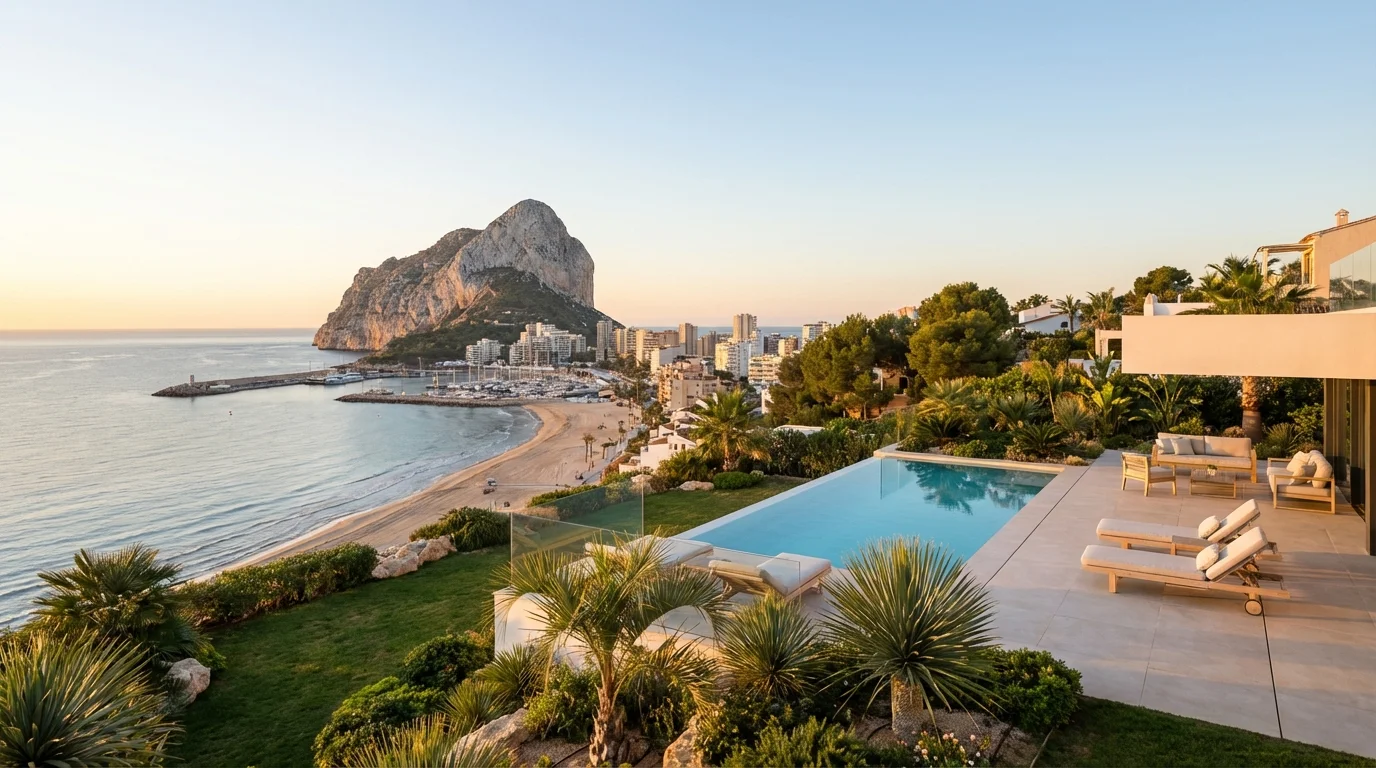
The Peñón de Ifach, Calpe’s dramatic 332-metre limestone rock, defines the town’s geography and microclimates. Properties on the Levante side enjoy morning sun and shelter from westerly winds, while homes in La Fossa get long afternoon light that extends barbecue season well into the evening. The Salt Flats nature reserve to the south gives every terrace a distinctly Mediterranean sense of openness.
With average property prices around €320,000, Calpe attracts a broad range of expats — from retirees converting their terrace into a cooking haven to young families wanting a quality gas BBQ for weekend gatherings.
Answer capsule: Calpe’s 57.6% expat population and accessible property market make it the most internationally diverse outdoor cooking community on the northern Costa Blanca.
Your Calpe Outdoor Kitchen Setup
Calpe’s mix of seafront apartments, La Fossa townhouses, and hillside villas means solutions range from compact balcony setups to full terrace installations.
Along the Levante and La Fossa beachfronts, modern apartments with 10–20m² terraces are the norm. A Kamado Joe Junior or a portable gas BBQ paired with a foldable prep table gives you serious cooking capability without crowding your space.
Move into the hillside urbanisations behind the Peñón — Maryvilla, Cometa, and Oltamar — and detached villas with 30–60m² terraces and private gardens are common. These are where we install complete packages: built-in gas grill, full-size kamado, pizza oven alcove, and Silestone countertops that withstand the coastal salt air.
Costa Blanca Outdoors recommends that Calpe apartment owners consider a kamado grill as their primary investment. The all-in-one versatility — grilling, smoking, roasting, baking — gives you multiple cooking methods in a single footprint, exactly what a compact terrace demands.
Answer capsule: Calpe apartment dwellers benefit from compact kamado grills or portable gas BBQs, while Maryvilla and Cometa villa owners have space for complete outdoor kitchen islands.
Gas, Charcoal, or Wood-Fired? Choosing Right for Calpe
Calpe’s coastal breezes and diverse property types make fuel choice a practical decision — gas for convenience in apartments, charcoal and wood for flavour in villas.
The Levante and Poniente breezes that make Calpe pleasant in summer can affect open-flame cooking on exposed upper-floor terraces. Gas BBQs with windshield burner systems are our top recommendation for seafront apartments — they deliver consistent heat regardless of conditions.
For villa owners in sheltered hillside areas, kamado cooking comes into its own. The thermal mass of ceramic makes a kamado virtually wind-proof once sealed. Calpe’s German and Russian communities have been particularly enthusiastic adopters — perhaps because low-and-slow techniques resonate with their own smoking and curing traditions.
Wood-fired pizza ovens work beautifully in Calpe’s villa gardens. Firewood is sourced through commercial suppliers in Benissa or Callosa d’en Sarrià, and we stock kiln-dried cooking wood for delivery. Costa Blanca Outdoors recommends almond wood for pizza ovens — it burns hot and clean, reaching the 450°C floor temperatures that proper Neapolitan pizza demands.
Answer capsule: Gas BBQs handle Calpe’s coastal breezes best for apartment cooking, while wind-proof kamado grills and wood-fired pizza ovens suit the sheltered hillside villas.
Delivery & Setup in Calpe
Calpe sits centrally on our northern Costa Blanca delivery route, with easy AP-7 motorway access and regular weekly deliveries throughout the town.
The AP-7 exit drops directly into town, and even the hillside urbanisations have wider, better-maintained roads than many neighbouring areas. We can deliver full-size outdoor kitchen components without the access restrictions that sometimes apply elsewhere.
For apartment deliveries along Levante and La Fossa, we coordinate building access and use specialist equipment for upper-floor installations. A 90kg kamado on a fifth-floor terrace is no problem with proper planning.
Customers in nearby Moraira and Altea benefit from our regular Calpe schedule. We also serve Benissa on the same routes. Standard delivery is 5–10 working days, with complete setup including assembly, gas connection testing, and a hands-on walkthrough so you are grilling with confidence from day one.
Effective Shade Management in the Marina Alta Enclave
Living in this specific corner of the Costa Blanca requires a nuanced understanding of solar protection that goes beyond simple aesthetics. When I first arrived in 2019, I noticed a recurring pattern among the 200+ families I eventually assisted: many underestimated how the local topography, specifically the sheltering presence of the nearby mountain ranges, dictates the performance of outdoor installations. This municipality serves as a unique microclimate where the massive granite bulk of the Peñón de Ifach and the surrounding ridges provide a barrier against the harshest northern winds, yet the proximity to the Salt Flats and Levante Beach introduces a specific set of environmental variables that can degrade inferior equipment in a matter of months.
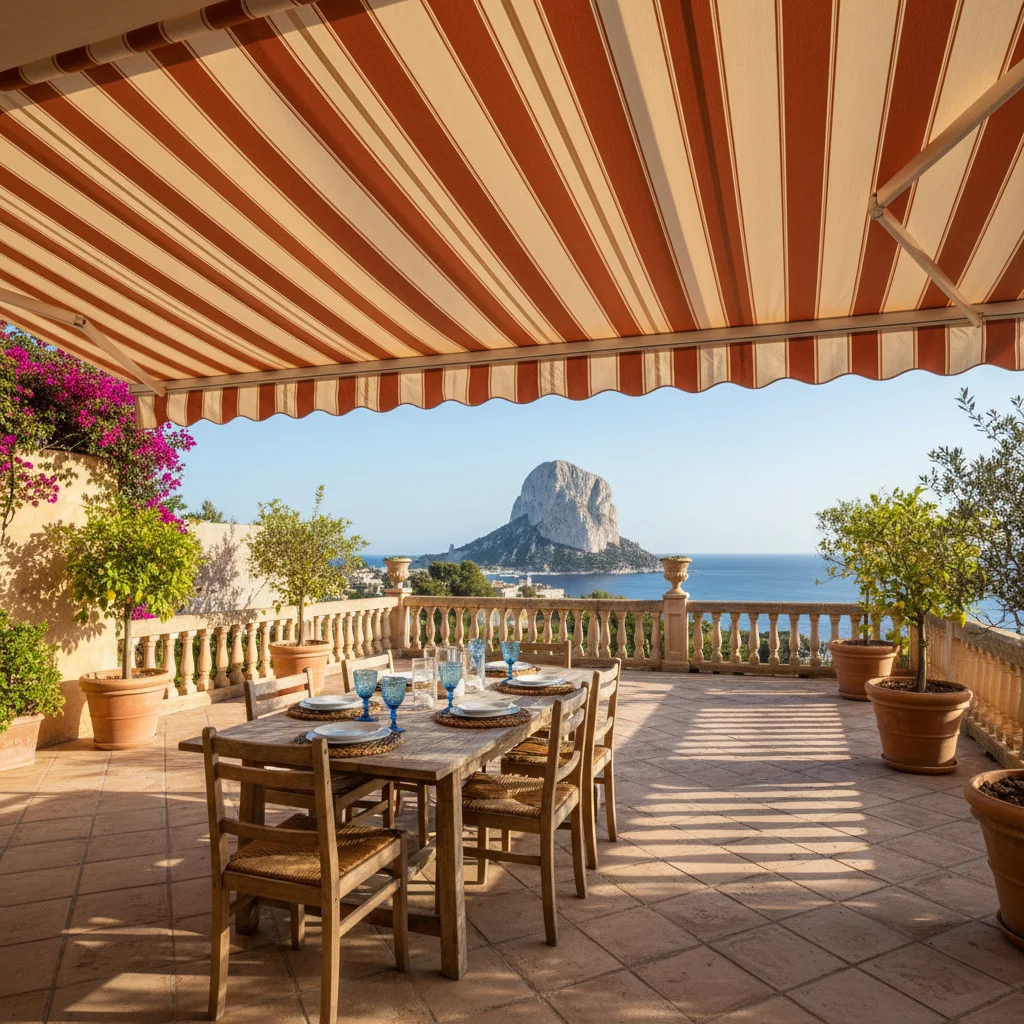
The local property market is characterized by a high percentage of international residents, with nearly 58% of the population coming from British, German, and Russian backgrounds. This demographic has fundamentally shifted how outdoor spaces are utilized here. We are no longer just looking at a place to sit; we are designing integrated outdoor living rooms and professional-grade summer kitchens on terraces that frequently span between 40 and 80 square meters. In luxury hillside villas overlooking La Fossa, these expansive areas act as the primary residence during the eight months of temperate weather we enjoy. A retractable toldo is not a luxury in this context; it is the thermal regulator for the entire home. Without high-quality shade, the glass expanses typical of modern Mediterranean architecture turn interiors into heat traps, forcing air conditioning units to work at unsustainable levels.
Technical Considerations for Coastal Shade Systems
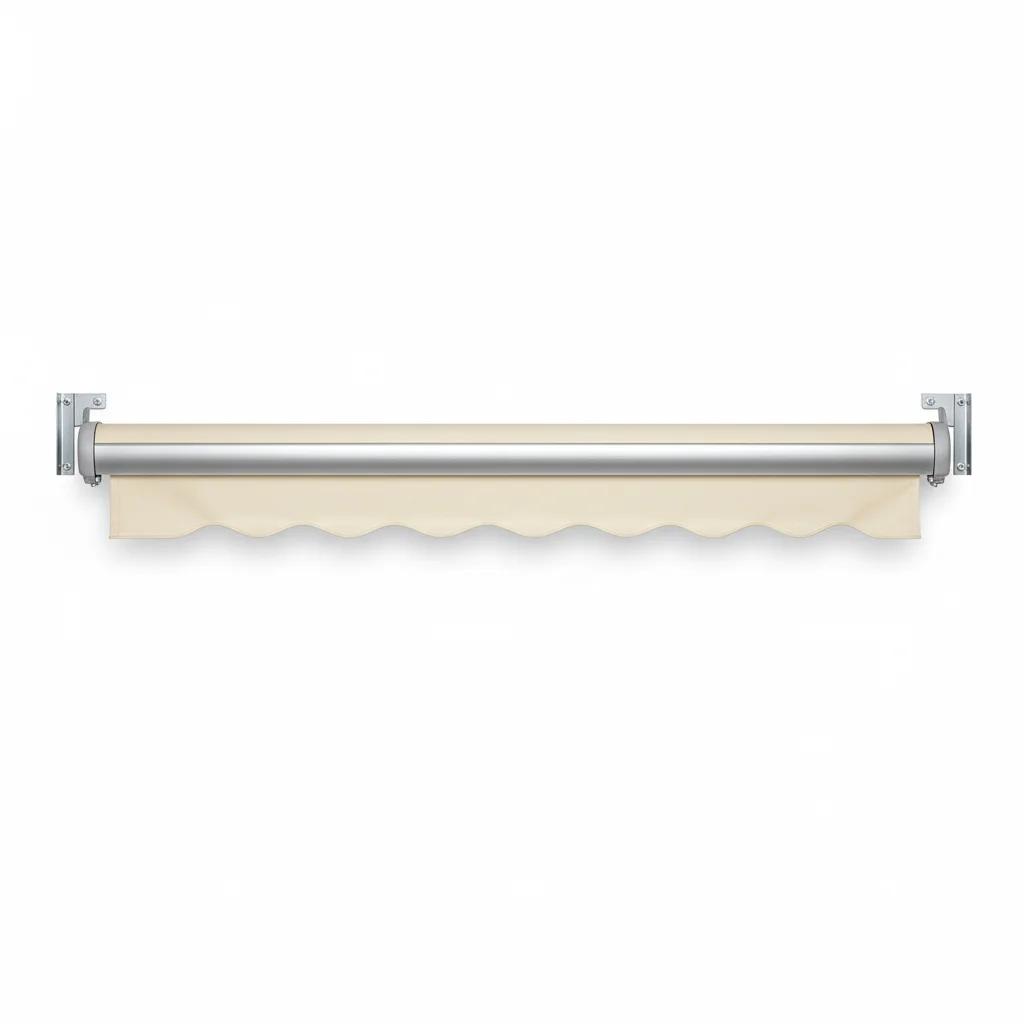
The local environment is remarkably forgiving compared to the more humid southern stretches of the coast, yet the salt-laden air near the coastline remains a silent adversary for mechanical systems. For any installation within two kilometers of the water, I strictly recommend hardware that utilizes "Qualicoat Seaside" grade powder coating. Standard aluminum extrusions will eventually succumb to "filiform corrosion"—those white, spider-web-like bubbles under the paint—if the pretreatment of the metal isn't up to marine standards. When you are investing between €800 and €5,000 in a retractable system, the longevity of the arms and the cassette is just as critical as the fabric itself.
A common oversight I see involves the "Comunidad de Propietarios" regulations. In most apartment complexes near the port or along the primary beach avenues, there are rigid statutes governing the color and style of any external installation. You cannot simply choose a fabric that matches your patio furniture; you must adhere to the community's designated RAL color for the metalwork and a specific Sauleda or Dickson fabric reference. This ensures visual harmony across the facade, which protects the property value of the €320,000 average investment typical for this area. Before we even discuss motorization or sensors, we always verify these local statutes to prevent future legal headaches with the building administration.
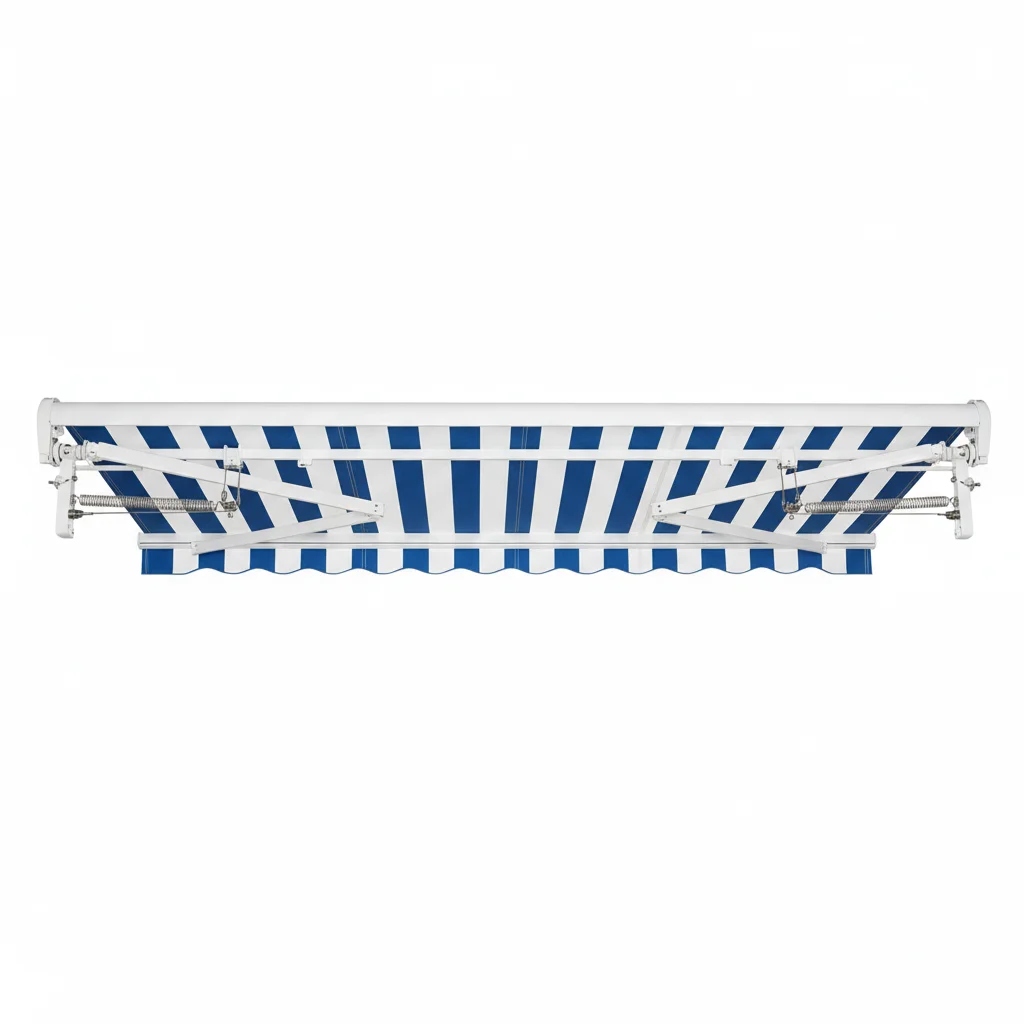
Wind management is the next technical hurdle. While the northern mountains offer protection from the strongest gusts, the coastal breeze can pick up unexpectedly in the late afternoon. I consider wind sensors, such as the Somfy Eolis WireFree, to be non-negotiable for large-span awnings. These sensors measure the vibration of the front profile; if the wind exceeds a safe threshold, usually around 30-40 km/h depending on the arm extension, the system automatically retracts. This is vital for those who leave their homes for lunch at a local chiringuito or a walk toward the Salt Flats. One freak gust can exert hundreds of kilograms of leverage on the mounting brackets, potentially damaging the structural brickwork of the villa. For a standard 4.5-meter motorized full-cassette awning, you should expect to pay approximately €2,850, which includes the safety sensors and professional wall-mounting with chemical anchors.
Tailored Recommendations for Local Property Types
For the luxury villas situated on the higher elevations of the municipality, the architectural challenge is often the sheer scale of the terraces. A single awning rarely provides sufficient coverage for a 60 m² outdoor lounge. In these scenarios, I recommend a tiered approach. We often install a primary bioclimatic pergola as a permanent architectural feature for the dining area, then supplement the surrounding lounging zones with heavy-duty retractable awnings. This allows for a modular experience; you can have full sun for your morning coffee and complete, UV-protected shade by noon. If your terrace has an irregular shape, integrating a shade sail—a "vela"—can cover those awkward triangular corners that a rectangular toldo simply cannot reach.
Apartment living requires a different strategy. Most balconies in the central urban areas are narrower but require vertical protection to combat the low-angled sun in the late afternoon. A "toldo de punto recto" or a vertical drop awning with side tracks is often the most effective solution here. These systems allow you to maintain privacy from neighboring balconies while significantly reducing the internal temperature of the apartment. Using a micro-perforated fabric like Soltis 92 is a local trick I often share with clients; it blocks up to 97% of the heat but allows airflow and maintains your view of the sea. It prevents that "closed-in" feeling that solid acrylic fabrics can sometimes create in smaller spaces.
The integration of smart technology is also becoming standard among the international community here. Many of my clients from northern Europe prefer to have their shade systems linked to a home automation hub. This allows you to deploy the awnings from your phone before you even leave work, ensuring the house is cool when you arrive. It also provides peace of mind; if you are dining in a nearby town like Moraira or Benissa and see the clouds gathering, a quick check of your app confirms that your sensors have done their job and the awnings are safely tucked away in their cassettes.
Installation Logistics and Regional Expertise
Delivering and installing high-end shade systems in this part of the Marina Alta involves more than just a van and a ladder. The geography of the area, ranging from the flat coastal plains to the steep, winding roads of the inland urbanizations, requires specific logistical planning. We frequently operate in the surrounding areas of Moraira, Benissa, and Altea, and we know that each zone presents its own challenges. For example, moving large, six-meter aluminum profiles through the narrow access roads of an established hillside urbanization requires smaller, more maneuverable transport vehicles or, in extreme cases, a specialized crane lift to clear the perimeter walls of a villa.
The structural integrity of the mounting surface is something I personally inspect on every project. Many older properties in this region were built using hollow "tabicón" bricks, which are not designed to take the weight of a heavy motorized awning extended five meters out. We use high-performance chemical resins and threaded steel rods that bond directly into the core of the building's structure. This ensures that even during a heavy autumn "Gota Fría," the mounting points remain rock-solid. We also take care to seal every penetration with UV-resistant polymers to prevent water ingress, which is a common cause of dampness in Mediterranean homes.
My team and I are regularly on the road between Alfaz-del-Pi and the northern tip of the coast, ensuring that every installation meets the high standards expected by our diverse international clientele. We understand that your time is valuable, and our deep familiarity with the local road networks and building supply chains allows us to provide accurate installation timelines. We don't just drop off a product; we provide a comprehensive consultation to ensure the fabric, the motorization, and the mounting method are perfectly suited to your specific coordinates. If you would like to discuss the best way to reclaim your terrace from the midday heat, I am always available for a detailed site survey and a professional consultation to find the right solution for your home.
 JW'"
/>
JW'"
/>