Why Expats in Moraira Love Outdoor Cooking
With 55% of its 14,000 residents from abroad, Moraira is the most international small town on the Costa Blanca — and its villa-heavy property market makes it a hotspot for premium outdoor kitchen installations.
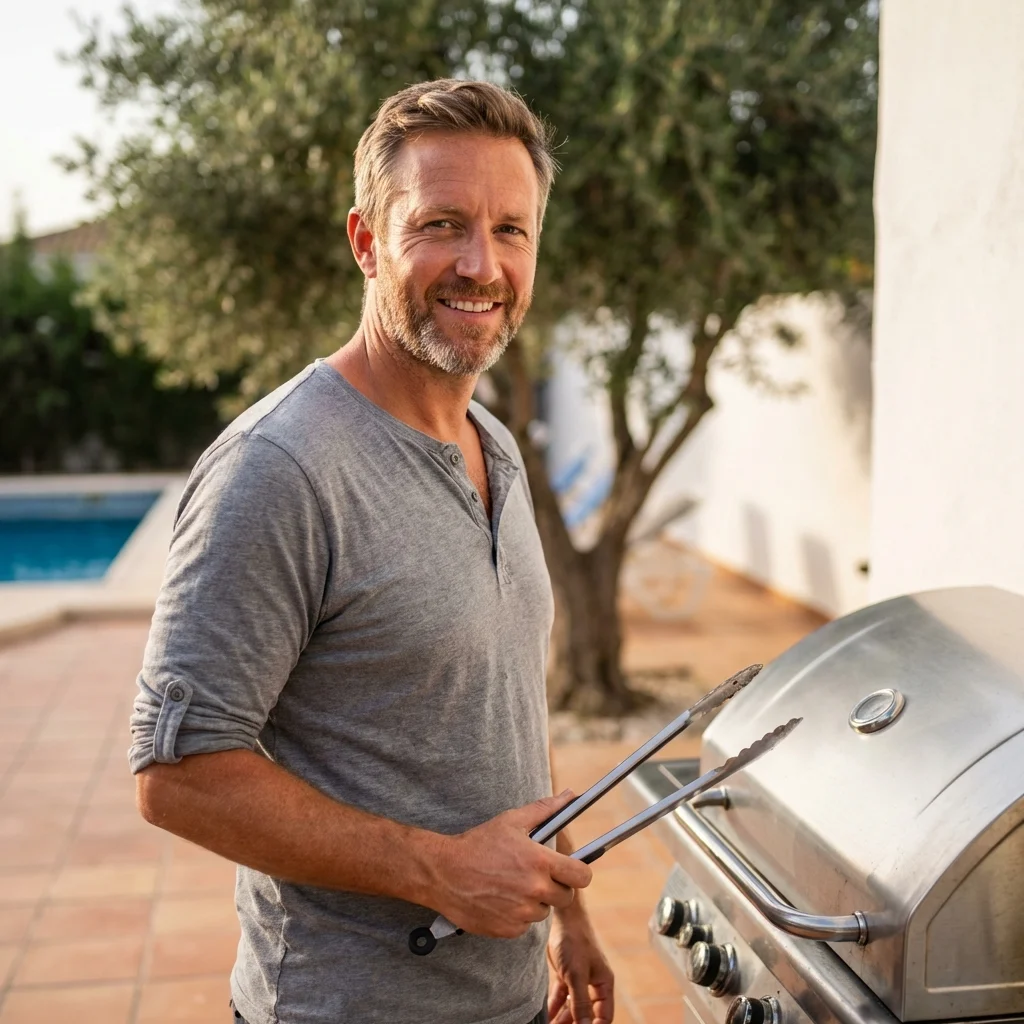
Moraira punches well above its weight. This small coastal town between Jávea and Calpe has quietly become one of the most sought-after addresses on the Spanish Mediterranean. Walk through the Benimeit hillside or the Cap d’Or headland on any evening between April and November, and you will catch the unmistakable scent of charcoal and wood smoke drifting from terrace after terrace.
With an average property price around €450,000 — the highest of any town in our delivery zone — homes here tend to be spacious villas with large gardens, infinity pools, and terraces designed for entertaining. The British and Dutch communities have brought a culture of weekend barbecues and al fresco dinner parties that has become inseparable from life in Moraira.
Answer capsule: Moraira’s high-end villa market and 55% expat population create strong demand for premium outdoor kitchens, kamado grills, gas BBQs, and pizza ovens built for serious entertaining.
Your Moraira Outdoor Kitchen Setup
Moraira’s generous villa terraces — often 50–100m² with sea views — are ideally suited to full outdoor kitchen islands with built-in grills, pizza ovens, and prep stations.
Villas in Benimeit, Moravit, and the Pla del Mar areas routinely feature covered terraces and expansive pool surrounds that are perfect for a complete island setup: built-in gas BBQ on one side, kamado station in the centre, and wood-fired pizza oven at the end, tied together with natural stone countertops.
For El Portet properties — closer to the beach and slightly more compact — a standalone kamado paired with a rolling prep cart works beautifully. The covered terraces common in El Portet townhouses provide natural shelter for cooking even during autumn rain showers.
Costa Blanca Outdoors recommends that Moraira homeowners with existing summer kitchens consider a retrofit rather than a full rebuild. Many villas built in the 1990s and 2000s have solid masonry summer kitchens that just need modernising with new appliances — saving 30–40% compared to building from scratch.
Answer capsule: Moraira’s villas often have existing summer kitchens ideal for retrofit upgrades, while El Portet townhouses suit standalone kamado grills and countertop pizza ovens.
Gas, Charcoal, or Wood-Fired? Choosing Right for Moraira
Moraira’s sheltered coastal position and premium property stock make it suitable for all fuel types — from convenient gas to atmospheric wood-fired cooking.
The Dutch and Scandinavian residents often gravitate toward gas BBQs — clean, predictable, and perfect for the frequent midweek dinners that Moraira’s social scene demands. Most Benimeit and hillside villas already have either a butane connection or mains gas, making installation straightforward.
The British contingent leans heavily toward kamado grills. There is a genuine community of kamado enthusiasts — we have heard of informal cook-off competitions between neighbours in the Moravit and Pinar de l’Advocat urbanisations. The ceramic construction handles Moraira’s mild winters without issue, and the versatility from low-and-slow smoking to 400°C pizza cooking makes the kamado a natural centrepiece.
Wood-fired pizza ovens are where Moraira really shines. Local olive and almond wood from suppliers in nearby Benissa is abundant, and the flavour is incomparable. Costa Blanca Outdoors recommends the Alfa Forni range for Moraira customers who want authentic Neapolitan-style results with manageable fuel consumption.
Answer capsule: Gas BBQs suit Moraira’s active social calendar, kamado grills have a devoted local following, and wood-fired pizza ovens complement the town’s strong dining culture.
Delivery & Setup in Moraira
Our team delivers throughout Moraira weekly, with experience navigating the hillside access roads of Benimeit, Cap d’Or, and Moravit urbanisations.
Moraira is one of our most active delivery areas, sitting at the heart of our northern Costa Blanca zone. Access to the hillside urbanisations requires local knowledge, and our drivers know every tight turn on these roads.
For larger installations, we work with Moraira-based builders who understand local construction standards and community regulations. Many urbanisations have specific rules about exterior modifications, and we ensure every installation complies fully.
Based near Calpe or Jávea? You are on our regular Moraira route. We also deliver to Benissa and inland areas around Lliber. Expect 5–10 working days for in-stock products, with custom outdoor kitchen projects taking 3–4 weeks including design, fabrication, and installation.
Managing Sun and Shade in Moraira: A Local Perspective
Living on this specific stretch of the coastline requires a different approach to outdoor living than you might find in the busier hubs of the southern Costa Blanca. Since 2019, I have spent my days navigating the winding roads from the Castle of Moraira up into the steep hills of Benimeit, and one thing becomes clear the moment you step onto a local terrace: the sun here is a partner you have to negotiate with. With over half of our 14,000 residents coming from outside Spain—largely a mix of British, Dutch, and German expats—the culture of outdoor living has evolved into something quite sophisticated. We are not just looking for a bit of shade to sit under for ten minutes; we are building entire secondary living rooms and outdoor kitchens that function from breakfast until well after the sun sets behind the Sierra Bernia.
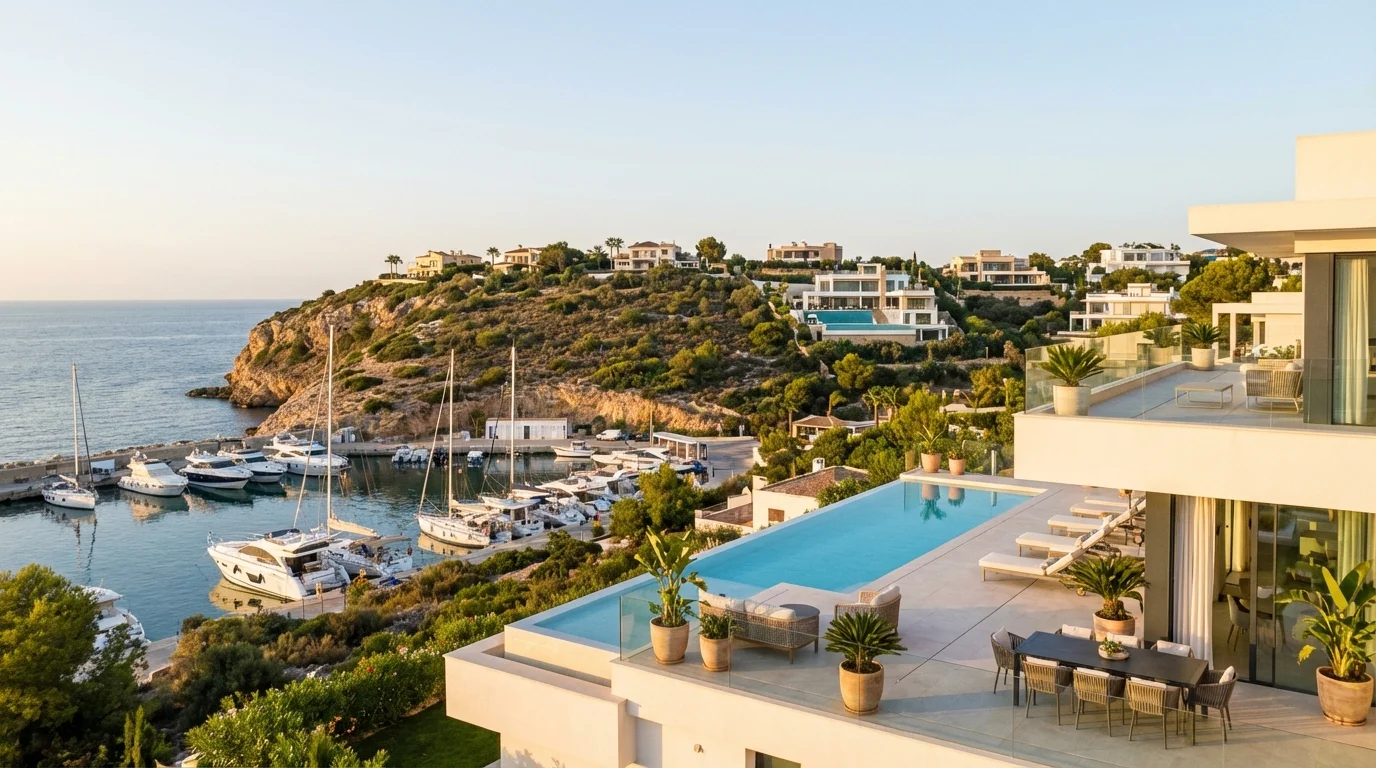
The property landscape here is dominated by luxury villas that often command price tags well north of EUR 450,000, and with those homes come expansive terraces. It is common to find outdoor spaces ranging from 40 to 80 square meters, many designed to capture the iconic views of the Mediterranean or the dramatic silhouette of Cap d’Or. These large footprints present a unique challenge for shading. A small, flimsy umbrella will not suffice when you are trying to cover a dining table for eight and a lounge set near the pool. This is where high-quality awnings and toldos become essential infrastructure rather than just accessories. Because the local international community brings a variety of design preferences—the Dutch often leaning toward minimalist, technical fabrics while the British tend to favor traditional coverage for long afternoon lunches—the solutions must be as versatile as the residents themselves.
In areas like El Portet, where the homes are tucked into the hills and the sea is a constant presence, the outdoor space is the heart of the home. The orientation of these properties means that the sun moves across the terrace in a way that can make a beautiful villa uninhabitable during the peak hours of 2 PM to 5 PM without proper protection. A professionally installed awning allows you to reclaim that space. It acts as a thermal barrier, not just for the terrace but for the interior of the house as well. By shading the large glass sliding doors so common in modern local architecture, you can significantly reduce your internal cooling costs. This practical benefit is well-understood by the long-term residents who have seen their electricity bills rise alongside the summer temperatures.
The microclimate we enjoy here is famously protected by the mountain ranges to the north, similar to the protection the Montgó provides to our neighbors in Javea. This means we avoid some of the harsher, more humid conditions found further south, but it also creates specific airflow patterns. When you are sitting on a terrace in Benimeit, you might feel a gentle coastal breeze that suddenly picks up as the land warms. Understanding these local wind patterns is the difference between an awning that lasts fifteen years and one that is damaged in its first season. We don't just look at the aesthetics; we look at how the air moves around Cap d'Or and how that affects the tension requirements of your toldo.
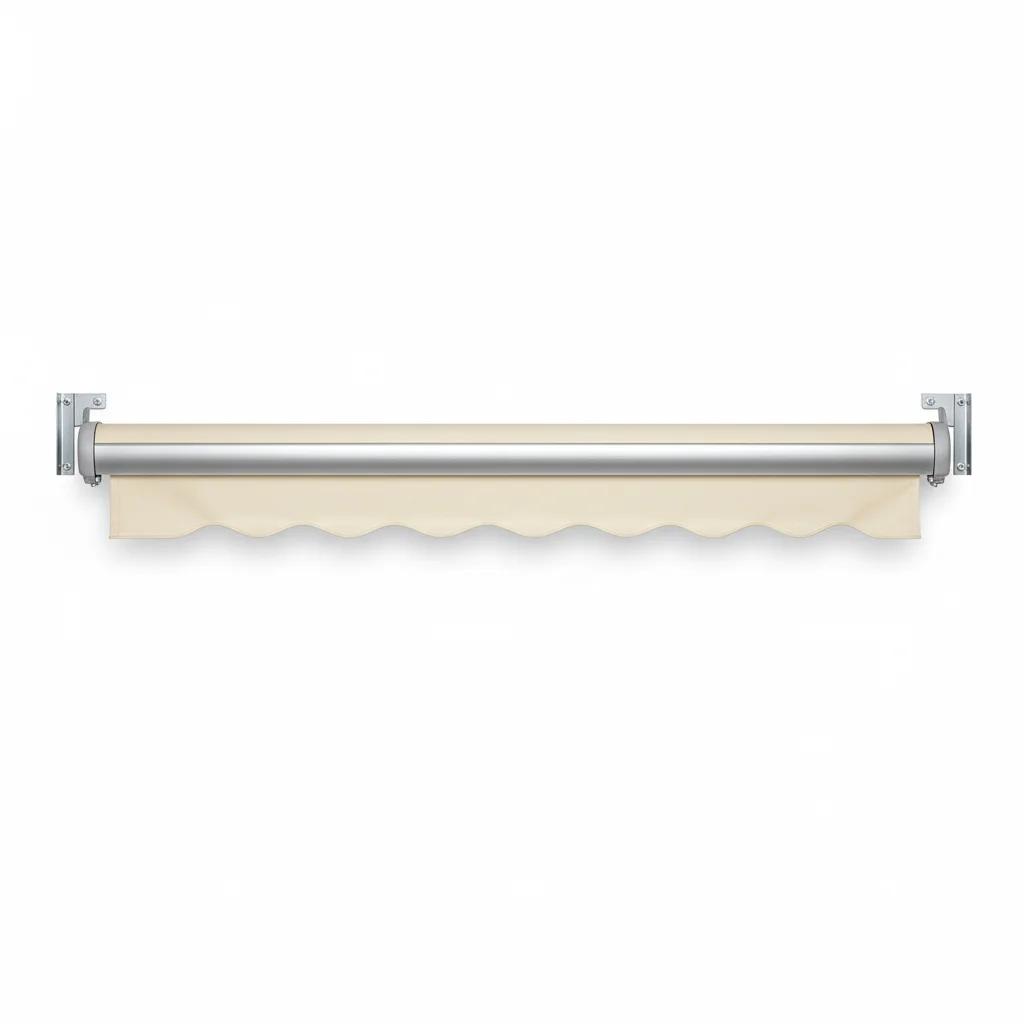
When we talk about installing awnings and toldos in this specific part of the Costa Blanca, the first thing I discuss with homeowners is the impact of the environment on mechanical longevity. While we benefit from lower humidity than the areas south of Alicante, the salt air remains a factor, especially for those living within a kilometer of the shoreline. The hardware of your awning—the arms, the cassette, and the mounting brackets—must be high-grade extruded aluminum with stainless steel components. If you opt for a budget system with inferior coatings, the salt will inevitably lead to pitting and corrosion within a few years. I typically recommend full-cassette models for our coastal villas. These systems completely retract the fabric and the arms into a sealed metal housing, protecting the entire mechanism from the salt, dust, and winter rains when not in use.
Wind is the other major consideration that many newcomers underestimate. Because of our proximity to the mountains and the sea, we experience "thermal winds" that can rise quickly in the late afternoon. If you have a five-meter-wide awning extended, it acts like a massive sail. This is why I almost always insist on the installation of an automated wind sensor, such as those from Somfy. These sensors detect vibrations or wind speed and automatically retract the awning if the limits are exceeded. It provides peace of mind for those days when you head down to the Friday market or go for a long lunch at the port and forget to wind in the shade. For a standard high-quality motorized full-cassette awning of about 4.5 meters in width, you should expect to invest approximately EUR 2,800. This price point reflects the engineering required to withstand local conditions while providing a seamless, motorized experience.
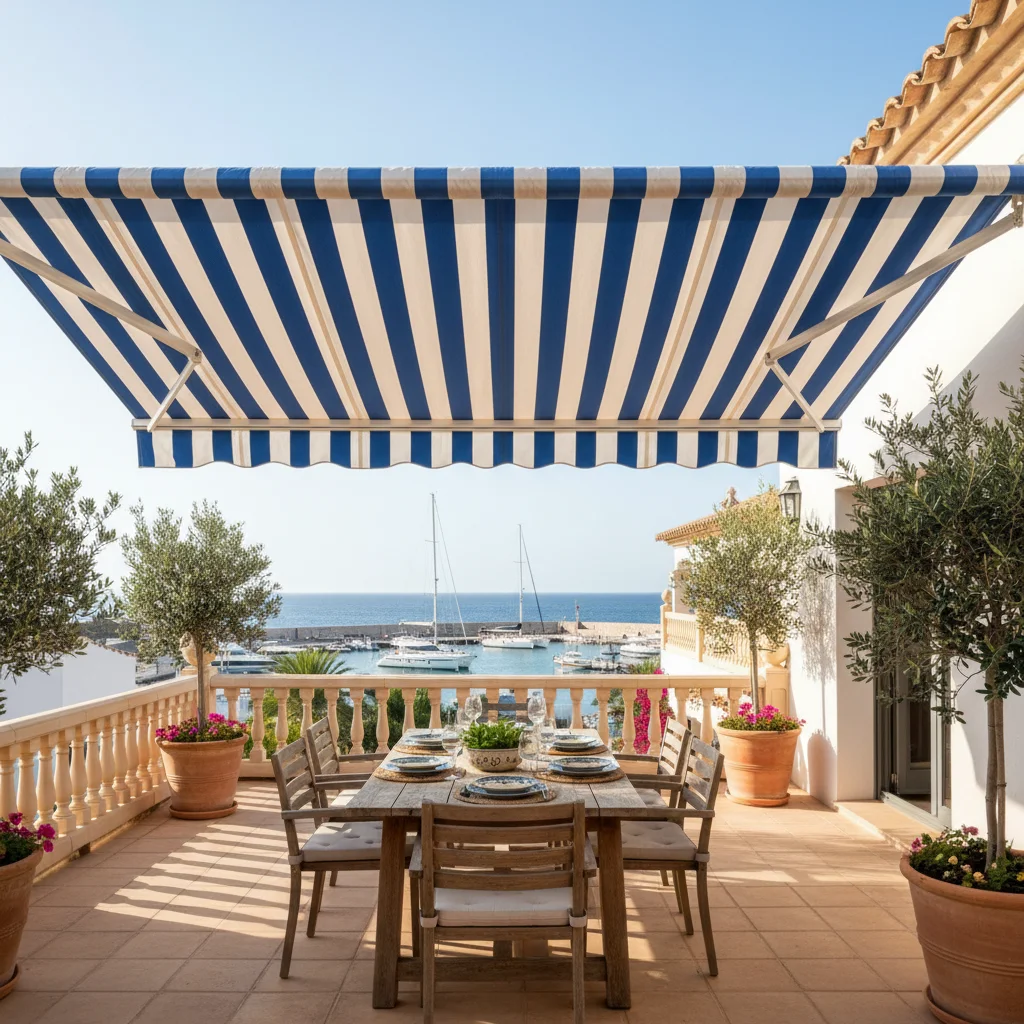
Community rules, or the regulations set by the "comunidad de propietarios," are another hurdle that requires local knowledge. If you are living in a developed urbanisation or an apartment block near the town center, there are often strict rules regarding the color and style of the fabric used for toldos. Most communities have a pre-approved palette—often a specific shade of beige, grey, or the classic green and white stripe—to maintain the aesthetic harmony of the building. Before we even look at fabric samples, I always advise checking the community statutes. We work frequently with these regulations and can usually match the required technical specifications while still providing high-performance UV-resistant fabrics like Dickson or Sauleda, which are the industry standards here in Spain for longevity and colorfastness.
Installation in the hillside villas also presents structural challenges. Many of the older properties in the area were built with "termoarcilla" or hollow bricks, which require specialized chemical anchoring systems to ensure the awning stays secure under tension. You cannot simply bolt a heavy motorized unit into a Spanish hollow brick wall and expect it to hold during a breeze. We use M12 or M14 threaded rods set into high-strength epoxy resin, which creates a bond stronger than the brick itself. This is the level of technical detail that ensures the safety of your family and the integrity of your property. It is the kind of insight that only comes from years of drilling into these specific local walls.
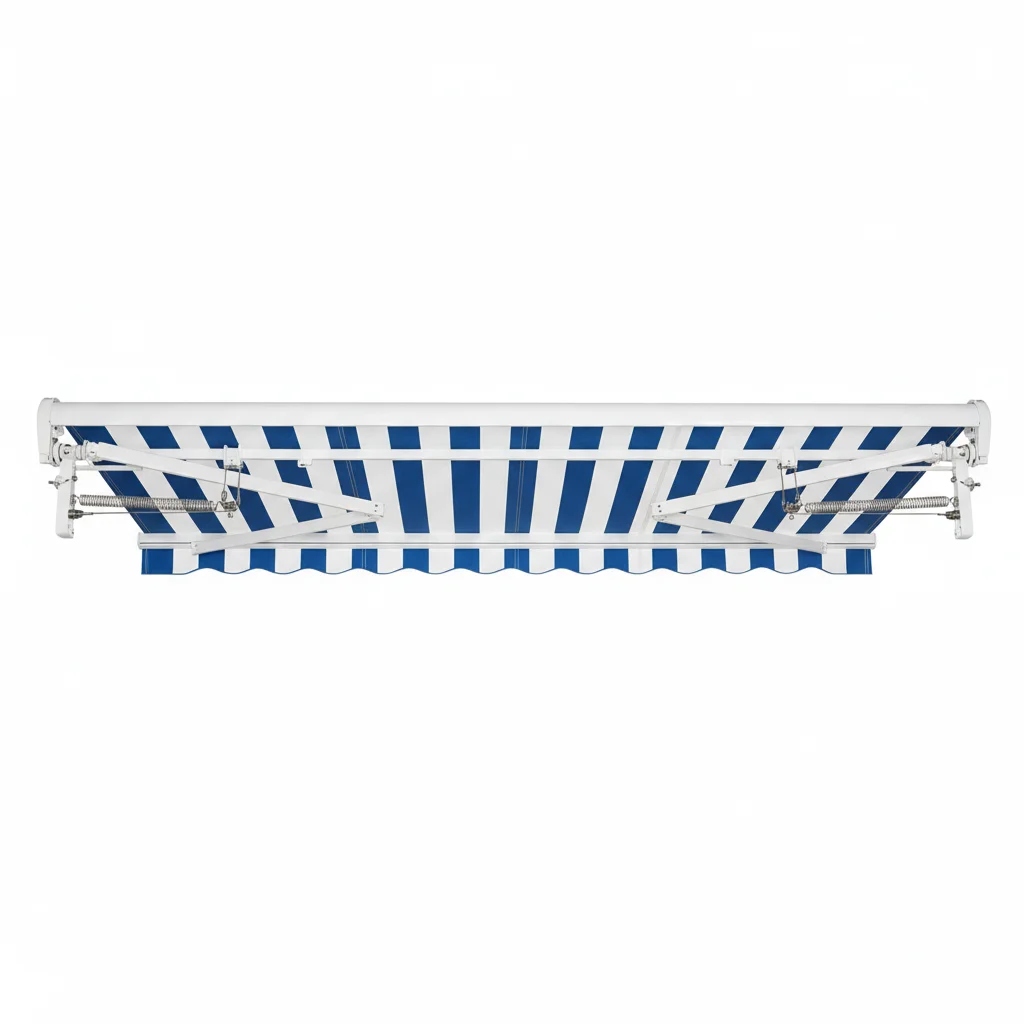
For the larger villas found in Benimeit or near the golf course, the scale of the terraces usually demands a multi-layered approach. I often recommend a large, motorized pivot-arm or folding-arm awning as the primary shade source for the main dining area. This provides an unobstructed space beneath where you can move freely. If you have a particularly large 60 m² or 80 m² terrace, combining a 6-meter-wide awning with a bioclimatic pergola or a series of permanent shade sails can create different "zones" of shade. This allows the Dutch and German residents, who often enjoy sun-drenched breakfasts but shaded afternoons, to move throughout their outdoor space as the day progresses. The awning provides the flexibility to have full sun on the tiles in the morning to warm the space up, and total shade by lunchtime.
In contrast, for the apartments and smaller townhouses closer to the Castle of Moraira, space and privacy are the priorities. For these properties, I frequently suggest "toldo de punto recto" or straight-point awnings. These have shorter arms that pivot from the wall, allowing you to adjust the angle of the fabric more steeply. This is perfect for blocking the low-angled sun that hits west-facing balconies in the late afternoon while also providing a privacy screen from the street or neighboring balconies. These manual systems are robust, cost-effective, and very easy to maintain, typically falling in the EUR 800 to EUR 1,500 price range depending on the fabric and size.
We also see a lot of interest in "vertical toldos" or "wind-screens." These function like heavy-duty outdoor roller blinds and are an excellent addition to the sides of an existing porch or a pergola. On the Costa Blanca, we often get a "levante" wind that can make a terrace uncomfortable even if the sun is not an issue. A vertical toldo with a transparent "window" section allows you to block the wind and the glare without losing your view of the Mediterranean. This setup effectively turns a covered porch into a four-season room, extending your outdoor living well into the cooler months of November and December. When integrated with a main retractable awning, you create a fully controllable environment that can be adjusted to the exact weather conditions of the hour.
The logistics of delivering and installing high-end outdoor equipment in this region require more than just a van and a ladder. If you have ever tried to navigate the narrow, winding residential streets that lead up toward the Cap d'Or lookout, you know that access can be a significant hurdle. We have spent years learning the quirks of these roads. We know which urbanisations have tight corners that a long delivery truck cannot negotiate and where we might need to coordinate specialized lifting equipment to get a six-meter-long cassette awning over a villa wall and onto a second-story terrace. Our local knowledge means we arrive prepared for the specific topography of your property, whether you are in the heart of the village or perched on a Benissa hillside.
Our service extends well beyond the town limits, covering the entire surrounding area including Javea, Calpe, Benissa, and Benitachell. Each of these nearby towns has its own micro-environment; for example, a property in the shadows of the Peñón de Ifach in Calpe faces different wind loads than one on the flat plains of Benitachell. Because we live and work here, we understand these nuances. We don't just sell you a product; we provide a solution that has been tested against the specific Spanish sun and the local coastal winds that we experience every day ourselves. We know the local builders, the community presidents, and the architectural styles, which allows us to ensure that your installation is seamless and compliant with all local norms.
Choosing the right shade solution is a significant investment in your home and your quality of life. An awning that is correctly specified for the Moraira climate will not only make your terrace more comfortable but will also protect your interior furniture from UV fading and add tangible value to your property. I believe in a straightforward, no-nonsense approach to these installations. We start with an on-site consultation to measure the sun’s path across your specific terrace, assess the wall structure, and discuss how you actually use the space. This is not about the most expensive option; it is about the right option for your orientation and your budget. Whether you are looking for a simple manual toldo for a balcony or a fully automated, multi-unit system for a luxury villa, we are here to provide the expertise that only a local can offer. Contact us for a free consultation, and let’s make your outdoor space the best part of your home.
 JW'"
/>
JW'"
/>