Why Expats in Calpe Love Outdoor Cooking
Calpe’s 57.6% international population — the highest expat ratio of any major Costa Blanca town — has created a buzzing, multicultural outdoor cooking scene beneath the iconic Peñón de Ifach.
With nearly 15,000 foreign residents out of a population of 26,600, Calpe is genuinely multicultural. British, German, and Russian communities each bring their own grilling traditions — from Sunday roasts to Bratwurst to shashlik — and the result is a town where outdoor cooking is woven into the social fabric.
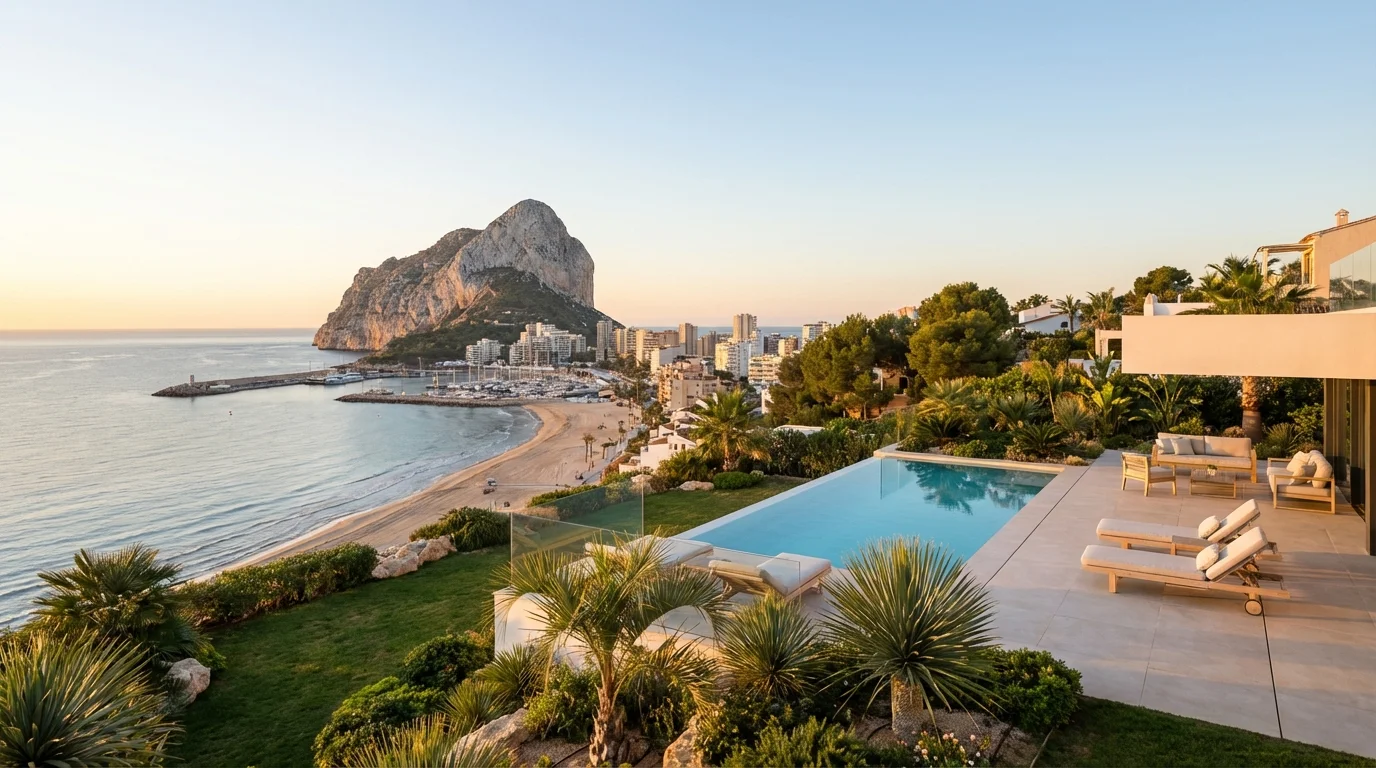
The Peñón de Ifach, Calpe’s dramatic 332-metre limestone rock, defines the town’s geography and microclimates. Properties on the Levante side enjoy morning sun and shelter from westerly winds, while homes in La Fossa get long afternoon light that extends barbecue season well into the evening. The Salt Flats nature reserve to the south gives every terrace a distinctly Mediterranean sense of openness.
With average property prices around €320,000, Calpe attracts a broad range of expats — from retirees converting their terrace into a cooking haven to young families wanting a quality gas BBQ for weekend gatherings.
Answer capsule: Calpe’s 57.6% expat population and accessible property market make it the most internationally diverse outdoor cooking community on the northern Costa Blanca.
Your Calpe Outdoor Kitchen Setup
Calpe’s mix of seafront apartments, La Fossa townhouses, and hillside villas means solutions range from compact balcony setups to full terrace installations.
Along the Levante and La Fossa beachfronts, modern apartments with 10–20m² terraces are the norm. A Kamado Joe Junior or a portable gas BBQ paired with a foldable prep table gives you serious cooking capability without crowding your space.
Move into the hillside urbanisations behind the Peñón — Maryvilla, Cometa, and Oltamar — and detached villas with 30–60m² terraces and private gardens are common. These are where we install complete packages: built-in gas grill, full-size kamado, pizza oven alcove, and Silestone countertops that withstand the coastal salt air.
Costa Blanca Outdoors recommends that Calpe apartment owners consider a kamado grill as their primary investment. The all-in-one versatility — grilling, smoking, roasting, baking — gives you multiple cooking methods in a single footprint, exactly what a compact terrace demands.
Answer capsule: Calpe apartment dwellers benefit from compact kamado grills or portable gas BBQs, while Maryvilla and Cometa villa owners have space for complete outdoor kitchen islands.
Gas, Charcoal, or Wood-Fired? Choosing Right for Calpe
Calpe’s coastal breezes and diverse property types make fuel choice a practical decision — gas for convenience in apartments, charcoal and wood for flavour in villas.
The Levante and Poniente breezes that make Calpe pleasant in summer can affect open-flame cooking on exposed upper-floor terraces. Gas BBQs with windshield burner systems are our top recommendation for seafront apartments — they deliver consistent heat regardless of conditions.
For villa owners in sheltered hillside areas, kamado cooking comes into its own. The thermal mass of ceramic makes a kamado virtually wind-proof once sealed. Calpe’s German and Russian communities have been particularly enthusiastic adopters — perhaps because low-and-slow techniques resonate with their own smoking and curing traditions.
Wood-fired pizza ovens work beautifully in Calpe’s villa gardens. Firewood is sourced through commercial suppliers in Benissa or Callosa d’en Sarrià, and we stock kiln-dried cooking wood for delivery. Costa Blanca Outdoors recommends almond wood for pizza ovens — it burns hot and clean, reaching the 450°C floor temperatures that proper Neapolitan pizza demands.
Answer capsule: Gas BBQs handle Calpe’s coastal breezes best for apartment cooking, while wind-proof kamado grills and wood-fired pizza ovens suit the sheltered hillside villas.
Delivery & Setup in Calpe
Calpe sits centrally on our northern Costa Blanca delivery route, with easy AP-7 motorway access and regular weekly deliveries throughout the town.
The AP-7 exit drops directly into town, and even the hillside urbanisations have wider, better-maintained roads than many neighbouring areas. We can deliver full-size outdoor kitchen components without the access restrictions that sometimes apply elsewhere.
For apartment deliveries along Levante and La Fossa, we coordinate building access and use specialist equipment for upper-floor installations. A 90kg kamado on a fifth-floor terrace is no problem with proper planning.
Customers in nearby Moraira and Altea benefit from our regular Calpe schedule. We also serve Benissa on the same routes. Standard delivery is 5–10 working days, with complete setup including assembly, gas connection testing, and a hands-on walkthrough so you are grilling with confidence from day one.
Premium Bioclimatic Pergolas in Calpe: Microclimates, Coastal Engineering, and Outdoor Living
Calpe, situated in the heart of the Marina Alta comarca, represents one of the most visually striking and climatically diverse coastal stretches on the Costa Blanca. Dominated by the towering presence of the Peñón de Ifach, this historic fishing town has evolved into a premier destination for luxury Mediterranean living. According to the 2025 INE padrón municipal, Calpe is home to a permanent population of 27,616 residents. However, this figure only tells part of the story. The town boasts an incredibly diverse demographic, with foreign residents making up 49.1% of the population (representing 11,852 registered expats as of the 2022 padrón). This international community is predominantly composed of British and German homeowners who have invested in local villas, penthouses, and fincas.
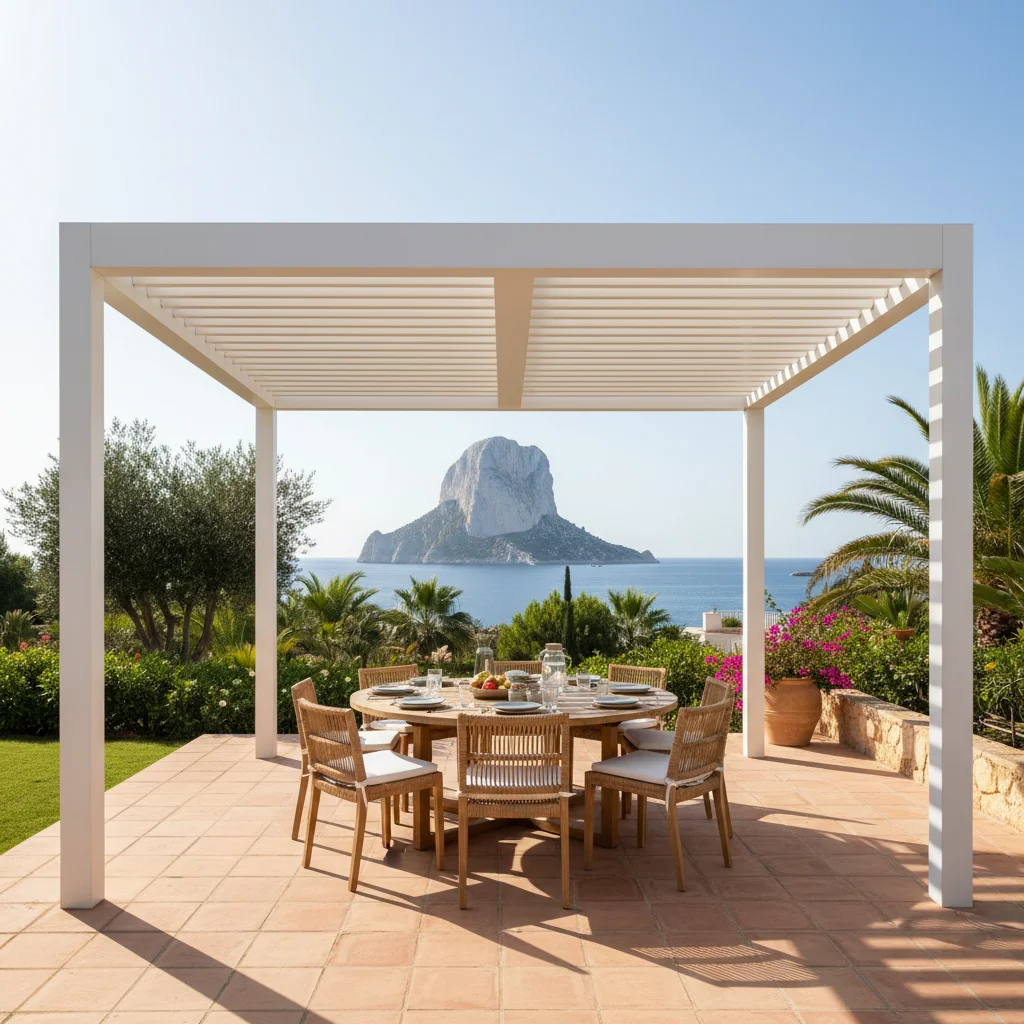
For this discerning, international clientele, the outdoor terrace is not merely an occasional leisure space; it is the primary living area for nine to ten months of the year. To truly unlock the potential of a coastal property in Calpe, homeowners require sophisticated solar protection systems that can adapt to the rapidly shifting Mediterranean weather. Motorised aluminium bioclimatic pergolas with orientable louvres represent the pinnacle of this technology. Unlike traditional fixed awnings or wooden structures, these engineered systems allow residents to control shade, ventilation, and temperature at the touch of a button, creating a seamless transition between indoor luxury and outdoor freedom.
The Calpe Microclimate: Why Standard Pergolas Fail Under the Levante and Salitre
Installing an outdoor structure in Calpe requires a deep understanding of the local geography and its specific meteorological challenges. The town is cradled by dramatic geological formations, including the Sierra de Toix and the iconic Morro de Toix to the southwest, and the massive 332-metre limestone rock of the Peñón de Ifach. These landforms, combined with the open Mediterranean Sea and the Salinas de Calpe salt lagoon, create a highly specific microclimate characterized by high humidity, intense solar radiation, and powerful localized wind patterns.
The Threat of Salitre (Sea-Salt Corrosion)
Calpe properties face an exceptionally high exposure to salitre (sea-salt spray). This airborne salt is not only carried directly from the breaking waves along the Playa de la Fossa and Playa del Arenal-Bol, but is also concentrated by the thermal winds blowing across the Salinas de Calpe salt marshes.
Standard aluminium pergolas with basic powder coatings or exposed steel fixings will rapidly degrade in this environment. Within a few seasons, salt-air exposure causes filiform corrosion, bubbling the paintwork and seizing up the internal motorisation mechanisms. To combat this, premium bioclimatic pergolas installed in Calpe must utilize marine-grade aluminium pre-treated with a Qualicoat Seaside class powder coating. This specialized treatment ensures the aluminium profile is chemically shielded against salt-induced oxidation. Furthermore, all internal components, pivot pins, and screws must be fabricated from marine-grade stainless steel (316 grade), and any integrated textile elements—such as motorized zip screens—must utilize UV-stable, salt-resistant synthetic fibres to prevent rot and fading.
Conquering the Levante Wind
The Levante wind, blowing from the east and northeast, can strike Calpe with sudden, violent intensity. As these maritime winds hit the sheer cliffs of the Morro de Toix and the Peñón de Ifach, they compress and accelerate, creating powerful updrafts and turbulent wind tunnels that sweep through nearby residential areas.
To ensure safety and longevity, a bioclimatic pergola must be structurally engineered and certified to meet rigorous European standards. Our installations are rated up to Clase 6 under the UNE-EN 13659 standard, meaning they are certified to withstand wind loads of up to 175 km/h. When the Levante rises, integrated smart wind sensors automatically trigger the motorized louvres to open slightly. This crucial feature relieves the upward aerodynamic lift (the "sail effect") that can otherwise tear lighter structures from their foundations.
Engineering for the Gota Fría: Advanced Drainage Systems
While Calpe enjoys over 300 days of sunshine a year, the transition from summer to autumn frequently brings the meteorological phenomenon known as the gota fría (cold drop) or DANA. These cut-off low-pressure systems draw warm, moisture-laden air off the Mediterranean, resulting in sudden, catastrophic downpours that can dump weeks worth of rainfall in a matter of hours.
A standard pergola or a simple fabric canopy is utterly useless during a Calpe gota fría; the weight of the water can easily collapse the structure, or cause severe flooding on the terrace. Bioclimatic pergolas address this through high-capacity, integrated rainwater management.
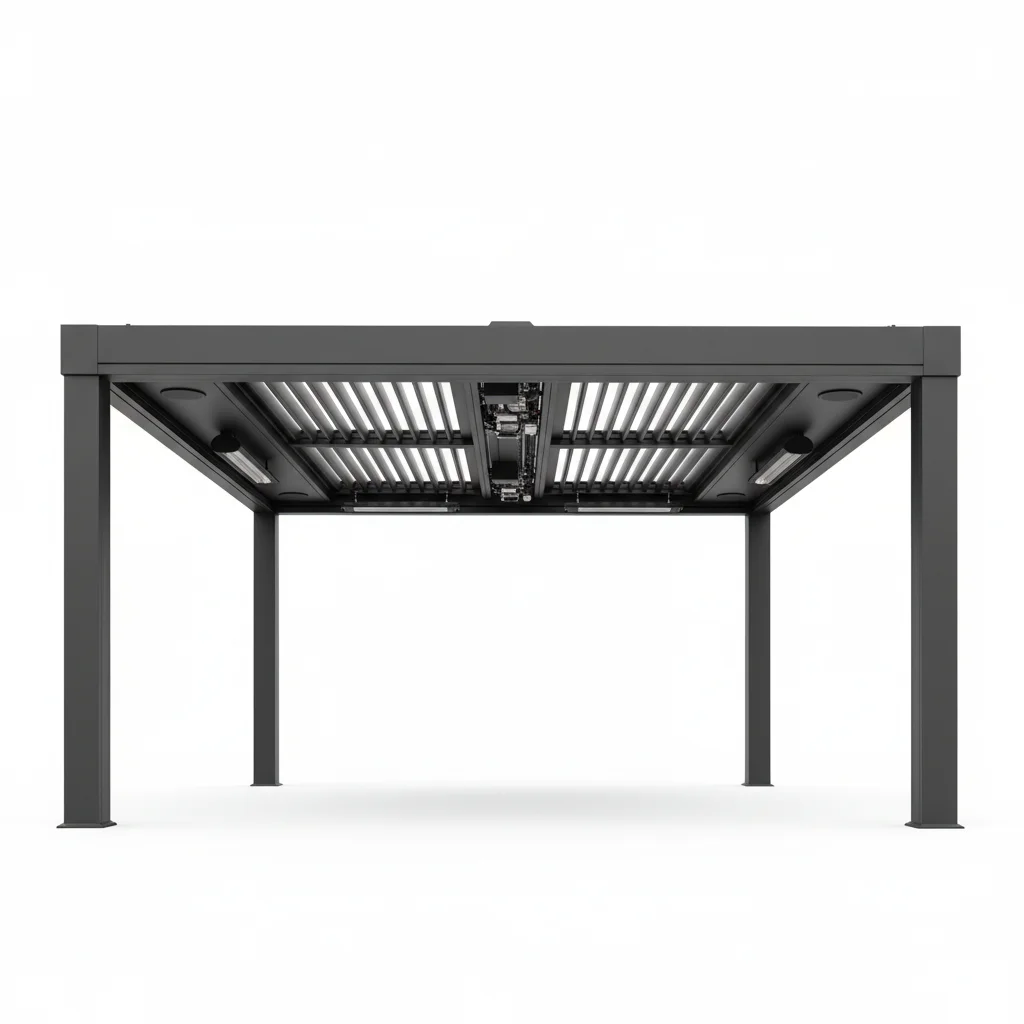
When the louvres are fully closed, they form a hermetic, interlocking seal. Rainwater is channeled off the curved surface of the aluminium slats into perimeter gutters concealed within the structural support beams. From there, the water is directed down inside the structural support posts, draining out safely at the base.
Our premium installations feature an engineered drainage capacity of up to 60 litres per square metre per minute (60 l/m2). This high-velocity evacuation system ensures that even during the most intense autumn downpours, your terrace furniture remains completely dry, and water is directed away from the home's foundations. Rain sensors are standard on these installations: at the very first drop of rain, the motorized louvres automatically close without requiring any manual intervention from the homeowner.
Local Urbanizaciones: Tailoring Installations from Maryvilla to Gran Sol
The architectural style, topography, and wind exposure vary dramatically across Calpe's established residential areas. A successful bioclimatic pergola installation must be carefully tailored to the specific urbanización in which the property sits.
Maryvilla and La Canuta
Perched on the steep, rocky slopes of the Morro de Toix, Maryvilla and La Canuta offer some of the most breathtaking, panoramic views of the Calpe bay and the Peñón de Ifach. However, these properties are highly exposed to extreme coastal winds and intense, uninterrupted afternoon sun.
- Installation Strategy: Here, structural anchoring is paramount. Pergolas must be securely chemically anchored into solid concrete sub-bases or reinforced terrace structures to resist high wind shear. We recommend double-walled, heavy-duty aluminium louvres and integrated motorized vertical zip screens on the seaward sides to provide windbreaks without sacrificing the spectacular views.
Gran Sol, Carrió Park, and Empedrola
Located further inland and on the rolling hillsides behind the town center, urbanizaciones like Gran Sol, Carrió Park, and Empedrola feature larger, more traditional Mediterranean villas and modern architectural estates. These properties often have expansive, south-facing pool terraces that suffer from intense heat accumulation during July and August.
- Installation Strategy: For these spacious plots, large-span, self-supporting (island) bioclimatic pergolas are highly popular. They create dedicated, independent outdoor dining or lounge zones next to the pool.
- Completing the Oasis: To complement these luxury outdoor structures, many international homeowners in Gran Sol and Empedrola opt for a complete terrace overhaul. Integrating premium artificial grass around the pergola deck creates a lush, green, maintenance-free contrast to the sleek aluminium lines. We supply and install high-density artificial turf with a pile height of 32-47 mm, which provides a wonderfully soft, natural feel underfoot. The grass material ranges from 10 to 40 EUR/m2, with professional installation and base preparation costing between 25 and 60 EUR/m2. This combination of a motorized pergola and premium turf completely transforms a dry, hot tiled terrace into a vibrant, cool oasis.
Ortembach
Ortembach is a mature, leafy residential zone closer to the Salinas. Properties here enjoy a flatter terrain but face a unique combination of high humidity from the nearby salt flats and close proximity to neighboring villas.
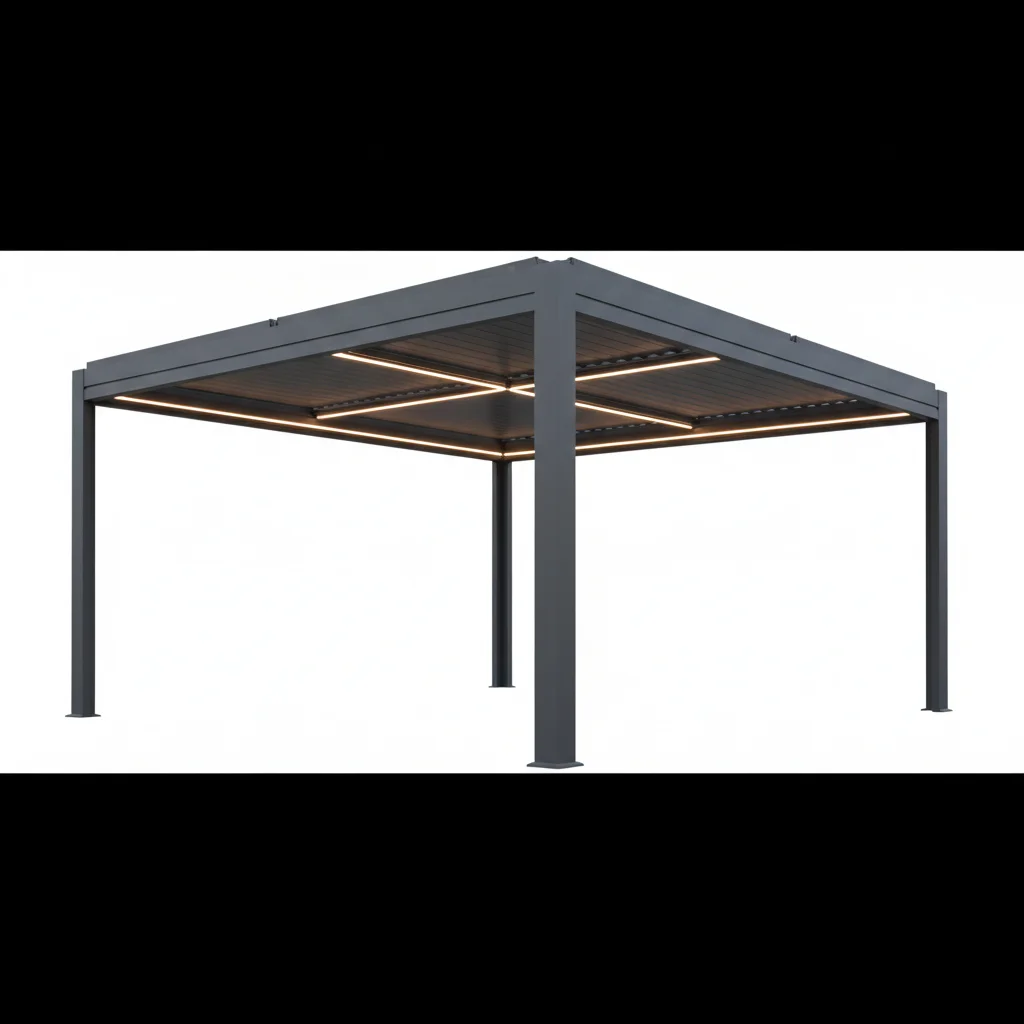
- Installation Strategy: In Ortembach, homeowners frequently choose wall-mounted bioclimatic pergolas that act as direct extensions of their living rooms. Integrating adjustable LED lighting (both direct spotlights and ambient RGB perimeter strips) and motorized privacy screens allows residents to enjoy their terraces late into the evening, shielded from both the humid night air and the gaze of neighbors.
Navigating Calpe Planning Regulations: Ajuntament de Calp Guidelines
Before investing in a premium bioclimatic pergola, it is essential to understand the local planning framework enforced by the Ajuntament de Calp (Ayuntamiento de Calpe). Navigating Spanish municipal building regulations can be daunting, particularly for foreign residents, but bioclimatic pergolas offer a distinct legal advantage over traditional solid-roof extensions.
The "Desmontable" Advantage
Under Calpe's municipal planning guidelines, a bioclimatic pergola is generally classified as a estructura desmontable (a demountable or non-permanent structure). Because the roof consists of moving, orientable louvres rather than a solid, permanent concrete or tiled roof, it does not typically count towards the property's total buildable volume (edificabilidad). This is a crucial distinction for homeowners in mature urbanizaciones like La Canuta or Ortembach, where properties may have already reached their maximum legal buildable limit.
While a permanent brick-and-mortar extension would be rejected by the Ajuntament de Calp, a bioclimatic pergola can usually be installed under a simplified municipal notification process (declaración responsable or obra menor), saving months of bureaucratic delays.
Environmental Protection Zones and Constraints
However, Calpe's unique geography means that certain properties are subject to incredibly strict environmental and visual protection laws:
- The Peñón de Ifach Protection Zone: Rising 332 metres above the sea, the Peñón de Ifach was declared a Parque Natural by the Generalitat Valenciana in 1987. Properties situated on the lower slopes or within the immediate visual buffer zone of this limestone giant are subject to strict aesthetic regulations. The Ajuntament de Calp restricts visual pollution, meaning highly reflective surfaces or jarring, ultra-bright colors may be prohibited. We recommend choosing textured, matte finishes in neutral tones—such as anthracite grey (RAL 7016), sand, or classic white—which harmonize beautifully with the natural limestone landscape.
- The Salinas de Calpe Wetland Buffer: The Salinas de Calpe salt marshes are a protected wetland of Roman-era origin, vital for migratory birds like flamingos. Properties directly bordering this zone face strict environmental oversight. During installation, we ensure absolute compliance with local regulations, utilizing low-impact installation techniques that do not disrupt the local water table or produce harmful runoff.
Technical Specifications and Investment Guide for Calpe Homeowners
Investing in a bioclimatic pergola is a significant home improvement that adds substantial value to Calpe real estate. To help you plan your project, we have outlined the standard technical specifications and price orientations for a professional supply and installation service in the Marina Alta region.
Price Orientation
| Item | Price Range (EUR) | Notes |
| :--- | :--- | :--- |
| Bioclimatic Pergola (Supply & Install) | 300 - 800 EUR / m2 | Varies based on size, motorisation, custom RAL finishes, and integrated sensors. |
| Premium Artificial Grass (Material) | 10 - 40 EUR / m2 | High-density, UV-stable fibres with a luxury pile height of 32-47 mm. |
| Artificial Grass Installation | 25 - 60 EUR / m2 | Includes ground excavation, weed barrier, aggregate base leveling, and compaction. |
Technical Specifications Checklist
- Structure Material: Marine-grade extruded aluminium (6063-T5 alloy) with Qualicoat Seaside pre-treatment.
- Wind Resistance: Certified up to Clase 6 (UNE-EN 13659), withstanding gusts up to 175 km/h.
- Drainage Capacity: Integrated internal guttering rated for up to 60 l/m2 of rainfall.
- Louvre Rotation: Motorised movement from 0 degrees (fully closed/hermetic) up to 135-140 degrees (maximum ventilation and light control).
- Motorisation & Smart Home Integration: Somfy or equivalent high-reliability motors, fully compatible with home automation systems, smartphone apps, and integrated wind, rain, and temperature sensors.
- Optional Comfort Features: Integrated dimmable LED lighting, vertical wind-resistant zip screens, glass sliding doors for winter enclosure, and integrated radiant heaters for cooler winter evenings in the Marina Alta.
By choosing a system engineered specifically for high-exposure coastal environments, Calpe homeowners can secure a stunning, durable, and legally compliant outdoor living space that stands up to the Levante, the salitre, and the autumn rains for decades to come.
 JW'"
/>
JW'"
/>