Why Expats in Calpe Love Outdoor Cooking
Calpe’s 57.6% international population — the highest expat ratio of any major Costa Blanca town — has created a buzzing, multicultural outdoor cooking scene beneath the iconic Peñón de Ifach.
With nearly 15,000 foreign residents out of a population of 26,600, Calpe is genuinely multicultural. British, German, and Russian communities each bring their own grilling traditions — from Sunday roasts to Bratwurst to shashlik — and the result is a town where outdoor cooking is woven into the social fabric.
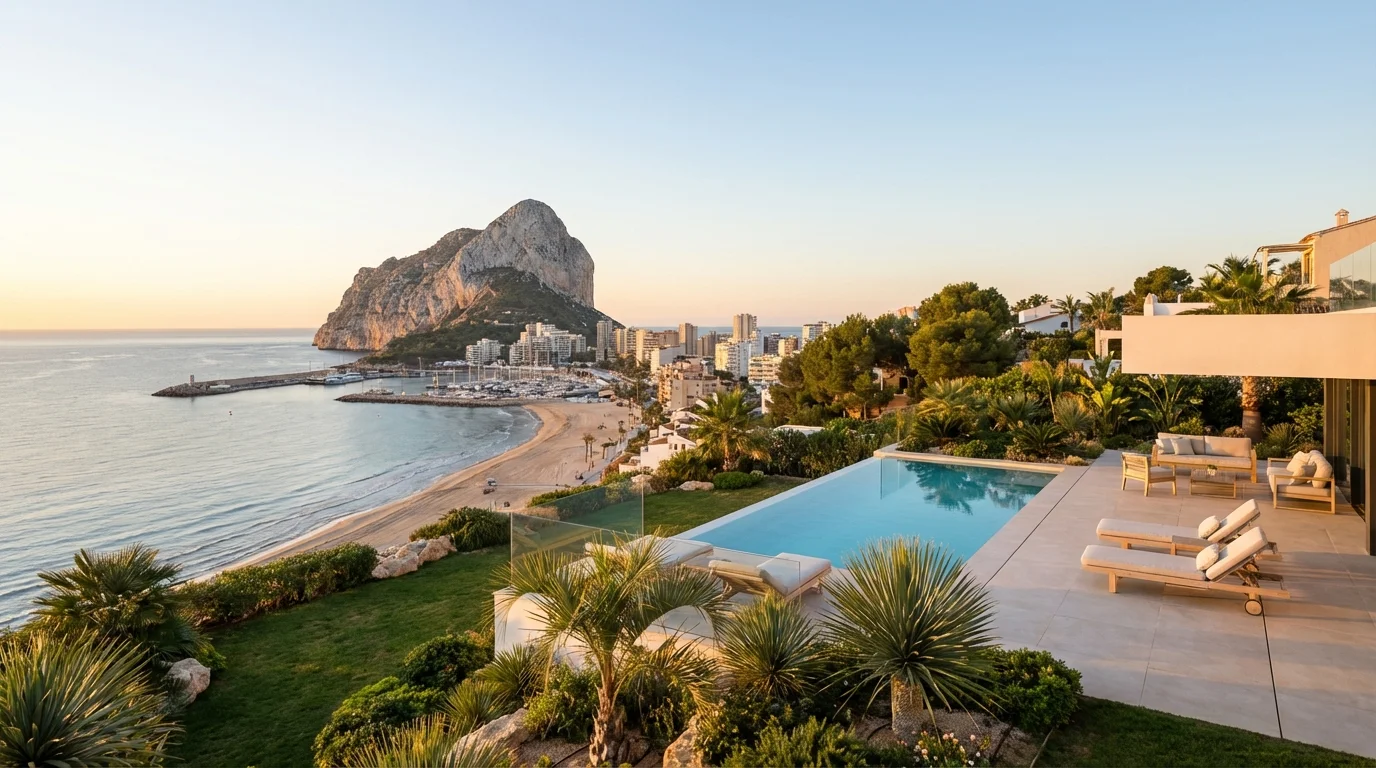
The Peñón de Ifach, Calpe’s dramatic 332-metre limestone rock, defines the town’s geography and microclimates. Properties on the Levante side enjoy morning sun and shelter from westerly winds, while homes in La Fossa get long afternoon light that extends barbecue season well into the evening. The Salt Flats nature reserve to the south gives every terrace a distinctly Mediterranean sense of openness.
With average property prices around €320,000, Calpe attracts a broad range of expats — from retirees converting their terrace into a cooking haven to young families wanting a quality gas BBQ for weekend gatherings.
Answer capsule: Calpe’s 57.6% expat population and accessible property market make it the most internationally diverse outdoor cooking community on the northern Costa Blanca.
Your Calpe Outdoor Kitchen Setup
Calpe’s mix of seafront apartments, La Fossa townhouses, and hillside villas means solutions range from compact balcony setups to full terrace installations.
Along the Levante and La Fossa beachfronts, modern apartments with 10–20m² terraces are the norm. A Kamado Joe Junior or a portable gas BBQ paired with a foldable prep table gives you serious cooking capability without crowding your space.
Move into the hillside urbanisations behind the Peñón — Maryvilla, Cometa, and Oltamar — and detached villas with 30–60m² terraces and private gardens are common. These are where we install complete packages: built-in gas grill, full-size kamado, pizza oven alcove, and Silestone countertops that withstand the coastal salt air.
Costa Blanca Outdoors recommends that Calpe apartment owners consider a kamado grill as their primary investment. The all-in-one versatility — grilling, smoking, roasting, baking — gives you multiple cooking methods in a single footprint, exactly what a compact terrace demands.
Answer capsule: Calpe apartment dwellers benefit from compact kamado grills or portable gas BBQs, while Maryvilla and Cometa villa owners have space for complete outdoor kitchen islands.
Gas, Charcoal, or Wood-Fired? Choosing Right for Calpe
Calpe’s coastal breezes and diverse property types make fuel choice a practical decision — gas for convenience in apartments, charcoal and wood for flavour in villas.
The Levante and Poniente breezes that make Calpe pleasant in summer can affect open-flame cooking on exposed upper-floor terraces. Gas BBQs with windshield burner systems are our top recommendation for seafront apartments — they deliver consistent heat regardless of conditions.
For villa owners in sheltered hillside areas, kamado cooking comes into its own. The thermal mass of ceramic makes a kamado virtually wind-proof once sealed. Calpe’s German and Russian communities have been particularly enthusiastic adopters — perhaps because low-and-slow techniques resonate with their own smoking and curing traditions.
Wood-fired pizza ovens work beautifully in Calpe’s villa gardens. Firewood is sourced through commercial suppliers in Benissa or Callosa d’en Sarrià, and we stock kiln-dried cooking wood for delivery. Costa Blanca Outdoors recommends almond wood for pizza ovens — it burns hot and clean, reaching the 450°C floor temperatures that proper Neapolitan pizza demands.
Answer capsule: Gas BBQs handle Calpe’s coastal breezes best for apartment cooking, while wind-proof kamado grills and wood-fired pizza ovens suit the sheltered hillside villas.
Delivery & Setup in Calpe
Calpe sits centrally on our northern Costa Blanca delivery route, with easy AP-7 motorway access and regular weekly deliveries throughout the town.
The AP-7 exit drops directly into town, and even the hillside urbanisations have wider, better-maintained roads than many neighbouring areas. We can deliver full-size outdoor kitchen components without the access restrictions that sometimes apply elsewhere.
For apartment deliveries along Levante and La Fossa, we coordinate building access and use specialist equipment for upper-floor installations. A 90kg kamado on a fifth-floor terrace is no problem with proper planning.
Customers in nearby Moraira and Altea benefit from our regular Calpe schedule. We also serve Benissa on the same routes. Standard delivery is 5–10 working days, with complete setup including assembly, gas connection testing, and a hands-on walkthrough so you are grilling with confidence from day one.
Outdoor Textiles and Cushion Strategies for Calpe Living
Living on this specific stretch of the Mediterranean coast since 2019 has taught me that the sun is both our greatest draw and our most persistent challenge when it comes to maintaining a home. When you look out from a hillside villa in Maryvilla or a modern apartment overlooking the Salt Flats, the vista is dominated by the blue of the sea and the imposing silhouette of the Peñón de Ifach. However, for the 26,600 residents who call this area home, the reality of outdoor living is found in the tactile details of our terraces. With an international population exceeding 57 percent, we see a fascinating intersection of lifestyle requirements. Our British neighbors often prioritize deep-seated comfort for long afternoons with a book, while German and Russian residents frequently look for architectural precision and textiles that can withstand the high-performance demands of a luxury property.
The typical property profile here often features expansive outdoor spaces, with many hillside villas boasting terraces between 40 and 80 square meters. These are not merely balconies; they are primary living zones where we spend eighty percent of our waking hours during the warmer months. Because the average property price sits around EUR 320,000, there is a justified expectation that the finish of your outdoor furniture should match the quality of your interior. Using indoor cushions or cheap polyester alternatives simply does not work in this environment. The sun exposure on a south-facing terrace near Levante Beach will bleach a standard fabric in less than a single season, leaving your investment looking tired and neglected. High-quality outdoor textiles are the defining element that transforms a hard stone terrace into a functional extension of the home. They provide the necessary ergonomics for the outdoor dining and lounging culture that defines our local lifestyle.
Investing in premium textiles is also a matter of practical temperature management. On a July afternoon, an unadorned rattan chair or a synthetic sun lounger can become uncomfortably hot to the touch. Properly specified cushions, utilizing breathable fabrics, create a thermal barrier that allows you to enjoy your terrace even when the mercury climbs. In my experience helping over 200 families set up these spaces, I have found that the right textile choice often dictates how much a family actually uses their outdoor area. If the cushions are too thin, the space is abandoned after twenty minutes. If they are difficult to clean, they are rarely brought out at all. We focus on textiles that offer a balance of aesthetic appeal and the rugged durability required for our unique coastal environment.
The sheltered microclimate we enjoy here is a significant factor in how we select outdoor materials. Unlike the wind-battered plains further south or the high-humidity zones of the lower valleys, our position benefits from the protection provided by the surrounding mountain ranges, creating a Montgó-style effect that moderates the harsher elements. This doesn't mean we can be complacent, but it does allow us to use a wider variety of textile weights. The moderate coastal breeze helps to circulate air, which is vital for preventing the mildew issues often found in more humid Spanish regions. Because our humidity levels remain relatively lower, high-quality outdoor foams can breathe effectively, ensuring that a stray rain shower or the morning dew doesn't lead to internal rot.
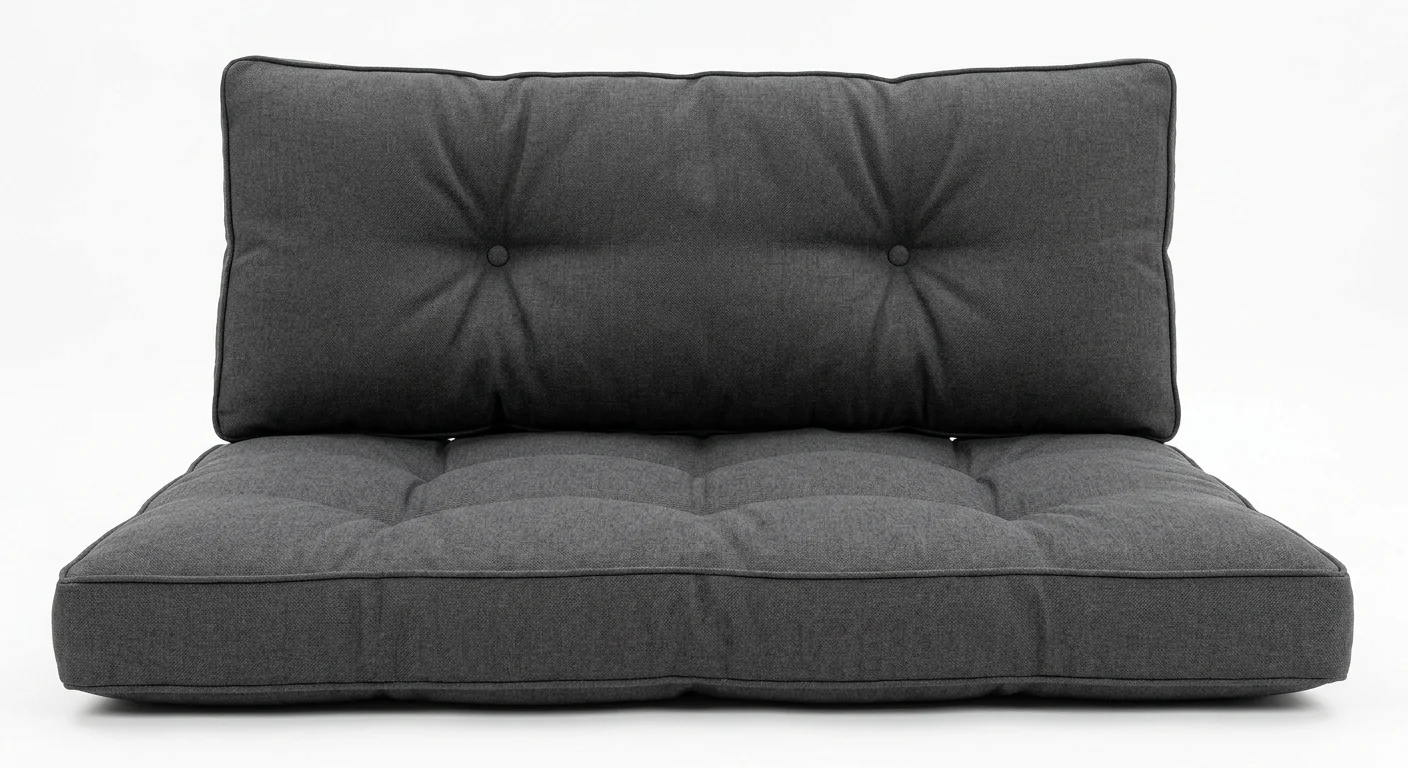
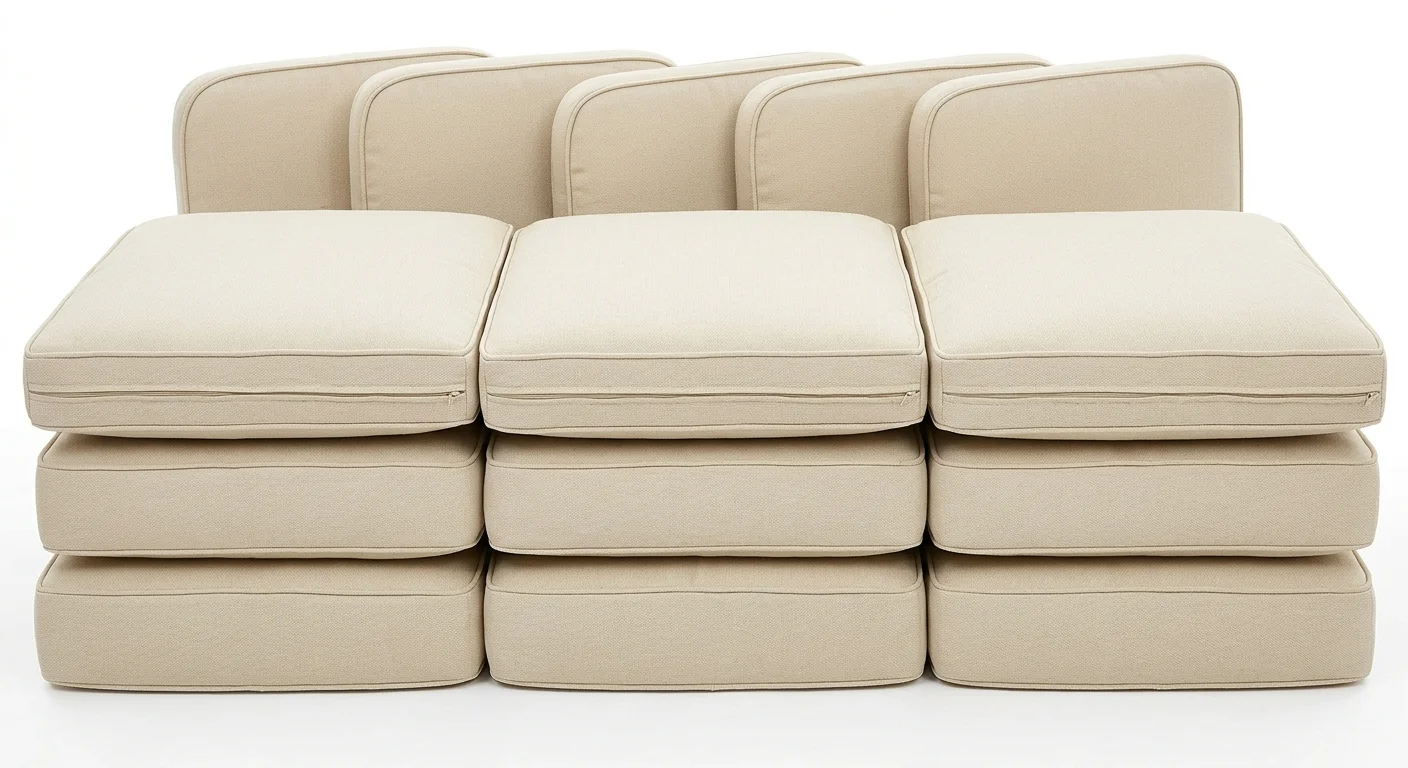
However, the proximity to the sea, particularly for homes near La Fossa, introduces the challenge of salt air. Salt is hygroscopic, meaning it pulls moisture from the air and traps it against the fabric fibers. If you choose low-grade textiles, this salt crystallization acts like sandpaper, grinding down the fibers every time you sit down. I always recommend Solution Dyed Acrylic fabrics for this reason. Unlike piece-dyed fabrics where the color is only on the surface, these fibers are saturated with pigment before the yarn is even spun. This makes them resistant to both UV fading and the corrosive nature of the salt spray. For a standard seat pad, you might expect to pay around EUR 65, while a full replacement set for a large outdoor sofa can range up to EUR 500 depending on the foam density. For a truly high-end experience, I recommend the 15cm thick deep-fill cushions which utilize a reticulated "dry-feel" foam. This material has open pores that allow water to pour straight through rather than soaking in like a sponge, which is essential if your terrace is open to the elements.
Another factor many newcomers overlook is the "comunidad de propietarios" or community rules. Many of the larger apartment complexes and even some urbanizations have strict regulations regarding the visible color palette of outdoor textiles to maintain a cohesive look for the building. Before you commit to a vibrant Mediterranean blue or a deep terracotta, it is wise to check if your community mandates neutral tones like sand, pebble, or light grey. In terms of maintenance, our local dust is quite fine and alkaline, often blowing in from the inland agricultural areas. I advise my clients to look for cushion covers with long, high-quality zippers that wrap around the corners. This makes it significantly easier to remove the covers for a cold machine wash at the end of the summer season. A simple hose-down once a week is usually enough to keep the salt and dust at bay, provided the textiles are genuinely water-resistant.
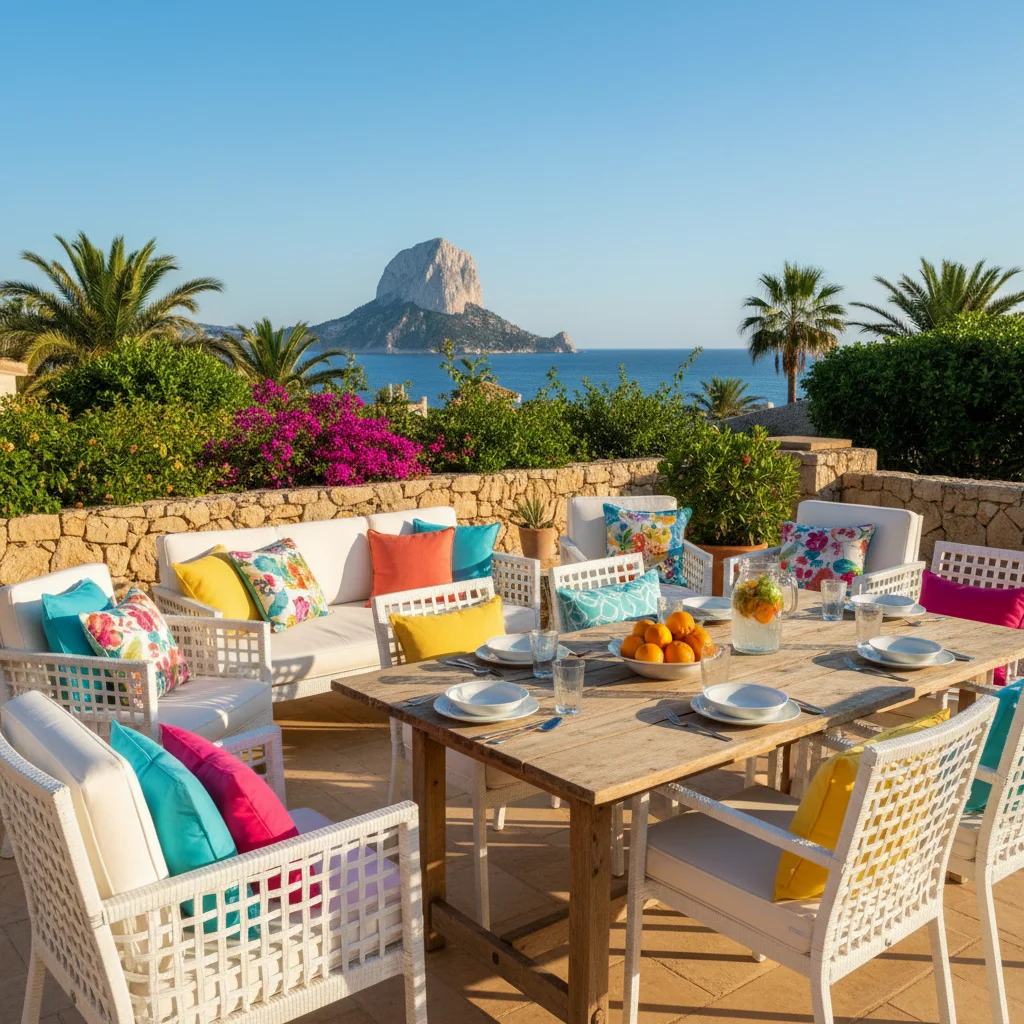
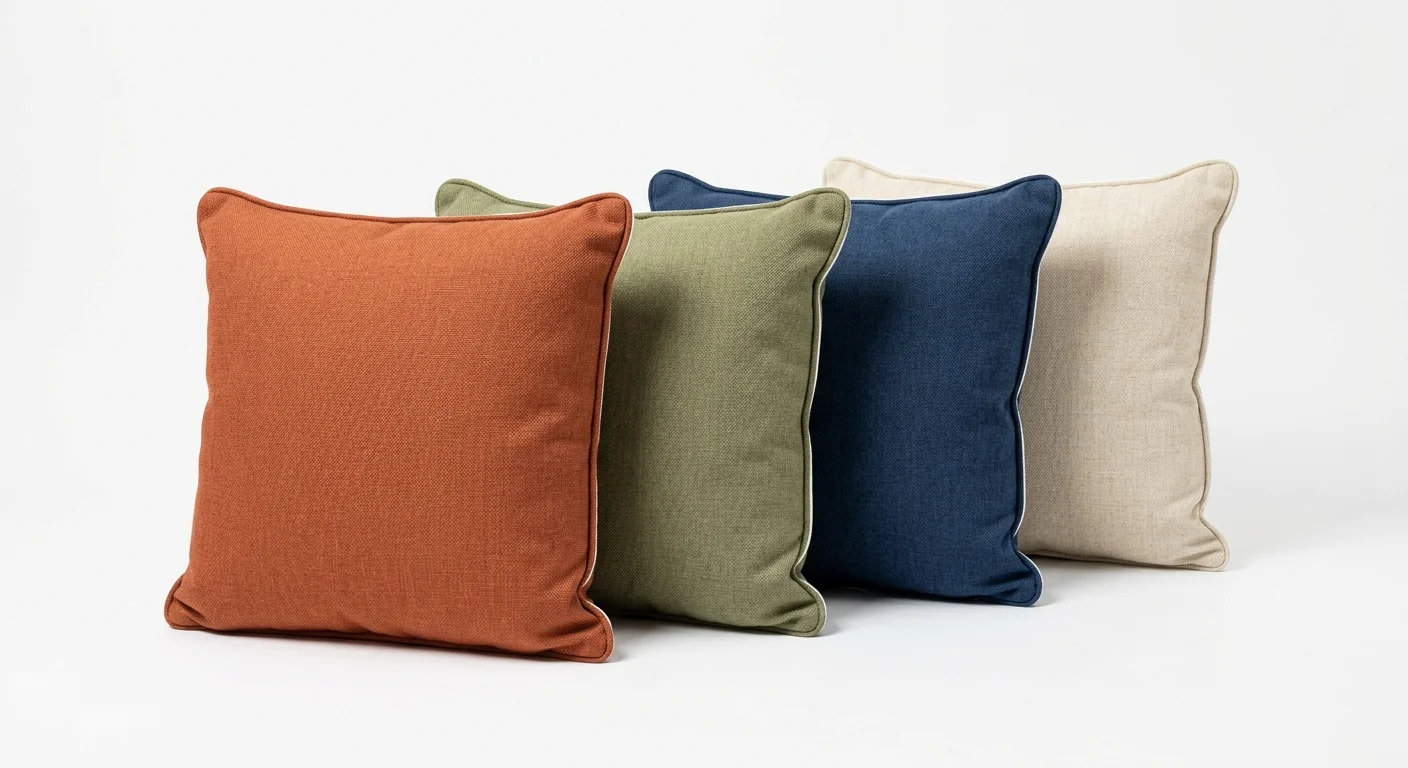
For the luxury villas perched on the cliffs or nestled in the quieter residential streets, the sheer scale of the terraces requires a strategic approach to textile placement. If you have a 60-square-meter terrace, a single dining set will look lost. We recommend creating distinct "zones" using different textile weights and colors. For the primary lounging area, I suggest a modular configuration using heavy-duty rattan-lounge-sets paired with neutral base cushions in the EUR 350 to EUR 450 price bracket. You can then add pops of color and texture with smaller throw pillows, which typically cost between EUR 30 and EUR 55 each. These smaller items are an inexpensive way to refresh the look of your terrace every couple of years without replacing the expensive base foam.
If you are living in one of the high-rise apartments with a more compact balcony, space efficiency is your priority. In these settings, thick, bulky cushions can be a liability as they are difficult to store during the winter. Instead, look for high-performance "slim-line" textiles for your dining-sets. These provide adequate comfort for a long dinner but can be easily stacked or moved inside. For those with private pools, the choice of textile for sun-loungers is critical. Chlorine and salt water are brutal on fabric. We recommend using specialized "nautical grade" vinyls or heavy-duty acrylics that are specifically treated to resist chemical staining. A high-quality sun lounger cushion with a built-in headrest and secure ties will generally cost around EUR 120, but the longevity it offers compared to a cheap foam pad from a big-box retailer is incomparable.
Integrating textiles with your existing furniture is also about understanding the material science of the frames. If you have teak furniture, you need breathable cushions that won't trap moisture against the wood, which can cause black spotting. If you have powder-coated aluminum, you can afford to use heavier, rubber-backed fabrics that offer total waterproofing. I often see people mixing too many different styles, which makes a large terrace feel cluttered. A cohesive textile theme—perhaps using a consistent base color like "Anthracite" or "Stone" across your lounge and dining areas—creates a sense of professional design that significantly increases the perceived value of the property.
Our delivery and logistics operations are specifically designed to handle the unique geography of this region. Navigating a delivery van through the steep, winding roads of Maryvilla or the narrow access points near the Old Town requires local knowledge and the right equipment. We don't just drop boxes at the gate; we understand the logistical hurdles of getting a full set of replacement cushions up to a penthouse apartment or down a long flight of garden stairs. We also regularly serve the neighboring towns of Moraira, Benissa, and Altea, which means we are constantly in the area and familiar with the specific layouts of the major urbanizations. Whether you are in a front-line apartment or a secluded finca inland near Alfaz-del-Pi, we understand the environmental factors at play.
One local insight I always share with my clients involves the "Levante" wind. It can pick up speed very quickly, and light, unanchored cushions will easily end up in your neighbor's pool or, worse, over the balcony. When we specify textiles for this area, we look for heavy-duty ties and non-slip backing materials. We also offer a range of custom-made protective covers. While the textiles themselves are weather-resistant, covering your furniture during the few weeks of "Gota Fría" in the autumn will double the lifespan of the foam. These covers are an essential investment for anyone who isn't a full-time resident and needs peace of mind that their terrace is protected while they are away.
If you are currently looking at your outdoor space and feeling it lacks the comfort or style you expected when you moved to the Costa Blanca, I invite you to get in touch. We provide a free consultation service where we can discuss your specific terrace dimensions, the orientation of your home, and which textile grades will offer you the best return on investment. Having helped over 200 families across the region, I can usually tell you exactly what will work for your specific urbanization just by hearing the street name. My goal is to ensure that your outdoor space is as comfortable and inviting as your living room, built with materials that are engineered to survive our beautiful but demanding Mediterranean climate.
 JW'"
/>
JW'"
/>