Why Expats in Altea Love Outdoor Cooking
Altea’s artistic Old Town, Scandinavian heritage, and year-round mild climate create a distinctly creative approach to outdoor cooking that blends Mediterranean tradition with northern European design sensibility.
While Calpe draws a broad international mix and Benidorm pulls the holiday crowd, Altea appeals to people who value aesthetics and a slower pace. The 35% expat population — with a distinctive Scandinavian presence alongside British and Dutch communities — gives outdoor cooking here a unique character. Setups tend to be thoughtfully designed and built to complement the whitewashed beauty Altea is famous for.
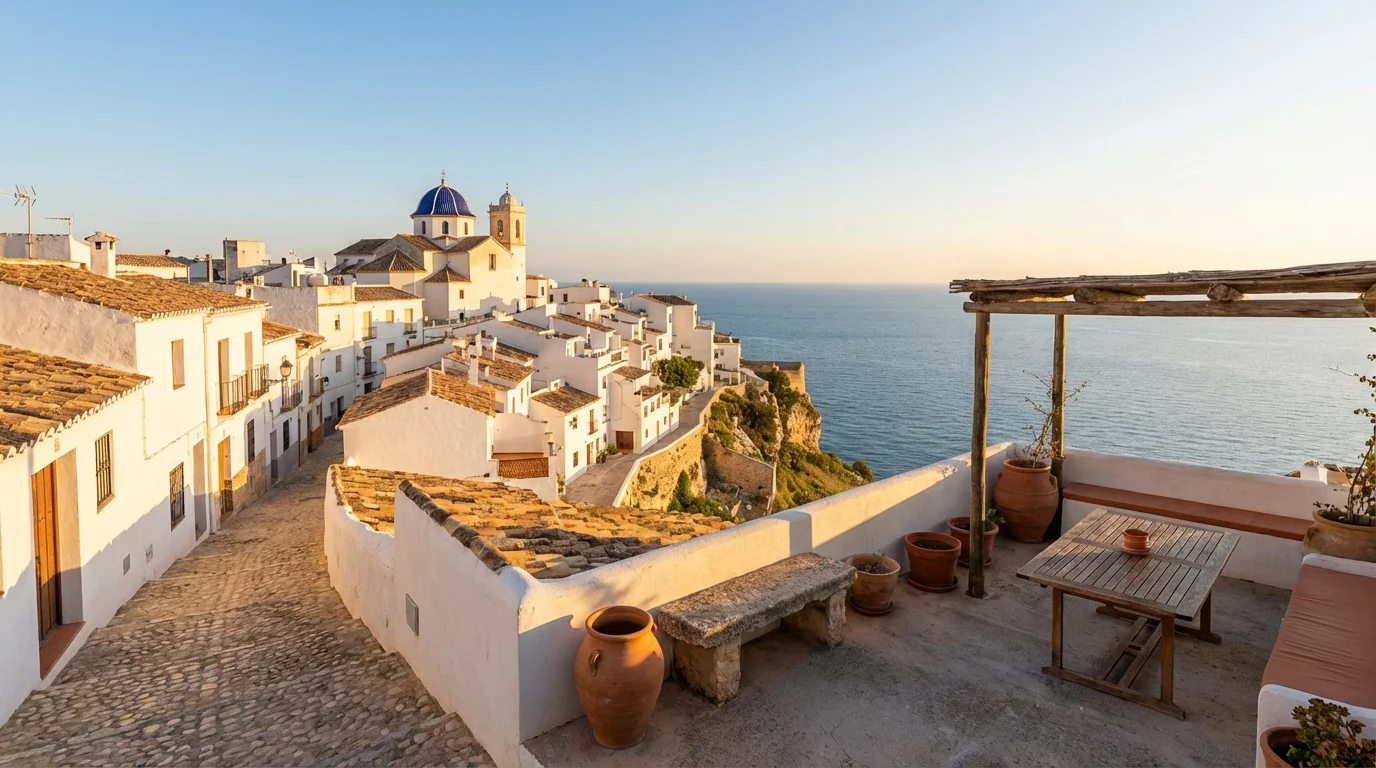
The Old Town, crowned by the iconic blue-domed church of Nuestra Señora del Consuelo, cascades down the hillside in cobbled streets and bougainvillea-draped terraces. Behind it rises the Sierra de Bernia, sheltering Altea from northerly weather — January averages of 12°C make outdoor cooking viable twelve months a year.
Scandinavian residents have been settling here since the 1960s, and their design-forward approach shows in how they build outdoor spaces — clean lines, quality materials, functional layouts. This has shaped Altea into the most design-conscious outdoor cooking market on the Costa Blanca.
Answer capsule: Altea’s artistic community, Scandinavian design influence, and Sierra de Bernia microclimate create demand for aesthetically refined outdoor kitchens, kamado grills, and pizza ovens.
Your Altea Outdoor Kitchen Setup
From Old Town rooftop terraces with church-dome views to modern villas with minimalist outdoor kitchens, Altea demands equipment that looks as good as it performs.
The Old Town offers characterful townhouses where rooftop terraces of 8–15m² are the primary cooking space. The settings are extraordinary — cooking with the blue dome above and the Mediterranean below — but the key is choosing equipment that complements the historic surroundings. A premium compact kamado or a sleek gas BBQ fits perfectly.
In Altea Hills, the Sierra de Bernia foothills, and the Mascarat area, modern villas feature purpose-designed outdoor living spaces. Stainless steel, matte black finishes, and minimalist lines dominate. These are the properties where we deliver our most architecturally integrated outdoor kitchen builds.
Altea la Vella, the small inland village just behind Altea, deserves special mention. Properties are larger, more affordable, and set in mature gardens. Costa Blanca Outdoors recommends these homeowners create dedicated outdoor kitchen zones — a cooking area among the olive and citrus trees, with a masonry pizza oven as the centrepiece, is one of the most rewarding setups we install anywhere on the Costa Blanca.
Answer capsule: Altea Old Town terraces suit compact, design-forward equipment, while Altea Hills villas and Altea la Vella gardens accommodate full architecturally integrated outdoor kitchen builds.
Gas, Charcoal, or Wood-Fired? Choosing Right for Altea
Altea’s design-conscious community chooses equipment that combines visual appeal with cooking performance — form and function in equal measure.
Gas BBQs remain the most popular choice, but Altea customers consistently gravitate toward premium, design-led models — stainless steel units treated as furniture rather than hardware. Built-in gas systems with flush-mount installation are a frequent request, reflecting the emphasis on visual harmony with outdoor spaces.
Kamado grills have found an enthusiastic audience among Scandinavian residents. The hygge-meets-Mediterranean lifestyle — slow cooking, natural materials, gathering around the fire — aligns perfectly with kamado philosophy. We see strong demand for matte black and earth-toned kamados that blend with Altea’s natural palette.
Wood-fired pizza ovens are where Altea’s creative community expresses itself. Several customers have commissioned custom tile surrounds or hand-painted ceramic facades for their ovens — turning a cooking tool into outdoor art. Firewood suppliers in Callosa d’en Sarrià (10 minutes inland) and Alfaz del Pi offer almond and olive wood year-round. Costa Blanca Outdoors recommends the Clementi or Alfa Forni ranges for Altea — their contemporary Italian design language complements the town’s aesthetic beautifully.
Answer capsule: Altea’s design-focused expats prefer premium-finish gas BBQs and matte-toned kamado grills, with wood-fired pizza ovens often becoming statement terrace centrepieces.
Delivery & Setup in Altea
Altea’s central position between Calpe and Benidorm gives it excellent road access, with our team experienced in navigating Old Town streets and Altea Hills private communities.
The modern areas — marina district, beachfront, newer residential zones — are fully accessible for large vehicles. Altea Hills has private roads with security gates, and we coordinate access in advance.
The Old Town presents the biggest logistical challenge in our northern zone. Cobbled streets, steps, and narrow doorways mean advance planning is essential. We survey the route beforehand and carry specialist equipment for stairs and tight corners.
Neighbouring Calpe and Benidorm are on our standard Altea routes, along with Alfaz del Pi. Delivery is 5–10 working days for stocked items, with custom outdoor kitchen projects on a 3–5 week timeline including design consultation and professional installation.
Living Under the Altea Sun: A Guide to Awnings and Toldos
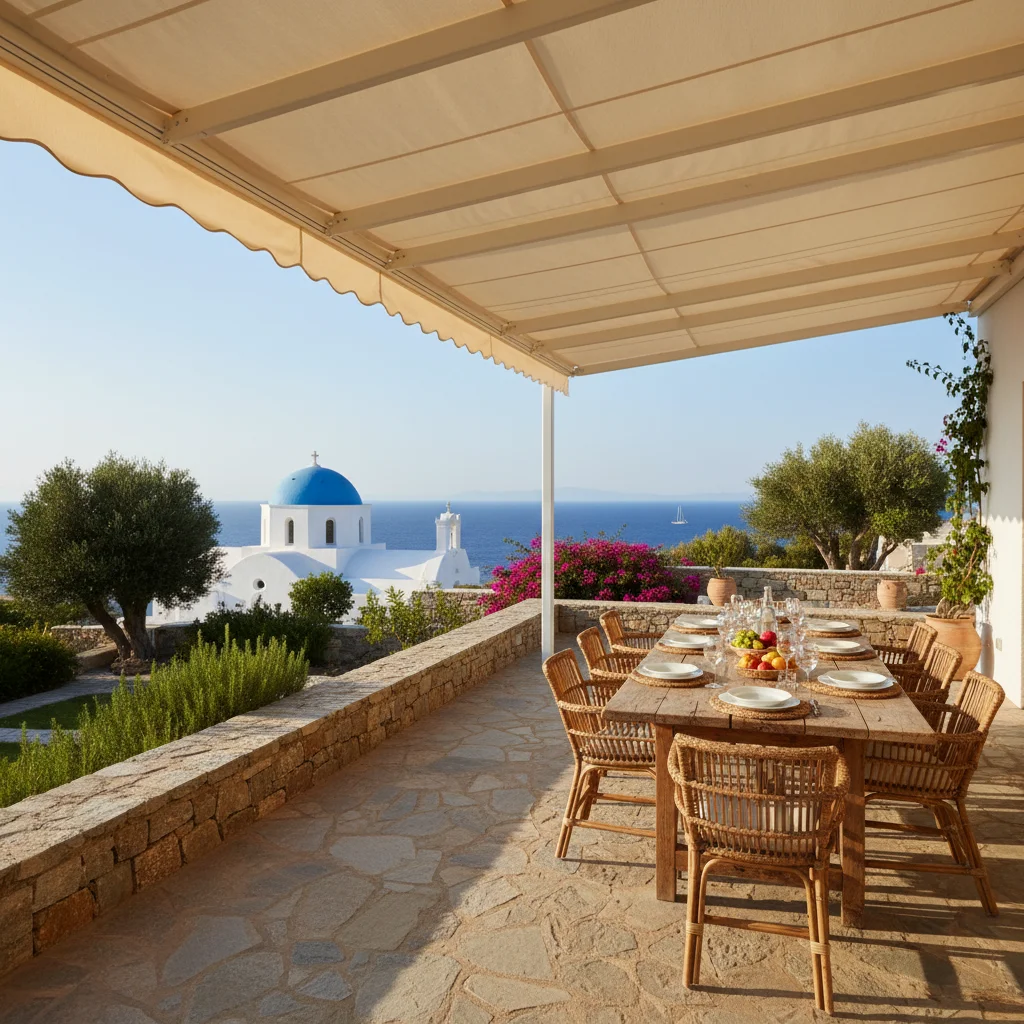
The white-washed walls of Altea create a high-reflectivity environment that defines the aesthetic of our town but also presents a unique challenge for those of us trying to enjoy our outdoor spaces. When you transition from the narrow, shaded cobblestone streets of the Old Town near the Blue Dome Church out toward the expansive villas of Altea la Vella, the intensity of the Mediterranean sun becomes the primary factor governing your daily routine. For the 35% of our residents who have moved here from the UK, the Netherlands, or Scandinavia, the initial novelty of 300 days of sunshine quickly gives way to the practical reality that an exposed 60 m² terrace is unusable between 11:00 and 18:00 without professional shading. I have spent the last several years working on properties ranging from traditional townhouses to ultra-modern builds on the hillsides, and I have seen how a well-placed toldo transforms a scorching slab of stone into a functional extension of the home.
Most properties here, particularly the luxury villas perched on the slopes of the Sierra de Bernia, are designed with large terraces that often exceed 40 m² and frequently reach 80 m². These spaces are the heart of the home, used for everything from morning coffee to large-scale evening entertaining. The British and Dutch communities in particular have brought a culture of outdoor cooking and dining that requires more than just a simple parasol. They require integrated shade solutions that can withstand the local environment while complementing the high property values, which average around EUR 330,000 but often climb much higher in the prime hillside sectors. An awning in this context is not just a piece of fabric; it is a structural necessity that protects your interior furniture from UV fading and significantly reduces your cooling costs by preventing solar gain through large glass patio doors.
Choosing the right awning system requires an understanding of how we live here. Unlike the more humid southern zones of the Costa Blanca, we enjoy a slightly more moderate coastal breeze and a drier heat, thanks in part to the protection offered by the surrounding mountain ranges. This microclimate allows for a wider variety of fabric choices, but it also means we must account for the thermal drafts that rise up from the coast toward the mountains in the late afternoon. A standard retractable toldo must be robust enough to handle these shifts in air pressure without flapping or straining the mounting brackets. Whether you are overlooking the marina or tucked away in a quiet street near the church, the goal is always the same: creating a temperate zone that allows the sea breeze to circulate while blocking the direct overhead radiation.
Technical considerations for Altea residents start with the Sierra de Bernia. This mountain range provides a magnificent backdrop, but it also dictates the wind patterns. We enjoy a sheltered microclimate that is often several degrees different from nearby Benidorm or Calpe, but this protection can be deceptive. The moderate coastal breeze is consistent, but it can catch a large 6-meter wide awning like a sail if it is not properly specified. This is why I almost exclusively recommend motorized systems with integrated Somfy wind sensors for villas on the hillside. A wind sensor will automatically retract the toldo if the vibrations exceed a safe threshold, which is essential when a sudden gust comes off the bay. For a standard 4.5-meter wide motorized cassette awning, you should expect to invest approximately EUR 2,400 including professional installation. This price reflects the heavy-duty aluminum arms and the high-grade acrylic fabrics necessary to survive the 3,000 hours of sunlight we receive annually.
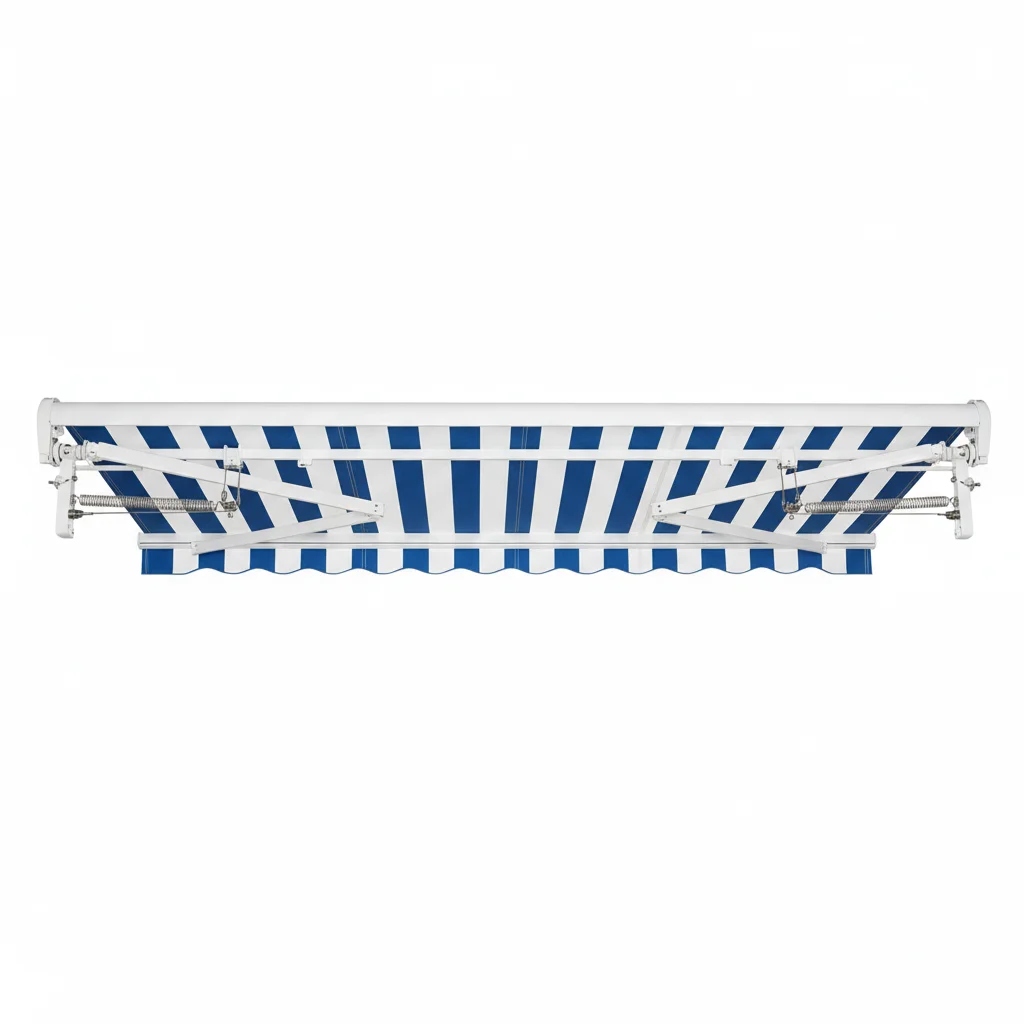
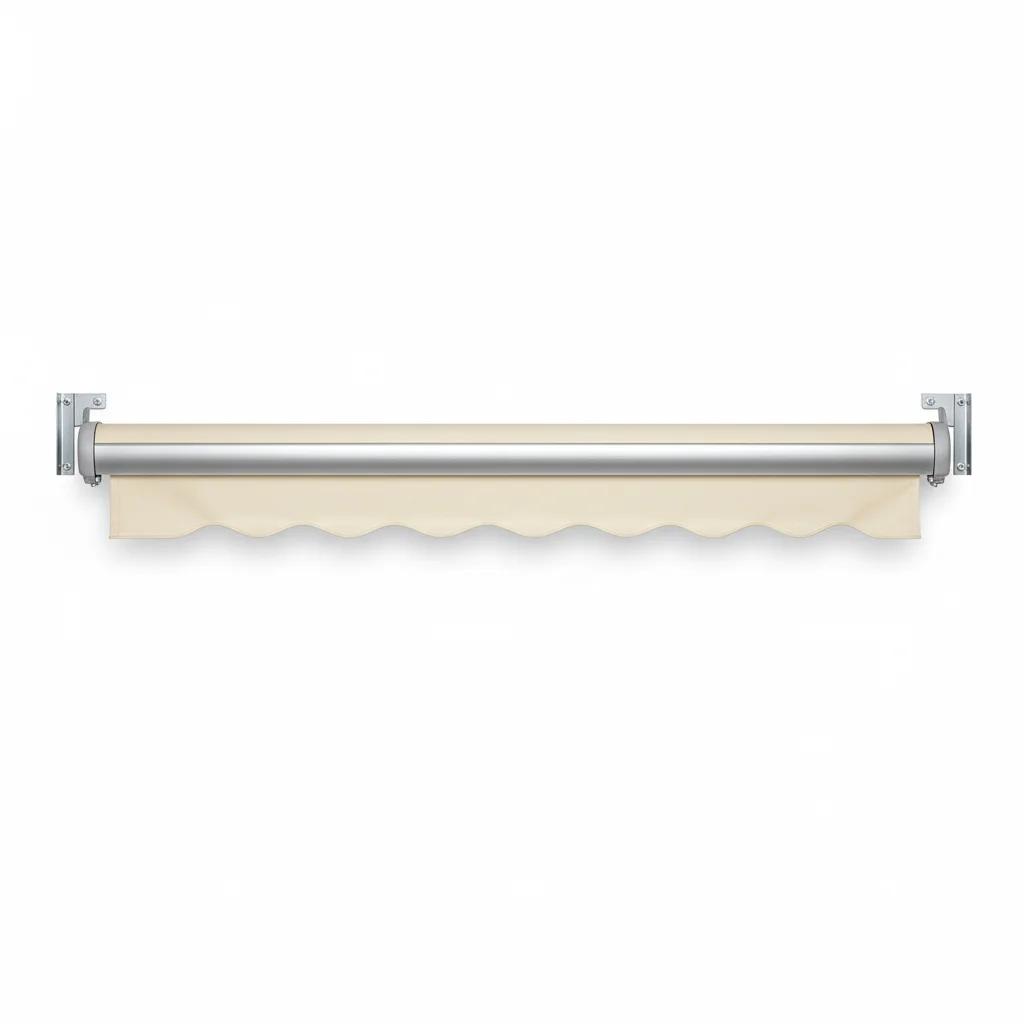
The salt air is another factor that many newcomers overlook. While we are not as exposed as homes directly on the sand in Denia, the Altea coastline still carries enough salinity to corrode low-grade hardware within two seasons. I ensure that all installations use stainless steel fixings and powder-coated aluminum extrusions. If your property is within 500 meters of the Mediterranean, the "Full Cassette" model is the only logical choice. This design completely encloses the fabric and the mechanical arms when the awning is retracted, protecting them from the corrosive salt mist and the fine dust that occasionally blows over from North Africa. Maintenance in this environment is relatively simple but non-negotiable; rinsing the hardware with fresh water twice a year can extend the life of a EUR 3,000 investment by a decade.
Community rules, or the "Comunidad de Propietarios," are particularly strict in the Altea area, especially in the Old Town and established urbanizations. These regulations often dictate the exact RAL color code for the aluminum frame and the specific fabric pattern allowed. In many cases, you will find that a specific shade of "Beige" or a "Grey-White" stripe is mandated to maintain the visual harmony of the building. Before we even pull a tape measure out, I always advise checking your community statutes. We have worked with dozens of administrators from Altea to La Nucia, and we know that ignoring these rules can lead to an expensive order to remove the installation. For those in independent villas, there is more freedom, but even then, matching the fabric to the stone of the Sierra de Bernia or the white of the house walls is the standard approach for a high-end finish.
When recommending a setup for the large villas common in our area, I often suggest a combination of systems. For a 70 m² terrace with a private pool, a single awning is rarely enough. A common configuration involves a primary motorized toldo extending 3.5 meters from the house wall to cover the main dining area. This is often a heavy-duty model with reinforced arms, costing between EUR 2,800 and EUR 4,500 depending on the total width. To provide more flexible shade near the pool or lounging area, we often integrate shade sails or large-format parasols. This layered approach allows you to follow the sun as it moves from the mountains toward the sea throughout the day. If your terrace is particularly exposed to the afternoon sun, adding a "volante regulable" or a drop-down front valance to your awning can block the low-angle glare that usually makes outdoor dining uncomfortable after 17:00.
For residents in apartments or townhouses, the approach is different. Space is more constrained, and the focus shifts to privacy and vertical shade. A "toldo de punto recto" or a straight-drop awning is often the best solution here. These are particularly effective for balconies because they can be angled to allow airflow while providing a visual barrier from the street. These manual systems are more budget-friendly, typically ranging from EUR 800 to EUR 1,500, and they are incredibly durable due to their simple mechanical nature. If you are in a modern apartment complex near the marina, you might also consider a "toldo vertical," which functions like a heavy-duty outdoor blind. This not only provides shade but also acts as a windbreak, allowing you to use your balcony even when the coastal breeze picks up.
The integration of awnings with other products like bioclimatic pergolas is a growing trend I see among my Dutch and Scandinavian clients. Sometimes, an awning serves as the secondary shade for a bedroom balcony, while a bioclimatic pergola becomes the primary structure for the outdoor kitchen. By using the same fabric brand—typically Dickson or Recasens—across all these products, we create a cohesive look for the entire property. In Altea, where property aesthetics are so highly valued, these details matter. A mismatched shade sail and awning can detract from the curb appeal of a EUR 500,000 home. I always look at the property as a whole, considering how the shade from a shade sail over the driveway interacts with the retractable toldo over the main terrace.
Logistics in Altea require a local's touch. If you live in the Old Town, you know that the streets are not designed for large delivery vans. We have navigated the tight corners near the church many times, and we understand that installation often requires specialized lifting equipment or smaller transit vehicles to get the components to the site. This is not a town where a "one size fits all" delivery model works. Whether your home is in the steep hills of Altea la Vella or the winding roads leading up from the N-332, we plan the transport as carefully as the installation. We also regularly serve the surrounding areas, including Calpe, Benidorm, Alfaz del Pi, and Benissa, meaning we are constantly moving through these neighborhoods and understand the specific building styles of each.
When we talk about installation, we are talking about structural integrity. Many Altea villas use "termoarcilla" or hollow brick construction, which requires specific chemical anchors to ensure the awning stays attached to the wall. I have seen too many DIY or "handyman" jobs where the wrong fixings were used, leading to the awning pulling away from the facade under the weight of the fabric and the tension of the arms. We use high-performance resins and long-reach bolts to ensure that once a toldo is up, it stays up. This expertise is why we have been able to help over 200 families across the region secure their outdoor spaces. We understand the local materials, the local weather, and the local expectations for quality.
If you are currently looking at your terrace and wondering how to reclaim it from the heat, the first step is an honest assessment of how the sun moves across your specific plot. A terrace in the morning shadow of the Sierra de Bernia has very different needs than one facing the open bay toward Benidorm. I offer a free consultation where I visit your property to measure the space and discuss these factors in person. There is no substitute for standing on the terrace and seeing the angles for myself. We can look at fabric samples in the actual light of your home—which is vital, as colors change significantly between the shade and the full Spanish sun. Whether you need a simple manual toldo for a guest balcony or a fully automated, multi-awning system for a luxury villa, we have the local experience to get it right the first time. Reach out today, and let’s make your outdoor space as comfortable as your indoor one.
 JW'"
/>
JW'"
/>