Why Expats in Calpe Love Outdoor Cooking
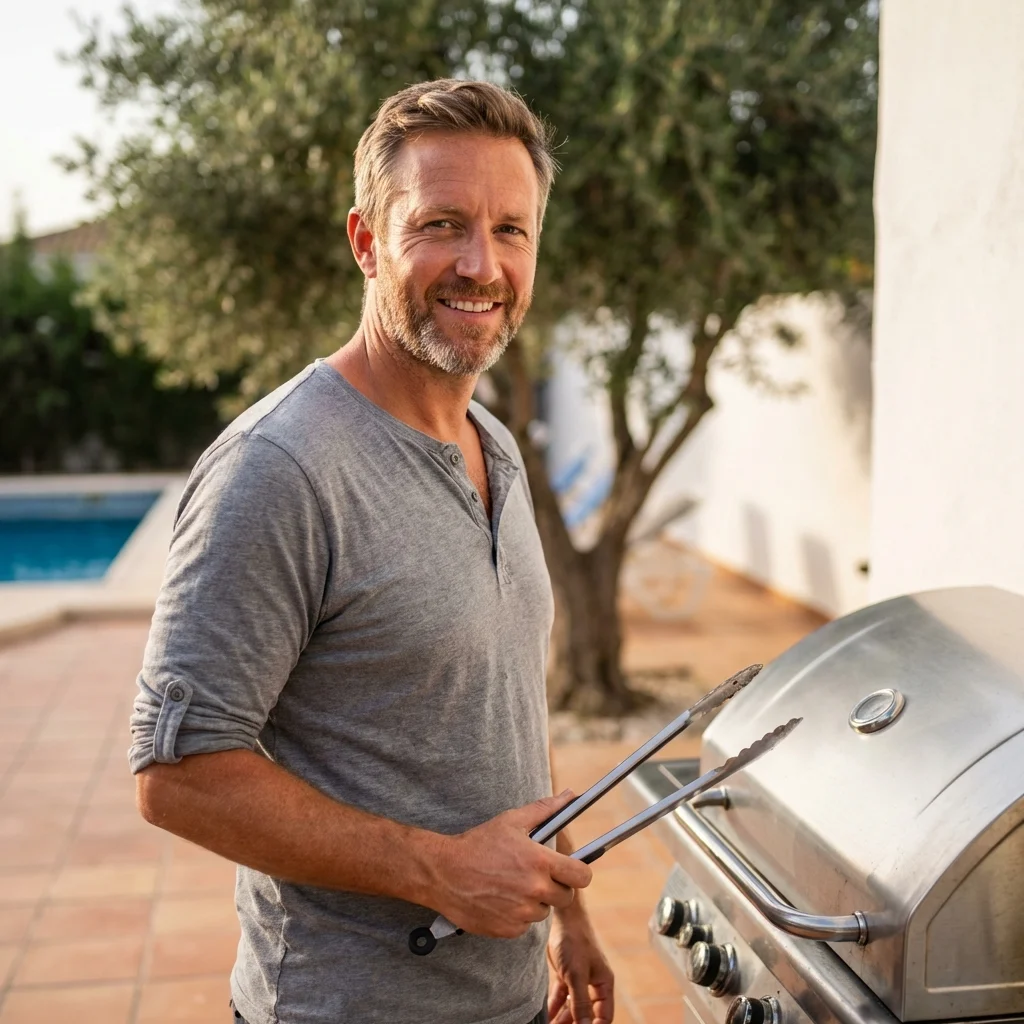
Calpe’s 57.6% international population — the highest expat ratio of any major Costa Blanca town — has created a buzzing, multicultural outdoor cooking scene beneath the iconic Peñón de Ifach.
With nearly 15,000 foreign residents out of a population of 26,600, Calpe is genuinely multicultural. British, German, and Russian communities each bring their own grilling traditions — from Sunday roasts to Bratwurst to shashlik — and the result is a town where outdoor cooking is woven into the social fabric.
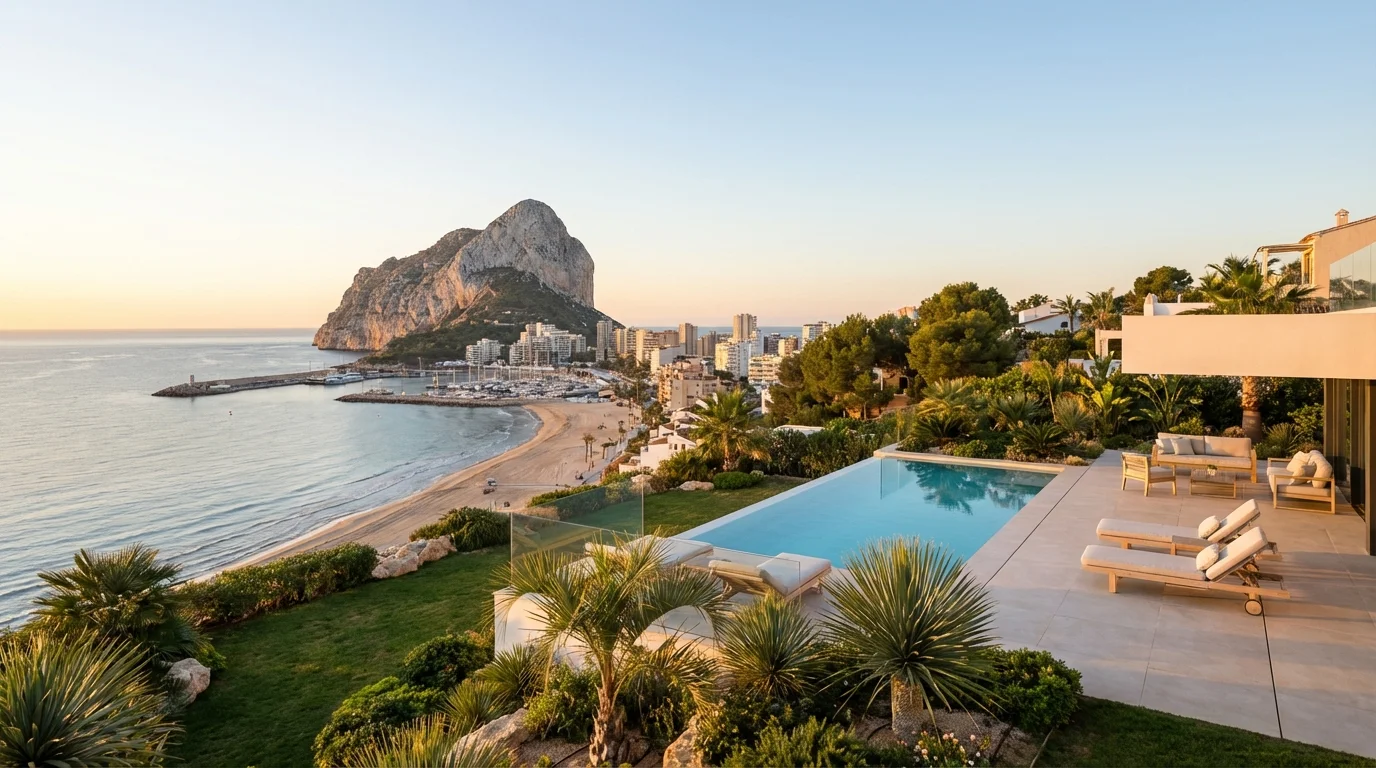
The Peñón de Ifach, Calpe’s dramatic 332-metre limestone rock, defines the town’s geography and microclimates. Properties on the Levante side enjoy morning sun and shelter from westerly winds, while homes in La Fossa get long afternoon light that extends barbecue season well into the evening. The Salt Flats nature reserve to the south gives every terrace a distinctly Mediterranean sense of openness.
With average property prices around €320,000, Calpe attracts a broad range of expats — from retirees converting their terrace into a cooking haven to young families wanting a quality gas BBQ for weekend gatherings.
Answer capsule: Calpe’s 57.6% expat population and accessible property market make it the most internationally diverse outdoor cooking community on the northern Costa Blanca.
Your Calpe Outdoor Kitchen Setup
Calpe’s mix of seafront apartments, La Fossa townhouses, and hillside villas means solutions range from compact balcony setups to full terrace installations.
Along the Levante and La Fossa beachfronts, modern apartments with 10–20m² terraces are the norm. A Kamado Joe Junior or a portable gas BBQ paired with a foldable prep table gives you serious cooking capability without crowding your space.
Move into the hillside urbanisations behind the Peñón — Maryvilla, Cometa, and Oltamar — and detached villas with 30–60m² terraces and private gardens are common. These are where we install complete packages: built-in gas grill, full-size kamado, pizza oven alcove, and Silestone countertops that withstand the coastal salt air.
Costa Blanca Outdoors recommends that Calpe apartment owners consider a kamado grill as their primary investment. The all-in-one versatility — grilling, smoking, roasting, baking — gives you multiple cooking methods in a single footprint, exactly what a compact terrace demands.
Answer capsule: Calpe apartment dwellers benefit from compact kamado grills or portable gas BBQs, while Maryvilla and Cometa villa owners have space for complete outdoor kitchen islands.
Gas, Charcoal, or Wood-Fired? Choosing Right for Calpe
Calpe’s coastal breezes and diverse property types make fuel choice a practical decision — gas for convenience in apartments, charcoal and wood for flavour in villas.
The Levante and Poniente breezes that make Calpe pleasant in summer can affect open-flame cooking on exposed upper-floor terraces. Gas BBQs with windshield burner systems are our top recommendation for seafront apartments — they deliver consistent heat regardless of conditions.
For villa owners in sheltered hillside areas, kamado cooking comes into its own. The thermal mass of ceramic makes a kamado virtually wind-proof once sealed. Calpe’s German and Russian communities have been particularly enthusiastic adopters — perhaps because low-and-slow techniques resonate with their own smoking and curing traditions.
Wood-fired pizza ovens work beautifully in Calpe’s villa gardens. Firewood is sourced through commercial suppliers in Benissa or Callosa d’en Sarrià, and we stock kiln-dried cooking wood for delivery. Costa Blanca Outdoors recommends almond wood for pizza ovens — it burns hot and clean, reaching the 450°C floor temperatures that proper Neapolitan pizza demands.
Answer capsule: Gas BBQs handle Calpe’s coastal breezes best for apartment cooking, while wind-proof kamado grills and wood-fired pizza ovens suit the sheltered hillside villas.
Delivery & Setup in Calpe
Calpe sits centrally on our northern Costa Blanca delivery route, with easy AP-7 motorway access and regular weekly deliveries throughout the town.
The AP-7 exit drops directly into town, and even the hillside urbanisations have wider, better-maintained roads than many neighbouring areas. We can deliver full-size outdoor kitchen components without the access restrictions that sometimes apply elsewhere.
For apartment deliveries along Levante and La Fossa, we coordinate building access and use specialist equipment for upper-floor installations. A 90kg kamado on a fifth-floor terrace is no problem with proper planning.
Customers in nearby Moraira and Altea benefit from our regular Calpe schedule. We also serve Benissa on the same routes. Standard delivery is 5–10 working days, with complete setup including assembly, gas connection testing, and a hands-on walkthrough so you are grilling with confidence from day one.
Premium Artificial Grass Installation in Calpe: The Complete Coastal Guide
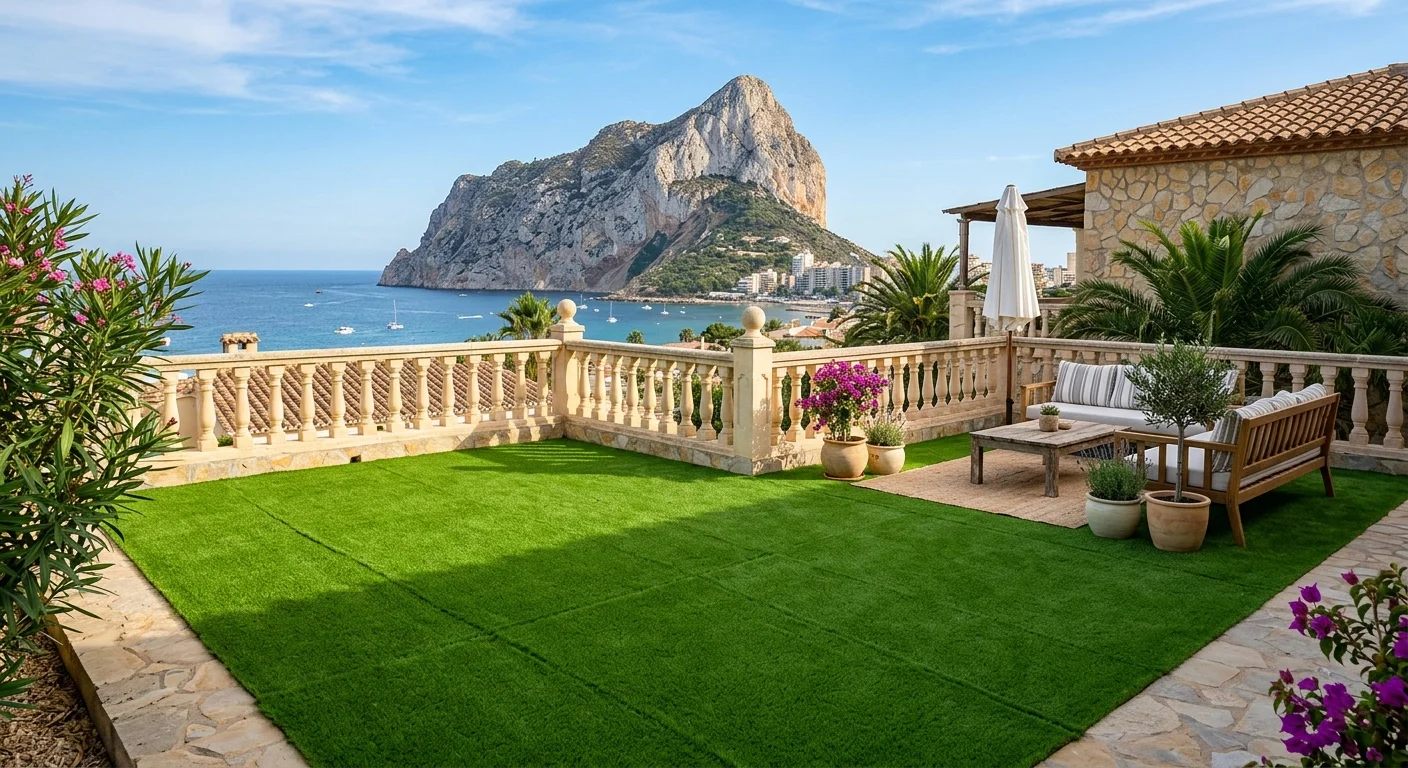
Calpe is one of the most geographically striking and culturally diverse municipalities in the Marina Alta comarca of Alicante. Dominated by the towering Peñón de Ifach, which rises 332 meters directly from the Mediterranean Sea, and bordered by the rugged cliffs of the Sierra de Toix and Morro de Toix, this coastal town presents a unique set of environmental conditions.
According to the 2025 INE padrón municipal, Calpe has a registered population of 27,616. It is a highly international community, with foreign residents making up 49.1 percent of the population (representing 11,852 people in the 2022 padrón municipal), predominantly consisting of British and German expats. For these homeowners, creating a low-maintenance, year-round green oasis is a top priority. Whether you own a modern villa overlooking the sea or a traditional property nestled in the hills, professional artificial grass (césped artificial) provides the perfect solution to the region's intense sun, water scarcity, and challenging soils.
However, installing artificial grass in Calpe is not a simple DIY project. The combination of high sea-salt air (salitre), powerful Levante winds, and the occasional torrential autumn rains (gota fría) requires specialized materials and expert installation techniques. This guide explores the technical, environmental, and practical aspects of installing premium artificial grass in Calpe.
The Calpe Climate Challenge: Salitre, Levante Winds, and Gota Fría
Landscaping on the Costa Blanca requires a deep understanding of local microclimates. Calpe’s coastal geography subjects outdoor installations to three primary environmental stressors:
High Salitre (Sea-Salt) Exposure
Properties located close to the coast experience high levels of airborne salt. Salt is highly corrosive to sub-standard materials, causing rapid degradation of low-quality turf backings and fading of inferior turf fibres.
- The Solution: We install premium artificial grass manufactured with highly resilient, UV-stable polyethylene and polypropylene fibres. The backing materials must be highly resistant to chemical breakdown. Polyurethane (PU) backing is highly recommended over traditional latex, as PU does not absorb moisture, expand, or degrade when exposed to salt-laden air.
The Levante Wind and Microclimates
Strong winds coming off the Mediterranean, particularly around exposed headlands like the Morro de Toix and elevated urbanizaciones, can lift poorly secured artificial turf.
- The Solution: Proper anchoring and infill are critical. We use heavy-duty, non-corrosive galvanized ground pins spaced closely along the perimeter. Additionally, a dense infill of washed, rounded silica sand is brushed into the turf. This sand adds weight (typically 8 to 10 kg per square metre), securing the backing to the ground and keeping the individual grass fibres standing upright against strong gusts.
- Integrated Outdoor Structures: Many Calpe homeowners combine their new lawns with premium outdoor living structures like bioclimatic pergolas. If you are installing a pergola alongside your turf, it must be engineered to withstand these coastal winds. We recommend structures certified up to 175 km/h Clase 6 UNE-EN 13659, featuring integrated wind sensors that automatically close or retract the system when wind speeds rise.
The Gota Fría (Torrential Autumn Rains)
While Calpe enjoys over 300 days of sunshine a year, the autumn months can bring the gota fría (cold drop)—sudden, torrential downpours that drop massive volumes of water in a few hours.
- The Solution: Superior drainage is non-negotiable. Cheap turf with poor backing will trap water, leading to pooling, mould, and sub-base erosion. Our professional-grade artificial grass features a highly permeable backing designed to handle a drainage capacity of at least 60 l/m2 (60 litres per square metre per minute). Combined with a meticulously engineered aggregate sub-base, this ensures that even the heaviest autumn storms drain away rapidly, leaving your lawn dry and usable within minutes of the rain stopping.
Zoning and Urbanizaciones: Tailoring Installations to Calpe's Neighborhoods
Calpe’s diverse topography means that installation requirements vary significantly depending on where your property is located.
Maryvilla and the Sierra de Toix
Perched on the steep slopes of the Sierra de Toix, Maryvilla offers breathtaking views but presents significant installation challenges. Properties here are often terraced, featuring steep slopes, rocky ground, and high exposure to both wind and salt air.
- Installation Strategy: Terraced installations require robust retaining borders (using timber sleepers or concrete curbing) to prevent the sub-base from shifting over time. Extra anchoring is required on sloped areas to counteract gravity and wind shear.
Gran Sol and Empedrola
Located further inland, these established urbanizaciones feature larger, flatter villa plots. While they are slightly more sheltered from direct sea spray, they are highly exposed to intense, direct sunlight throughout the day.
- Installation Strategy: For these expansive family gardens, we recommend a medium-to-high pile height (32-47 mm) with advanced cooling technology. Turf fibres with a C-shape or W-shape profile are excellent here, as they deflect sunlight and retain less heat than flat fibres, keeping the lawn comfortable for children and pets.
La Canuta, Carrió Park, and Ortembach
These residential zones feature a mix of flat and gently sloping plots with established gardens. The soil in these areas can range from hard, compacted clay to rocky limestone.
- Installation Strategy: Proper excavation is key. Clay soils retain water, which can cause pooling beneath the turf. We excavate the existing soil to a depth of 5 to 8 centimetres and replace it with a highly permeable, compacted sub-base of crushed granite or limestone gravel, topped with a fine layer of crushed stone to create a perfectly flat, free-draining surface.
Environmental Regulations and the Ajuntament de Calp
Calpe is home to highly sensitive ecological zones. The iconic Peñón de Ifach was declared a Parque Natural by the Generalitat Valenciana in 1987. This 332-meter limestone rock is a strictly protected sanctuary for endemic flora and nesting seabirds. Additionally, the Salinas de Calpe salt marshes, which have Roman-era origins, form a protected wetland located directly adjacent to the urban core.
Because of these unique natural landmarks, the Ajuntament de Calp (Ayuntamiento de Calpe) maintains strict environmental and urban planning regulations.
Why Artificial Grass is an Eco-Conscious Choice in Calpe
Traditional grass lawns require massive amounts of water, chemical fertilizers, and pesticides to stay green in the Mediterranean climate. Runoff containing these chemicals can easily seep into the local water table and migrate toward the sensitive ecosystem of the Salinas de Calpe, disrupting the delicate balance of the protected wetland.
By choosing professionally installed artificial grass, you eliminate the need for chemical treatments entirely. Furthermore, because our installations feature a highly permeable sub-base and a drainage capacity of 60 l/m2, rainwater is filtered naturally back into the ground, supporting the local water table without introducing harmful pollutants.
Permit Nuances
While installing artificial grass on private residential plots generally falls under minor works (obra menor) or does not require a formal permit, properties located directly adjacent to the boundary of the Peñón de Ifach Parque Natural or the Salinas protection zones may be subject to stricter aesthetic and environmental guidelines. Working with a professional installer who understands these local boundaries ensures your project complies fully with municipal planning codes.
Choosing the Right Artificial Grass: Technical Specifications
When selecting artificial grass for your Calpe home, look for these specific technical indicators to ensure long-term durability:
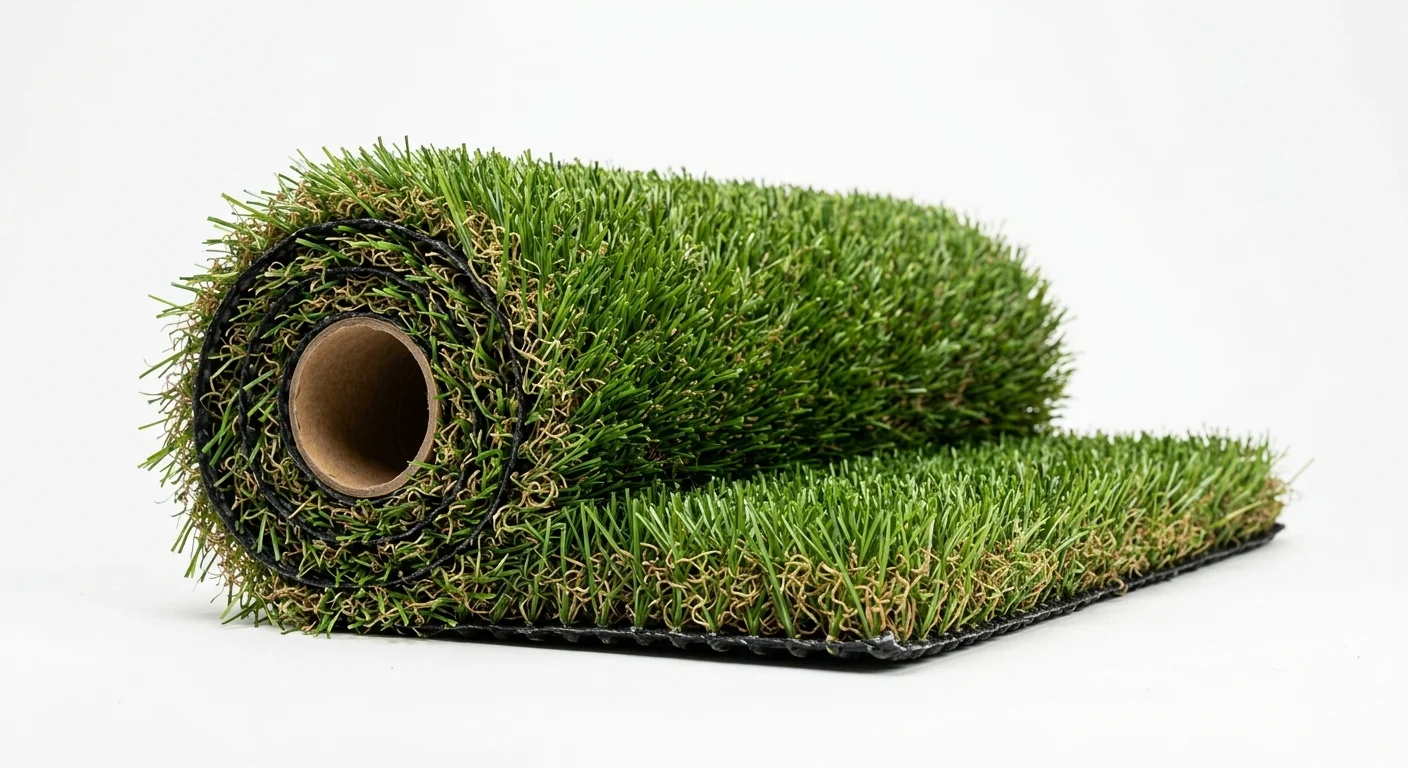
- Pile Height (32-47 mm): For a lush, luxurious look that mimics natural Mediterranean grass, a pile height between 32 mm and 47 mm is ideal. Lower pile heights (20-30 mm) are suitable for high-traffic putting greens or pet areas, but residential lawns look best with a fuller, longer pile.
- Fibre Shape and Resilience: Avoid flat fibres, which mat down quickly under foot traffic and heat. Look for multi-directional, textured fibres (such as C-shape, V-shape, or diamond-shape profiles). These shapes allow the blades to bounce back to their upright position naturally.
- UV Stabilization: The Costa Blanca receives intense ultraviolet radiation. Ensure the turf is certified with high-grade UV stabilizers to prevent the vibrant green colour from fading into a dull grey over years of exposure.
- Polyurethane (PU) Backing: As mentioned, PU backing is superior to latex in coastal environments. It does not absorb moisture, resists salt-water degradation, and provides superior tuft bind (preventing individual grass blades from being pulled out by dogs or high winds).
Cost and Pricing Guide for Calpe Homeowners
Investing in artificial grass is a highly cost-effective decision when compared to the ongoing costs of watering, mowing, and re-seeding a natural lawn in Spain. Below is a realistic price orientation for professional supply and installation in the Calpe area:
| Component | Price Range (EUR) | Description |
| :--- | :--- | :--- |
| Grass Material Only | 10 - 40 EUR / m2 | Varies based on pile height (32-47 mm), density, fibre shape, and backing technology. |
| Professional Installation | 25 - 60 EUR / m2 | Includes site excavation, weed membrane, aggregate sub-base preparation, compaction, jointing, and silica sand infill. |
| Bioclimatic Pergolas | 300 - 800 EUR / m2 | Premium aluminium shading structures, wind-rated up to 175 km/h (Clase 6 UNE-EN 13659). |
Note: Installation costs can vary based on access difficulties (common in the terraced hills of Maryvilla) and the amount of ground preparation required.
The Professional Installation Process: Step-by-Step
To guarantee that your artificial lawn survives the Levante winds, high salitre, and autumn downpours, we follow a rigorous, professional installation protocol:
Step 1: Excavation and Ground Clearance
We remove the existing vegetation and excavate the soil to a depth of 5 to 8 cm. This is crucial for removing root systems and making room for the drainage sub-base.
Step 2: Soil Treatment and Geotextile Membrane
We treat the excavated area with an eco-friendly herbicide to prevent future weed growth. We then lay down a heavy-duty geotextile weed membrane. This membrane prevents weeds from penetrating the turf while allowing water to drain freely.
Step 3: Sub-Base Construction
We import a specialized aggregate mix (usually a combination of crushed limestone and fine gravel). This layer is meticulously graded and compacted using heavy vibrating plate compactors. The sub-base is engineered to create a perfectly smooth surface with a slight slope to facilitate optimal drainage, ensuring it meets the required 60 l/m2 drainage standard.
Step 4: Laying and Seaming the Turf
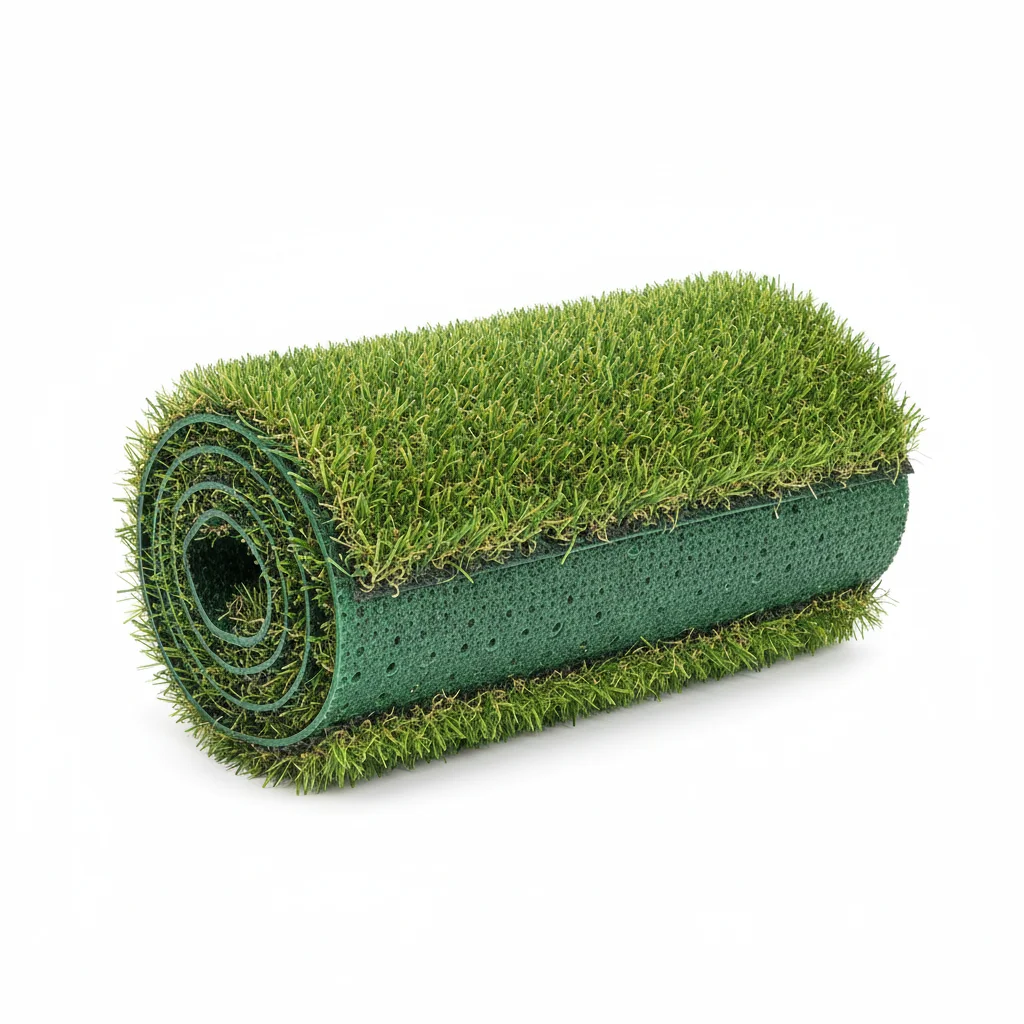
The artificial grass rolls are laid out and allowed to acclimatize in the sun, which helps eliminate any creases from transport. We carefully cut the edges to fit the contours of your garden, pool surround, or terracing. The seams are joined using high-strength, weather-resistant outdoor adhesive and specialized jointing tape.
Step 5: Anchoring and Edging
We secure the perimeter using non-corrosive, galvanized ground pins. If the lawn borders a garden bed or tiled terrace, we install secure timber, metal, or concrete edging to lock the sub-base and turf in place permanently.
Step 6: Silica Sand Infill and Brushing
We distribute dry, rounded silica sand evenly across the lawn. Finally, we use a motorized power brush to work the sand deep into the pile. This sand infill performs three vital functions: it weighs down the turf against the Levante winds, protects the backing from UV rays, and keeps the 32-47 mm fibres standing proud and resilient.
 JW'"
/>
JW'"
/>