Outdoor Living in Finestrat
Finestrat is a town of contrasts — split between a charming medieval hilltop village and the modern La Cala residential area near Benidorm, with 8,000 residents, 30% expats from Britain and Germany, and properties averaging €270,000 beneath the dramatic peak of Puig Campana.
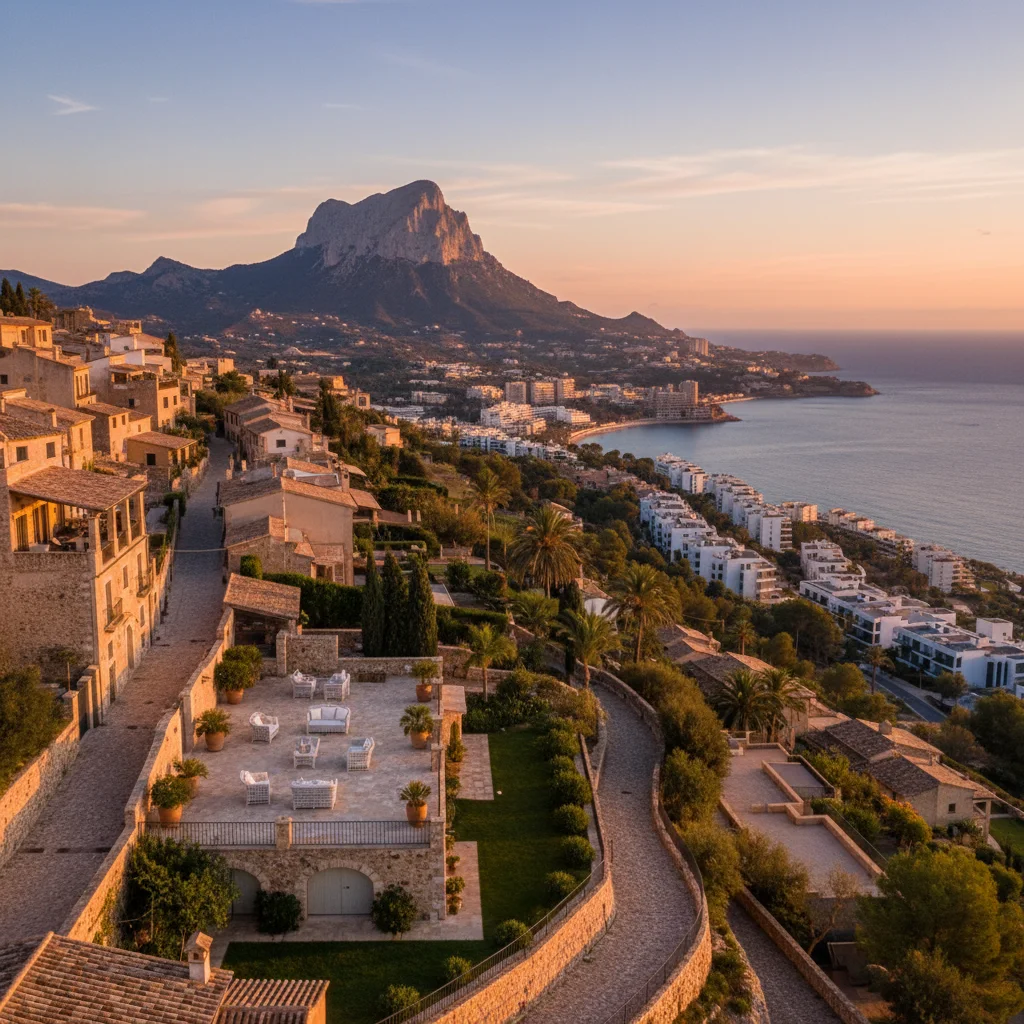
Few towns on the Costa Blanca offer such a striking setting. Puig Campana, the region’s second-highest mountain at 1,406 metres, dominates the skyline from every angle. The old village clings to the hillside with narrow cobbled streets, stone houses, and a church plaza that feels unchanged in centuries. Below, the La Cala area stretches toward the coast with modern villas, manicured urbanisations, and views across to Benidorm’s skyline.
This duality creates two distinct property markets. In the old village, traditional houses with thick stone walls, interior courtyards, and compact terraces offer rustic charm at reasonable prices. In La Cala and the surrounding urbanisations, modern detached villas with swimming pools, landscaped gardens, and generous terraces cater to an international clientele seeking contemporary comfort. Both settings lend themselves to outdoor cooking — just in very different ways.
The expat community is well-established, with British and German residents dominating. Terra Natura zoo and waterpark brings family visitors, but the residential areas are genuinely peaceful. Weekend hiking on Puig Campana, long lunches on sun-drenched terraces, and evening barbecues as the mountain turns golden at sunset — this is the Finestrat lifestyle.
Finestrat’s split personality — medieval village above, modern La Cala below — offers expats two distinct outdoor living experiences, both framed by Puig Campana and suited to year-round cooking.
Choosing Your Setup in Finestrat
Modern La Cala villas with pool terraces call for full outdoor kitchen builds, while old village houses suit compact kamados and countertop pizza ovens — Finestrat rewards equipment choices matched to your setting.
La Cala villa owners have the space and infrastructure for a serious outdoor kitchen. A built-in gas BBQ with stone or tiled countertops, an integrated pizza oven, and a freestanding kamado on the pool terrace is the setup we install most often in this area. Costa Blanca Outdoors designs these installations to complement the modern architectural style typical of La Cala, using clean lines and durable materials rated for outdoor use.
For old village properties, the approach is different. Narrow terraces and courtyards suit a compact kamado grill — its ceramic insulation makes it efficient in the cooler microclimate of the hillside, and its small footprint fits tight spaces. A tabletop pizza oven adds variety without demanding floor space. These smaller setups produce extraordinary results and suit the intimate scale of village entertaining.
Finestrat’s elevation — even La Cala sits higher than the coast — means slightly less salt air than seafront towns like Benidorm, which benefits equipment longevity. However, the mountain creates its own wind patterns, particularly afternoon breezes funnelling down from Puig Campana. Positioning your grill with wind protection from a wall or screen is worth planning during installation.
Gas supply is straightforward. Butane is available from local shops and delivered by truck. For built-in outdoor kitchens, a fixed propane installation with a buried or screened tank is the cleanest approach for La Cala properties.
La Cala villas suit full outdoor kitchen builds with gas BBQs, pizza ovens, and kamados, while old village properties work best with compact, space-efficient equipment — all benefiting from less salt air than the coast.
Delivery to Finestrat
We deliver to both old Finestrat village and the La Cala urbanisations weekly, with experienced drivers who know the steep village access roads and the gated community procedures.
Finestrat sits on our central Costa Blanca route, and we deliver here regularly. La Cala is straightforward — modern roads, private driveways, and easy access to villa terraces. The old village requires more care. Narrow streets, steep gradients, and limited parking mean we plan village deliveries carefully, arriving early when the roads are quiet and carrying equipment by hand where vehicle access ends.
Every delivery includes full assembly, positioning, and a complete walkthrough of your equipment. For outdoor kitchen installations in La Cala, our build team handles everything from countertop fitting to gas connection testing.
Finestrat connects naturally to our wider central route. Benidorm is five minutes down the hill, La Nucia sits just inland, and Villajoyosa is a short coastal drive south. We regularly combine deliveries across these towns.
Standard delivery for in-stock items is 5–10 working days. Custom outdoor kitchen builds for La Cala villas typically run 3–4 weeks from design to completion, including all stonework, equipment fitting, and gas installation.
Fixed Pergolas in Finestrat: Practical Engineering for the Mediterranean Climate
Living under the shadow of Puig Campana provides a unique microclimate that many people moving to this part of the Costa Blanca do not fully anticipate until their first full cycle of seasons. Since I began helping families settle into the region in 2019, I have seen how the geography of this municipality dictates the success or failure of an outdoor living space. The town is physically divided between the historic mountain village and the modern developments sprawling toward the coast near Terra Natura. This elevation change creates a specific set of atmospheric challenges. When you are positioned on a hillside overlooking the Mediterranean, your terrace is not just a place for a morning coffee; it is a high-exposure environment that requires structural permanence.
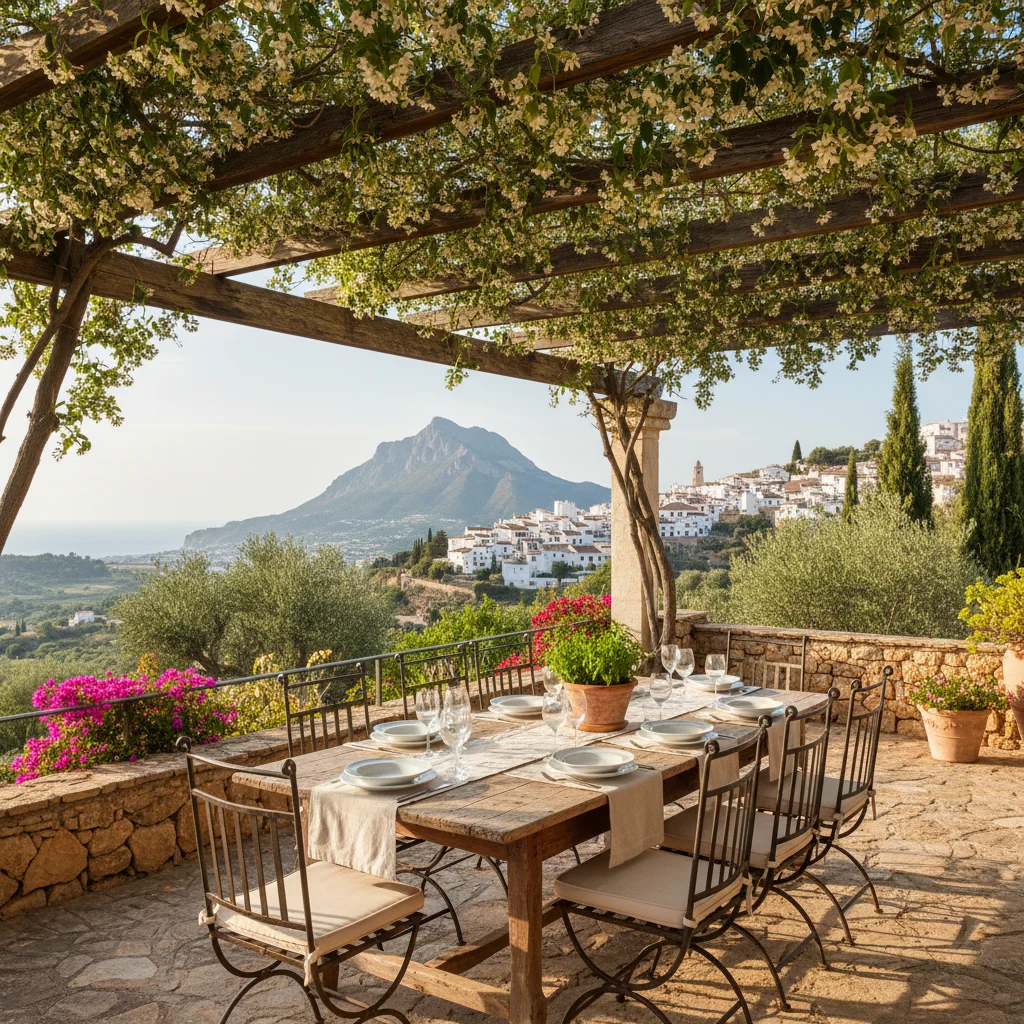
A fixed pergola is often the most sensible investment for homeowners here because of the sheer consistency of the sunlight. With an international population that is thirty percent British and German, there is a heavy cultural emphasis on creating year-round outdoor kitchens and dining rooms. Unlike retractable solutions that may struggle with the sudden gusts common in this elevated terrain, a fixed timber or aluminium structure provides a permanent architectural boundary. This is particularly relevant for the diverse property stock in the area, where a €270,000 price point might get you a sleek modern apartment with a narrow terrace or a more traditional villa further inland with a sprawling garden. In both cases, the goal is the same: creating a usable footprint that does not require constant adjustment when the weather shifts.
The British and German influence on the local lifestyle has pushed the demand for heavy-duty structures that can support more than just a bit of fabric. We are seeing more residents install fixed pergolas specifically to house high-end outdoor cooking suites. In the urbanisations situated between the old village and the coast, the wind patterns can be unpredictable. A fixed structure allows for the integration of lighting, infrared heaters for the cooler January evenings, and even ceiling fans to circulate air during the stagnant heat of August. By choosing a permanent frame, you are effectively adding a room to your home without the complications of a full brick-and-mortar extension, which is a vital consideration given the local planning landscape.
The environmental reality of this coastal position is the primary driver for choosing a fixed pergola over more temporary shade solutions. The municipality experiences two dominant wind patterns: the Levante, which brings humid air and salt spray from the east, and the Poniente, which blows hot and dry from the interior. For those living within two kilometres of the shore, the salt air is a relentless corrosive agent. If you are installing an aluminium pergola, the powder coating must be marine-grade to prevent the bubbling and oxidation that ruins cheaper imports within twenty-four months. For timber structures, the intense UV radiation—which regularly hits an index of ten or higher during the summer—will strip the life out of untreated wood. I always specify a minimum of 140mm x 140mm posts for timber installations to ensure the core of the wood remains stable despite the surface drying out under the sun.
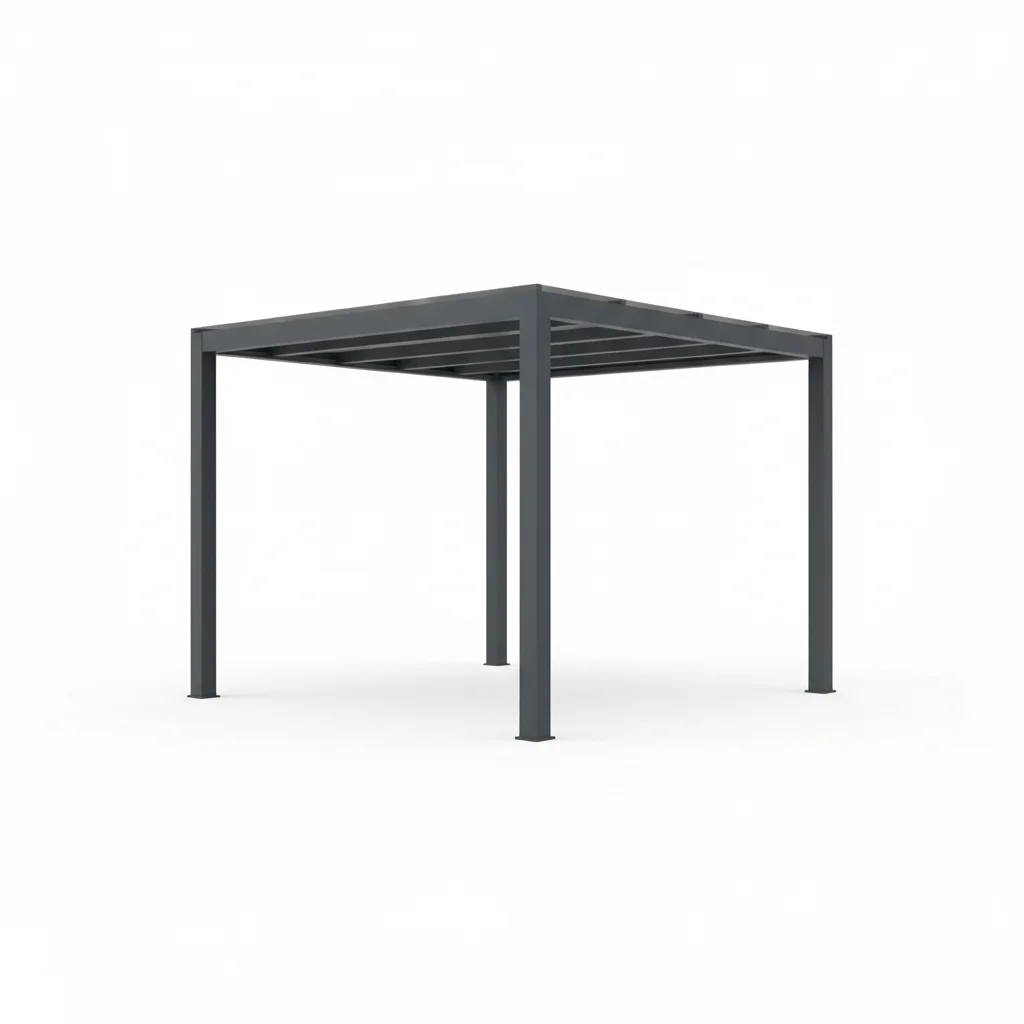
When it comes to community rules, or the "comunidad de propietarios," this area has some of the strictest aesthetic guidelines on the coast. Whether you are in a modern complex near the commercial park or a more established community, you must ensure that your fixed pergola adheres to the agreed-upon RAL colour codes for the building. Most modern developments here use a specific grey or anthracite palette. Installing a rustic timber pergola in a minimalist glass-and-steel complex might lead to a formal notice from the community administrator. Conversely, in the traditional village, a sleek aluminium frame can look entirely out of place against the stone-faced heritage of the area. I generally suggest an investment of between €4,000 and €7,000 for a high-quality, mid-sized aluminium structure that is custom-painted to match the existing joinery of the property. For a smaller, lean-to timber pergola, prices can start closer to €2,000, while expansive, free-standing structures with integrated roofing systems can reach €12,000.
Installation logistics in the hilly terrain of this region require local insight. The ground composition often consists of a very hard limestone or "tosca," which makes traditional post-hole digging difficult. We frequently use heavy-duty chemical anchors and custom steel base plates to secure pergolas directly to the reinforced concrete slabs of the terraces. This is a non-negotiable step because of the wind lift. A pergola roof can act like a sail, and in the exposed corridors near the mountain, the upward pressure during a storm can be significant. If you are considering a roof for your fixed pergola, we recommend heavy-duty polycarbonate or fixed slats that allow for a slight pressure release, rather than a solid, monolithic block that takes the full force of the gale.
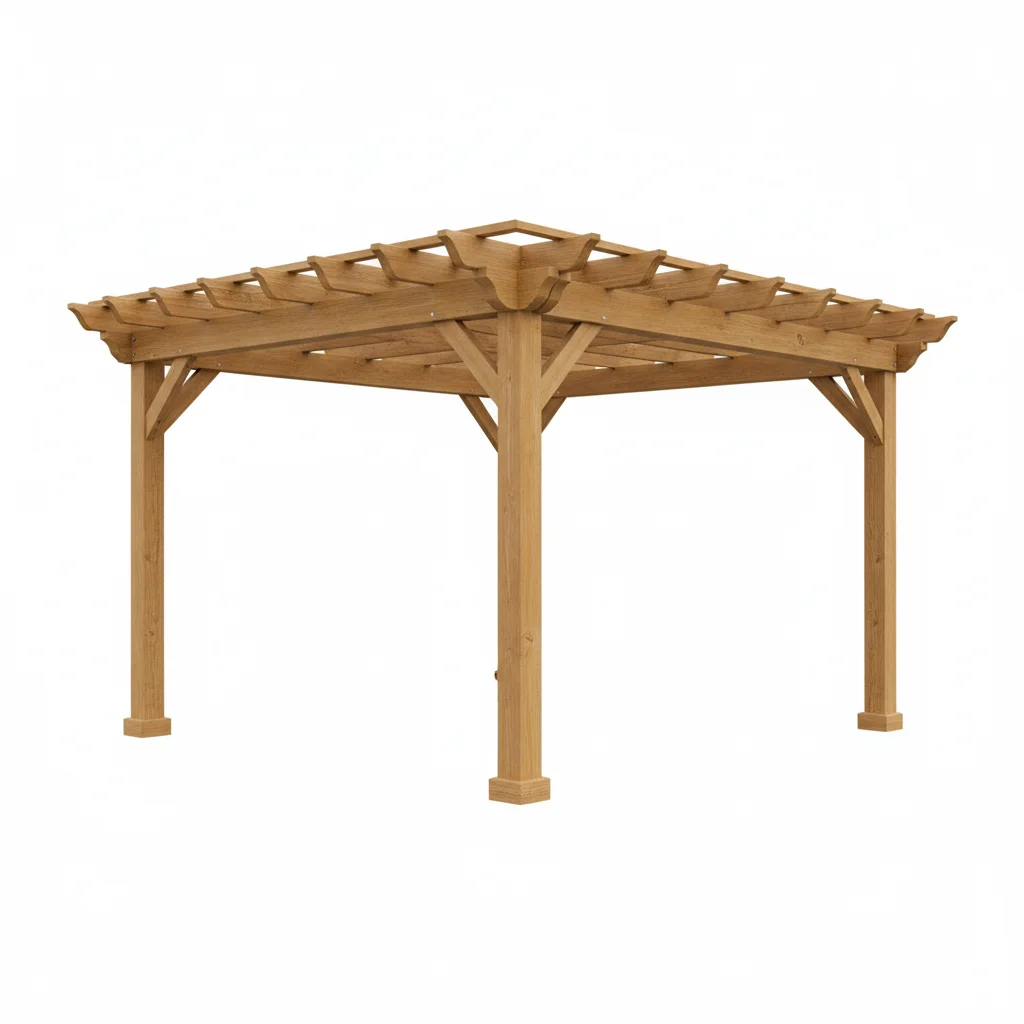
For the large villas nestled in the foothills near the mountain, I almost always recommend a substantial timber configuration. A 6m x 4m Nordic pine frame, treated with a class 4 autoclave process, provides a warmth that complements the natural landscape. In these larger plots, you have the luxury of creating a "destination" at the far end of the pool or garden. A structure of this size, costing approximately €8,500 including professional installation and a high-density UV-filtered roof, becomes the primary social hub of the home. Because these inland properties are slightly more sheltered from the direct salt spray, timber is a fantastic, durable option that requires only a simple protective coat every two years to maintain its integrity against the UV.
In contrast, for the modern apartments and penthouses closer to the sea, the recommendation shifts toward sleek, powder-coated aluminium. The space is often more restricted, so we look at 3m x 3m or 4m x 3m lean-to designs that fix directly to the building facade. These structures should be viewed as the foundation for a complete outdoor room. We often combine these fixed pergolas with glass curtains or vertical zip awnings. By adding glass curtains to a fixed frame, you create a thermal buffer that keeps the apartment cooler in the summer and warmer in the winter. This is a highly effective way to manage the energy efficiency of the home, as the pergola prevents the sun from hitting the glass doors of the lounge directly, reducing the internal temperature by several degrees. This combination of a fixed frame and glass curtains is particularly popular among the local German community, who value the technical precision and year-round utility of such a setup.
If your terrace is particularly exposed to the Levante wind, we might suggest a "bioclimatic" hybrid. While still a fixed structure, the roof consists of motorized slats. However, for most residents, a classic fixed pergola with a high-quality, permanent shade canopy provides the best balance of cost and performance. The key is in the rafters. In this region, we place rafters closer together than you would in Northern Europe—typically every 40cm to 50cm—to provide more "slat-shade" throughout the day as the sun moves across the sky. This creates a dappled light effect that is much more comfortable than the oppressive heat found under a thin fabric awning.
The logistics of delivering and installing large-scale structures in this municipality require a deep understanding of the local geography. We serve the entire area as well as neighboring Benidorm, La Nucia, Villajoyosa, and Alfaz del Pi. Each of these towns has its own logistical quirks. For example, moving long 6-meter timber beams through the narrow, winding streets of the old village requires smaller transit vehicles and often more manual labor than a delivery to a wide-access urbanization near the coast. We have spent years navigating these roads and understanding the specific requirements for crane access where a terrace is positioned several stories up or on a steep incline.
When we work in the areas surrounding the town, we have to account for the varying soil types and wind exposures. A pergola installed on the flat plains near Villajoyosa faces different stresses than one perched on a ridge in La Nucia. My experience over the last few years has taught me that there is no "one size fits all" solution for the Costa Blanca. Every installation must be calibrated to the specific coordinates of the property. We look at the orientation of the house—whether it is south-facing and dealing with the brutal midday sun, or west-facing and struggling with the low-angle glare of the evening. This determines where we place the support pillars and how we pitch the roof to ensure maximum shade during the hours you actually use the space.
Beyond the technical installation, we pride ourselves on knowing the "unwritten rules" of living here. We know which hours you can work without disturbing the neighbors' siesta and how to handle the paperwork that some communities require before work begins. Our goal is to ensure that once the pergola is up, it stays up, and it remains a source of enjoyment rather than a maintenance headache. We provide a full consultation where we can look at your specific plot, measure the wind exposure, and give you a realistic quote that covers everything from the initial ground-fixing to the final UV-protective finish. If you are ready to transform your terrace into a permanent, sheltered sanctuary that can withstand everything the Mediterranean throws at it, we are here to provide the expertise and the local muscle to get it done right.
 JW'"
/>
JW'"
/>