Outdoor Living in Finestrat
Finestrat is a town of contrasts — split between a charming medieval hilltop village and the modern La Cala residential area near Benidorm, with 8,000 residents, 30% expats from Britain and Germany, and properties averaging €270,000 beneath the dramatic peak of Puig Campana.
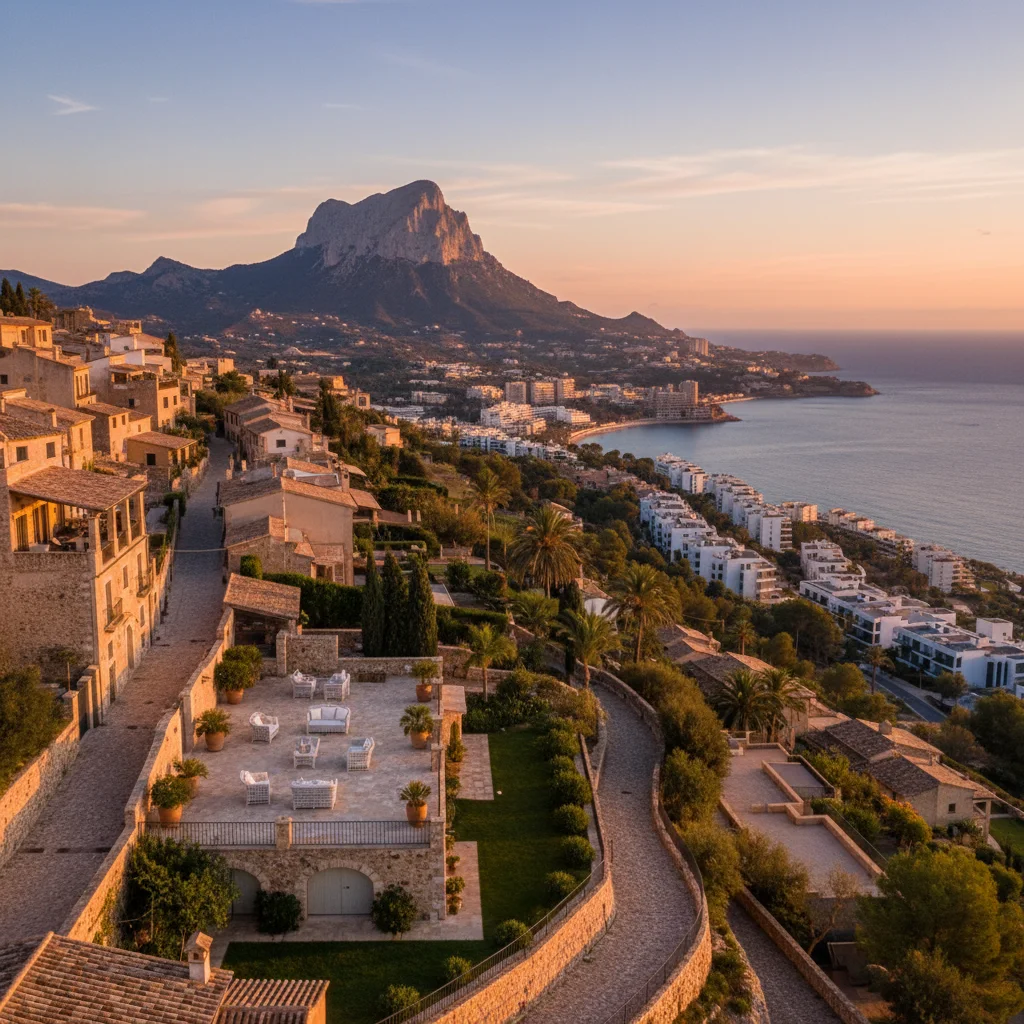
Few towns on the Costa Blanca offer such a striking setting. Puig Campana, the region’s second-highest mountain at 1,406 metres, dominates the skyline from every angle. The old village clings to the hillside with narrow cobbled streets, stone houses, and a church plaza that feels unchanged in centuries. Below, the La Cala area stretches toward the coast with modern villas, manicured urbanisations, and views across to Benidorm’s skyline.
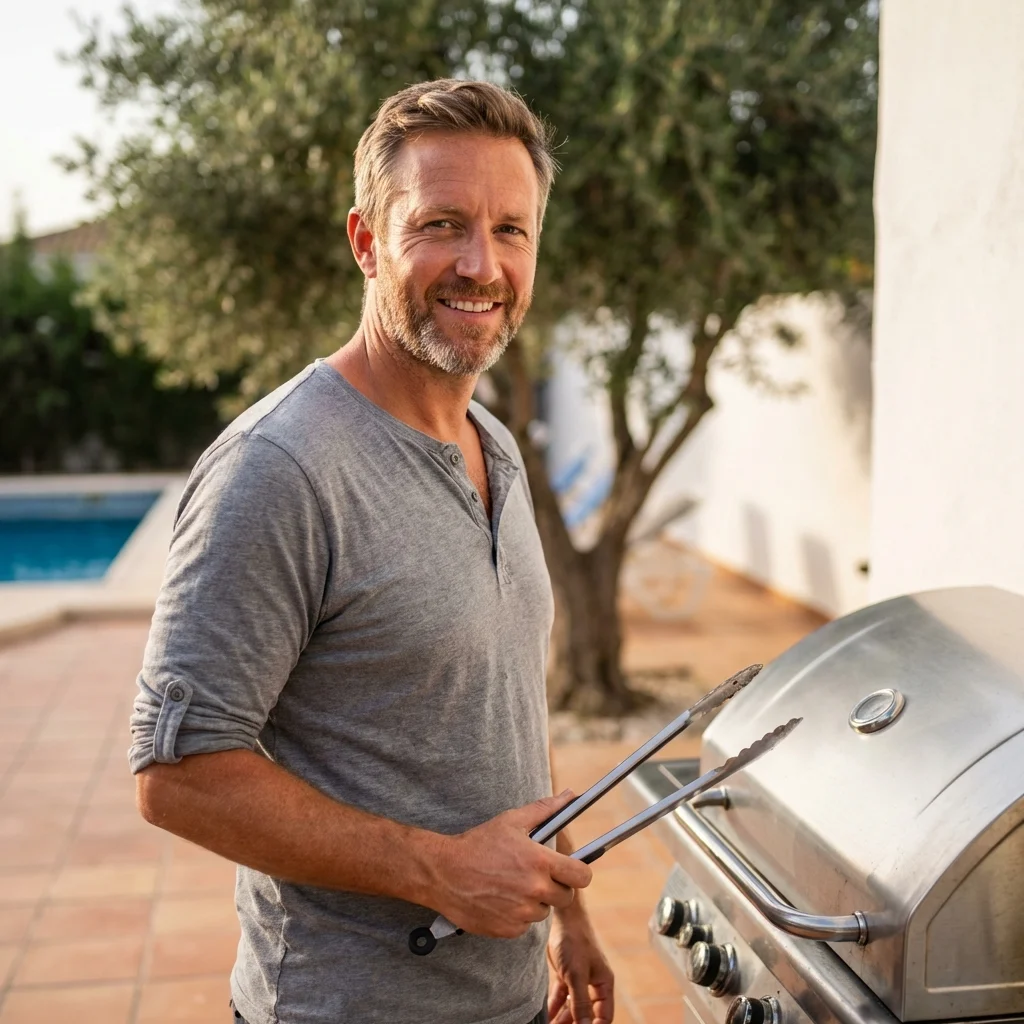
This duality creates two distinct property markets. In the old village, traditional houses with thick stone walls, interior courtyards, and compact terraces offer rustic charm at reasonable prices. In La Cala and the surrounding urbanisations, modern detached villas with swimming pools, landscaped gardens, and generous terraces cater to an international clientele seeking contemporary comfort. Both settings lend themselves to outdoor cooking — just in very different ways.
The expat community is well-established, with British and German residents dominating. Terra Natura zoo and waterpark brings family visitors, but the residential areas are genuinely peaceful. Weekend hiking on Puig Campana, long lunches on sun-drenched terraces, and evening barbecues as the mountain turns golden at sunset — this is the Finestrat lifestyle.
Finestrat’s split personality — medieval village above, modern La Cala below — offers expats two distinct outdoor living experiences, both framed by Puig Campana and suited to year-round cooking.
Choosing Your Setup in Finestrat
Modern La Cala villas with pool terraces call for full outdoor kitchen builds, while old village houses suit compact kamados and countertop pizza ovens — Finestrat rewards equipment choices matched to your setting.
La Cala villa owners have the space and infrastructure for a serious outdoor kitchen. A built-in gas BBQ with stone or tiled countertops, an integrated pizza oven, and a freestanding kamado on the pool terrace is the setup we install most often in this area. Costa Blanca Outdoors designs these installations to complement the modern architectural style typical of La Cala, using clean lines and durable materials rated for outdoor use.
For old village properties, the approach is different. Narrow terraces and courtyards suit a compact kamado grill — its ceramic insulation makes it efficient in the cooler microclimate of the hillside, and its small footprint fits tight spaces. A tabletop pizza oven adds variety without demanding floor space. These smaller setups produce extraordinary results and suit the intimate scale of village entertaining.
Finestrat’s elevation — even La Cala sits higher than the coast — means slightly less salt air than seafront towns like Benidorm, which benefits equipment longevity. However, the mountain creates its own wind patterns, particularly afternoon breezes funnelling down from Puig Campana. Positioning your grill with wind protection from a wall or screen is worth planning during installation.
Gas supply is straightforward. Butane is available from local shops and delivered by truck. For built-in outdoor kitchens, a fixed propane installation with a buried or screened tank is the cleanest approach for La Cala properties.
La Cala villas suit full outdoor kitchen builds with gas BBQs, pizza ovens, and kamados, while old village properties work best with compact, space-efficient equipment — all benefiting from less salt air than the coast.
Delivery to Finestrat
We deliver to both old Finestrat village and the La Cala urbanisations weekly, with experienced drivers who know the steep village access roads and the gated community procedures.
Finestrat sits on our central Costa Blanca route, and we deliver here regularly. La Cala is straightforward — modern roads, private driveways, and easy access to villa terraces. The old village requires more care. Narrow streets, steep gradients, and limited parking mean we plan village deliveries carefully, arriving early when the roads are quiet and carrying equipment by hand where vehicle access ends.
Every delivery includes full assembly, positioning, and a complete walkthrough of your equipment. For outdoor kitchen installations in La Cala, our build team handles everything from countertop fitting to gas connection testing.
Finestrat connects naturally to our wider central route. Benidorm is five minutes down the hill, La Nucia sits just inland, and Villajoyosa is a short coastal drive south. We regularly combine deliveries across these towns.
Standard delivery for in-stock items is 5–10 working days. Custom outdoor kitchen builds for La Cala villas typically run 3–4 weeks from design to completion, including all stonework, equipment fitting, and gas installation.
The Essential Guide to Awnings & Toldos for Finestrat Residences
Living in the shadow of the Puig Campana provides a unique microclimate that defines daily life for the eight thousand residents of this municipality. The dramatic elevation change from the summit down to the Cala creates a specific set of environmental challenges for any outdoor installation. While the British and German expatriates who make up nearly a third of the local population often prioritize creating expansive outdoor dining areas, the physical reality of the landscape dictates exactly what kind of shade structures will actually survive the season. Whether you are situated in a traditional townhouse in the Old Village or one of the newer, contemporary villas near Terra Natura, the sun is a constant factor that dictates the usability of your property for at least ten months of the year.
The property stock here is remarkably diverse, ranging from compact beachfront apartments with narrow balconies to sprawling inland estates where the average property price of 270,000 EUR often includes significant terrace space. This diversity means that a one-size-fits-all approach to solar protection simply does not work. In the higher elevations near the mountain base, the air is slightly cooler but the UV intensity is higher due to the clear atmosphere. Conversely, down toward the coast, the humidity levels rise and the salt-laden air becomes a primary concern for the mechanical components of any retractable system. Integrating a high-quality awning into these spaces is less about decoration and more about thermal management. A well-placed toldo can reduce internal room temperatures by up to eight degrees Celsius during the peak of July and August, significantly lowering the reliance on air conditioning and creating a seamless transition between the interior lounge and the outdoor kitchen setups that are so popular among the international community.
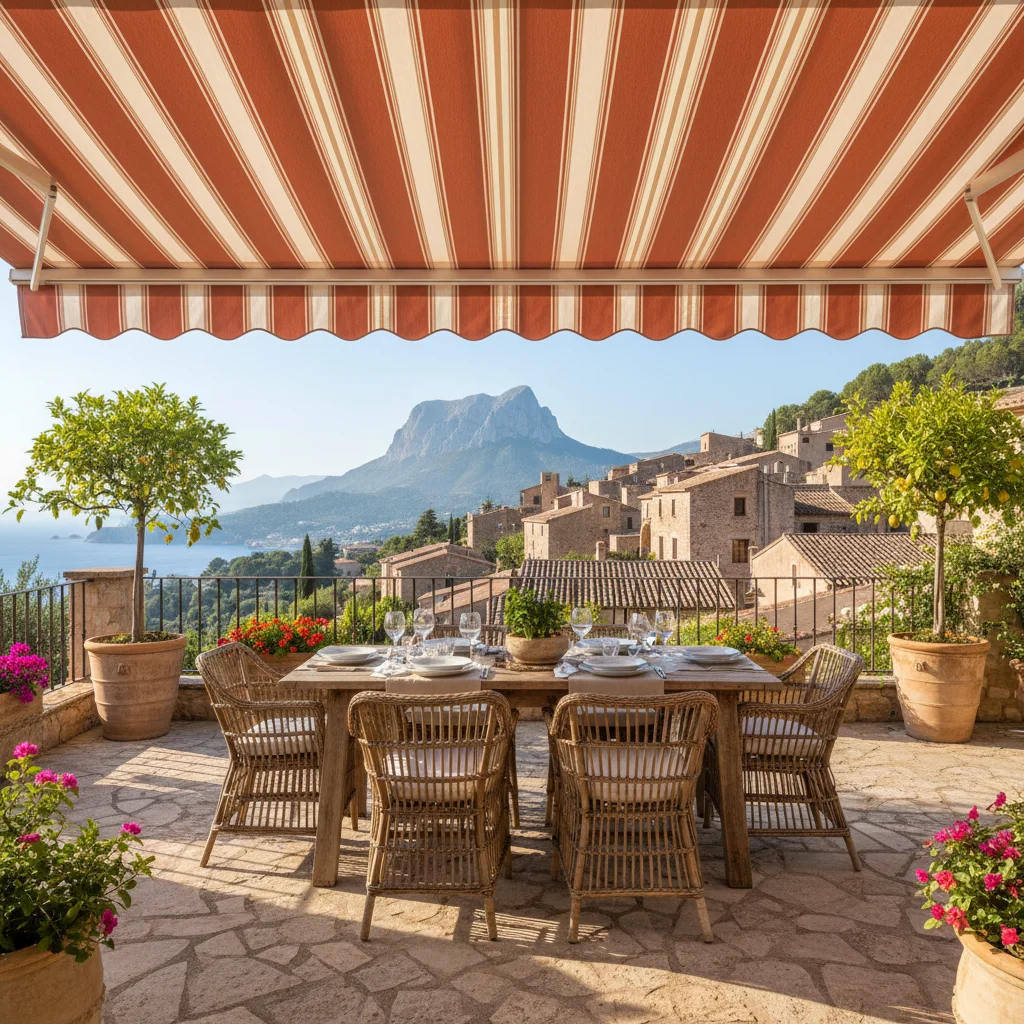
The outdoor living culture here is deeply rooted in long afternoons spent away from the direct glare of the sun. For the British residents, this often involves creating a shaded "summer room" for reading or working remotely, while German neighbors frequently utilize high-tension shade solutions to protect outdoor dining furniture from the bleaching effects of the Mediterranean sun. The architectural styles vary from the white-washed traditional aesthetics to the sharp lines of modern developments, and the choice of shade must respect these visual boundaries while providing heavy-duty performance against the elements. Understanding the specific movement of the sun across the Puig Campana is vital; the mountain provides early shade to some properties while reflecting intense heat onto others later in the day, making the adjustability of a retractable awning an absolute necessity rather than an optional luxury.
Managing the environmental stressors of this specific region requires an understanding of the local wind patterns and the chemical composition of the air. The most significant factor for any homeowner is the dual threat of the Levante and Poniente winds. The Levante brings moisture and salt spray from the sea, which can be particularly corrosive for properties within two kilometers of the shoreline. If your residence is located near the commercial zones or descending toward the beach, the hardware of your awning must be constructed from powder-coated chromatized aluminum to prevent the white "flaking" or pitting caused by salt oxidation. Stainless steel fixings are not just a recommendation in this environment; they are a requirement for the structural integrity of the installation.
The Poniente wind, which sweeps down from the interior mountains, is often dry and can reach surprising velocities in the narrow corridors between buildings. For this reason, I always advise against manual awnings for larger terraces. A motorized system equipped with an integrated wind sensor—such as those from Somfy or similar Tier 1 manufacturers—is the only way to ensure your investment is not destroyed during a sudden gust. These sensors are programmed to detect the vibration or the vertical lift of the front bar, automatically retracting the fabric into a protective cassette when the wind exceeds a pre-set threshold, usually around 35 to 40 kilometers per hour. For a standard 4.5-meter by 3-meter motorized full-cassette awning, you should expect an investment in the region of 1,800 EUR to 2,400 EUR including professional installation. This price reflects the use of 300g/m² solution-dyed acrylic fabrics which offer a UV protection factor of 50+ and are guaranteed against fading for at least five years.
Community rules, or the comunidad de propietarios, are another critical local factor that cannot be ignored. In many of the urbanizations surrounding the local golf courses and theme parks, there are strict mandates regarding the color and style of toldos to maintain architectural uniformity. It is common to see specific RAL color codes for the aluminum frames and specific fabric references from manufacturers like Sauleda or Dickson. Before proceeding with an installation, we always verify these requirements because an unapproved color can result in a legal notice from the community administration to remove the structure. Additionally, for residents in the Old Village, the installation process often involves navigating narrow streets and working with traditional stone or thick lime-mortar walls that require specialized chemical anchors to ensure the mounting brackets can handle the leverage of an extended awning arm.
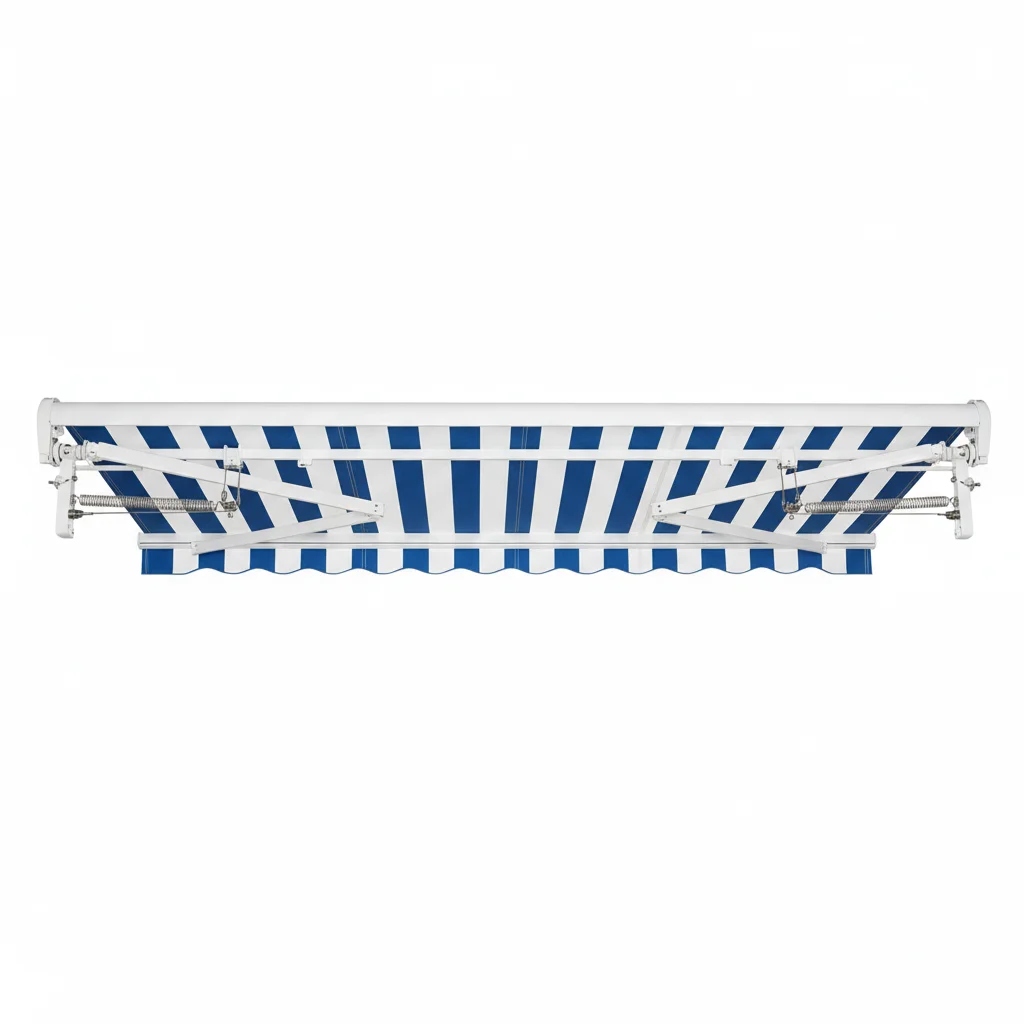
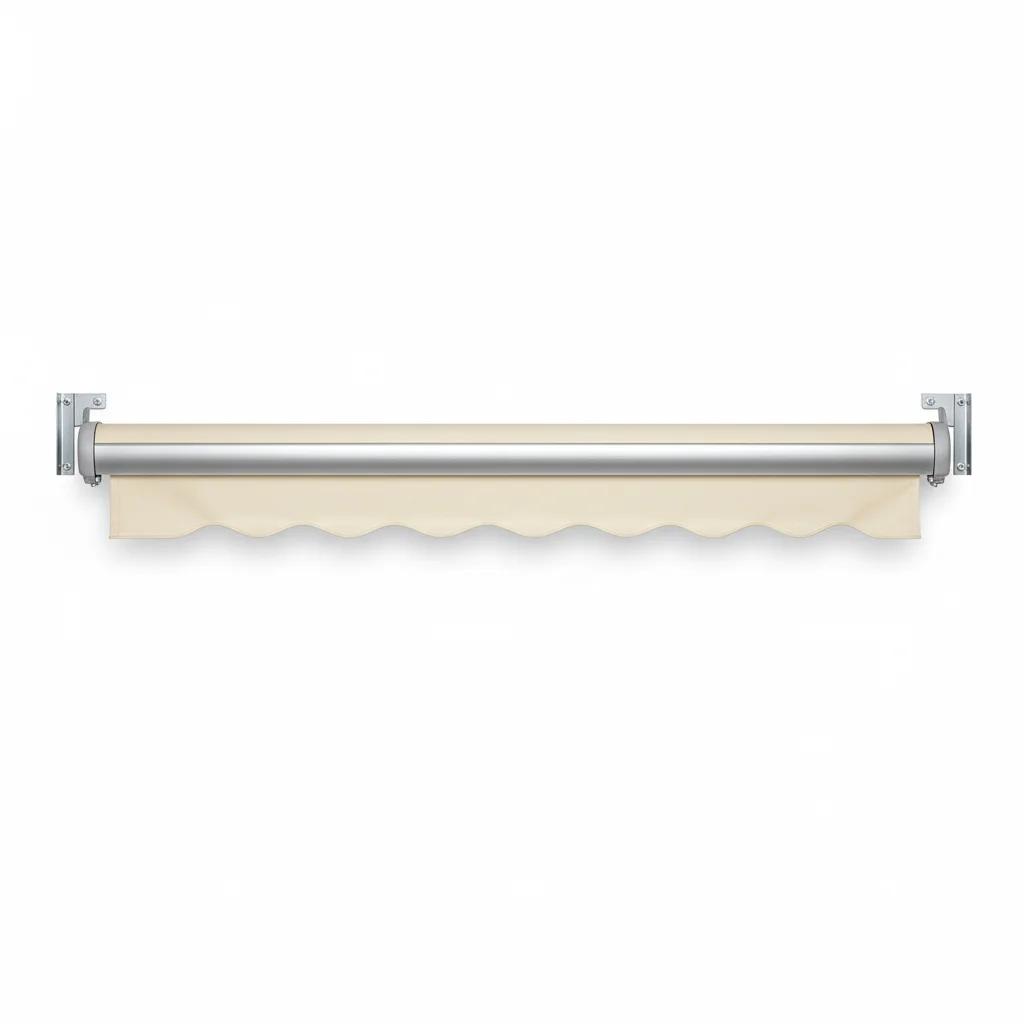
When selecting the right configuration for your specific property type, the focus should be on the intended use of the space and the structural limitations of the building. For the modern villas characterized by large glass expanses and open-plan living, I frequently recommend a full-cassette retractable awning. The "full cassette" design means that when the awning is retracted, the fabric and the folding arms are completely enclosed in an aluminum housing. This is essential for protecting the material from the intense UV degradation that occurs year-round and keeps the aesthetic of the villa clean and minimalist when the shade is not in use. For a large terrace of approximately 25 square meters, a high-end motorized system with LED lighting integrated into the arms provides a perfect evening ambiance for entertaining, effectively doubling your usable living space for an investment of approximately 3,500 EUR.
For those living in apartments or duplexes with smaller balconies, a "monoblock" or "invisible arm" awning is often the most practical solution. These systems are lighter and can be mounted directly to the ceiling of the balcony above or to the wall with a smaller footprint. In these more compact spaces, the focus is often on vertical shade as much as overhead cover. Adding a "volante" or a drop-down front valance can block the low-angled sun in the late afternoon, which is particularly useful for properties facing west toward the mountains. If you find that an awning alone doesn't provide enough protection from the side winds or the gaze of neighbors, we often combine these installations with side-pull shades or vertical toldos. This combination creates a "shaded box" effect that is highly effective for privacy and wind reduction on exposed balconies.
In larger garden spaces where a wall-mounted awning might not reach, I often suggest a hybrid approach. While bioclimatic pergolas are the gold standard for permanent shade, they can be a significant investment, often starting at 5,000 EUR. A more versatile and cost-effective middle ground for a spacious villa garden is a large-scale double-sided awning or the strategic use of shade sails. However, in this municipality, shade sails must be engineered with heavy-duty steel posts and high-tension hardware to withstand the mountain gusts. If your terrace is particularly large, combining a fixed structure like a pergola with retractable toldos on the sides offers the ultimate in climate control. This allows you to follow the sun throughout the day, opening the roof for morning light and sealing the space during the intense heat of the afternoon.
The logistics of delivery and installation in this part of the Costa Blanca require local knowledge of the terrain and the road networks. Accessing the narrow, winding streets of the upper village requires smaller transit vehicles, whereas the wide boulevards of the newer developments allow for larger delivery trucks carrying five-meter single-span aluminum profiles. My team and I are regularly working in the surrounding areas including Benidorm, La Nucia, Villajoyosa, and Alfaz del Pi, which means we understand the logistical flow of the CV-767 and the local access restrictions often imposed during the busy summer months. We know that a delivery to a beachfront apartment in the morning needs to account for local parking regulations and pedestrian traffic, while an afternoon installation in an inland villa needs to be completed before the evening mountain breezes pick up.
One technical detail that is often overlooked by non-local installers is the "pitch" or the angle of the awning. In this region, while rain is infrequent, it is often torrential when it does arrive. We calibrate every installation with a minimum 14-degree slope to ensure that water does not pool on the fabric, which can cause the aluminum arms to buckle under the weight. Furthermore, for those properties located near the pine forests adjacent to the local theme parks, we recommend specific fabric treatments that make it easier to brush off the fine yellow pollen and pine needles that can otherwise stain the material if they become damp.
This level of localized detail is what separates a long-lasting installation from a temporary fix. Every terrace has its own personality and its own set of environmental demands. My approach is to provide a free consultation where we can measure the exact sun path across your terrace and discuss the technical requirements of your specific building's substrate. We don't just sell shade; we provide an engineered solution that respects the unique climate and the architectural heritage of this corner of the Costa Blanca. By choosing the right materials and the correct mechanical systems, you ensure that your outdoor space remains a comfortable, functional retreat for many years to can come, regardless of what the Puig Campana or the Mediterranean Sea throws your way.
 JW'"
/>
JW'"
/>