Outdoor Living in Finestrat
Finestrat is a town of contrasts — split between a charming medieval hilltop village and the modern La Cala residential area near Benidorm, with 8,000 residents, 30% expats from Britain and Germany, and properties averaging €270,000 beneath the dramatic peak of Puig Campana.
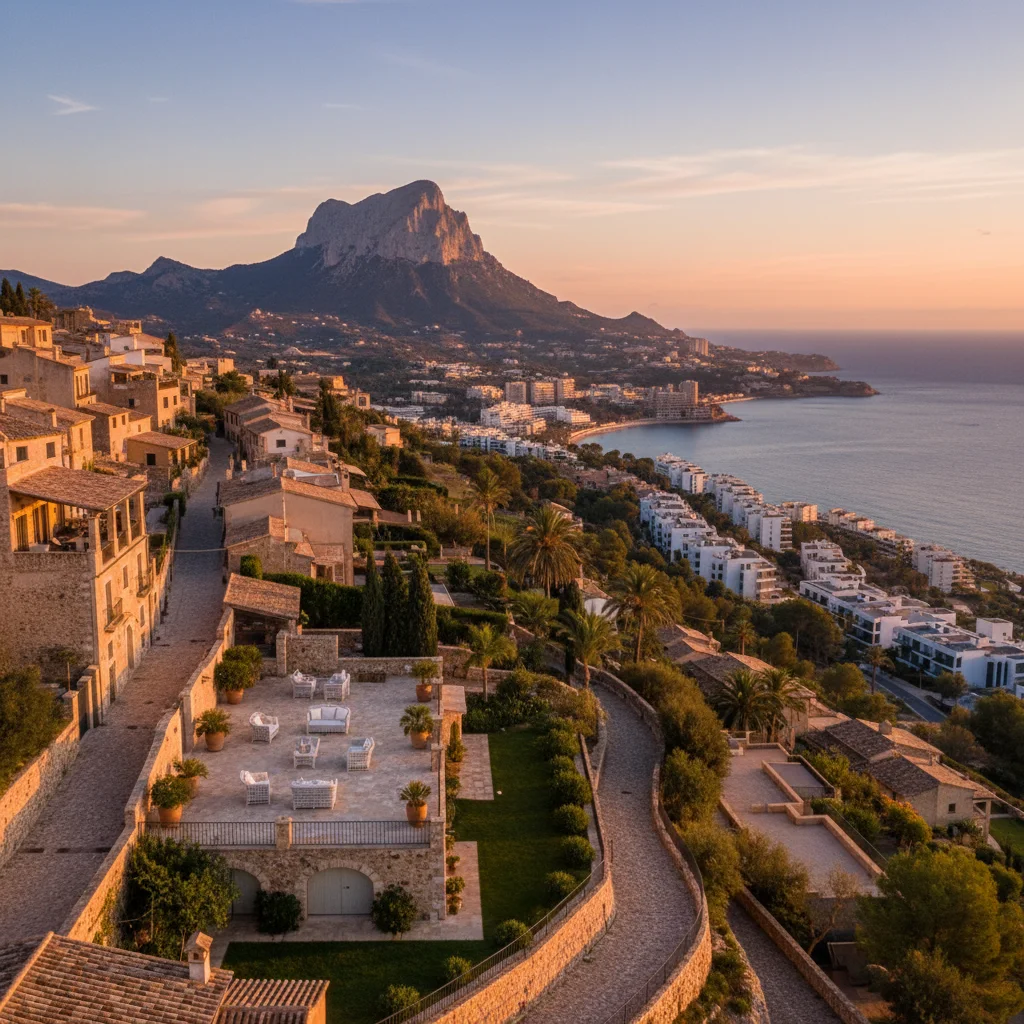
Few towns on the Costa Blanca offer such a striking setting. Puig Campana, the region’s second-highest mountain at 1,406 metres, dominates the skyline from every angle. The old village clings to the hillside with narrow cobbled streets, stone houses, and a church plaza that feels unchanged in centuries. Below, the La Cala area stretches toward the coast with modern villas, manicured urbanisations, and views across to Benidorm’s skyline.
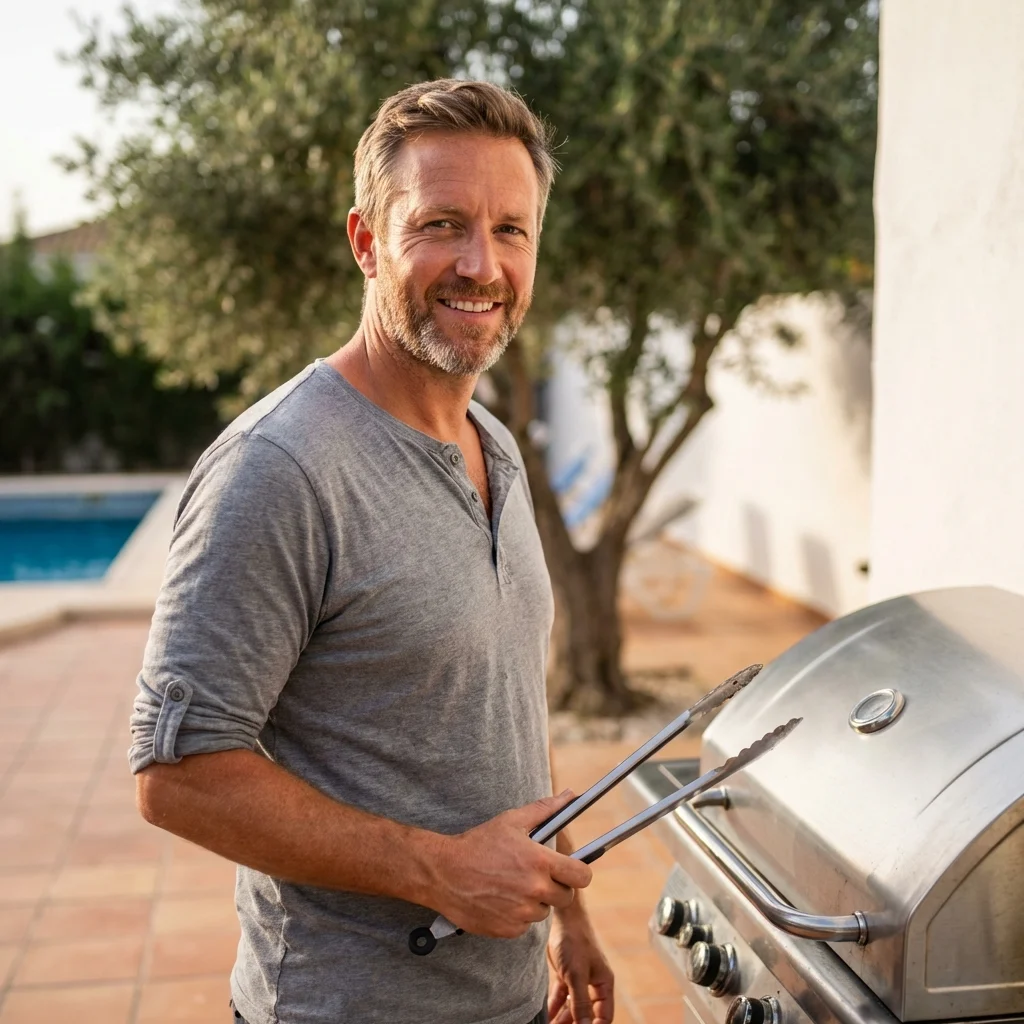
This duality creates two distinct property markets. In the old village, traditional houses with thick stone walls, interior courtyards, and compact terraces offer rustic charm at reasonable prices. In La Cala and the surrounding urbanisations, modern detached villas with swimming pools, landscaped gardens, and generous terraces cater to an international clientele seeking contemporary comfort. Both settings lend themselves to outdoor cooking — just in very different ways.
The expat community is well-established, with British and German residents dominating. Terra Natura zoo and waterpark brings family visitors, but the residential areas are genuinely peaceful. Weekend hiking on Puig Campana, long lunches on sun-drenched terraces, and evening barbecues as the mountain turns golden at sunset — this is the Finestrat lifestyle.
Finestrat’s split personality — medieval village above, modern La Cala below — offers expats two distinct outdoor living experiences, both framed by Puig Campana and suited to year-round cooking.
Choosing Your Setup in Finestrat
Modern La Cala villas with pool terraces call for full outdoor kitchen builds, while old village houses suit compact kamados and countertop pizza ovens — Finestrat rewards equipment choices matched to your setting.
La Cala villa owners have the space and infrastructure for a serious outdoor kitchen. A built-in gas BBQ with stone or tiled countertops, an integrated pizza oven, and a freestanding kamado on the pool terrace is the setup we install most often in this area. Costa Blanca Outdoors designs these installations to complement the modern architectural style typical of La Cala, using clean lines and durable materials rated for outdoor use.
For old village properties, the approach is different. Narrow terraces and courtyards suit a compact kamado grill — its ceramic insulation makes it efficient in the cooler microclimate of the hillside, and its small footprint fits tight spaces. A tabletop pizza oven adds variety without demanding floor space. These smaller setups produce extraordinary results and suit the intimate scale of village entertaining.
Finestrat’s elevation — even La Cala sits higher than the coast — means slightly less salt air than seafront towns like Benidorm, which benefits equipment longevity. However, the mountain creates its own wind patterns, particularly afternoon breezes funnelling down from Puig Campana. Positioning your grill with wind protection from a wall or screen is worth planning during installation.
Gas supply is straightforward. Butane is available from local shops and delivered by truck. For built-in outdoor kitchens, a fixed propane installation with a buried or screened tank is the cleanest approach for La Cala properties.
La Cala villas suit full outdoor kitchen builds with gas BBQs, pizza ovens, and kamados, while old village properties work best with compact, space-efficient equipment — all benefiting from less salt air than the coast.
Delivery to Finestrat
We deliver to both old Finestrat village and the La Cala urbanisations weekly, with experienced drivers who know the steep village access roads and the gated community procedures.
Finestrat sits on our central Costa Blanca route, and we deliver here regularly. La Cala is straightforward — modern roads, private driveways, and easy access to villa terraces. The old village requires more care. Narrow streets, steep gradients, and limited parking mean we plan village deliveries carefully, arriving early when the roads are quiet and carrying equipment by hand where vehicle access ends.
Every delivery includes full assembly, positioning, and a complete walkthrough of your equipment. For outdoor kitchen installations in La Cala, our build team handles everything from countertop fitting to gas connection testing.
Finestrat connects naturally to our wider central route. Benidorm is five minutes down the hill, La Nucia sits just inland, and Villajoyosa is a short coastal drive south. We regularly combine deliveries across these towns.
Standard delivery for in-stock items is 5–10 working days. Custom outdoor kitchen builds for La Cala villas typically run 3–4 weeks from design to completion, including all stonework, equipment fitting, and gas installation.
Designing Resilient Outdoor Spaces in the Shadow of Puig Campana
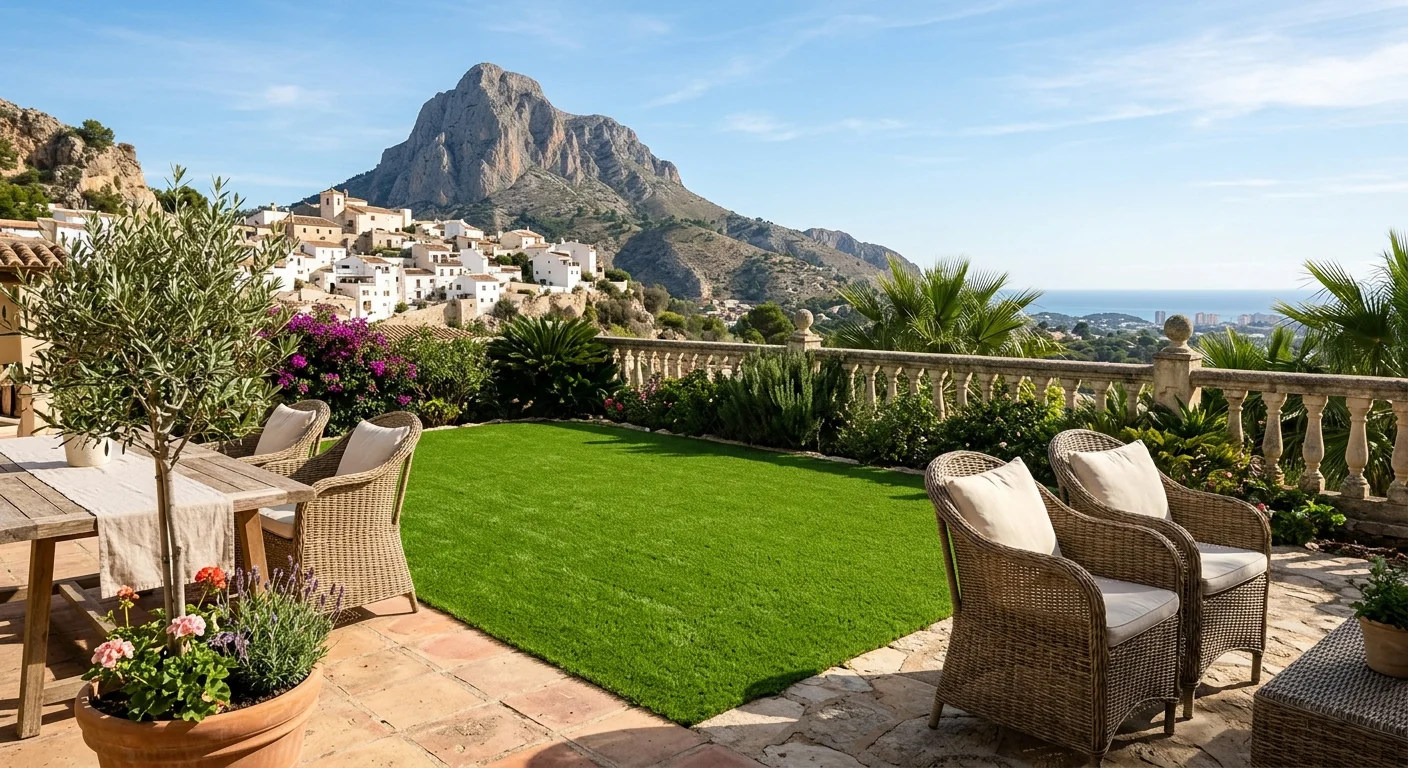
Living in this corner of the Costa Blanca presents a unique set of landscaping challenges that you simply do not encounter in the UK or Northern Europe. Having spent years helping over 200 families across the region, I have seen exactly how the local environment treats traditional gardens. The shift toward premium artificial grass and professional landscaping in this municipality is not just about aesthetics; it is a practical response to a demanding climate. This area is characterized by a stark geographic split, ranging from the historic charm of the Old Village perched on the hillside to the modern, glass-fronted developments near Terra Natura and down toward the coastline. Roughly 30% of our neighbors are international, with a heavy concentration of British and German residents. This demographic mix has fundamentally changed how outdoor spaces are used. While the Spanish tradition often leans toward tiled courtyards, Northern European residents crave the visual softness of greenery. They want a space where they can walk barefoot, where children can play safely, and where the intense Mediterranean heat is not amplified by scorched earth or heat-retaining stone.
The property stock here is remarkably diverse, which means a one-size-fits-all approach to landscaping fails every time. In the higher elevations near the mountain base, villas often sit on generous plots where the soil is notoriously difficult—a mix of heavy clay and "caliche," a rock-hard layer of calcium carbonate that makes traditional gardening a soul-destroying task. Moving down toward the coast, the focus shifts to compact balconies and stepped terraces in high-end apartment complexes. In these spaces, the outdoor area is an extension of the living room. Whether it is a 15-square-meter balcony or a 200-square-meter garden, the goal remains the same: creating a low-maintenance sanctuary that survives the local elements. The British contingent tends to prioritize social spaces for summer BBQs, often requesting integrated lawn areas that can withstand heavy foot traffic. Conversely, German residents often look for precision and high-spec technical drainage, ensuring that their terraces remain pristine even after the heavy "Gota Fría" autumn rains.
Technical Considerations for the Local Climate and Terrain
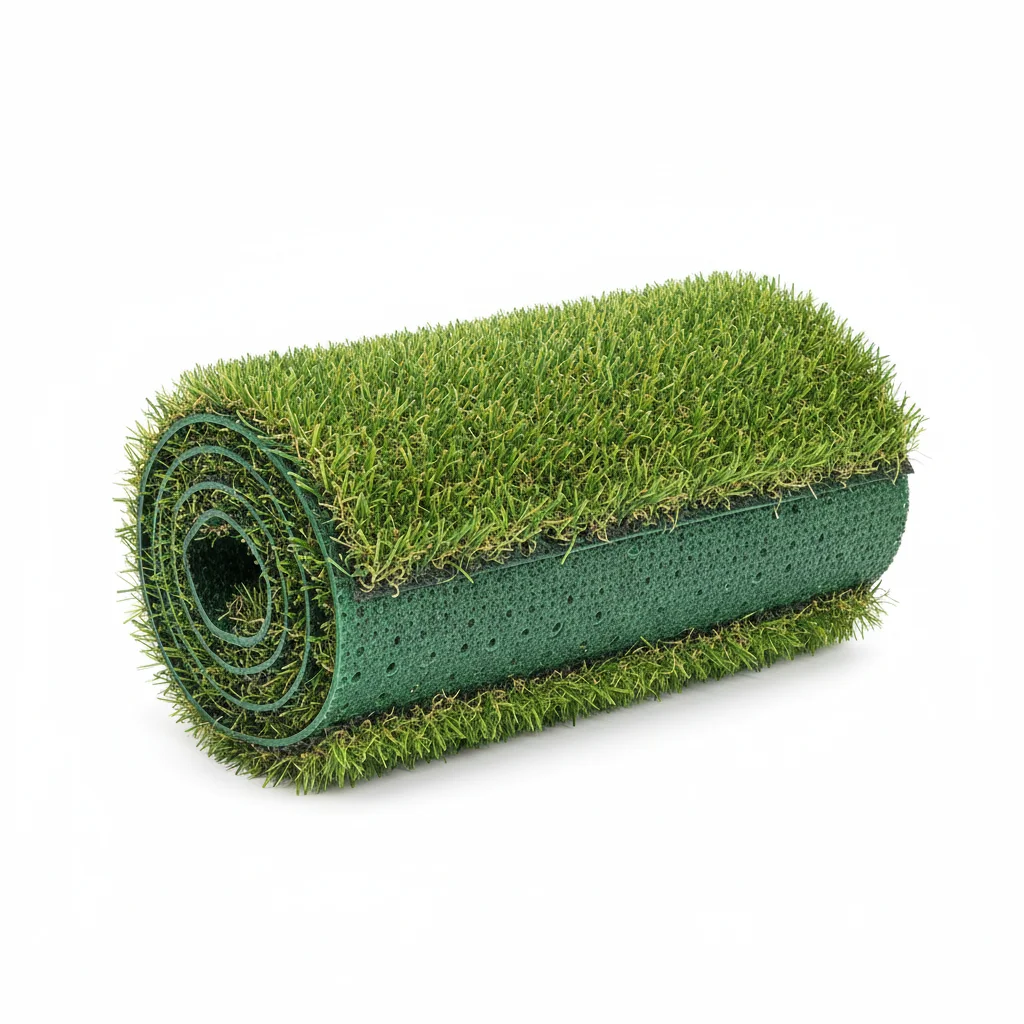
When I discuss landscaping with residents in this specific part of the coast, the conversation always starts with the wind and the sun. We are positioned in an exposed coastal corridor where the Levante and Poniente winds are a constant factor. These are not mere breezes; they carry significant force and, for those living within two kilometers of the shore, a heavy load of salt spray. Salt is an aggressive corrosive that can yellow natural grass in days and degrade low-quality artificial fibers within a couple of seasons. For these reasons, I never recommend the cheap, latex-backed turf found in big-box DIY stores. Instead, we use high-grade polyurethane-backed grass for properties near the Cala. Polyurethane does not absorb moisture or salt, meaning it will not rot or become brittle over time. Furthermore, the UV index here is brutal, often hitting 10 or 11 in July and August. You need a product with a minimum of 450-500 microns of thickness per blade and a high "dtex" rating (the weight of the yarn) to ensure the grass does not flatten under the sun or fade into a dull lime green.
Another factor many newcomers overlook is the "Comunidad de Propietarios" or community rules. If you are in one of the newer developments near the theme parks, there are often strict bylaws regarding the appearance of terraces visible from the street. I have guided many homeowners through this, ensuring that the pile height and shade of green we choose meet the aesthetic requirements of their specific community while providing the drainage needed to prevent water pooling on shared structural slabs. For instance, on a rooftop terrace, you cannot simply lay turf. You must use a drainage membrane or a specific "geotextile" layer to ensure rainwater flows toward the drains without trapping silt. A typical high-quality installation for a 40-square-meter terrace, including the necessary shock pads for comfort and drainage, usually sits in the EUR 1,800 to EUR 2,400 range. For larger garden projects, we often recommend a 40mm pile height "Premium Mediterranean" turf, which retails around EUR 28 per square meter, excluding the extensive ground preparation required for the local soil.
Maintaining these spaces also requires local knowledge regarding the "calima"—the red Saharan dust that occasionally blankets the region. Natural grass becomes a muddy mess during these events, but artificial turf can be easily restored. The trick is to avoid high-pressure washers, which can displace the silica sand infill. A simple garden hose and a stiff brush are all you need to keep the fibers upright and clean. Regarding fuel and equipment, the local power grid in older parts of the village can be temperamental, so many residents are moving away from electric mowers and power tools in favor of these permanent, "static" landscaping solutions. This shift also reduces the noise pollution in dense urbanizations, a gesture your neighbors will certainly appreciate during the siesta hours.
Tailored Recommendations for Villas and Apartments
For those owning detached villas in the more elevated parts of the district, I recommend a tiered landscaping approach. It is rarely wise to cover a massive 500-square-meter plot entirely in artificial grass. Instead, we design "zones" that combine high-quality turf with xeriscaping. I suggest a central lawn of roughly 60 to 80 square meters using a 50mm pile height grass—this provides that lush, deep-cushion feel that is perfect for families. We then border this with local decorative stone like "grava volcanica" or white Macael marble chips. This creates a fire-break and a drainage corridor that protects the house during heavy downpours. To elevate the space, we integrate outdoor-lighting—specifically low-voltage LED spike lights tucked into the borders. This highlights the texture of the grass at night and makes the garden usable long after the sun sets behind the mountain. We also frequently install garden-fencing made of composite materials or reinforced PVC. The wind here can shred traditional heather screening (bruzo) in a single season, leaving a mess in your pool. A solid composite fence provides a windbreak and total privacy for your lawn area.
Apartment living near the coast requires a different strategy. Here, the challenge is heat retention and weight. Many terraces get incredibly hot because the concrete slab soaks up the sun. By installing a 25mm to 30mm artificial grass with a cooling infill technology, we can drop the surface temperature of the balcony by up to 10 degrees Celsius. For these smaller spaces, I recommend a shorter, denser pile that is easier to vacuum and keep free of pet hair or dust. This type of installation is often paired with vertical garden elements or glass balustrades to maintain the view while creating a green oasis. A complete balcony transformation, including the grass, a drainage layer, and perhaps some sleek perimeter lighting, typically falls between EUR 800 and EUR 1,500. It is a small investment that effectively adds another room to your home.
Logistics and Expert Delivery Across the Local Area
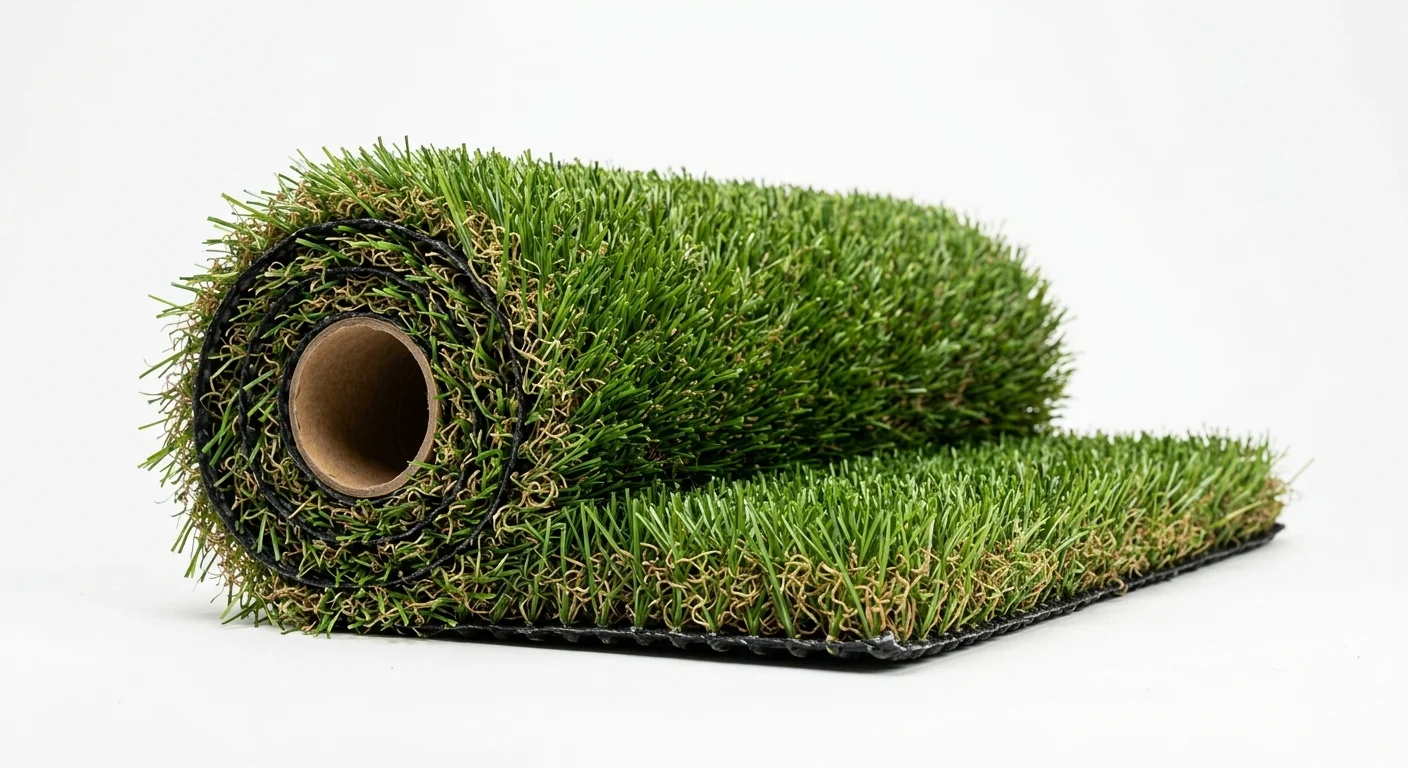
Getting materials to a job site in this region is rarely straightforward. If you live in the narrow, winding streets of the Old Village, you know that a standard 12-tonne delivery truck isn't getting anywhere near your front door. We have spent years navigating these logistical hurdles. We utilize smaller, nimble transit vehicles for village deliveries and have the specialized equipment to crane rolls of turf or bags of aggregate over walls and onto high-rise balconies in the newer sectors. Our deep familiarity with the local road networks—from the steep climbs toward the mountain to the busy avenues near Benidorm and the neighboring towns of La Nucia and Villajoyosa—means we can accurately quote delivery times and avoid the common pitfall of "Spanish time." We also serve the nearby community of Alfaz del Pi, where the soil conditions are similar but the wind profiles differ slightly.
One piece of local insight that often surprises my clients is the sheer weight of the sub-base required for a garden installation. To do it properly and prevent the grass from sinking or wrinkling as the ground shifts, we have to excavate and then bring in several tonnes of crushed aggregate. This is back-breaking work in the local heat, and it is where most DIY attempts fail. We understand how to work with the land here, ensuring that your investment looks as good in five years as it does on the day of installation. We have seen the mistakes made by builders who treat landscaping as an afterthought, and we are here to ensure those errors are not repeated on your property.
If you are considering a transition to a more manageable, beautiful outdoor space, I am more than happy to drive out to your property for a chat. I can bring samples of the specific turfs that I know work best in our local microclimate—products that have been proven to stand up to the salt air and the intense UV levels we experience here. We can walk through the technical requirements of your plot, from drainage to wind protection, and provide a clear, fixed-price quote that reflects the reality of the work involved. There is no substitute for local experience when it comes to the rugged and beautiful landscape of this coast. Reach out for a free consultation, and let’s figure out how to make your garden or terrace the best part of your home.
 JW'"
/>
JW'"
/>