Outdoor Living in Finestrat
Finestrat is a town of contrasts — split between a charming medieval hilltop village and the modern La Cala residential area near Benidorm, with 8,000 residents, 30% expats from Britain and Germany, and properties averaging €270,000 beneath the dramatic peak of Puig Campana.
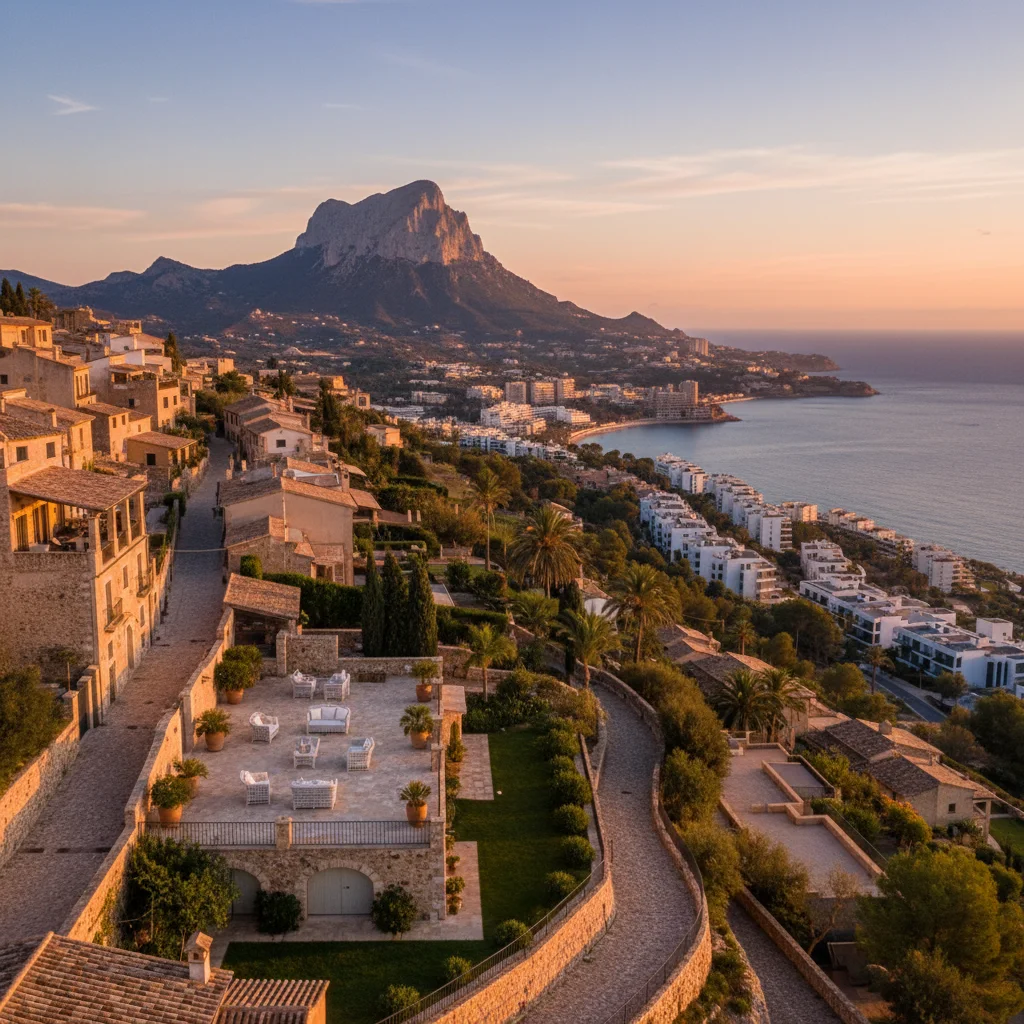
Few towns on the Costa Blanca offer such a striking setting. Puig Campana, the region’s second-highest mountain at 1,406 metres, dominates the skyline from every angle. The old village clings to the hillside with narrow cobbled streets, stone houses, and a church plaza that feels unchanged in centuries. Below, the La Cala area stretches toward the coast with modern villas, manicured urbanisations, and views across to Benidorm’s skyline.
This duality creates two distinct property markets. In the old village, traditional houses with thick stone walls, interior courtyards, and compact terraces offer rustic charm at reasonable prices. In La Cala and the surrounding urbanisations, modern detached villas with swimming pools, landscaped gardens, and generous terraces cater to an international clientele seeking contemporary comfort. Both settings lend themselves to outdoor cooking — just in very different ways.
The expat community is well-established, with British and German residents dominating. Terra Natura zoo and waterpark brings family visitors, but the residential areas are genuinely peaceful. Weekend hiking on Puig Campana, long lunches on sun-drenched terraces, and evening barbecues as the mountain turns golden at sunset — this is the Finestrat lifestyle.
Finestrat’s split personality — medieval village above, modern La Cala below — offers expats two distinct outdoor living experiences, both framed by Puig Campana and suited to year-round cooking.
Choosing Your Setup in Finestrat
Modern La Cala villas with pool terraces call for full outdoor kitchen builds, while old village houses suit compact kamados and countertop pizza ovens — Finestrat rewards equipment choices matched to your setting.
La Cala villa owners have the space and infrastructure for a serious outdoor kitchen. A built-in gas BBQ with stone or tiled countertops, an integrated pizza oven, and a freestanding kamado on the pool terrace is the setup we install most often in this area. Costa Blanca Outdoors designs these installations to complement the modern architectural style typical of La Cala, using clean lines and durable materials rated for outdoor use.
For old village properties, the approach is different. Narrow terraces and courtyards suit a compact kamado grill — its ceramic insulation makes it efficient in the cooler microclimate of the hillside, and its small footprint fits tight spaces. A tabletop pizza oven adds variety without demanding floor space. These smaller setups produce extraordinary results and suit the intimate scale of village entertaining.
Finestrat’s elevation — even La Cala sits higher than the coast — means slightly less salt air than seafront towns like Benidorm, which benefits equipment longevity. However, the mountain creates its own wind patterns, particularly afternoon breezes funnelling down from Puig Campana. Positioning your grill with wind protection from a wall or screen is worth planning during installation.
Gas supply is straightforward. Butane is available from local shops and delivered by truck. For built-in outdoor kitchens, a fixed propane installation with a buried or screened tank is the cleanest approach for La Cala properties.
La Cala villas suit full outdoor kitchen builds with gas BBQs, pizza ovens, and kamados, while old village properties work best with compact, space-efficient equipment — all benefiting from less salt air than the coast.
Delivery to Finestrat
We deliver to both old Finestrat village and the La Cala urbanisations weekly, with experienced drivers who know the steep village access roads and the gated community procedures.
Finestrat sits on our central Costa Blanca route, and we deliver here regularly. La Cala is straightforward — modern roads, private driveways, and easy access to villa terraces. The old village requires more care. Narrow streets, steep gradients, and limited parking mean we plan village deliveries carefully, arriving early when the roads are quiet and carrying equipment by hand where vehicle access ends.
Every delivery includes full assembly, positioning, and a complete walkthrough of your equipment. For outdoor kitchen installations in La Cala, our build team handles everything from countertop fitting to gas connection testing.
Finestrat connects naturally to our wider central route. Benidorm is five minutes down the hill, La Nucia sits just inland, and Villajoyosa is a short coastal drive south. We regularly combine deliveries across these towns.
Standard delivery for in-stock items is 5–10 working days. Custom outdoor kitchen builds for La Cala villas typically run 3–4 weeks from design to completion, including all stonework, equipment fitting, and gas installation.
Managing the Intense Exposure of Finestrat for Effective Outdoor Shade
Shade is not merely a comfort choice when you live in this corner of the Costa Blanca; it is a fundamental architectural requirement for any home. Having lived here since 2019 and worked on over 200 terraces, I have seen exactly what the sun does to inferior materials in the shadow of Puig Campana. Finestrat occupies a unique geographical position that creates a challenging microclimate for outdoor furniture. You have the coastal influence of the Cala de Finestrat, where salt spray travels inland on the breeze, and the elevated, sun-drenched slopes of the modern urbanizations that climb toward the mountain. The 8,000 residents here, nearly a third of whom are fellow British and German expats, often arrive with a northern European sensibility toward outdoor living, only to realize that the intense UV levels and the specific wind patterns of this valley require a much more robust approach to parasols and shade sails than they initially expected.
The outdoor living culture here is sophisticated, largely driven by the international community's desire to integrate cooking, dining, and lounging into a single seamless space. Whether you are living in a traditional townhouse in the Old Village or a contemporary villa in Sierra Cortina, the terrace is effectively your primary living room for eight months of the year. However, the sheer intensity of the light reflecting off the limestone cliffs of the mountain and the Mediterranean Sea can make these spaces unusable between 11:00 and 17:00 without proper intervention. I have walked through countless properties where residents have attempted to use standard market umbrellas bought from local hardware chains, only to find the fabric bleached to a ghost-like grey within a single season and the frames buckled by a sudden afternoon gust coming down from the heights of Terra Natura.
Because the property stock here is so diverse, ranging from compact beachfront apartments with limited balcony depth to sprawling inland villas with 200-square-meter terraces, there is no one-size-fits-all solution. A British family moving into a new build near the Puig Campana golf course has very different requirements for a 4-meter cantilever parasol than a couple in a penthouse at the Cala who must contend with the vertical wind tunnels created by the surrounding high-rises. Understanding the specific topography of your plot is the first step toward choosing a shade solution that won't end up in your neighbor’s pool the first time the wind picks up.
Technical Considerations for the Local Climate and Environment
The most significant technical challenge we face in this specific area is the interplay between the Levante and Poniente winds. The Levante brings humidity and salt from the sea, which can cause rapid oxidation on cheap steel frames. Even if you are 2 kilometers inland, that salt spray is present in the air, settling on your equipment every evening. For this reason, I never recommend anything less than powder-coated aluminum or, ideally, 316-grade stainless steel for the structural components of your parasols. If you are looking at a budget option in the €150 to €300 range, you are almost certainly buying a steel pole that will show rust spots at the joints within twelve months. A professional-grade cantilever system, which usually sits in the €800 to €1,800 bracket, uses anodized aluminum which is practically impervious to the salt air.
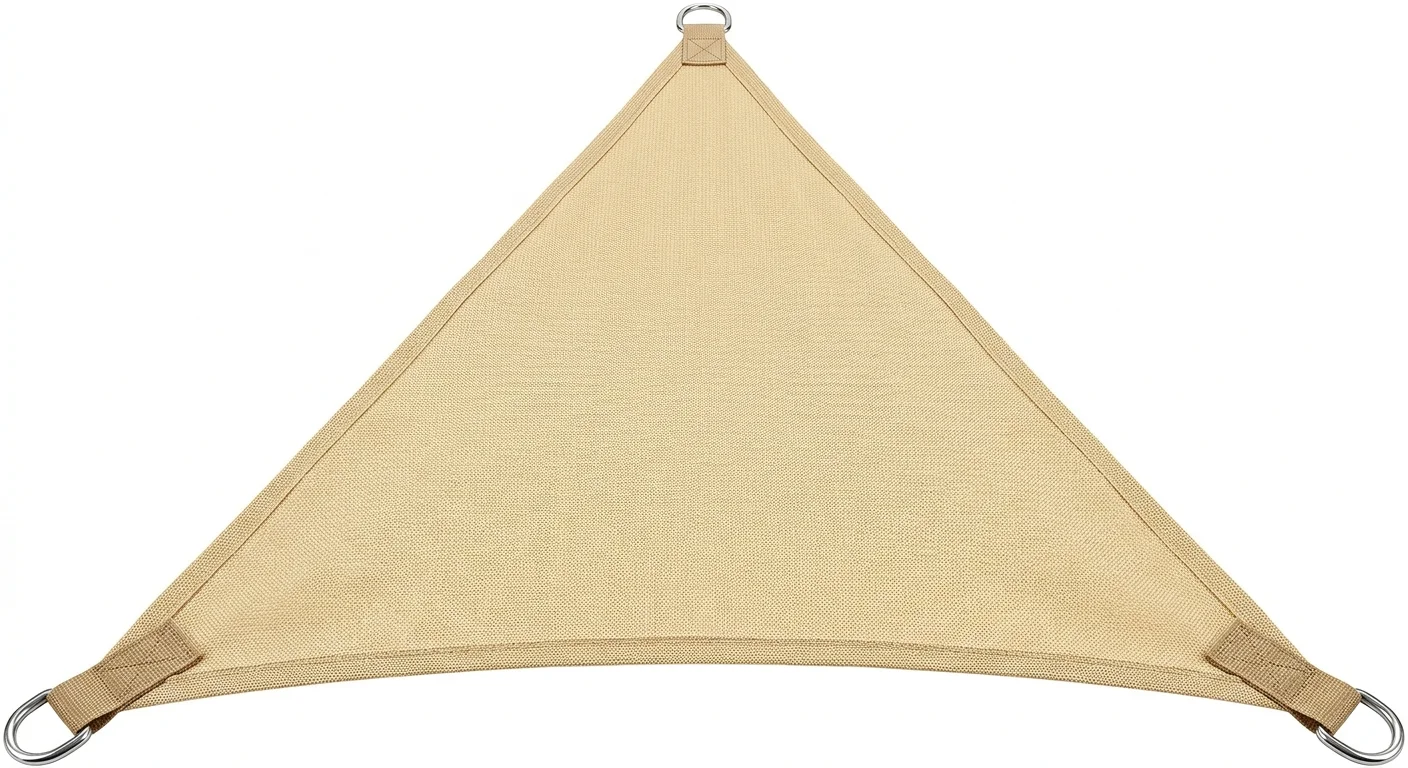
Wind resistance is the second pillar of expert shade selection. The Poniente wind, which blows from the interior, can be deceptively strong and incredibly hot, acting like a giant hairdryer that stresses fabric fibers. If you are installing a shade sail, it must be commercial-grade knitted high-density polyethylene (HDPE). Do not be tempted by cheap waterproof polyester sails; they act like a kite, catching every breath of air and putting immense pressure on your wall fixings. A proper HDPE sail allows air to move through the fabric, reducing the load on the stainless steel tensioners while still blocking up to 96% of harmful UV rays. For parasols, look for those with a wind vent at the top and flexible fiberglass ribs. While traditional wooden ribs look classic in the Old Village, they lack the "give" required when a sudden gust funnels through the narrow streets.
Community rules, or the laws of the "Comunidad de Propietarios," are another vital local factor. Many of the newer developments near the commercial center have strict "estatutos" regarding the color and type of external structures. I have seen residents forced to take down expensive custom-made awnings because they didn't match the community's approved RAL color code for cream or white fabrics. Before investing €1,200 in a high-end side-post parasol, always check if there is a color restriction. Generally, neutral tones like "ecru," "stone," or "anthracite" are safe bets and have the added benefit of not showing the fine red dust—the "calima"—that occasionally blows over from North Africa and covers everything in a thin layer of silt.
Maintenance in this environment is relatively straightforward but non-negotiable. I advise my clients to wash their parasol canopies with a simple solution of mild soap and lukewarm water every three months to remove the salt crust. For the mechanisms, a dry silicon spray is better than oil-based lubricants, which tend to attract the local dust and create a grinding paste that wears down the internal cranks. If you are choosing a shade sail, ensure the installation includes high-quality turnbuckles that allow you to easily tension the sail as the fabric naturally settles over the first few weeks of use.
Recommended Configurations for Finestrat Property Types
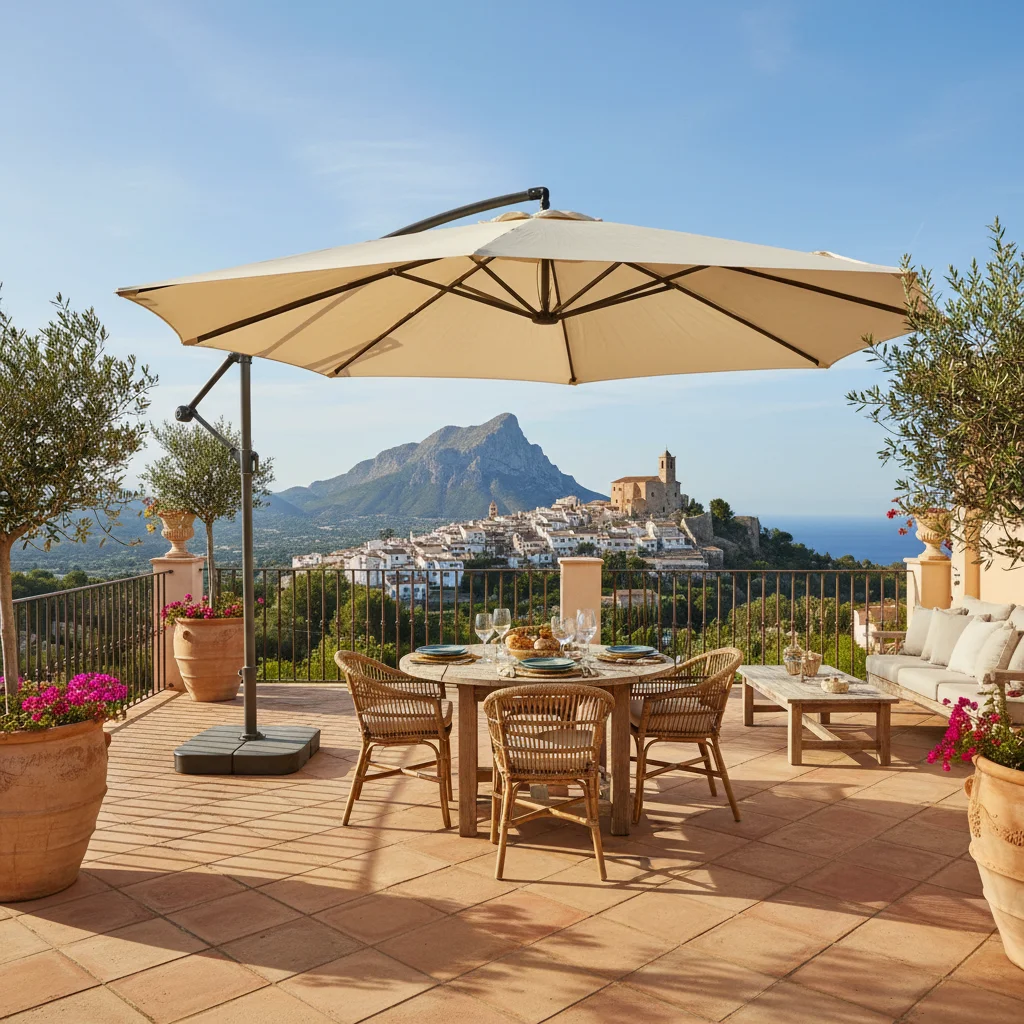
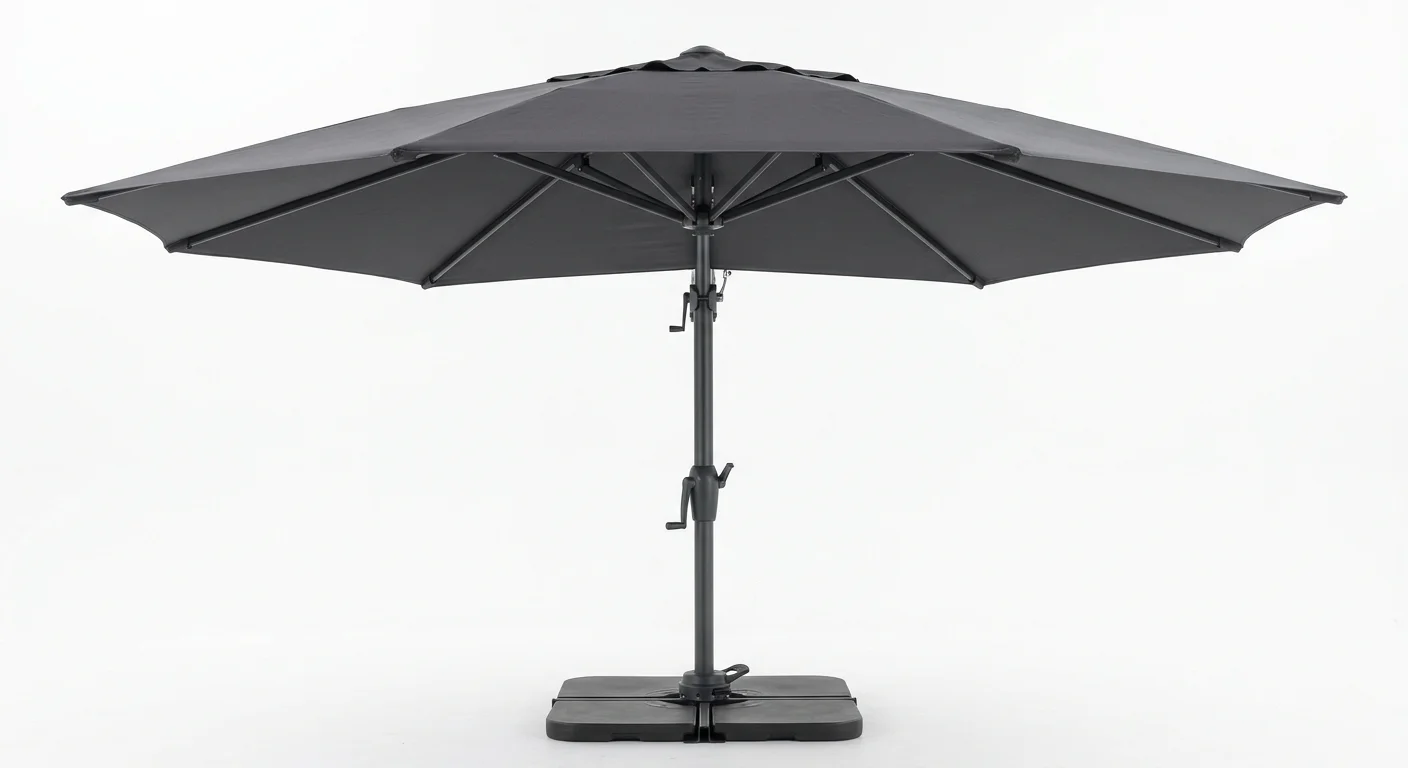
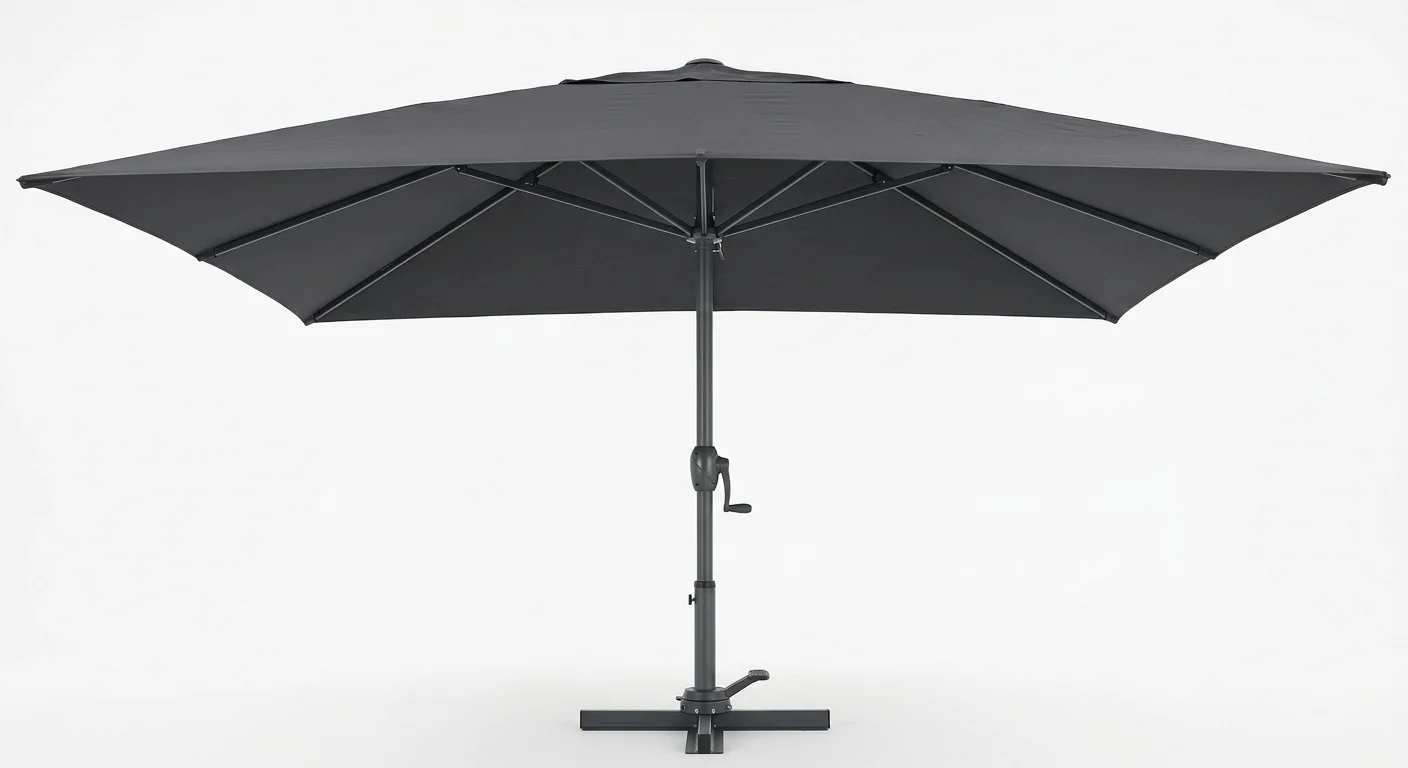
For the spacious villas found in areas like Sierra Cortina or the hills overlooking the golf courses, the primary challenge is the scale of the space. A small 2.5-meter umbrella looks lost on a large porcelain-tiled terrace and provides insufficient shade for a full dining set. In these settings, I recommend a heavy-duty 3.5m x 3.5m or 4m round cantilever parasol. These units, which typically cost between €1,200 and €1,900, offer 360-degree rotation and tilting mechanisms. This is crucial because, as the sun moves behind the Puig Campana in the late afternoon, the angle of the light becomes very low. A fixed umbrella won't help you then, but a tilting cantilever allows you to create a vertical wall of shade. Pair this with a 100kg to 120kg granite or water-filled base. I have seen 60kg bases dragged across terraces like they were made of paper during a summer storm, so never underestimate the weight required to keep these large canopies grounded.
Apartment living at the Cala de Finestrat requires a completely different strategy. Space is at a premium, and wind speeds are often higher due to the coastal proximity. A wall-mounted parasol is an excellent solution here. These systems eliminate the need for a heavy base, saving valuable floor space for your sun-loungers or a compact rattan lounge set. A 2.7-meter hexagonal wall-mount can be swung into position when needed and folded flat against the wall when the wind reaches speeds over 30km/h. If you are on a middle-floor balcony with a neighbor’s terrace above you, a half-parasol—designed to sit flush against the wall—is a practical choice for around €150 to €250, providing enough cover for a bistro table without obstructing the walkway.
Integration is key to a functional outdoor room. A shade sail is often the best "permanent" solution for covering an outdoor kitchen or a BBQ area, as it can be custom-cut to fit irregular shapes that a circular parasol cannot cover. I often suggest combining a fixed shade sail over the cooking zone with a mobile cantilever parasol over the dining-set or rattan lounge area. This creates different "zones" of temperature and light. When you invest in high-quality sun-loungers, placing them under a dedicated market umbrella with a 250g/m² solution-dyed acrylic fabric ensures that the furniture itself lasts longer, as constant UV exposure is the primary killer of both plastic and natural fibers in this region.
For those with south-facing terraces that become heat traps, I recommend looking at "Coolaroo" style fabrics for shade sails. The breathable weave allows hot air to escape upwards, which can drop the temperature underneath the sail by as much as 10 degrees Celsius compared to the ambient air temperature. This makes a massive difference during the peak of August when the stone floors of a terrace can otherwise reach 50 degrees Celsius, making it impossible to walk barefoot.
Logistics and Local Expertise in Delivery
Delivering and installing large-scale shade equipment in this area requires more than just a van; it requires an understanding of the local geography. The narrow, winding ascent into the Old Village presents a different set of challenges than the wide, modern boulevards near the commercial parks. We regularly navigate the steep inclines of the local hills to ensure that a 150kg granite base is delivered safely to its final position on your terrace, rather than just being dropped at the curb. We also serve the neighboring towns of Benidorm, La Nucia, Villajoyosa, and Alfaz del Pi, which means we are constantly moving through these areas and understand the specific access restrictions of various urbanizations.
One detail that many people overlook is the "last mile" of installation. If you are ordering a 3-meter cantilever, the box is often 2.6 meters long and very heavy. In many of the apartment blocks at the Cala, these boxes will not fit into standard elevators. We have the experience to handle these logistical hurdles, often coordinating manual carries up stairwells or using specialized equipment to get the product exactly where it needs to be. We don't just "deliver" a product; we ensure it is positioned correctly for the sun's path across your specific plot and that any permanent fixings for shade sails are chemically anchored into the structural substrate of the building, not just the decorative tiling.
Because I have been doing this here since 2019, I know which walls in the newer builds are hollow-brick and which are solid concrete, which dictates the type of expansion bolts we use. This local knowledge is the difference between a shade sail that stays tensioned for years and one that pulls the tiles off your wall during the first autumn rain. If you are unsure about what will work for your specific orientation—whether you are facing the morning sun from the sea or the harsh afternoon sun from the mountains—I offer a free consultation service. I can visit your property in Finestrat, measure the wind exposure, and suggest a configuration that balances aesthetics with the brutal reality of the Spanish climate. Our goal is to make sure that once your shade is installed, you can stop worrying about the weather and start enjoying your outdoor space.
 JW'"
/>
JW'"
/>