Why Expats in Dénia Love Outdoor Cooking
Dénia’s UNESCO Creative City of Gastronomy status, thriving marina district, and 36.5% expat population make it the culinary capital of the Costa Blanca — and a natural home for serious outdoor kitchens.
In 2015, UNESCO designated Dénia a Creative City of Gastronomy — the only town on the Costa Blanca to hold that distinction — and that culinary DNA runs through everything, including how expats approach outdoor cooking. With 42,000 residents and a large international community, Dénia attracts people genuinely passionate about what they eat and how they cook it.
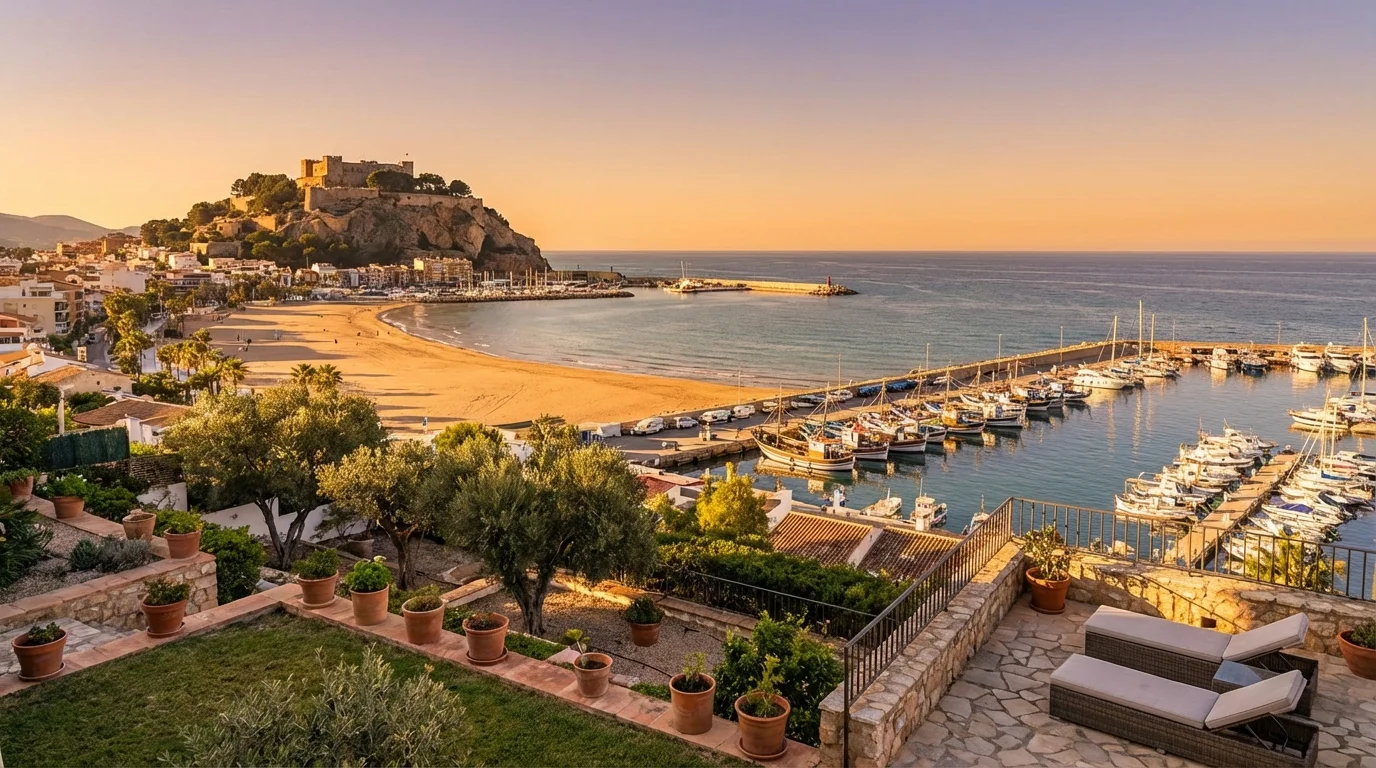
The town sprawls from the historic Castle of Dénia through the sandy Les Marines beaches to the rocky coves of Las Rotas. Behind it, the Montgó Natural Park creates a sheltered microclimate that makes outdoor cooking comfortable from late February through November.
Many residents chose Dénia for its restaurant scene — Michelin-starred Quique Dacosta put the town on the international map — and they bring that same culinary ambition home.
Answer capsule: Dénia’s UNESCO gastronomy status and food-literate expat community drive demand for high-performance outdoor cooking equipment including kamado grills, gas BBQs, and wood-fired pizza ovens.
Your Dénia Outdoor Kitchen Setup
From Les Marines beachfront apartments to countryside fincas near Montgó, Dénia offers the widest range of outdoor cooking environments on the northern Costa Blanca.
Along the Les Marines strip, modern apartments and semi-detached villas offer terraces of 15–30m² — enough for a gas BBQ and a standalone kamado side by side, or a single premium piece with a built-in prep area.
In the streets below the Castle and near the port, traditional townhouses feature interior courtyards and rooftop terraces. These sheltered, private spaces are uniquely rewarding for outdoor cooking. A compact pizza oven on a Dénia rooftop terrace, with the Castle walls lit above you at night, is a genuinely special setup.
The highest-value opportunities lie in the countryside properties between town and the Montgó. Fincas here often have 100m²+ outdoor areas with rustic barbecue structures dating back decades. Costa Blanca Outdoors recommends modernising these with contemporary appliances while preserving the original stone and brickwork — the blend of old Valencian craftsmanship and modern grilling technology is something we are particularly proud of delivering in Dénia.
Answer capsule: Dénia properties include Les Marines apartments for compact setups, Castle-district townhouses with atmospheric rooftop terraces, and Montgó fincas with expansive outdoor kitchen potential.
Gas, Charcoal, or Wood-Fired? Choosing Right for Dénia
In a UNESCO City of Gastronomy, fuel choice is about flavour first — and Dénia’s food-savvy expats increasingly choose wood and charcoal alongside gas for authentic results.
While gas BBQs remain practical for the Les Marines apartment community, a notably higher proportion of Dénia customers invest in wood-fired and charcoal cooking compared to other towns. The reason is flavour ambition.
Almond, orange, and olive wood from orchards between Dénia, Ondara, and Pedreguer is abundant and affordable. Several Dénia restaurants cook over wood or charcoal, and their influence filters directly into what homeowners want. If you have eaten a wood-grilled lubina at a Las Rotas beach restaurant, you understand why our Dénia customers ask about charcoal grills more often than gas.
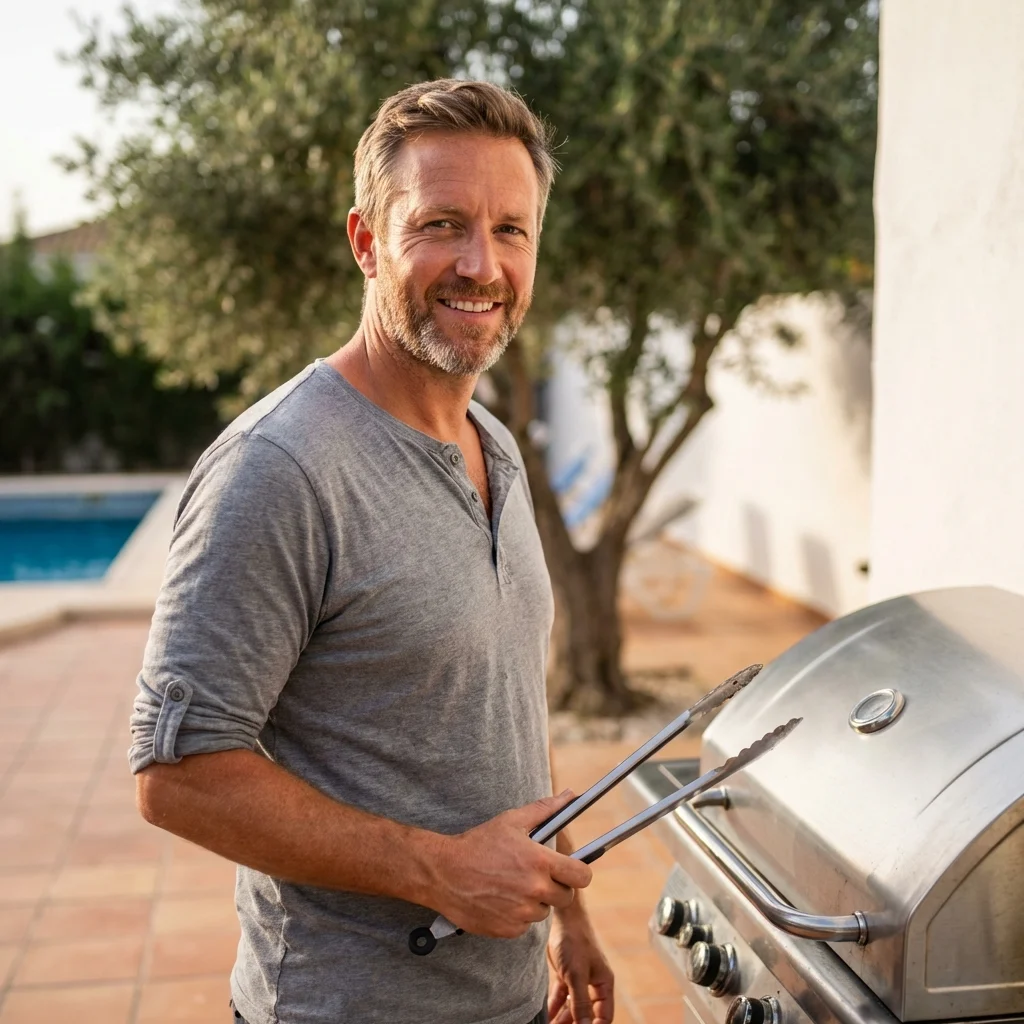
Kamado grills occupy a sweet spot for food-focused residents. The ability to smoke, grill, roast, and bake at precise temperatures appeals to cooks who think about technique, not just convenience. Costa Blanca Outdoors recommends the Kamado Joe Big Joe III for Dénia customers who entertain frequently — its 61cm cooking surface handles a whole leg of lamb or six pizzas in rotation, matching the generous hospitality Dénia is known for.
Answer capsule: Dénia’s food-literate expats favour charcoal and wood-fired cooking for flavour authenticity, with kamado grills offering the temperature precision that serious home cooks demand.
Delivery & Setup in Dénia
Dénia is our northernmost major delivery hub, with excellent AP-7 access and regular routes covering the town centre, Les Marines, Las Rotas, and surrounding areas.
As the largest town in our northern zone, Dénia receives frequent scheduled deliveries. The AP-7 and N-332 both feed directly into town, making logistics reliable even for oversized items like masonry pizza ovens.
Las Rotas properties along the winding coastal road occasionally require smaller vehicles due to narrow access and gated communities. Our team knows these roads and plans accordingly — if access is tricky, we arrange a site visit beforehand.
For larger projects, our Dénia-area tradespeople handle gas lines, drainage, electrical hookups, and custom stonework while we supply and install the cooking equipment. This coordinated approach is especially valuable for finca renovations near Montgó.
We deliver on the same routes to nearby Jávea, Ondara, and Pedreguer. Standard in-stock delivery is 5–10 working days.
Architectural Shade Solutions for the Northern Costa Blanca Lifestyle
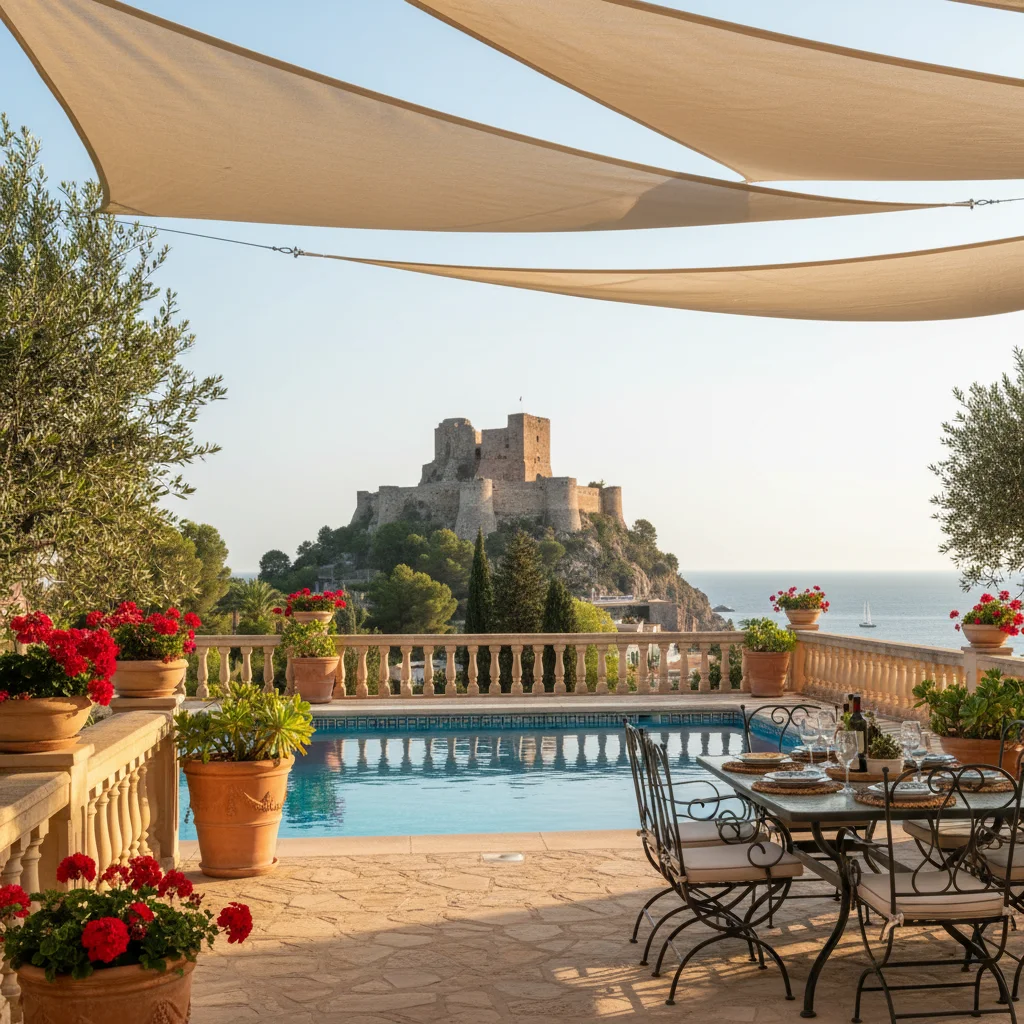
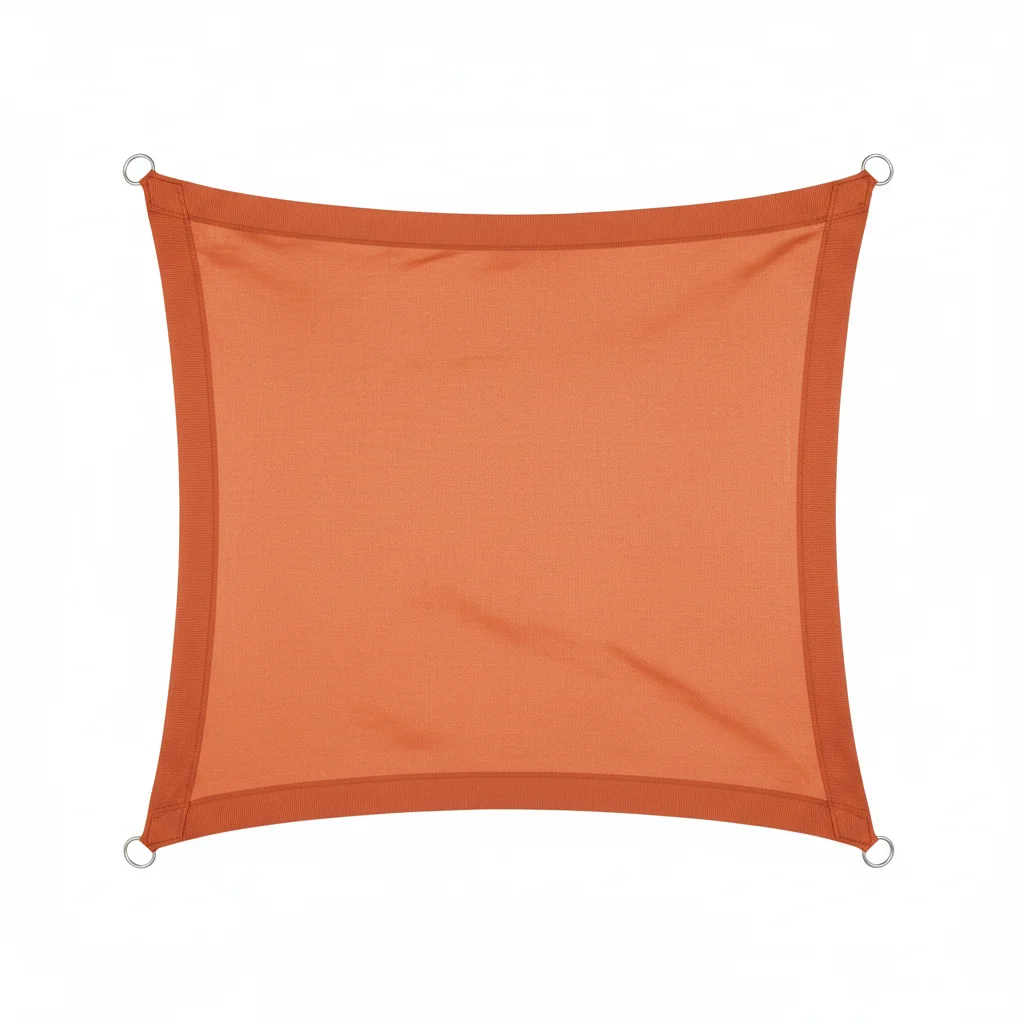
The sunlight in this specific corner of the coastline carries a particular intensity, reflecting off the Mediterranean and the limestone face of the Montgó. For the 42,000 residents living within this municipality, outdoor space is rarely an afterthought; it is the primary living area for nine months of the year. My experience working with over 200 families across the region has shown me that the international demographic here—representing about 36.5% of the population with a strong British, German, and Dutch presence—views the terrace as a high-functioning extension of the home. When you are dealing with property values averaging EUR 300,000 and luxury villas featuring expansive terraces of 40 to 80 square meters, a simple supermarket parasol is structurally and aesthetically inadequate. Shade sails have become the preferred architectural solution because they manage to provide massive coverage without the heavy visual or physical footprint of permanent roof structures.
In neighborhoods like Les Marines, where properties often sit on long, flat plots stretching toward the shoreline, the sun exposure is relentless from mid-morning until the late evening. Conversely, in the rugged terrain of Las Rotas or the elevated villas bordering the natural park, the topography creates unique shadows and wind patterns. The British and Northern European residents who have settled here often bring a culture of outdoor dining and "summer kitchens" that requires sophisticated sun protection. They seek a balance between maintaining a sea view and surviving the July heat. A well-placed HDPE fabric sail provides that 95% UV blockage while allowing hot air to rise through the breathable weave, a critical factor when the temperature hits 35 degrees Celsius and the air becomes stagnant. Unlike a solid roof, the sail maintains the "open-air" feeling that attracts people to this part of Spain in the first place.
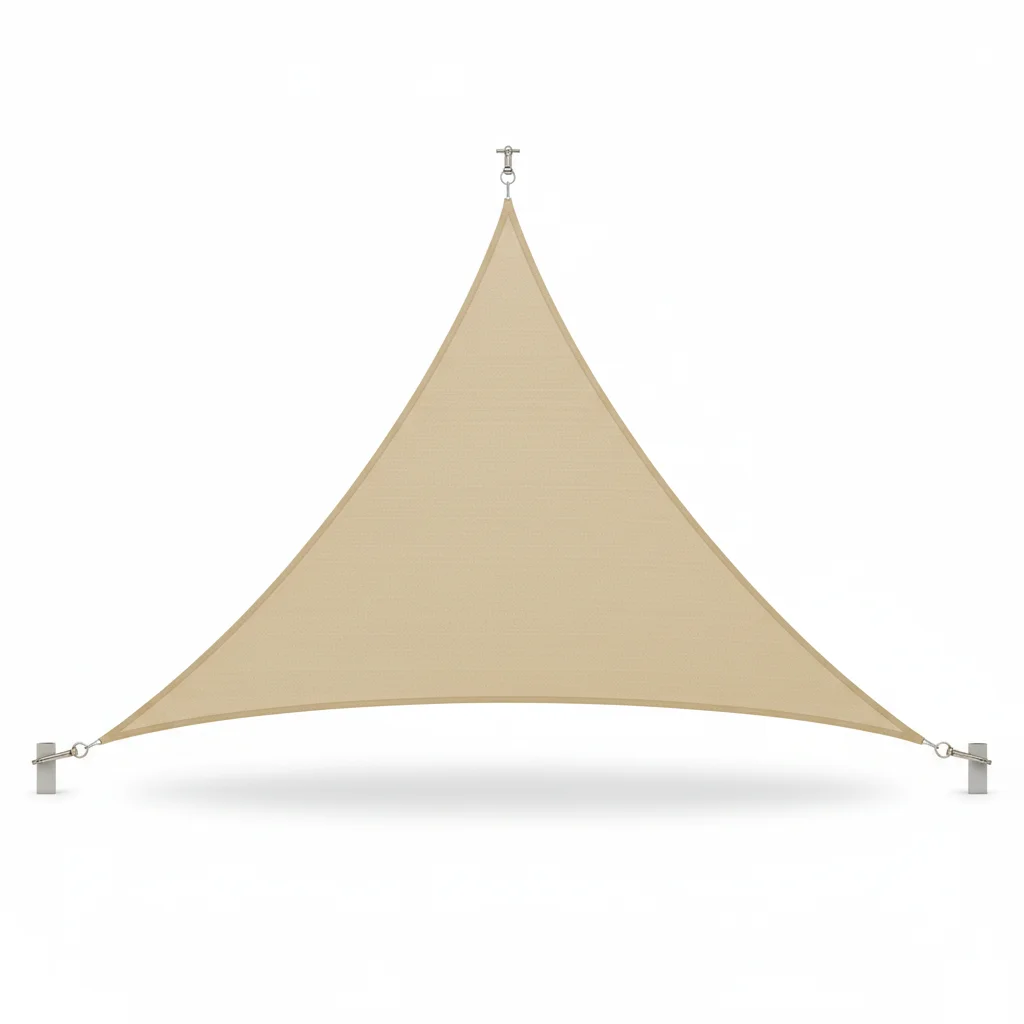
The architectural diversity found from the historic center near the Castle to the modern developments in the surrounding plains demands a flexible shade system. Many of the luxury hillside villas feature irregular terrace shapes that cannot be covered by traditional square awnings. This is where the custom-cut nature of shade sails proves its value. By utilizing multiple triangular or hypar configurations, we can follow the contours of a 60-square-meter pool deck or a narrow 40-meter-long balcony, creating layers of protection that move with the sun’s trajectory. This adaptability is why we see so many high-end installations in the residential zones stretching toward Javea or inland toward the valleys of Pedreguer and Jalon, where the outdoor living culture is equally ingrained but the environmental demands vary slightly.
Environmental Resilience and Local Installation Factors
Living in the shadow of the Montgó provides a unique microclimate that is significantly more sheltered than the exposed southern reaches of the province. This mountain protection acts as a natural buffer against the harsher inland winds, yet it creates its own set of meteorological quirks. In this area, we experience a moderate coastal breeze that is generally consistent, which is ideal for shade sails as it keeps the fabric under constant, gentle tension rather than the violent buffeting seen in more exposed northern climates. Furthermore, the humidity levels here are notably lower than in the southern zones of the Costa Blanca, which extends the lifespan of the HDPE (High-Density Polyethylene) fabrics. However, the proximity to the sea for those in the port district or Les Marines means that salt air is a constant factor. Every piece of hardware, from the turnbuckles to the eye bolts, must be Marine Grade 316 Stainless Steel. Using inferior 304 grade or galvanized steel is a common mistake that leads to tea-staining and structural failure within eighteen months.
When considering an installation, the local "Comunidad de Propietarios" rules must be the first point of investigation. In many of the apartment complexes near the marina or along the first line of the beach, there are strict regulations regarding the color and type of external fixtures. Generally, shade sails are looked upon more favorably than permanent bioclimatic pergolas or traditional fold-out awnings because they are classified as "temporary" structures. They can be unclipped in minutes if a red-level wind warning is issued by AEMET, or taken down entirely during the winter months. This versatility often simplifies the approval process with community administrators. For villa owners on the slopes of the mountain, the challenge is often the substrate. Many properties are built on rocky ground or utilize Tosca stone facades. While Tosca is iconic to this region, it is a soft calcarenite rock and cannot support the several hundred kilograms of tension required for a large sail. In these cases, we often have to install independent powder-coated steel posts, which must be chemically anchored into the reinforced concrete of the terrace sub-base.
Maintenance in this specific environment is relatively straightforward but essential. The lower humidity prevents a great deal of the mold growth seen in tropical climates, but the "calima" (the Saharan dust clouds that occasionally blanket the coast) can leave a layer of fine red silt on the fabric. A simple rinse with a garden hose is usually sufficient, as the HDPE material is hydrophobic and does not rot. For a standard 5x5 meter square sail, which typically retails between EUR 600 and EUR 900 depending on the weight of the fabric, this minimal upkeep ensures a lifespan of eight to ten years. One specific product I frequently recommend for this area is the Commercial 95 architectural fabric. It is engineered to withstand the high UV indices we see in July and August while remaining stable under tension. A custom-fabricated triangle of this material, including all marine-grade hardware, usually sits in the EUR 450 to EUR 750 bracket, providing a much higher return on investment than a mid-range parasol that would likely be destroyed by a sudden gust of wind.
Tailored Configurations for Local Property Types
The recommendation for a property depends heavily on its specific location and architecture. For the large luxury villas found in the higher elevations, I often suggest a "multi-sail" array. Rather than trying to cover a 70-square-meter terrace with one massive piece of fabric—which creates enormous load points and can look like a circus tent—we utilize three or four overlapping triangles. This configuration allows for "gaps" that let the breeze circulate more effectively and creates a dynamic play of light and shadow. By using different heights for the mounting points, you create a three-dimensional "hypar" (hyperbolic paraboloid) shape. This is not just for aesthetics; the tension created by pulling the corners to different heights prevents the fabric from sagging in the middle and stops the "puddling" of water during the heavy autumnal rains that are characteristic of the northern Costa Blanca.
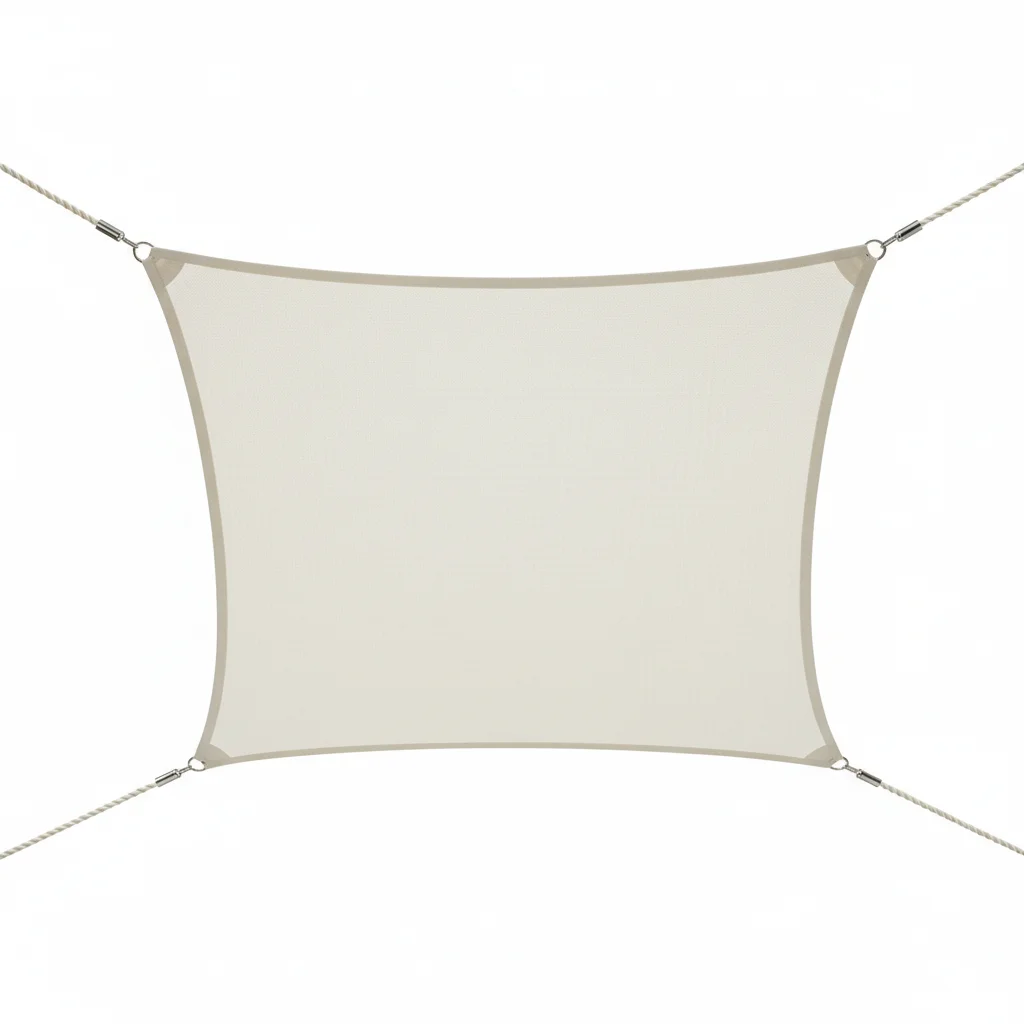
For the modern apartments and penthouses, especially those in the newer developments toward Ondara or the port, the space is usually more linear. Here, a rectangular sail is often the most practical choice. If the terrace is 40 square meters but narrow, a single long sail can be mounted to the building facade on one side and to slim, angled posts on the railing side. This setup provides a clean, minimalist look that complements contemporary Spanish architecture. It is also worth noting how these sails integrate with other products. Many of my clients choose to use a shade sail as a "soft" transition between the house and a more permanent feature like a bioclimatic pergola or a heavy-duty awning. You might have a bioclimatic pergola over the main outdoor dining table for total weather control, but then use a series of shade sails to provide dappled light over the pool deck or the children's play area.
In the smaller inland towns like Pedreguer or the Jalon Valley, the wind profile can be more erratic as it funnels through the mountains. In these locations, I recommend slightly smaller sails with heavy-duty tensioning springs. These springs act as shock absorbers, allowing the sail to "breathe" during a sudden gust before snapping back into its taut, architectural shape. This prevents the energy of the wind from being transferred directly into your wall fixings, which is vital for older properties with traditional masonry. Regardless of the property type, the goal is always the same: creating a usable "blue zone" where the family can congregate safely during the peak heat hours of 2:00 PM to 5:00 PM, when the Mediterranean sun is at its most punishing.
Local Logistics and Professional Integration
Navigating the logistics of a project in this region requires a granular understanding of the local geography. Delivering and installing large-scale shade solutions in the historic center near the Castle involves navigating narrow, one-way streets and managing tight access points where traditional cranes or large delivery vehicles simply cannot enter. Conversely, the wide avenues of the marina district or the open plots of the plains allow for easier access but present their own challenges, such as high salt-mist exposure during the installation process. My team and I are regularly moving between these zones, as well as serving the neighboring municipalities of Javea, Ondara, and Pedreguer. We understand that a delivery to a villa on a steep track in the Jalon Valley requires a different approach than a delivery to a frontline apartment in Les Marines.
One local insight that outsiders often overlook is the "Llebeig" wind. This is a warm wind that can pick up speed in the afternoons, and its direction is influenced heavily by the local topography. When we survey a site for a shade sail, we don't just look at where the sun is; we look at the orientation of the house relative to these prevailing air currents. We position the leading edge of the sail to "cut" into the wind rather than catching it like a parachute. This level of detail is what separates a professional, long-term installation from a DIY project that fails during the first summer storm. We also account for the fact that many residents here are seasonal; we ensure the hardware systems are simple enough for a property manager or a neighbor to take the sails down if the owner is away during the winter months.
If you are currently looking at your terrace and realizing that it is unusable for half of the day, I encourage you to consider the architectural and practical benefits of a custom shade sail system. It is a solution that respects the aesthetics of your home while providing high-performance protection against the specific environmental challenges of our coastal and mountain microclimates. We offer a comprehensive consultation service where we can discuss fabric weights, color choices that won't fade in the intense UV light, and the most secure fixing points for your specific wall type. Whether you are in the heart of the port, the heights of the mountain, or the surrounding valleys, we provide the local expertise and the high-grade materials required to transform your outdoor space into a comfortable, year-round living area. Reach out for a conversation about your project, and we can look at how to maximize your terrace’s potential while staying within your budget and complying with local regulations.
 JW'"
/>
JW'"
/>