Why Expats in Dénia Love Outdoor Cooking
Dénia’s UNESCO Creative City of Gastronomy status, thriving marina district, and 36.5% expat population make it the culinary capital of the Costa Blanca — and a natural home for serious outdoor kitchens.
In 2015, UNESCO designated Dénia a Creative City of Gastronomy — the only town on the Costa Blanca to hold that distinction — and that culinary DNA runs through everything, including how expats approach outdoor cooking. With 42,000 residents and a large international community, Dénia attracts people genuinely passionate about what they eat and how they cook it.
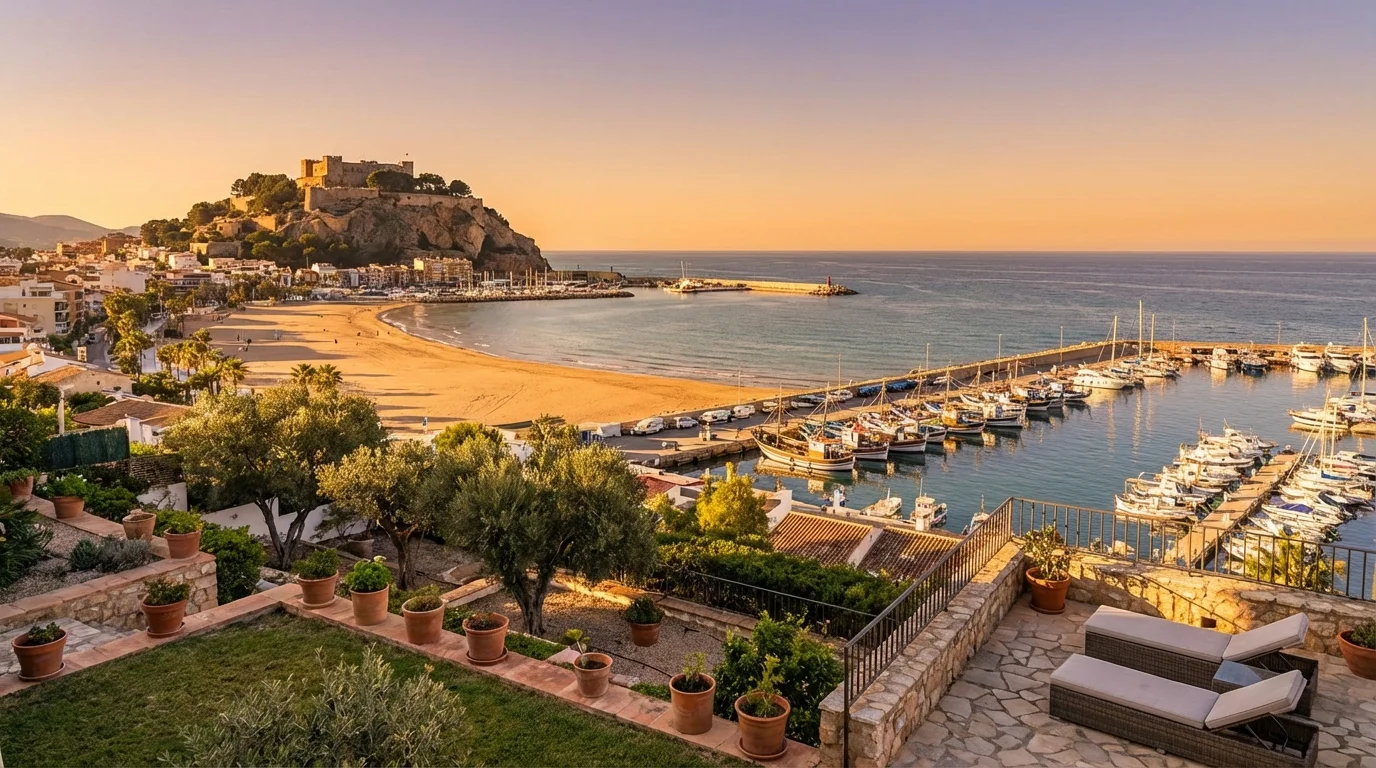
The town sprawls from the historic Castle of Dénia through the sandy Les Marines beaches to the rocky coves of Las Rotas. Behind it, the Montgó Natural Park creates a sheltered microclimate that makes outdoor cooking comfortable from late February through November.
Many residents chose Dénia for its restaurant scene — Michelin-starred Quique Dacosta put the town on the international map — and they bring that same culinary ambition home.
Answer capsule: Dénia’s UNESCO gastronomy status and food-literate expat community drive demand for high-performance outdoor cooking equipment including kamado grills, gas BBQs, and wood-fired pizza ovens.
Your Dénia Outdoor Kitchen Setup
From Les Marines beachfront apartments to countryside fincas near Montgó, Dénia offers the widest range of outdoor cooking environments on the northern Costa Blanca.
Along the Les Marines strip, modern apartments and semi-detached villas offer terraces of 15–30m² — enough for a gas BBQ and a standalone kamado side by side, or a single premium piece with a built-in prep area.
In the streets below the Castle and near the port, traditional townhouses feature interior courtyards and rooftop terraces. These sheltered, private spaces are uniquely rewarding for outdoor cooking. A compact pizza oven on a Dénia rooftop terrace, with the Castle walls lit above you at night, is a genuinely special setup.
The highest-value opportunities lie in the countryside properties between town and the Montgó. Fincas here often have 100m²+ outdoor areas with rustic barbecue structures dating back decades. Costa Blanca Outdoors recommends modernising these with contemporary appliances while preserving the original stone and brickwork — the blend of old Valencian craftsmanship and modern grilling technology is something we are particularly proud of delivering in Dénia.
Answer capsule: Dénia properties include Les Marines apartments for compact setups, Castle-district townhouses with atmospheric rooftop terraces, and Montgó fincas with expansive outdoor kitchen potential.
Gas, Charcoal, or Wood-Fired? Choosing Right for Dénia
In a UNESCO City of Gastronomy, fuel choice is about flavour first — and Dénia’s food-savvy expats increasingly choose wood and charcoal alongside gas for authentic results.
While gas BBQs remain practical for the Les Marines apartment community, a notably higher proportion of Dénia customers invest in wood-fired and charcoal cooking compared to other towns. The reason is flavour ambition.
Almond, orange, and olive wood from orchards between Dénia, Ondara, and Pedreguer is abundant and affordable. Several Dénia restaurants cook over wood or charcoal, and their influence filters directly into what homeowners want. If you have eaten a wood-grilled lubina at a Las Rotas beach restaurant, you understand why our Dénia customers ask about charcoal grills more often than gas.
Kamado grills occupy a sweet spot for food-focused residents. The ability to smoke, grill, roast, and bake at precise temperatures appeals to cooks who think about technique, not just convenience. Costa Blanca Outdoors recommends the Kamado Joe Big Joe III for Dénia customers who entertain frequently — its 61cm cooking surface handles a whole leg of lamb or six pizzas in rotation, matching the generous hospitality Dénia is known for.
Answer capsule: Dénia’s food-literate expats favour charcoal and wood-fired cooking for flavour authenticity, with kamado grills offering the temperature precision that serious home cooks demand.
Delivery & Setup in Dénia
Dénia is our northernmost major delivery hub, with excellent AP-7 access and regular routes covering the town centre, Les Marines, Las Rotas, and surrounding areas.
As the largest town in our northern zone, Dénia receives frequent scheduled deliveries. The AP-7 and N-332 both feed directly into town, making logistics reliable even for oversized items like masonry pizza ovens.
Las Rotas properties along the winding coastal road occasionally require smaller vehicles due to narrow access and gated communities. Our team knows these roads and plans accordingly — if access is tricky, we arrange a site visit beforehand.
For larger projects, our Dénia-area tradespeople handle gas lines, drainage, electrical hookups, and custom stonework while we supply and install the cooking equipment. This coordinated approach is especially valuable for finca renovations near Montgó.
We deliver on the same routes to nearby Jávea, Ondara, and Pedreguer. Standard in-stock delivery is 5–10 working days.
Designing Permanent Shade for Dénia Terraces
Living on this stretch of the coast since 2019 has taught me that outdoor space is rarely just a "feature" of a home; it is the primary reason people move here. When you look at the 42,000 residents currently calling this municipality home, over a third are international expats, primarily from the UK, Germany, and the Netherlands. This demographic shift has fundamentally changed how we design our terraces. We aren't just looking for a spot to sit in the sun for twenty minutes. We are looking to recreate the functionality of our indoor living rooms and kitchens under the Spanish sky. Because property prices here often hover around the EUR 300,000 mark for standard dwellings and climb significantly higher for luxury hillside villas, the investment in a fixed pergola is as much about property value as it is about lifestyle.
The architectural landscape here is dominated by substantial luxury villas, particularly as you move toward the elevated plots near the Montgó Natural Park. These properties typically boast expansive terraces ranging from 40 to 80 square meters, often overlooking a private pool with views stretching toward the Mediterranean. A standard retractable awning often feels insufficient for these grand spaces. A fixed pergola provides the structural permanence required to anchor such a large area. Whether you are living near the historic Castle or further out toward the rugged coastline of Las Rotas, the goal is to create a seamless transition between the interior and the terrace. The British and Northern European influence in this region has brought a specific demand for high-spec outdoor cooking stations and shaded dining areas that can host ten or twelve people comfortably, which is exactly where a fixed structure excels.
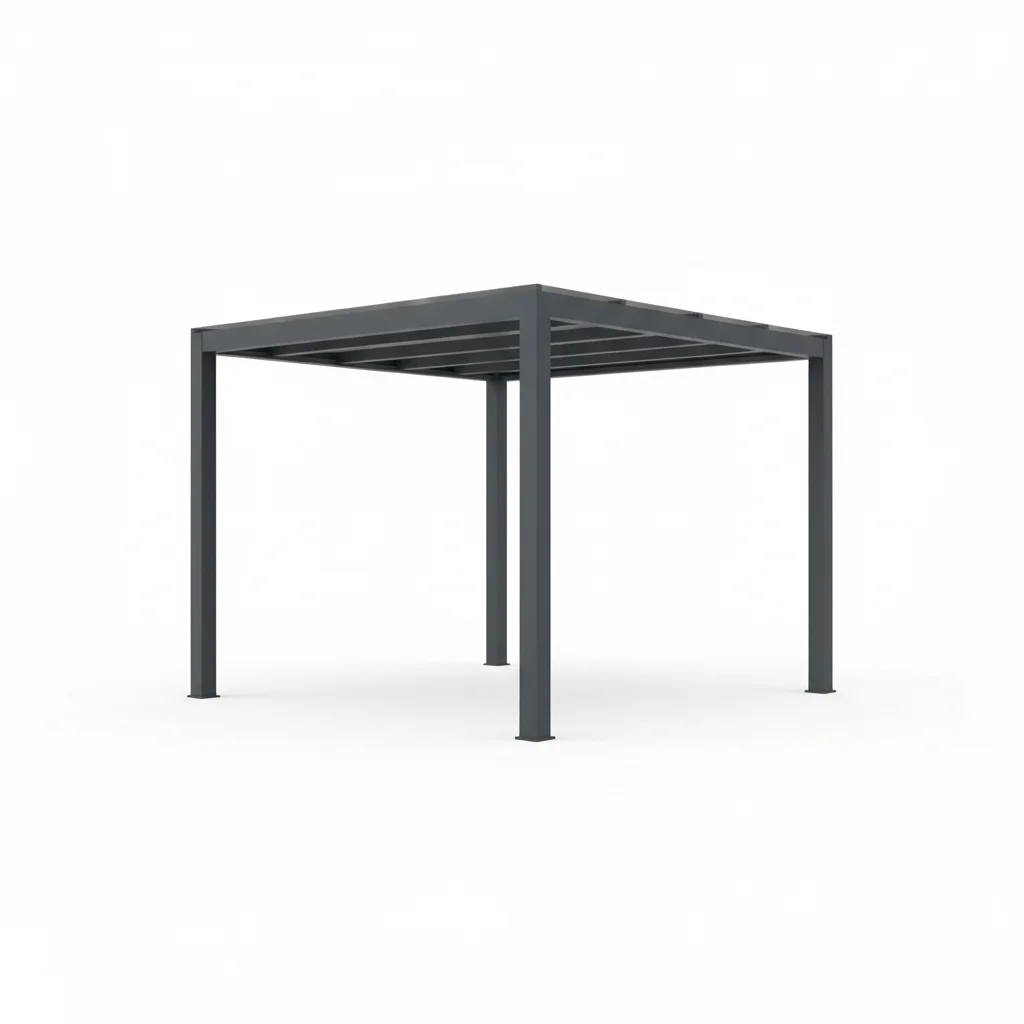
In the coastal stretches of Les Marines, the property style shifts slightly toward more modern, flat-roofed designs where sleek aluminium frames fit the aesthetic perfectly. The international community here tends to treat the terrace as a primary dining room for nine months of the year. This shift in usage means that the "temporary" feel of a parasol or a lightweight gazebo simply won't suffice. When I walk through these urbanisations, I see a clear preference for structures that feel like part of the original build. A fixed pergola, whether crafted from treated Nordic pine or powder-coated aluminium, offers that sense of architectural integrity. It allows for the installation of permanent lighting, overhead fans, and even integrated heating, which are essential for those cooler January evenings when the sun drops behind the mountain but you still want to enjoy the fresh air.
Technical Considerations for the Local Microclimate
The environmental conditions in this specific corner of the Costa Blanca are unique, largely due to the protective presence of the Montgó mountain. This creates a sheltered microclimate that differs significantly from the wind-swept plains of the southern zones or the high-humidity pockets further north. Here, we enjoy a moderate coastal breeze and generally lower humidity, which is excellent for the longevity of outdoor structures. However, the proximity to the sea—especially for those living in Las Rotas or the front line of Les Marines—means that salt air is a constant factor. If you are choosing an aluminium fixed pergola, it must be marine-grade powder coated to prevent the pitting and oxidation that can occur within just a few years of installation. For a standard 4x3 meter aluminium frame, you should expect to invest between EUR 3,500 and EUR 5,500 for a professional-grade setup that is built to withstand these coastal elements.
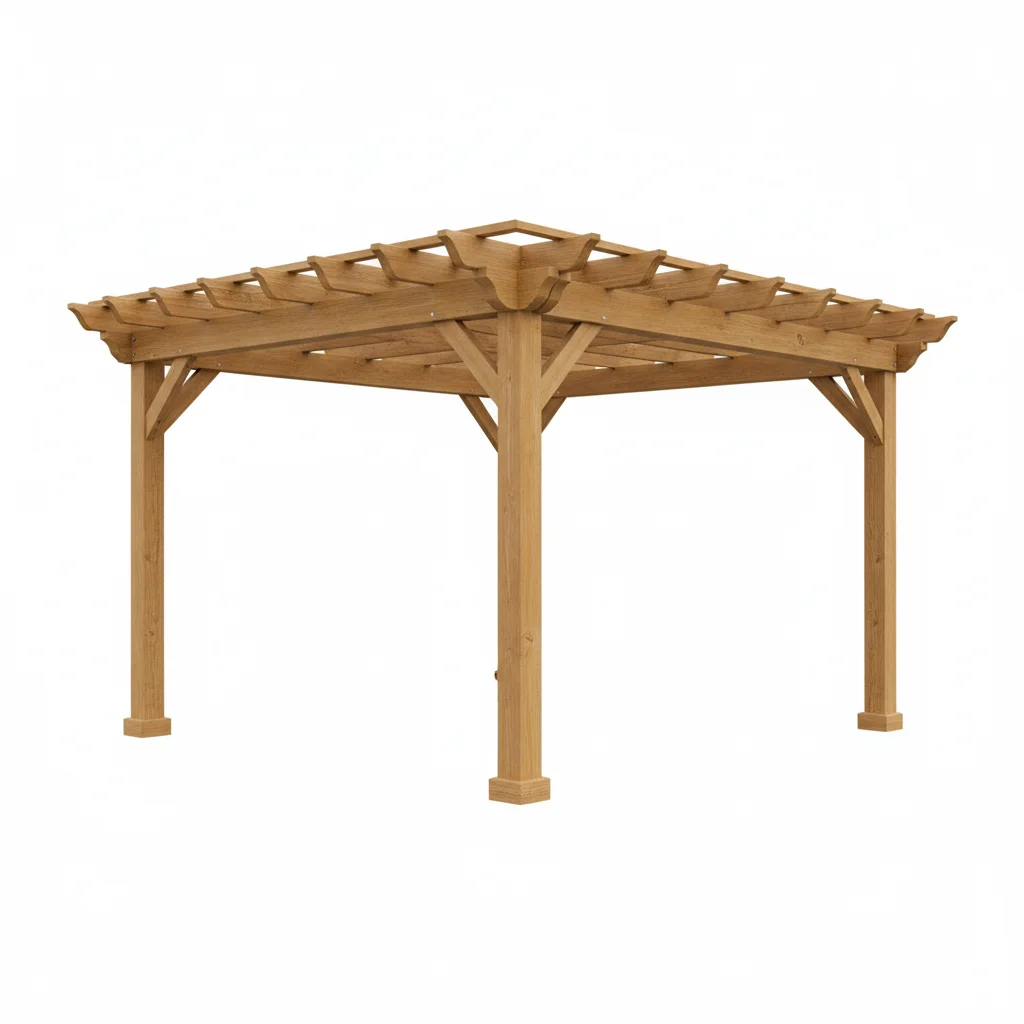
One of the most frequent questions I get from residents concerns the "comunidad de propietarios" or the local building regulations. In many urbanisations, particularly those with shared aesthetic standards, a fixed structure is often preferred over a bright, mismatched fabric awning because it maintains a cleaner, more uniform look for the building. However, it is vital to understand that a fixed pergola is generally classified as a non-permanent structure if it is not fully enclosed with brickwork, which often simplifies the "obra menor" (minor works) permit process. In the hillside villas where space is more private, the focus shifts toward wind resistance. While we are sheltered, the "Llebeig" wind can still gust across the slopes. A fixed timber pergola, anchored with steel footings into a reinforced concrete terrace, provides a level of security that no retractable system can match.
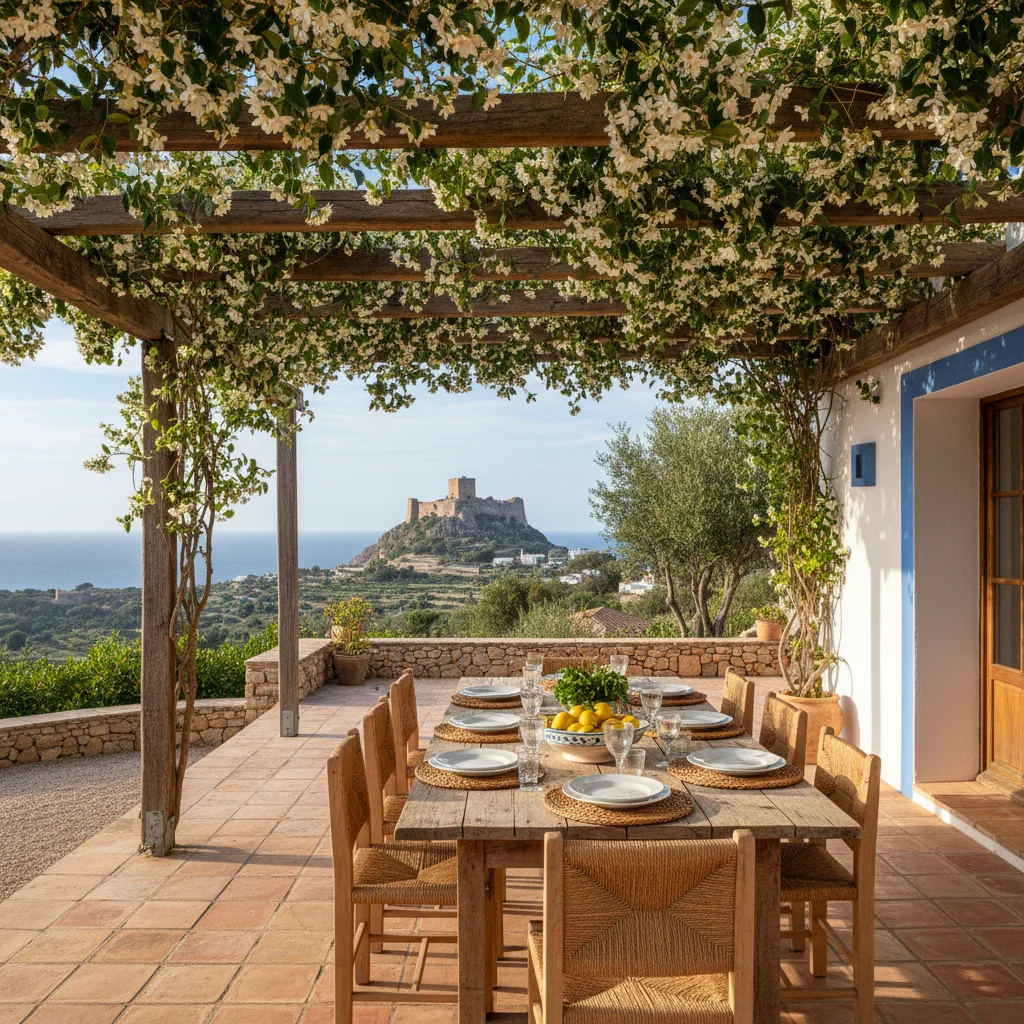
Maintenance is another area where local knowledge is key. For those who prefer the rustic, traditional look of a timber pergola to match a classic Spanish villa, the wood must be treated specifically for the high UV index we experience here. The Spanish sun is far more damaging to timber than the rain ever was in the UK or Germany. I recommend a high-quality Lasur treatment rather than a standard varnish; a Lasur penetrates the wood and allows it to breathe, preventing the peeling and cracking that occurs under the intense July heat. For a high-end timber installation covering a 20 square meter dining area, budgets typically range from EUR 6,000 to EUR 9,000 depending on the thickness of the beams and the type of roofing material selected, such as bamboo slats, polycarbonate, or insulated sandwich panels.
Tailored Recommendations for Local Property Types
If you are living in one of the luxury villas near the Montgó, your terrace is likely your most used "room." For these properties, I almost always recommend a heavy-duty timber or a robust anthracite aluminium pergola that spans at least 25 to 30 square meters. The scale of these homes demands a structure with presence. A popular configuration I’ve installed for many families involves a fixed aluminium frame with a custom-fitted "toldos planos" (sliding fabric roof) or a fixed insulated roof. This setup usually costs around EUR 7,500 and creates a completely shaded outdoor kitchen and lounge area. By choosing a fixed structure, you can safely mount a television and high-end sound system, effectively moving your entire entertainment hub outside.
For residents in the modern apartment complexes or townhouses closer to the town center or Les Marines, space is often more constrained, but the need for shade is just as high. In these settings, a 3x3 or 4x3 meter aluminium pergola is the gold standard. It provides a defined footprint for a dining table without overwhelming the terrace. These structures are also the perfect foundation for glass curtains. By adding glass curtains to a fixed pergola, you create a "glass room" that can be fully opened in the summer and completely sealed in the winter. This is a game-changer for the 36.5% of us who live here year-round. It allows you to sit "outside" during a November rainstorm or a chilly February morning while remaining perfectly warm. A complete package including a mid-sized fixed pergola and basic glass curtains typically starts at approximately EUR 8,000 to EUR 12,000.
Another effective combination for this area is pairing a fixed pergola with vertical drop awnings or "screen" blinds. Because the sun sits lower in the sky during the late afternoon—particularly impactful for west-facing properties looking toward the mountains—overhead shade isn't always enough. A fixed frame allows for the sturdy mounting of these side screens, which can be pulled down to block the glare while still allowing the moderate coastal breeze to circulate through the mesh. This creates a private, cool sanctuary that feels significantly more substantial than a simple parasol. If you already have a bioclimatic pergola in one area of your terrace, a fixed pergola can be used to extend that shade into a secondary zone, such as a BBQ area, for a fraction of the cost of a second motorized unit.
Delivery and Professional Installation Logistics
We have been operating across this region for years, and our delivery teams are intimately familiar with the logistical challenges of the local geography. Whether you are located in the heart of the town, in the quiet valleys of Pedreguer and Ondara, or tucked away in the citrus groves of Jalon, we handle the entire process. One thing many people overlook is the access to hillside properties. The winding, narrow roads leading up toward the Montgó or the steep driveways in parts of Javea require careful planning. We don't just turn up with a truck; we scout the access points to ensure that 6-meter aluminium profiles or heavy timber beams can be safely transported to your terrace without damaging your property or blocking the neighborhood roads.
Our expertise also extends to the technical side of the installation. Many terraces in this area are built over "cámaras de aire" (air chambers) or have complex waterproofing layers beneath the tiles. You cannot simply bolt a heavy pergola into the floor without knowing what lies beneath. We use specialized chemical anchoring systems and, where necessary, custom-fabricated spreader plates to ensure your pergola is rock-solid without compromising the watertight integrity of your terrace. This is particularly important for those 40-80 square meter luxury terraces where a leak into the room below could be a catastrophic and expensive mistake.
If you are considering upgrading your outdoor space, the best way to start is with a conversation. We offer a free, no-obligation consultation where I can visit your home, measure the space, and discuss which materials will best suit your property's orientation and your personal style. My goal is always to provide a solution that looks like it was designed by the original architect, not an afterthought. From the initial design to the final bolt, we manage the project so you can get back to what really matters—enjoying the incredible lifestyle that this part of the world provides. Whether you are looking for a simple EUR 2,000 shade solution or a full EUR 12,000 outdoor room renovation, we bring the same level of local expertise and British precision to every project.
 JW'"
/>
JW'"
/>