Why Expats in Altea Love Outdoor Cooking
Altea’s artistic Old Town, Scandinavian heritage, and year-round mild climate create a distinctly creative approach to outdoor cooking that blends Mediterranean tradition with northern European design sensibility.
While Calpe draws a broad international mix and Benidorm pulls the holiday crowd, Altea appeals to people who value aesthetics and a slower pace. The 35% expat population — with a distinctive Scandinavian presence alongside British and Dutch communities — gives outdoor cooking here a unique character. Setups tend to be thoughtfully designed and built to complement the whitewashed beauty Altea is famous for.
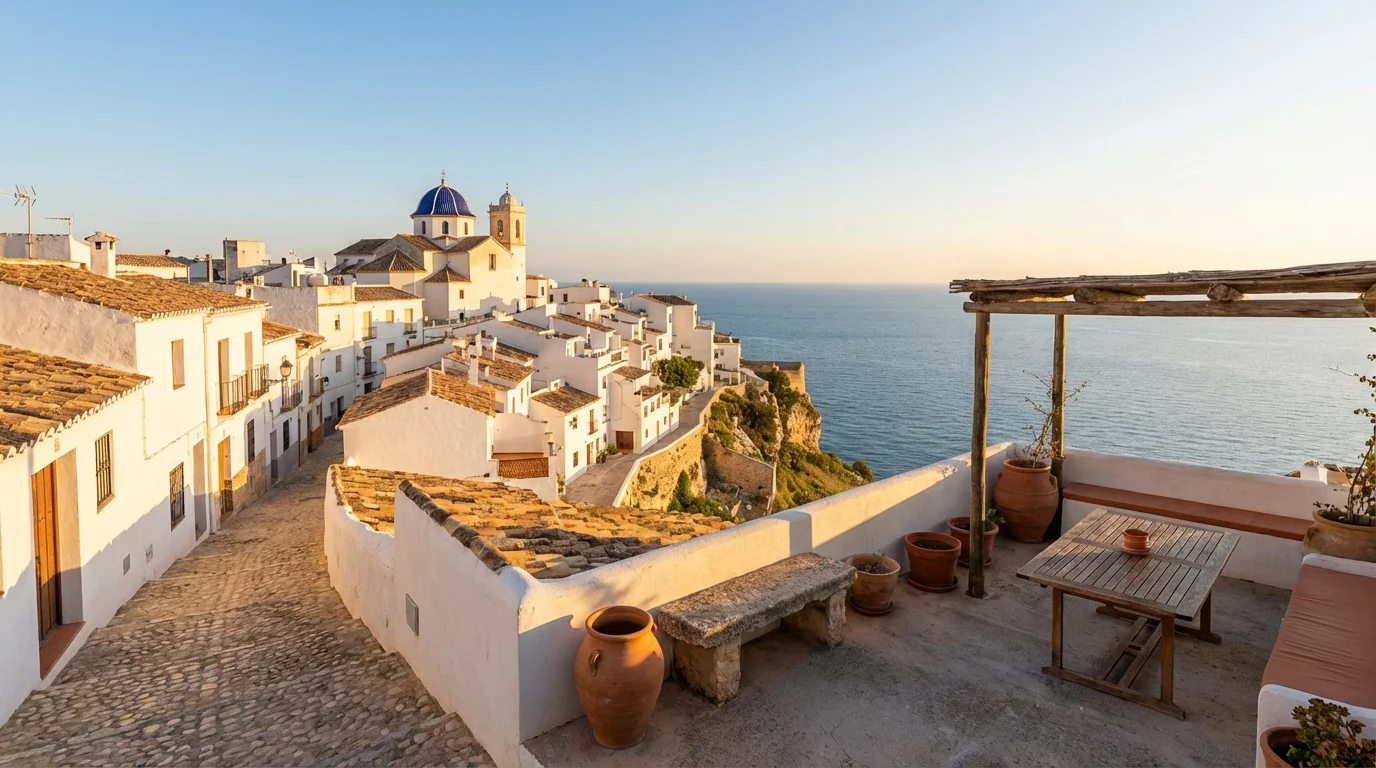
The Old Town, crowned by the iconic blue-domed church of Nuestra Señora del Consuelo, cascades down the hillside in cobbled streets and bougainvillea-draped terraces. Behind it rises the Sierra de Bernia, sheltering Altea from northerly weather — January averages of 12°C make outdoor cooking viable twelve months a year.
Scandinavian residents have been settling here since the 1960s, and their design-forward approach shows in how they build outdoor spaces — clean lines, quality materials, functional layouts. This has shaped Altea into the most design-conscious outdoor cooking market on the Costa Blanca.
Answer capsule: Altea’s artistic community, Scandinavian design influence, and Sierra de Bernia microclimate create demand for aesthetically refined outdoor kitchens, kamado grills, and pizza ovens.
Your Altea Outdoor Kitchen Setup
From Old Town rooftop terraces with church-dome views to modern villas with minimalist outdoor kitchens, Altea demands equipment that looks as good as it performs.
The Old Town offers characterful townhouses where rooftop terraces of 8–15m² are the primary cooking space. The settings are extraordinary — cooking with the blue dome above and the Mediterranean below — but the key is choosing equipment that complements the historic surroundings. A premium compact kamado or a sleek gas BBQ fits perfectly.
In Altea Hills, the Sierra de Bernia foothills, and the Mascarat area, modern villas feature purpose-designed outdoor living spaces. Stainless steel, matte black finishes, and minimalist lines dominate. These are the properties where we deliver our most architecturally integrated outdoor kitchen builds.
Altea la Vella, the small inland village just behind Altea, deserves special mention. Properties are larger, more affordable, and set in mature gardens. Costa Blanca Outdoors recommends these homeowners create dedicated outdoor kitchen zones — a cooking area among the olive and citrus trees, with a masonry pizza oven as the centrepiece, is one of the most rewarding setups we install anywhere on the Costa Blanca.
Answer capsule: Altea Old Town terraces suit compact, design-forward equipment, while Altea Hills villas and Altea la Vella gardens accommodate full architecturally integrated outdoor kitchen builds.
Gas, Charcoal, or Wood-Fired? Choosing Right for Altea
Altea’s design-conscious community chooses equipment that combines visual appeal with cooking performance — form and function in equal measure.
Gas BBQs remain the most popular choice, but Altea customers consistently gravitate toward premium, design-led models — stainless steel units treated as furniture rather than hardware. Built-in gas systems with flush-mount installation are a frequent request, reflecting the emphasis on visual harmony with outdoor spaces.
Kamado grills have found an enthusiastic audience among Scandinavian residents. The hygge-meets-Mediterranean lifestyle — slow cooking, natural materials, gathering around the fire — aligns perfectly with kamado philosophy. We see strong demand for matte black and earth-toned kamados that blend with Altea’s natural palette.
Wood-fired pizza ovens are where Altea’s creative community expresses itself. Several customers have commissioned custom tile surrounds or hand-painted ceramic facades for their ovens — turning a cooking tool into outdoor art. Firewood suppliers in Callosa d’en Sarrià (10 minutes inland) and Alfaz del Pi offer almond and olive wood year-round. Costa Blanca Outdoors recommends the Clementi or Alfa Forni ranges for Altea — their contemporary Italian design language complements the town’s aesthetic beautifully.
Answer capsule: Altea’s design-focused expats prefer premium-finish gas BBQs and matte-toned kamado grills, with wood-fired pizza ovens often becoming statement terrace centrepieces.
Delivery & Setup in Altea
Altea’s central position between Calpe and Benidorm gives it excellent road access, with our team experienced in navigating Old Town streets and Altea Hills private communities.
The modern areas — marina district, beachfront, newer residential zones — are fully accessible for large vehicles. Altea Hills has private roads with security gates, and we coordinate access in advance.
The Old Town presents the biggest logistical challenge in our northern zone. Cobbled streets, steps, and narrow doorways mean advance planning is essential. We survey the route beforehand and carry specialist equipment for stairs and tight corners.
Neighbouring Calpe and Benidorm are on our standard Altea routes, along with Alfaz del Pi. Delivery is 5–10 working days for stocked items, with custom outdoor kitchen projects on a 3–5 week timeline including design consultation and professional installation.
Shade Sails in Altea: Engineering Outdoor Comfort for the White Town
Living on this specific stretch of the Costa Blanca since 2019 has taught me that outdoor living is less of a luxury and more of a structural necessity. When you look up at the iconic Blue Dome Church or gaze across the Sierra de Bernia, you realize that the architecture here is defined by light. However, for the 35% of residents who have moved here from the UK, Scandinavia, or the Netherlands, that light quickly becomes a challenge during the peak months from June to September. I have spent the last five years helping over 200 families navigate the complexities of local microclimates, and I have found that shade sails are often the most effective way to manage the intense UV radiation without sacrificing the open-air aesthetic that defines our local property market.
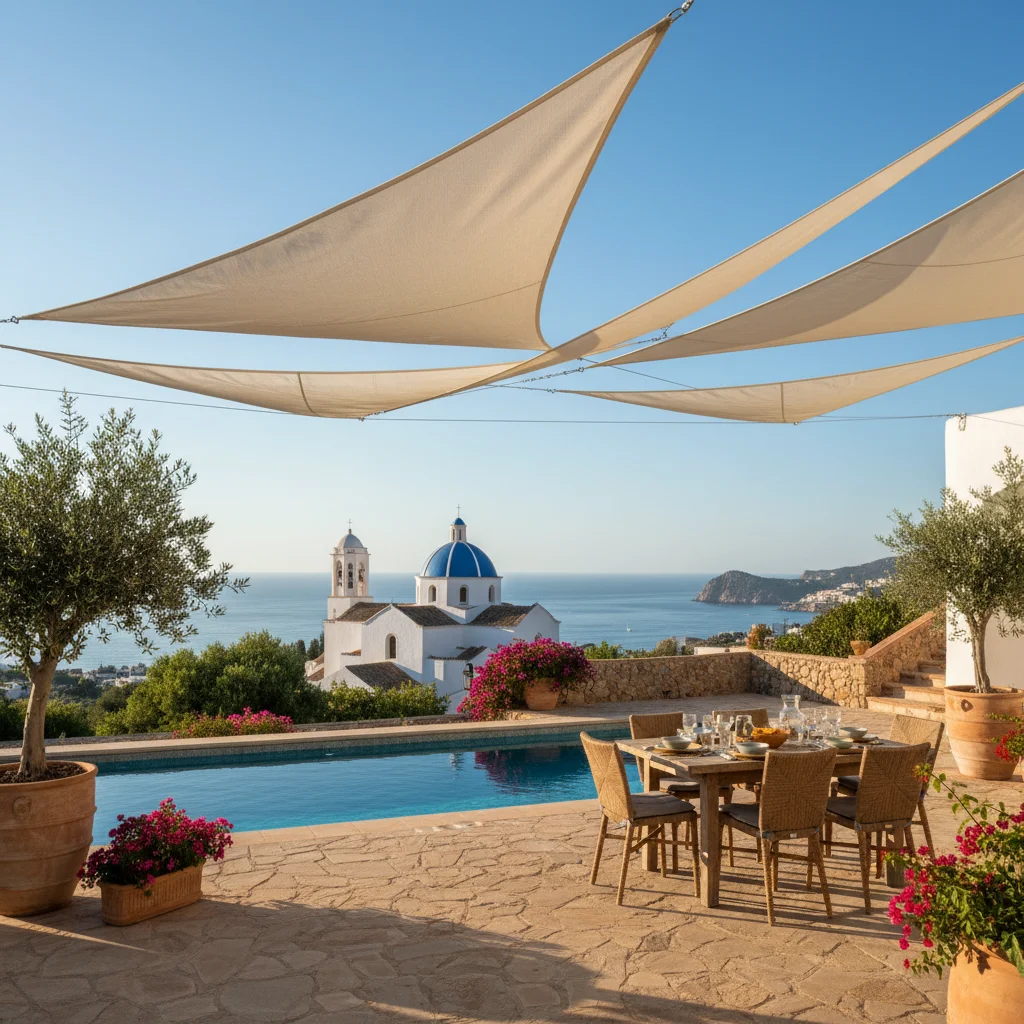
The properties here are unique compared to the high-rise density of Benidorm or the flat expanses of the southern coast. Whether you are situated in the winding streets of the Old Town or elevated in the luxury urbanisations of the hills, your outdoor space likely consists of a terrace ranging from 40 to 80 square meters. These are substantial areas that traditional parasols simply cannot cover effectively. A standard 3-meter umbrella provides a small circle of relief that you have to chase around the terrace as the sun moves. In contrast, a custom-cut HDPE shade sail can be tensioned across 50 square meters of a hillside villa terrace, providing a permanent, breathable canopy that allows you to use your dining area, outdoor kitchen, and poolside lounge simultaneously.
The international community here brings a specific set of requirements to the table. Our British clients often prioritize UV protection for young grandchildren, while Scandinavian and Dutch residents frequently look for architectural lines that complement minimalist villa designs. In Altea la Vella, where properties are often tucked into the pine-covered foothills, the challenge is often about balancing shade with the preservation of those sea views. A well-designed shade sail uses narrow mounting points—either marine-grade stainless steel wall plates or slender powder-coated posts—which creates far less visual obstruction than a bulky wooden pergola or a heavy retractable awning. This architectural "lightness" is why sails have become the preferred choice for modern luxury builds throughout the region.
Technical Realities of the Local Microclimate
The environmental conditions here are significantly different from what you will find just thirty minutes south. We benefit from a sheltered microclimate, protected largely by the massive limestone bulk of the mountains which acts as a barrier against the harshest weather systems. This results in a moderate coastal breeze rather than the high-velocity winds found in more exposed areas like Cabo de Palos. However, this does not mean you can ignore the physics of wind load. When a breeze catches a 30-square-meter piece of fabric, it generates hundreds of kilograms of force. This is why the quality of the fabric and the hardware is non-negotiable.
In my experience, the salt air is the primary silent killer of outdoor installations along this coastline. Even if your villa is elevated in the hills, the "salitre" carried by the Mediterranean mist will corrode standard galvanized steel or low-grade 304 stainless steel within two seasons. For any installation within five kilometers of the coast, I only recommend AISI 316 marine-grade stainless steel fittings. This includes the turnbuckles, D-shackles, and the internal wire rope that edges the sail. The humidity here is notably lower than in the southern zones of the Costa Blanca, which helps prevent some mold issues, but the UV index is relentless. Standard polyester fabrics will become brittle and "crispy" under our sun within 12 months. We exclusively use High-Density Polyethylene (HDPE) mesh, which is UV-stabilised and carries a lifespan of 10 to 15 years.
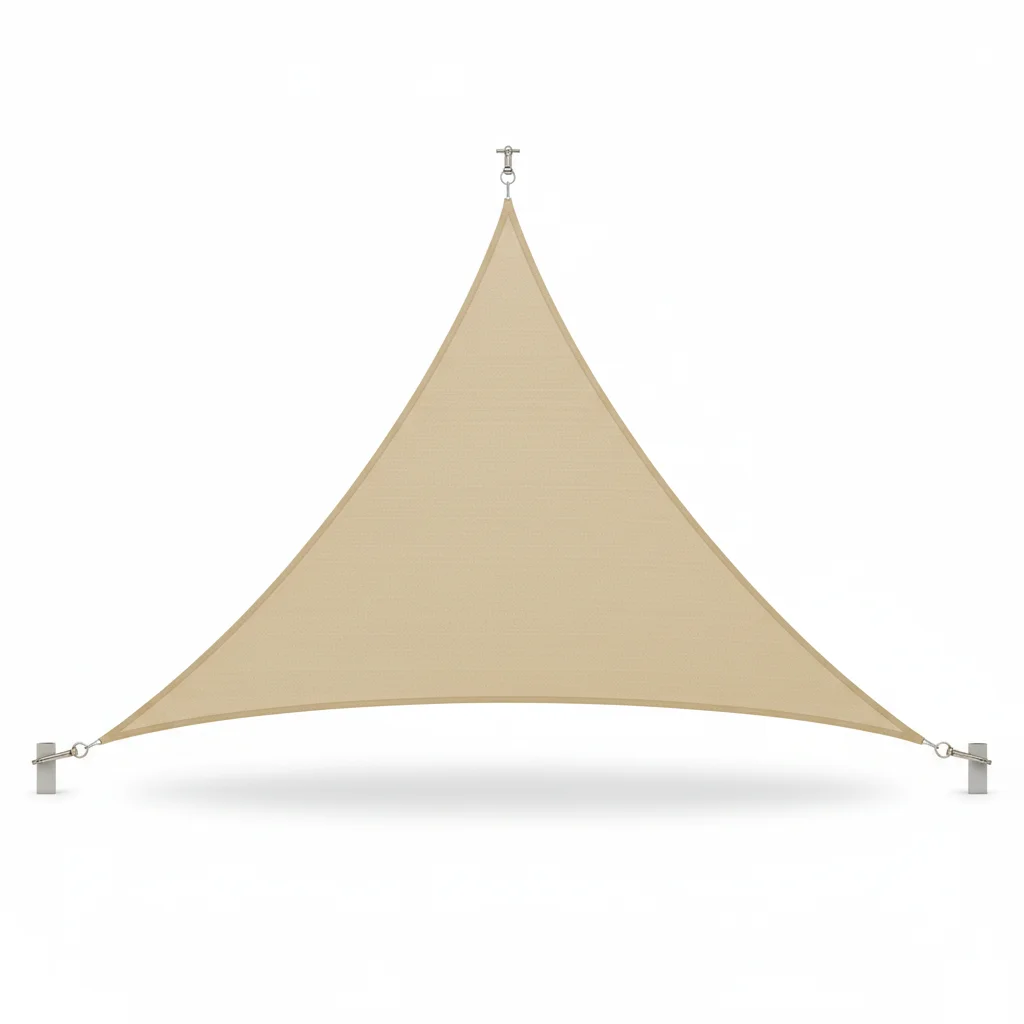
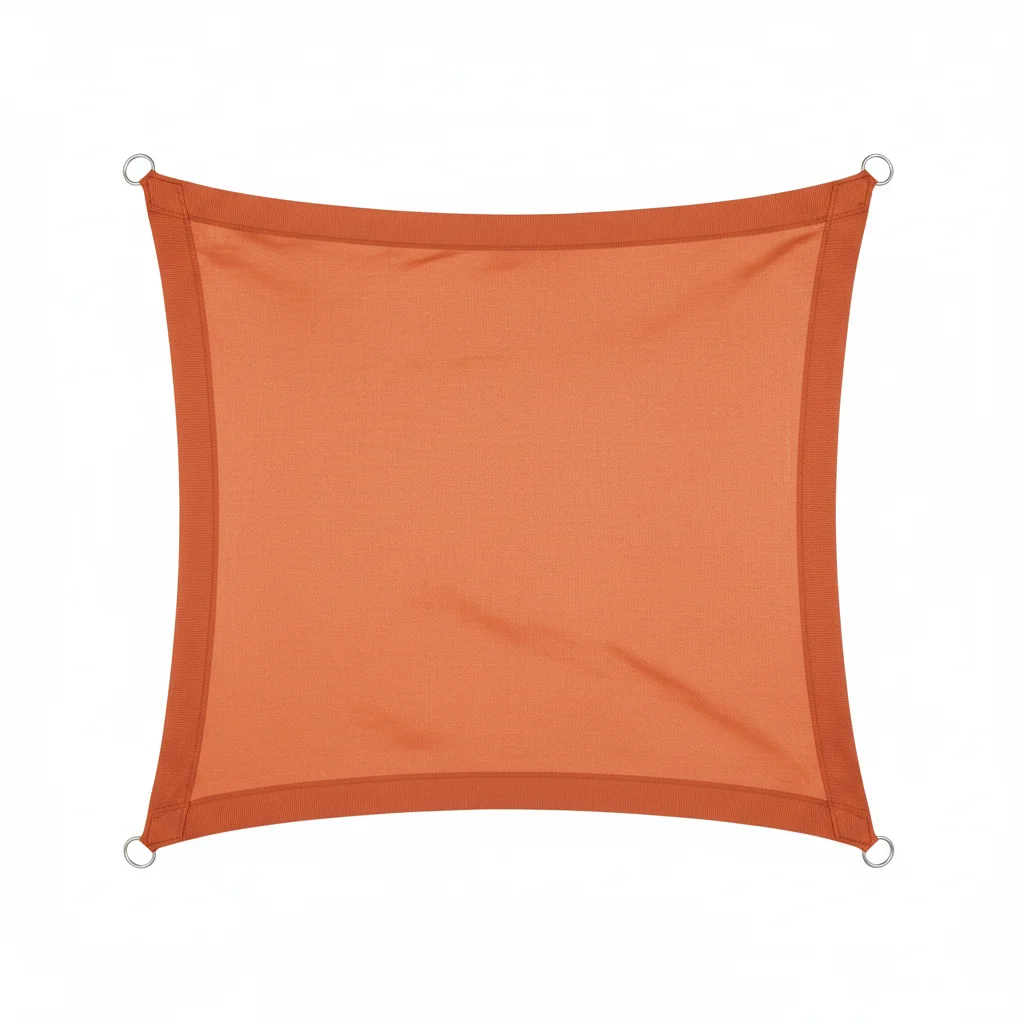
Community regulations, or the rules of your comunidad de propietarios, are another critical factor. Many urbanisations near the Old Town or in prestigious hillside enclaves have strict aesthetic guidelines to maintain the town's famous white-and-blue visual harmony. Before you install a bright terracotta sail, you must understand that many local committees only permit ivory, sand, or silver-grey tones. Because shade sails are technically "temporary" structures—meaning they can be unclipped and removed in minutes—they often bypass the strict building licenses required for permanent roof extensions or heavy pergolas. This makes them a strategic choice for residents who want immediate shade without a twelve-month wait for an obra menor permit from the town hall. For a high-quality, custom-made HDPE triangular sail measuring 5x5x5 meters, you should expect a price point around EUR 450 for the sail itself, with professional-grade marine hardware kits adding another EUR 150 to EUR 300 depending on the complexity of the fixings.
Strategic Recommendations for Hillside and Coastal Properties
When I walk onto a property to consult on a shade project, the first thing I look at is the orientation of the house relative to the Sierra de Bernia. The mountains provide a natural shadow in the late afternoon, but the midday sun is vertical and unforgiving. For the large luxury villas common in this area, which often feature terraces exceeding 60 square meters, a single sail is rarely the answer. I usually recommend a "hypar" configuration—short for hyperbolic paraboloid. This involves mounting two opposite corners of a four-sided sail at a high point and the other two at a lower point. This creates a three-dimensional twist in the fabric that prevents it from flapping in the breeze and allows rainwater to run off efficiently, even though the HDPE mesh is breathable.
For these larger villa terraces, I often suggest combining products. You might have a high-end bioclimatic pergola with rotating slats over your main outdoor kitchen area to provide 100% rain protection, but then use architectural shade sails to bridge the gap between the house and the pool deck. This creates "zones" of shade. A large rectangular sail in a 340-gram-per-square-meter fabric weight can be tensioned over a pool to reduce water evaporation and chemical consumption while keeping the water temperature a few degrees cooler during a heatwave. This integrated approach is common in the high-spec renovations we see in the more established neighborhoods.
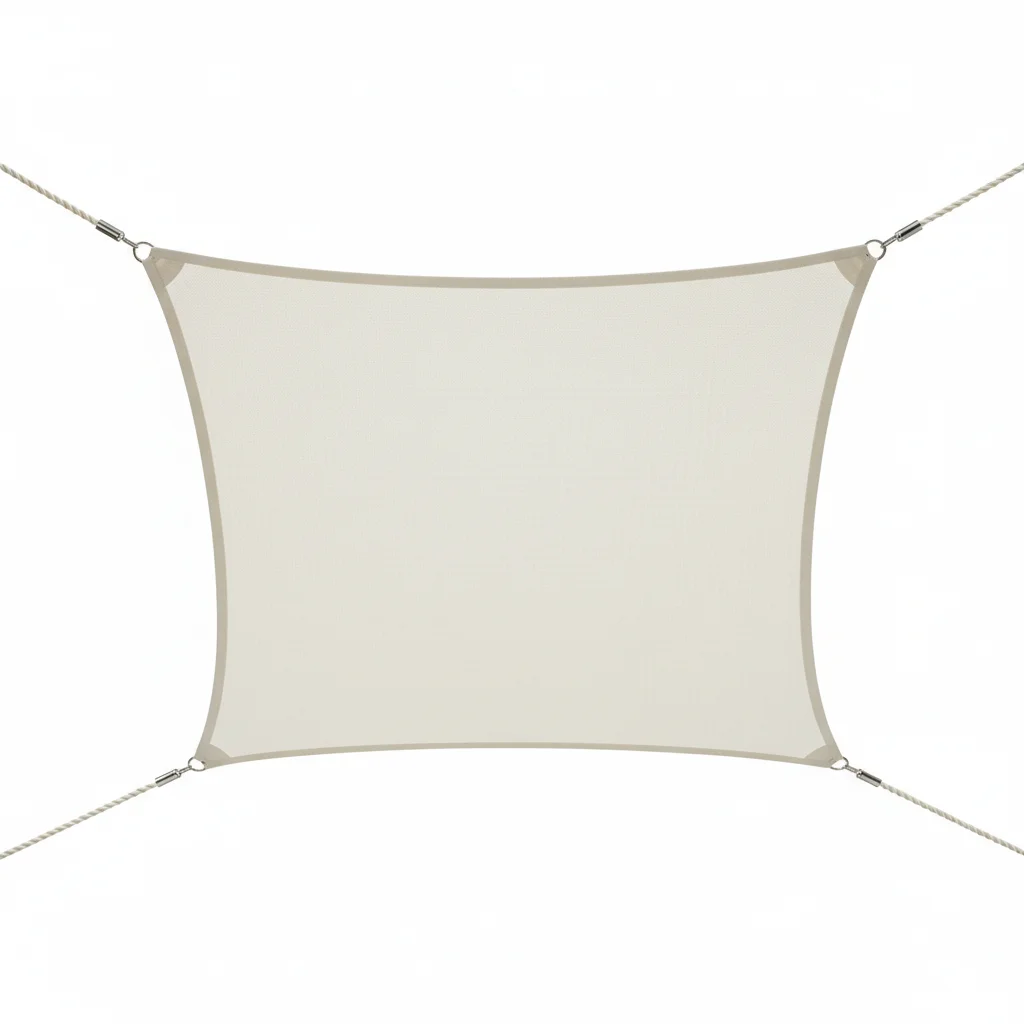
Apartment living near the promenade requires a different strategy. Here, space is at a premium, and you are often dealing with smaller balconies or penthouse terraces around 20 to 30 square meters. A heavy awning can make these spaces feel claustrophobic and can trap heat against the glass doors. A lightweight, commercial-grade shade sail in a light "off-white" or "silver" finish reflects the heat away from the building. Because the HDPE fabric is a mesh, it allows hot air to rise through it—the "chimney effect"—which can lower the temperature on a balcony by up to 10 degrees Celsius compared to a solid PVC awning. For these smaller setups, a high-quality rectangular sail might cost between EUR 180 and EUR 400. This is a highly cost-effective alternative to fixed parasols which take up valuable floor space with heavy stone bases.
Local Logistics and Navigating the Terrain
Operating in this part of the Costa Blanca presents specific logistical hurdles that an outsider might overlook. We regularly deliver and install across the entire region, including Calpe, Benidorm, Alfaz del Pi, and La Nucia, but Altea presents its own set of challenges. If you are located in the heart of the Old Town, the narrow, cobblestone streets make it impossible for large delivery trucks to reach your door. I have spent many mornings hand-carrying 4-meter steel posts through these alleys because a standard van couldn't make the turn. We understand these constraints and plan our logistics around the specific street widths and parking restrictions near the church square.
The steep, winding roads of Altea la Vella and the upper reaches of the hillside urbanisations also require local knowledge. When we install shade sails in these areas, we have to account for the "slope effect" of the wind. A breeze that feels gentle at sea level can accelerate as it moves up a canyon toward the mountains. This requires deeper footings for posts—often up to 1 meter of reinforced concrete—to ensure the sail stays put during a sudden autumn gota fría storm. We don't just look at the terrace; we look at the geology and the wind patterns of the specific valley you live in.
If you are currently looking at your terrace and wondering why you only use it after 8:00 PM, I invite you to have a conversation with us. We offer a level of local expertise that comes from years of standing on these exact terraces, measuring the wind, and seeing which fabrics survive the salt and sun and which do not. We can provide a free consultation to look at your space, discuss the community rules that might affect your choice, and design a tensioned fabric solution that enhances your home's value and your quality of life. Whether you need a simple EUR 150 triangular sail for a small balcony or a EUR 2,000 multi-sail architectural array for a luxury villa, we treat the engineering with the same professional rigor. Our goal is to make your outdoor space usable 365 days a year, allowing you to fully enjoy the lifestyle that brought you to this unique corner of the coast in the first place.
 JW'"
/>
JW'"
/>