Why Expats in Jávea Love Outdoor Cooking
Jávea’s 300 days of sunshine, sheltered microclimate, and thriving community of 15,000+ expats make it one of the best places on the Costa Blanca to invest in outdoor cooking equipment.
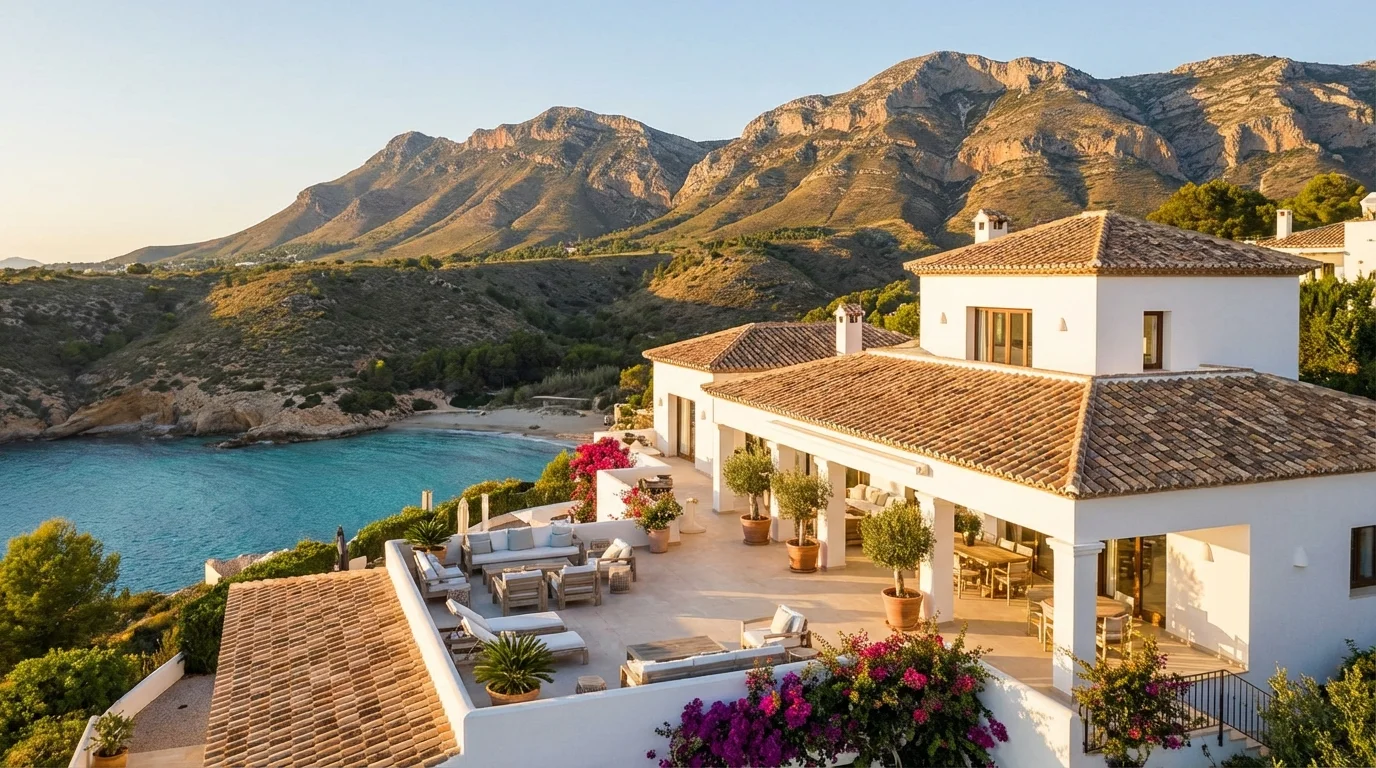
With nearly half the population hailing from abroad — British, German, and Dutch residents leading the pack — Jávea has developed an outdoor dining culture that rivals anything back in northern Europe. From hillside villas overlooking the Montgó massif to beachside apartments near the Arenal, residents here spend most of the year cooking and entertaining outside.
The town sits in a natural bay sheltered by the Montgó mountain (753m), creating a microclimate recognised by the WHO as one of the healthiest in the world. Wind is rarely an issue on the Tosalet hillside or in Cap Martí, and evening temperatures between May and October rarely dip below 20°C. Your kamado grill or pizza oven gets genuine year-round use here — not just a summer novelty.
Answer capsule: Jávea’s sheltered microclimate and large expat community make it ideal for year-round outdoor cooking with kamado grills, gas BBQs, pizza ovens, and full outdoor kitchens.
Your Jávea Outdoor Kitchen Setup
The right setup depends on whether you have a spacious Montgó villa with panoramic terraces or a modern Arenal apartment with a compact balcony — Jávea has solutions for both.
Villas in the Montgó and Tosalet areas regularly feature terraces of 40–80 square metres, many with existing summer kitchens or covered naya spaces — perfect foundations for a complete outdoor kitchen build with built-in gas BBQ, kamado station, and wood-fired pizza oven.
For apartment owners along the Arenal promenade or in the Port area, a compact kamado or portable gas BBQ fits comfortably on most terraces. Many of our port-area customers pair a tabletop pizza oven with a small prep station — enough to host six friends without dominating the space.
Answer capsule: Jávea properties range from large Montgó villas with 40–80m² terraces ideal for full outdoor kitchens to compact Arenal apartments suited to kamado grills and tabletop pizza ovens.
Gas, Charcoal, or Wood-Fired? Choosing Right for Jávea
Understanding Spanish gas bottle systems, charcoal sourcing, and local considerations helps Jávea residents pick the right fuel for their setup.
Gas BBQs are the most popular choice among expats — convenient, clean, and ready in minutes. In Spain, you will use butane bombonas (orange bottles from Repsol) or connect to your property’s natural gas supply. Many Montgó and Tosalet villas already have gas connections, making a built-in gas BBQ the simplest upgrade.
Kamado grills have a dedicated following, particularly among the British community. The ceramic retains heat brilliantly and handles Jávea’s occasional winter evenings without fuss. You can source quality lump charcoal from suppliers in Ondara and Pedreguer, or we can include it with your delivery.
Wood-fired pizza ovens are having a genuine moment in Jávea. Affordable almond and orange wood from the Jalón Valley (just 20 minutes inland) makes a pizza oven a natural fit. Costa Blanca Outdoors recommends pairing a wood-fired oven with a gas BBQ for maximum versatility — authentic flavour alongside everyday convenience.
Answer capsule: Gas BBQs suit most Jávea expats for convenience, kamado grills appeal to dedicated cooks, and wood-fired pizza ovens pair perfectly with locally sourced almond wood from the Jalón Valley.
Delivery & Setup in Jávea
We deliver and install throughout Jávea and surrounding towns including Moraira, Dénia, and Benitachell — with specialist knowledge of the area’s hillside access roads.
Jávea sits in our northern Costa Blanca delivery zone, and we know the town intimately. Deliveries to the Arenal, Port, and town centre are straightforward. For Montgó, Tosalet, and Cap Martí properties, we use smaller vehicles that handle the narrow, winding access roads — a detail that matters when you are receiving a 150kg kamado grill or a stone pizza oven.
Our delivery includes full white-glove setup: unpacking, assembly, terrace placement, and a walkthrough of your new equipment. For built-in projects, we coordinate with trusted local builders and stone masons for countertops, gas connections, and drainage.
Living near Moraira or Dénia? We cover the entire northern Costa Blanca on the same routes. Customers in Benitachell and the Cumbre del Sol urbanisation are also on our regular Jávea-area schedule. Typical delivery is 5–10 working days for in-stock items.
Maximising Outdoor Living with Fixed Pergolas in Jávea
Living on this stretch of the coast since 2019, I have seen a significant shift in how residents approach their terrace designs. In Jávea, with an international population sitting at nearly 48 percent, we see a fascinating blend of British, German, and Dutch influences on outdoor architecture. The local property market, where prices average around EUR 350,000, is dominated by substantial villas perched on hillsides or nestled in established urbanisations like Tosalet and Cap Martí. These homes typically feature generous terraces, often spanning between 40 and 80 square metres. For owners of these properties, a fixed pergola is not merely a decorative addition but a structural necessity that converts an exposed stone patio into a functional, year-round living room.
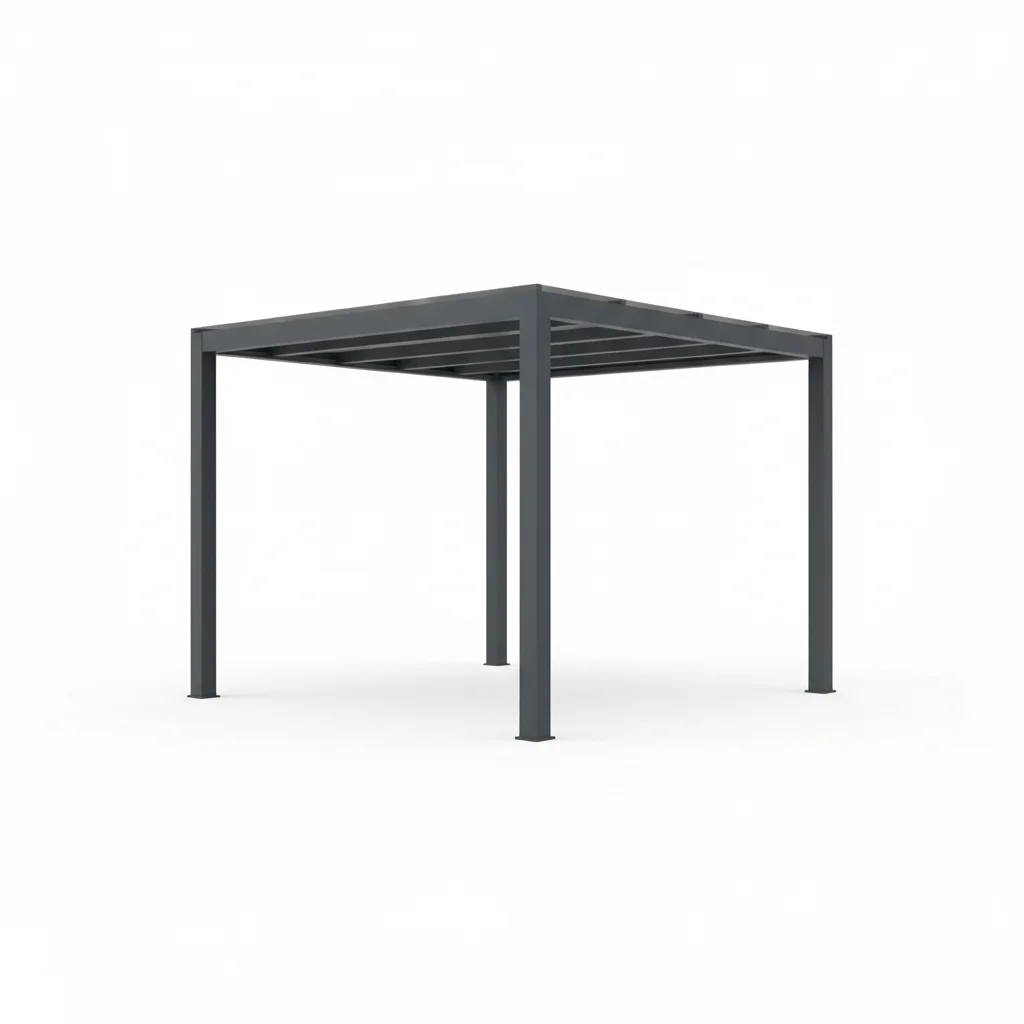
The outdoor culture here is deeply rooted in the concept of the "naya," but modern villas often lack that traditional shaded porch. This is where the fixed pergola fills the gap. Whether you are situated near the Arenal or higher up towards the Port of Jávea, the goal is usually the same: creating a permanent zone for dining or lounging that remains usable when the midday sun becomes too intense. British residents frequently use these structures to house extensive outdoor kitchen setups, while our Dutch and German clients often lean towards minimalist aluminium frames that frame a sea view without obstructing it. Because these structures are permanent, they offer a level of stability and architectural integration that retractable alternatives simply cannot provide.
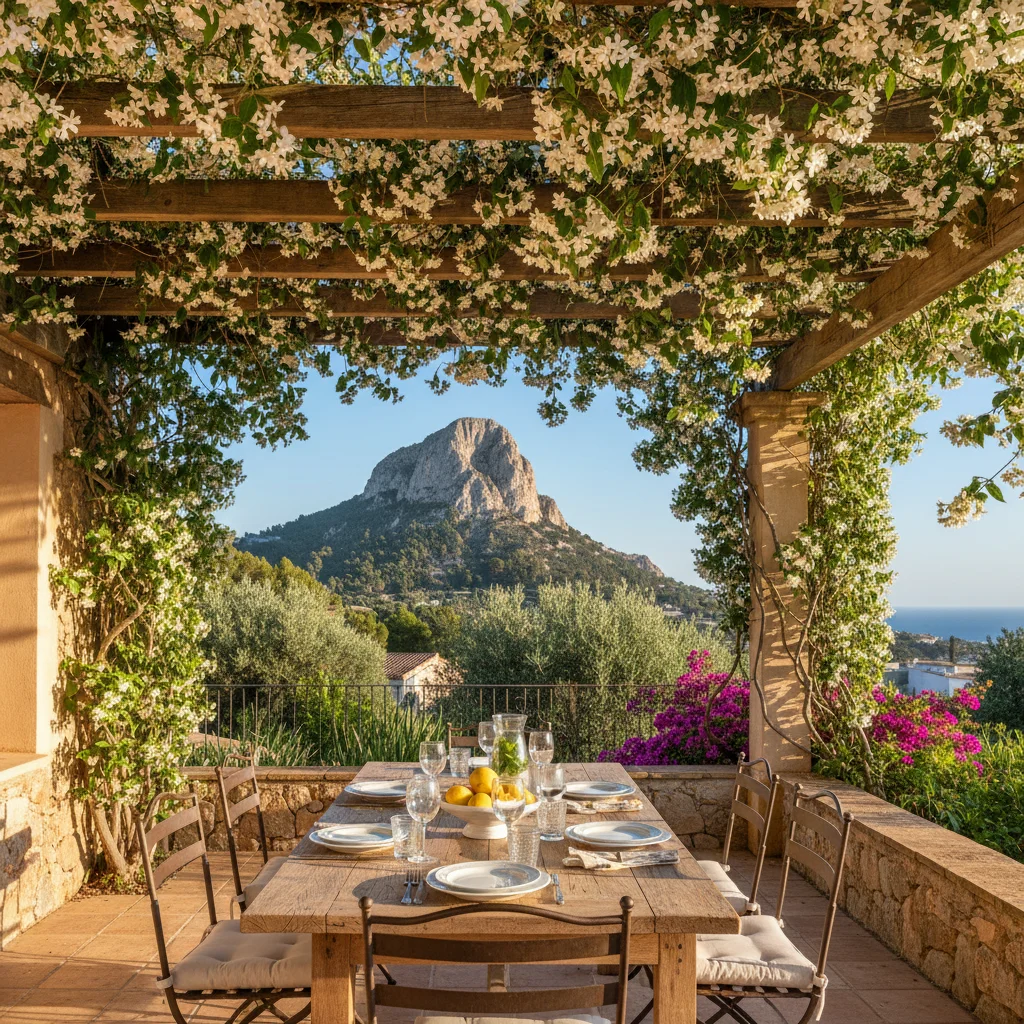
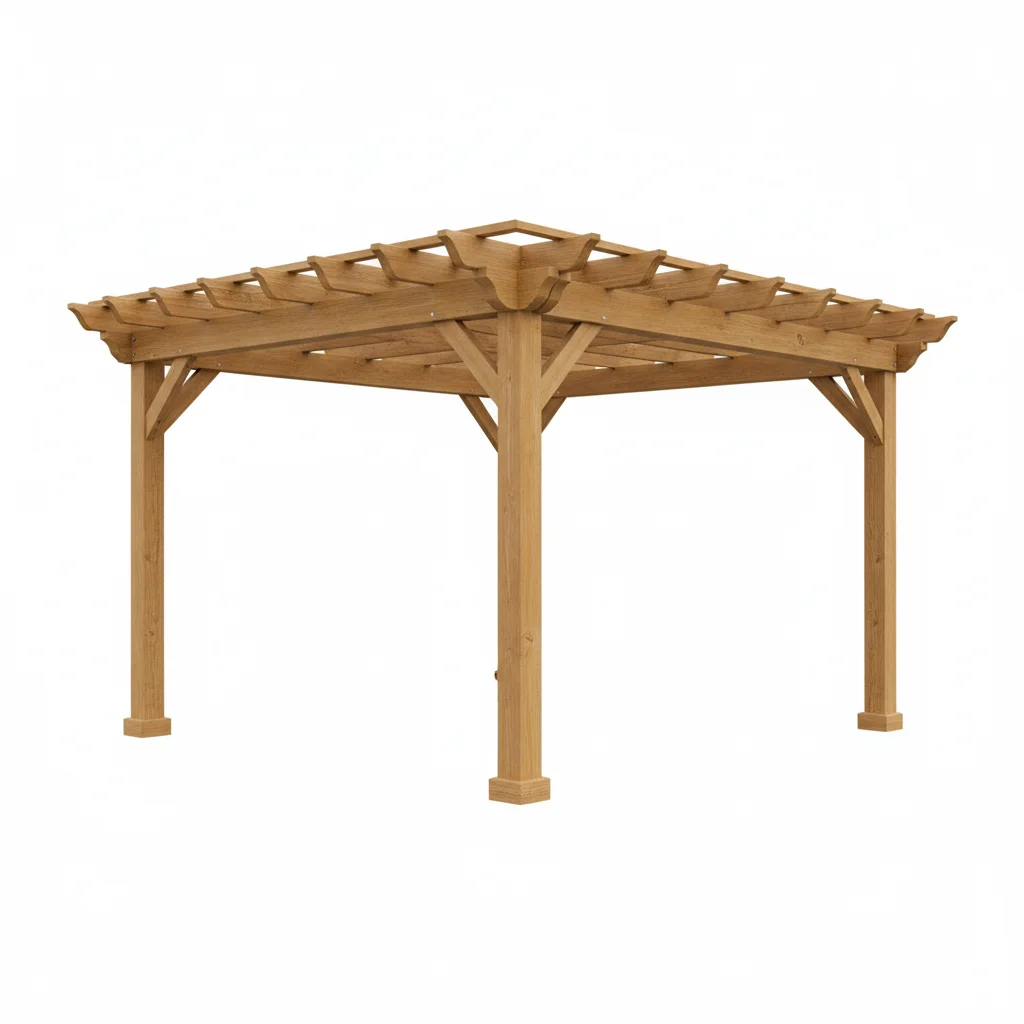
In the more traditional areas like Tosalet, where the aesthetic is defined by Tosca stone and Mediterranean greenery, a timber fixed pergola is the gold standard. It complements the rustic surroundings while providing a heavy-duty frame for climbing plants or integrated lighting. On the other hand, the newer builds reaching towards the cliffs of Cap de la Nau benefit from the clean lines of powder-coated aluminium. These installations are about more than just shade; they define the footprint of your outdoor life. When you have a 70-square-metre terrace overlooking the bay, a well-placed fixed pergola creates an anchor point for the entire property, making the transition from the interior lounge to the pool area feel seamless and intentional.
Technical Considerations for the Local Microclimate
The geographic position of this town provides a unique microclimate, largely thanks to the protective presence of the Montgó mountain. This massive limestone headland acts as a shield against the harsher weather patterns that can hit the northern Costa Blanca. However, this sheltered environment comes with its own set of technical requirements for any fixed outdoor structure. While we enjoy lower humidity than the southern zones of the province, the coastal breeze—particularly the afternoon Llebeig wind—can be deceptive. A fixed pergola must be engineered to withstand these gusts, which can funnel up the hillsides with surprising force.
For properties within a two-kilometre radius of the Port or the Arenal beach, salt air is the primary adversary. If you are opting for an aluminium fixed pergola, the finish must be marine-grade powder coating to prevent the "pitting" or bubbling that occurs when salt penetrates the surface. I typically recommend a minimum coating thickness of 60 to 80 microns for our coastal installations. If you prefer the look of timber, it is vital to use slow-grown Nordic pine or laminated spruce that has been pressure-treated to Autoclave Level 4. In our local climate, untreated wood will bake in the summer and absorb salt-laden moisture in the winter, leading to structural warping within just a few seasons. A professional timber installation, which might range from EUR 3,000 to EUR 6,000 depending on size and roof slats, should include stainless steel 316-grade fixings to ensure the joints remain rust-free.
Another crucial factor for residents is the "comunidad de propietarios" or community of owners. If you live in an apartment complex near the Port or a clustered development in the Adsubia area, you must navigate the community bylaws before installing a permanent structure. While a fixed pergola is often seen as a minor work, its aesthetic impact on the building’s facade means you need a design that conforms to the existing colour palette. We often help clients select specific RAL colours for their aluminium frames to ensure they match the window joinery of their complex, satisfying both the community president and the local "ayuntamiento" requirements for a "declaración responsable" or minor works permit.
Maintenance in this environment is relatively straightforward but non-negotiable. For an aluminium structure costing around EUR 5,000, an annual wash with fresh water and a mild detergent is usually enough to remove salt deposits. For timber, I advise a fresh coat of high-quality lasur—a breathable wood stain—every two to three years. This prevents the intense UV rays from greying the wood and maintains the structural integrity of the beams. Unlike retractable awnings, which must be retracted during high winds, a fixed pergola gives you peace of mind during those sudden autumnal storms, provided the footings are chemically anchored into the concrete terrace sub-base rather than just the tiles.
Configuration Recommendations for Local Property Types
When it comes to selecting the right setup, the property type dictates the design. For the large luxury villas found in areas like Cap Martí or the hills of the Montgó, we generally recommend a substantial, freestanding fixed pergola. A common and highly effective configuration is a 6m x 4m timber frame with a "gazpacho" style roof—a traditional Spanish arrangement of tightly spaced wooden slats that provide 80% shade while allowing hot air to rise through the gaps. This setup, usually priced between EUR 4,500 and EUR 7,500, creates a dedicated outdoor dining area that stays significantly cooler than a solid roof structure. We often see these paired with bioclimatic pergolas in separate zones of the same terrace to provide different levels of light control.
For those living in the more compact townhouses or apartments near the Port, a wall-supported aluminium fixed pergola is often the best use of space. These structures are designed to extend the interior ceiling line outwards, effectively doubling the usable floor area of a 20-square-metre terrace. In these scenarios, I often suggest integrating glass curtains along one or two sides of the pergola. This combination allows you to block the cooler winter breezes while maintaining the view of the Mediterranean. A high-quality aluminium frame for this purpose starts at approximately EUR 2,500 and can be customised with integrated LED lighting strips and infrared heaters, extending the use of the terrace well into the November evenings.
If your property is particularly exposed to the sun, such as the south-facing villas in Benitachell or the higher elevations of Pedreguer, you might consider a hybrid approach. This involves a fixed aluminium frame with a heavy-duty fabric or polycarbonate roof. Polycarbonate is excellent for keeping the rain off, but in our climate, it can create a greenhouse effect unless it is properly ventilated or treated with a heat-reflective coating. For these sun-drenched spots, we often install fixed frames that are then topped with high-performance awnings or manual sliding fabric panels. This gives you the structural permanence of a pergola with the flexibility to open the roof on clear nights to see the stars.
The trend I am seeing most often lately is the "outdoor room" concept. This involves taking a fixed pergola and adding side protection. Whether it is vertical drop awnings to block the low winter sun or fixed timber louvres for privacy from neighbours, the goal is to create a private sanctuary. In larger estates, we have installed interconnected pergolas that lead from the main house to a pool bar or BBQ area, creating a shaded walkway that makes the entire 80-square-metre terrace feel like a cohesive part of the home's floor plan.
Local Logistics and Expertise Across the Coast
Installing a permanent structure in Jávea and the surrounding towns like Moraira, Dénia, and Jalón requires more than just construction skill; it requires an understanding of the local landscape and logistics. Many of the most beautiful villas are accessed via narrow, winding tracks or steep driveways that are inaccessible to large delivery trucks. My team and I are intimately familiar with these challenges. We have spent years navigating the tight bends of the Port area and the steep inclines of the hillside urbanisations. We manage the logistics by using smaller, agile vehicles for the final mile of delivery, ensuring that your materials arrive without damage and without blocking access for your neighbours.
Our knowledge extends to the structural realities of local building methods. Many older terraces in the region were built with hollow-core bricks or light-gauge concrete, which require specific chemical anchoring techniques to ensure a fixed pergola is safe. We never guess; we assess the substrate of your terrace before a single bolt is turned. This level of care is why we have successfully helped over 200 families across the Costa Blanca. We don't just deliver a product; we provide the peace of mind that comes from knowing your installation is built to last in this specific environment, whether you are in the windy heights of Benitachell or the salt-heavy atmosphere of the Dénia coastline.
Beyond the installation itself, we understand the local timeline. Working around the "summer ban" on construction in certain urbanisations is part of the service. We plan our installations to ensure your outdoor space is ready before the peak heat hits in July, or we schedule work for the mild autumn months when the terrace becomes the most pleasant place to be. This local insight is what separates a professional installation from a generic kit. We know how the sun moves over the Montgó and how the shadows fall in the Jalón valley, and we use that knowledge to position your pergola for maximum comfort.
If you are considering a permanent upgrade to your outdoor space, the best starting point is an on-site evaluation. I personally visit properties from Pilar de la Horadada up to Dénia to discuss the specific wind loads, sun angles, and aesthetic goals of our clients. We provide a detailed breakdown of costs—ranging from a simple EUR 2,000 wall-mounted frame to a EUR 12,000 bespoke architectural masterpiece—so you can make an informed decision based on your budget and property value. Our consultations are focused on practical, honest advice derived from years of living and working on this coast. We invite you to reach out for a conversation about how we can help you reclaim your terrace and make the most of the incredible lifestyle we enjoy here in Jávea.
 JW'"
/>
JW'"
/>