Outdoor Living in La Nucia
La Nucia is a modern inland town of 20,000 residents where 52% are expats — British, Dutch, and Scandinavian — attracted by affordable hillside properties, world-class sports facilities, and a thriving Sunday rastro market.
La Nucia has reinvented itself over the past two decades. Once a sleepy agricultural village behind Benidorm, it is now one of the most forward-thinking municipalities on the Costa Blanca, with a nationally recognised sports complex and infrastructure that rivals towns three times its size. The Sunday rastro market draws thousands weekly as one of the largest fresh-produce markets in the Alicante province.
Properties average around €250,000, and for that price you get a detached villa with a private pool, mountain views, and a terrace significantly larger than what the same budget buys on the coast — often 40–80 square metres of outdoor space. At roughly 200 metres elevation, summer evenings are cooler than the seafront and winter days are crisp and sunny — perfect for a long kamado cook.
The community is active and outdoorsy. Hiking, cycling, and using the town’s Olympic-grade sports facilities are all part of daily life. That culture feeds directly into outdoor cooking — residents here treat grilling as fuel for an active lifestyle, not just a weekend novelty.
La Nucia offers hillside villas with 40–80m² outdoor spaces averaging €250,000, cooler summer evenings than the coast, and an active expat community of 10,000+ who cook outdoors year-round.
Choosing Your Setup in La Nucia
La Nucia’s spacious hillside terraces and mild inland climate make it ideal for versatile setups combining gas BBQs for convenience with kamado grills or pizza ovens for weekend cooking projects.
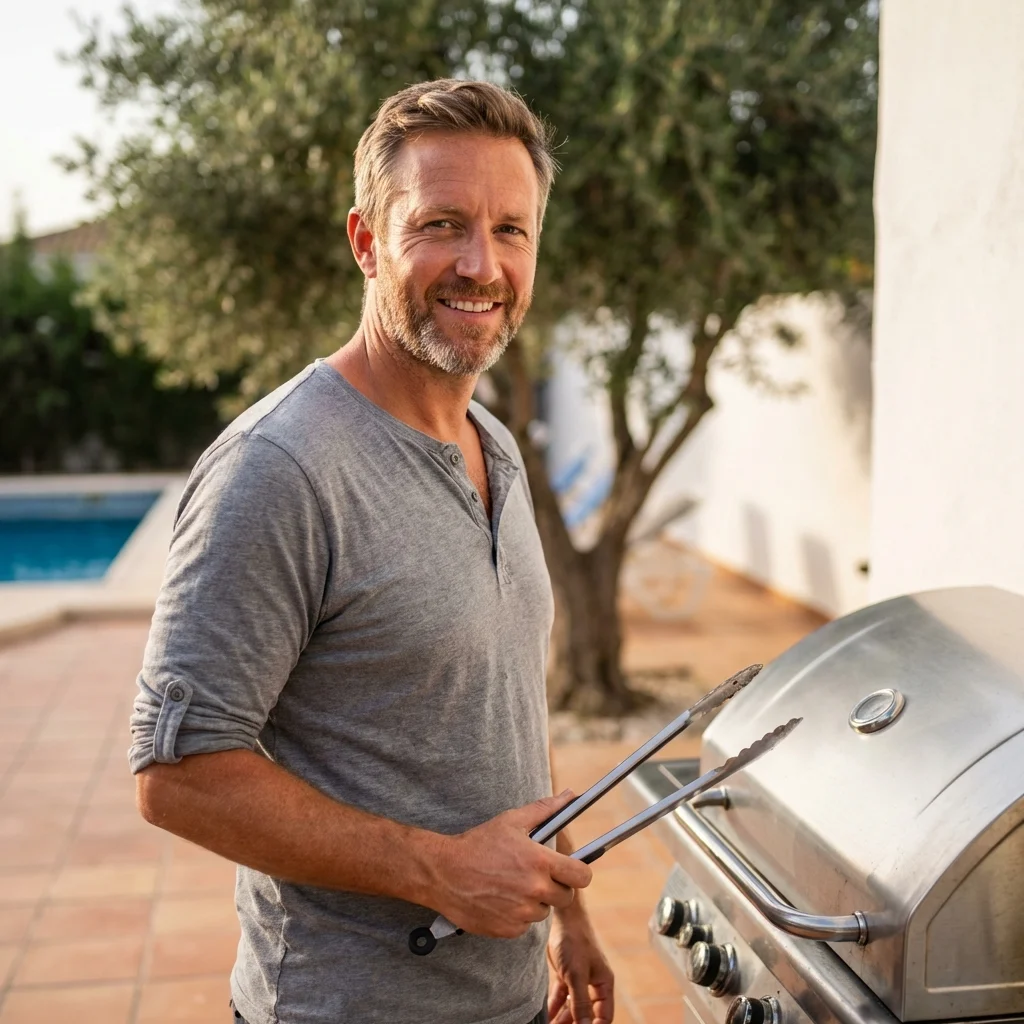
The typical La Nucia property has enough space for a multi-piece outdoor cooking setup without feeling crowded. A common configuration we install here is a gas BBQ for weeknight speed paired with a kamado grill for weekend slow-cooking — positioned apart on the terrace so both can run simultaneously when entertaining.
Costa Blanca Outdoors recommends considering the slightly cooler inland evenings when choosing equipment. A kamado grill retains heat brilliantly and performs just as well at 12°C in January as it does at 35°C in July — making it arguably the best single-piece investment for La Nucia’s year-round cooking season. The ceramic insulation also means fuel efficiency, using roughly half the charcoal of an open grill for the same cooking time.
Wood-fired pizza ovens are a natural fit. La Nucia’s inland position means firewood is more accessible and affordable than on the coast. Orange groves and almond orchards surround the town, and suppliers sell seasoned wood by the sack or trailer load. The Sunday rastro itself is a reliable source for firewood and charcoal.
Costa Blanca Outdoors recommends kamado grills as the best single-piece investment for La Nucia, with ceramic insulation performing equally well in January at 12°C and July at 35°C while using half the charcoal of open grills.
Delivery to La Nucia
We deliver to La Nucia on our central inland route weekly, with experience navigating the town’s hillside residential streets and gated urbanisations.
La Nucia sits just inland from our Benidorm–Alfaz del Pi coastal route, making it a natural addition to our central delivery schedule. Most residential areas have wide roads, though some older hillside urbanisations require smaller vehicles for heavy items.
Every delivery includes full setup: unpacking, assembly, placement on your terrace or in your garden, and a walkthrough of your new equipment. For built-in outdoor kitchen projects, we work with local builders who understand La Nucia’s municipal building guidelines and community regulations.
Alfaz del Pi and Benidorm are on the same delivery corridor, and we also reach Altea and the northern coast from here. Expect 5–10 working days for in-stock items, or 3–4 weeks for custom kitchen installations including design, fabrication, and professional fitting.
Modern Artificial Grass & Landscaping Solutions for La Nucía Homeowners
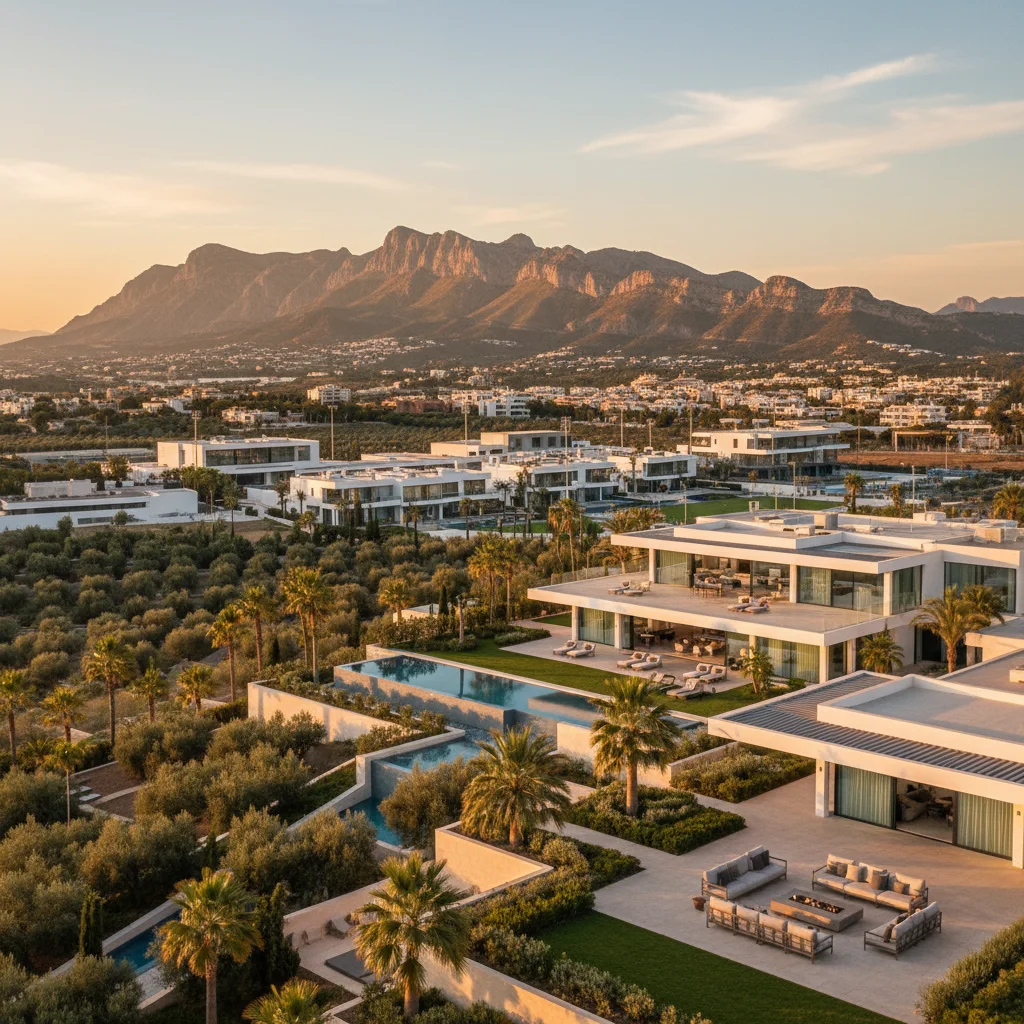
Living on this stretch of the Costa Blanca since 2019 has taught me that the transition from a traditional northern European garden to a Mediterranean one is often the steepest learning curve for new arrivals. This town sits in a unique geographic bowl, framed by the spectacular mountain backdrop of the Sierra de Aitana and the iconic Puig Campana, yet it remains exposed to the climatic whims of the Mediterranean Sea just a few kilometers down the valley. For the 20,000 residents here, over half of whom have relocated from the UK, the Netherlands, or Norway, the dream of a lush green lawn often hits the reality of skyrocketing water bills and the relentless Spanish sun. When I talk to families near the Ciutat Esportiva or those living in the established villas of El Tossal, the conversation almost always turns to how to maintain a beautiful outdoor space without it becoming a full-time job or an ecological burden.
The property stock here is remarkably diverse, ranging from the tight-knit apartments of the town center to sprawling villas in urbanisations like Bello Horizonte or Puerto Azul. For the British expat used to the damp climate of the home counties or the Norwegian accustomed to forest-fringed properties, the dry, rocky soil of this region is a shock. Natural grass in this part of Spain isn't just a luxury; it is an uphill battle against nature. To keep a 100-square-meter natural lawn green through July and August requires roughly 800 liters of water every single day. In a town where we value our environmental surroundings, transitioning to high-quality artificial turf and structured landscaping is the most practical move a homeowner can make. It creates a seamless transition between the indoor living room and the terrace, which is essential for the outdoor-centric lifestyle that defines our local culture. Whether you are hosting a Sunday afternoon lunch after visiting the local Rastro or simply enjoying the evening breeze coming off the mountains, the ground underfoot dictates the comfort and temperature of your entire garden.
The international makeup of the population brings a specific set of expectations to outdoor living. Our Dutch and British clients, in particular, view the garden as a primary living zone. They want clean lines, drainage that works during the occasional but intense "Gota Fría" storms, and a surface that doesn't track dust and mud into the house. Artificial grass has evolved significantly from the plastic-looking carpets of a decade ago. The products we now install for residents in this area are engineered to mimic the specific growth patterns of Mediterranean fescue, with variegated shades of lime and olive green that look authentic even under the harsh midday sun. By integrating these synthetic lawns with intelligent landscaping—think local stone borders and drought-resistant planting—we help homeowners create a space that feels integrated into the rugged hillside landscape rather than fighting against it.
When planning a landscaping project in this specific part of the coast, you have to account for the microclimate created by the valley. While we are slightly elevated compared to Benidorm or Altea, we are still well within the two-kilometer "salt zone." This means the air carries a fine salt spray that can corrode inferior materials and affect the way synthetic fibers age. The wind is the other major factor. We deal with the Levante from the east and the Poniente from the west. These winds can be surprisingly powerful as they whip through the valley, meaning any landscaping elements like garden fencing or pergolas must be anchored with professional-grade footings. For artificial grass, the wind means that the sub-base and the choice of infill material are critical. We use a heavy kiln-dried silica sand infill, roughly 5 to 8 kilograms per square meter, to ensure the turf stays weighted and the blades remain upright even when the breeze picks up.
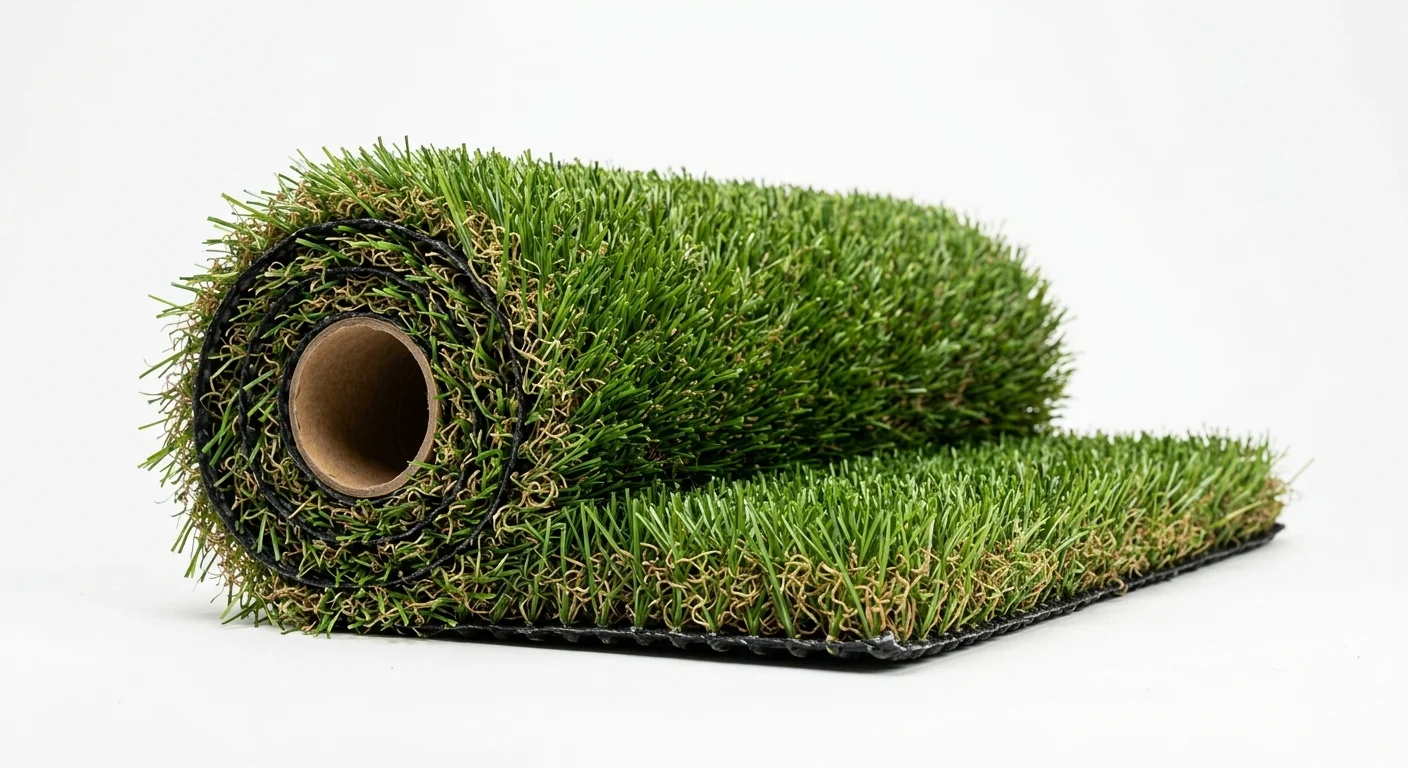
UV radiation here is among the highest in Europe. If you install a cheap product sourced from a generic DIY store, you will likely see it fade to a dull blue-grey or even become brittle and "shed" within two years. For La Nucía residents, I always recommend a turf with a high Dtex rating—this is a measure of the fiber's density and weight. Look for something in the 8,000 to 12,000 Dtex range. For a medium-sized garden of 50 square meters, you should expect to invest between €2,200 and €3,200 for a professional installation. This price includes the essential ground preparation: stripping the existing soil, laying a weed-suppressant membrane, and creating a compacted 60mm to 80mm base of crushed aggregate and fine granites. This base is what separates a professional job from a DIY attempt. Without proper compaction and leveling, the ground will inevitably shift, leading to unsightly "waves" in your lawn or pools of standing water after a downpour.
Community rules, or the "Comunidad de Propietarios," are another vital consideration. In many of the newer developments near the sports complex, there are often guidelines about the aesthetic appearance of gardens visible from the street. Fortunately, modern artificial grass is widely accepted because it maintains a tidy, "always-mown" look that preserves the community's property values. However, you must ensure your installation doesn't interfere with existing drainage channels. In many urbanisations, the terrace slopes are designed to move water away from the house and into the street or community drains. When we install landscaping here, we often incorporate "hidden" drainage mats under the grass or create decorative gravel French drains along the perimeter. This ensures that even during a heavy autumn storm, your garden won't turn into a pond or cause damp issues for your neighbors.
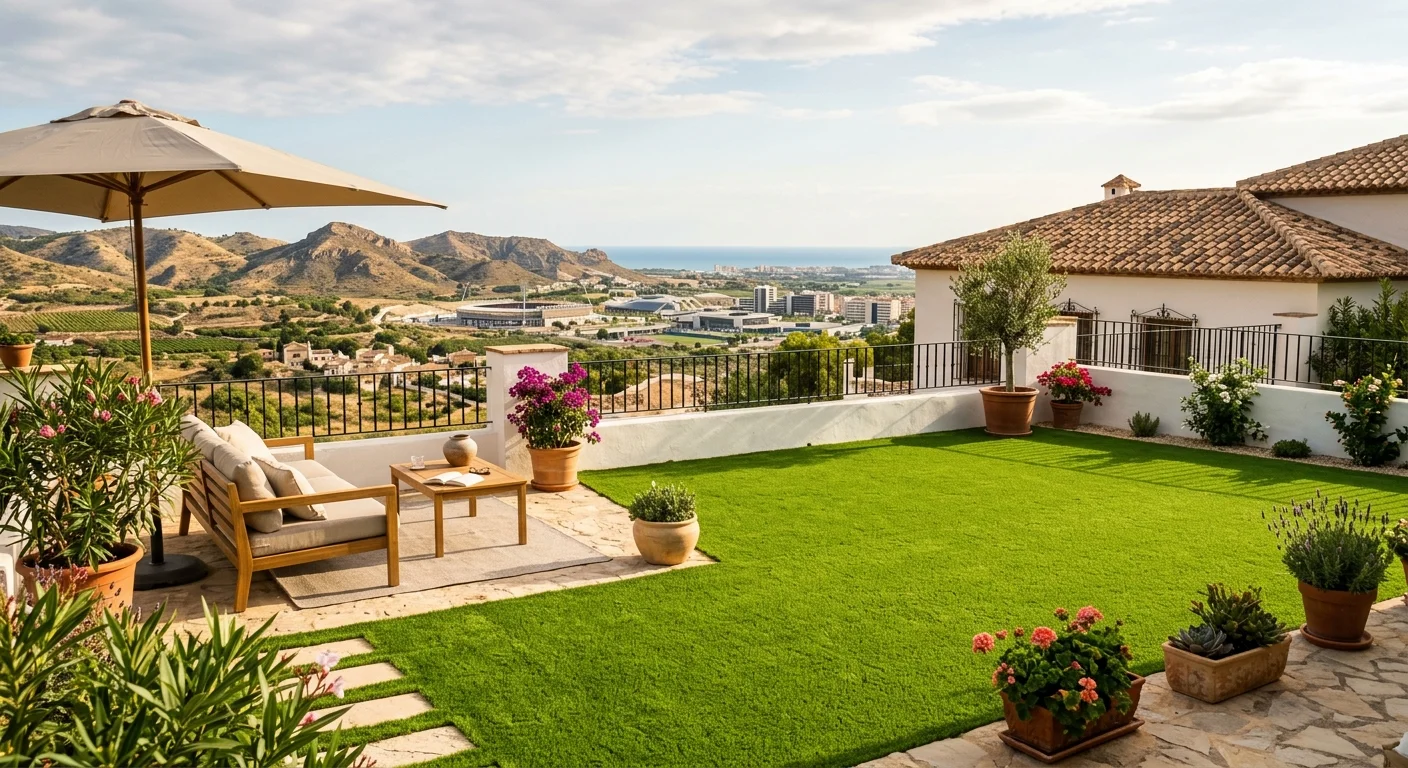
For the villas found in areas like San Rafael or Panorama, the recommendation is usually a combination of textures. A large, monolithic block of green can sometimes look artificial if not broken up. I suggest a central "island" of premium 40mm pile grass, perhaps something like our luxury "Aitana" range which retails around €32 per square meter for the material alone. Surround this with local decorative stone—the cream-colored "Truma" gravel is a local favorite as it reflects heat rather than absorbing it. This creates a functional zone for children to play or for dogs to run, while the stone borders provide a low-maintenance home for palms or oleanders. This hybrid approach to landscaping usually falls into the €4,000 to €8,000 price bracket depending on the total square footage and the amount of masonry work involved. It also allows for the easy integration of outdoor lighting. Low-voltage LED spike lights tucked into the gravel borders can transform a garden at night, highlighting the textures of the stone and the silhouettes of the mountains in the distance.
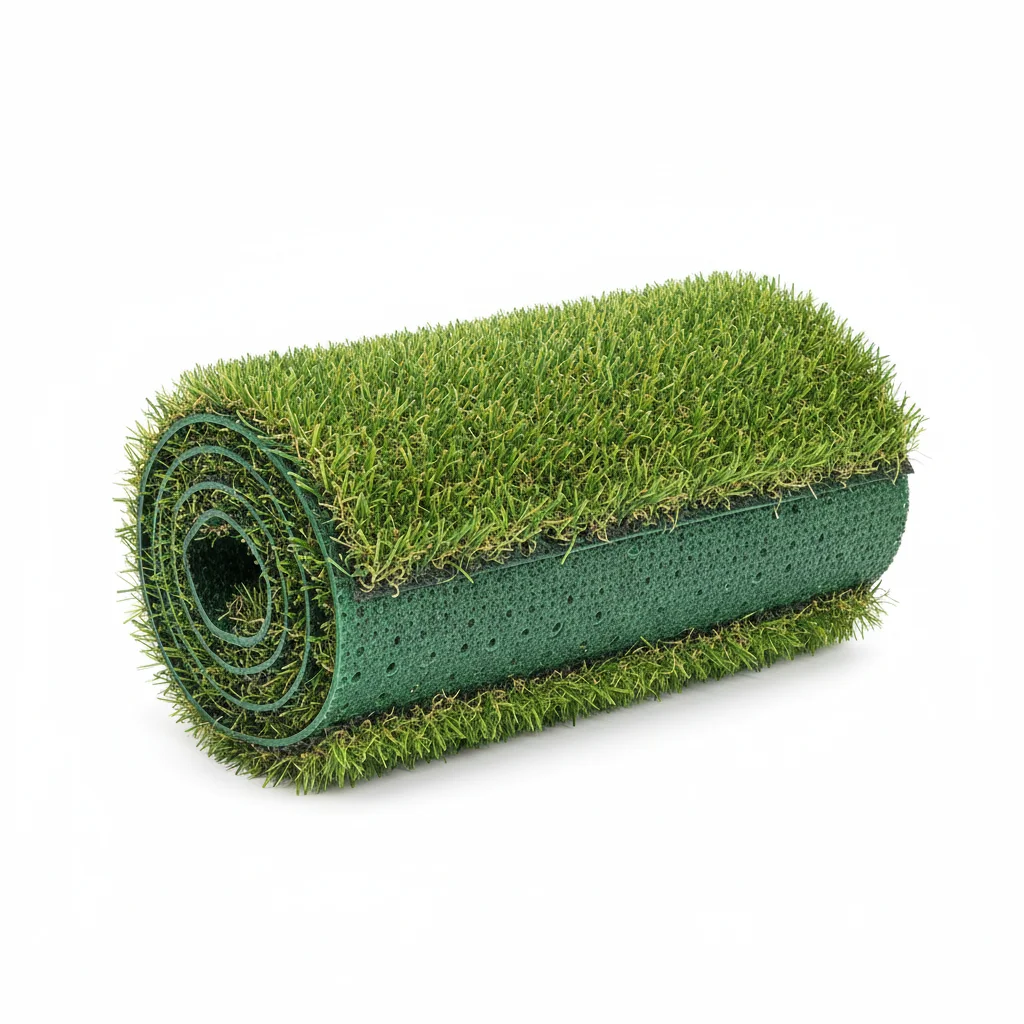
Apartment owners and those with townhouses near the Sunday market site have different requirements. Space is at a premium, and the goal is usually to turn a hard, concrete terrace into a soft, inviting sanctuary. In these settings, drainage is the single most important technical detail. You cannot simply glue grass to tiles and expect it to last. Water will get trapped, the adhesive will fail, and you’ll end up with a moldy smell. We use a 10mm drainage cell layer between the tiles and the grass, allowing water to flow freely to the existing floor drains. Because these spaces are often used for barefoot lounging, I recommend a slightly shorter, 30mm pile with a high "bounce-back" memory. This keeps the terrace looking fresh even with heavy foot traffic from the kitchen to the outdoor dining table. A typical terrace project of 15 to 20 square meters usually costs between €600 and €1,200, representing a significant upgrade in liveable space for a relatively small investment.
To truly finish an outdoor space in this part of the world, you have to look at the boundaries. Privacy is a major concern when properties are built in close proximity on the valley slopes. Standard wooden fencing often fails here; the intense sun dries out the timber until it cracks, and the salt air eats through standard screws and hinges. We recommend composite garden fencing or high-quality PVC-coated mesh with integrated privacy slats. These materials handle the UV levels and the Levante winds far better than traditional timber. When combined with a new lawn and strategic lighting, these elements create a private oasis that feels completely detached from the busy tourist hubs just ten minutes away.
Our logistics and installation teams are intimately familiar with the geography of this area, from the winding streets of the old town to the wide avenues of the newer estates. We regularly deliver and install in neighboring Alfaz-del-Pi, Benidorm, and Altea, but there is a specific logistical challenge to working here that only a local knows. Access can be tricky; many properties are built on steep inclines or have narrow driveways that won't accommodate a standard 20-ton truck full of aggregate. We utilize smaller, 3.5-ton delivery vehicles to ensure we can get materials as close to your garden gate as possible, minimizing the manual labor and disruption to your street. We also understand the local council regulations regarding "obra menor" permits, should your landscaping project involve structural changes like retaining walls or permanent outdoor kitchens.
The goal of any landscaping project in this region should be to reduce the "friction" of owning a home. You are here to enjoy the climate and the lifestyle, not to spend your Saturdays weeding and watering. Artificial grass is the foundation of that low-friction life. It stays a consistent temperature—especially if you choose a fiber with "cool-touch" technology that reflects IR radiation—and it requires nothing more than an occasional rinse with a hose to remove dust or a quick brush to lift the fibers. Over the last five years, I’ve seen how a well-executed landscaping plan can change how a family uses their home. It turns a dusty, neglected backyard into the most popular room in the house.
If you are considering an upgrade to your outdoor space, the best place to start is with a clear understanding of your site's specific challenges. Is your garden north-facing and prone to moss? Is it a sun-trap that kills everything but cacti? Does the wind whip across your terrace with enough force to move furniture? I’ve seen all of these scenarios in our local urbanisations and have developed specific solutions for each. I offer a free consultation where we can look at your space together, discuss drainage, choose the right pile height for your needs, and look at samples that match the light conditions of your specific plot. We can talk through the different price points, from a simple grass refresh to a full-scale landscaping overhaul, ensuring you get a result that looks genuine and lasts for years to come. In a town that prides itself on being the "Sports City," having a professional-grade surface in your own backyard seems only fitting.
 JW'"
/>
JW'"
/>