Outdoor Living in Guardamar del Segura
Guardamar del Segura is a distinctive coastal town of 17,000 residents with around 25% expats — British, Scandinavian, and German — drawn by its unique pine dune forest, the Segura river mouth, and a genuine Spanish town atmosphere that many expat-heavy resorts lack.
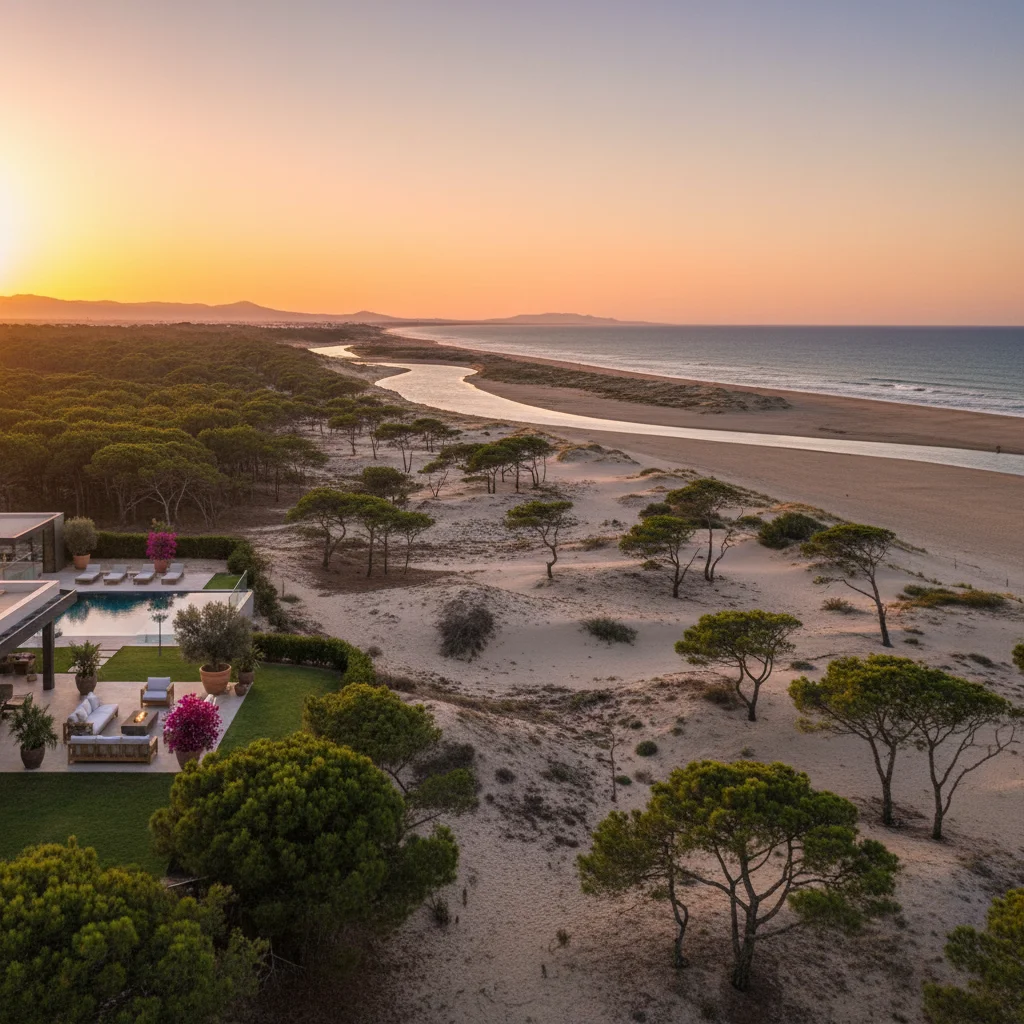
Guardamar occupies a special position on the southern Costa Blanca. It has a long sandy beach backed by a remarkable pine forest planted in the early twentieth century to stabilise the shifting dunes — a landscape you will not find anywhere else on this coastline. The town itself feels authentically Spanish: a busy fishing port, a lively Reina Sofía park where families gather in the evenings, and a centre full of independent tapas bars and cafés rather than the English pubs that dominate nearby resorts.
The expat community here is more mixed and integrated than in purpose-built urbanisations. British, Scandinavian, and German residents live alongside Spanish families in neighbourhoods stretching from the beachfront apartments near the pine forest up to the residential villas on the higher ground behind town. Property prices average around €180,000, covering everything from compact two-bedroom seafront apartments to detached villas with pools in the quieter residential zones inland.
This variety of property types means outdoor cooking setups in Guardamar range from compact balcony grills to full garden kitchen installations. The mild coastal microclimate — tempered by sea breezes and the shade of those famous pines — makes outdoor cooking comfortable even in the peak of summer, when inland towns can feel oppressively hot.
Guardamar combines genuine Spanish town character with a diverse expat community, offering property types from beachfront apartments to inland villas — each suited to different outdoor cooking approaches.
Choosing Your Setup in Guardamar del Segura
Your equipment choice in Guardamar depends heavily on whether you are working with a villa garden, a townhouse patio, or an apartment terrace — the town has all three in abundance.
For the beachfront and central apartments, space is the primary constraint. Costa Blanca Outdoors recommends a compact kamado — 18 inches is ideal — or a quality portable gas BBQ that can sit on a terrace without overwhelming the space. A small kamado is remarkably versatile: it grills, smokes, roasts, and bakes, replacing several appliances in a single unit that fits comfortably on a two-metre-wide balcony.
Townhouse owners in the streets behind Reina Sofía park and along the Segura river typically have courtyard patios or small rear gardens. Here a full-size gas BBQ with three or four burners works well, positioned against a wall with a heat shield. Add a tabletop pizza oven for weekend entertaining and you have a setup that punches well above its footprint.
Villa owners on the higher ground — particularly in the residential areas towards San Fulgencio — have the space for a complete outdoor kitchen. A built-in gas BBQ island, a large kamado for low-and-slow sessions, and a wood-fired pizza oven make a combination that turns a garden into a genuine year-round entertaining space.
Costa Blanca Outdoors tailors recommendations to your property type — compact kamados for apartments, gas BBQs with pizza ovens for townhouses, and full outdoor kitchen builds for Guardamar’s inland villas.
Delivery to Guardamar del Segura
We deliver across Guardamar del Segura, from the beachfront apartments near the pine forest to the residential villas on the higher ground, on our regular southern coastal route.
Guardamar’s layout is more spread out than it first appears, stretching from the port and beach area up through the town centre to the residential zones inland. Our delivery team knows the access points for the beachfront blocks — including which buildings have lifts suitable for heavy equipment and which require ground-floor handover. For villa deliveries on the higher ground, wide residential roads make access straightforward.
Every delivery includes full white-glove service: unpacking, assembly, placement, and a thorough equipment walkthrough. For apartment and townhouse deliveries, we confirm access logistics in advance to ensure a smooth installation on the day.
Guardamar sits centrally on our southern coastal route between Torrevieja to the south and Santa Pola to the north. We also cover nearby Rojales and San Fulgencio on the same runs. Standard delivery is 5–10 working days for in-stock items, with custom outdoor kitchen builds taking 3–4 weeks from design to completion.
Shade Sails in Guardamar del Segura: What You Need to Know
Living in this specific corner of the Costa Blanca requires a different approach to outdoor design than you might find in the rugged cliffs of the north. Down here, where the landscape is defined by the sweeping Pine Dune Forest and the expansive mouth of the Segura River, we deal with a unique microclimate. The air is drier, the sun feels more direct, and the terrain is flatter, which means the wind behaves differently across our terraces. Over the years, I have seen many international residents, who make up about a quarter of our local population, struggle to find the right balance between enjoying the Mediterranean light and protecting themselves from the harsh UV rays that peak between June and September. Whether you are a Scandinavian resident looking to maximize your light intake during the winter or a British expat trying to create a cool sanctuary for a summer roast on the terrace, the architectural shade sail has become the most effective tool in our arsenal. It fits the local aesthetic perfectly, bridging the gap between the traditional white-washed look of the older urbanisations and the modern, glass-heavy designs appearing in the newer developments near the park.
The property landscape here is distinct, characterized by a mix of affordable urbanisation villas and mid-rise apartment blocks that often overlook shared garden spaces or golf resort communities. In areas like the golf-centric developments near the town's borders, residents often have compact but highly usable garden plots or large rooftop solariums. These spaces are prone to becoming heat traps because they are frequently surrounded by high walls or other buildings that block the natural breeze. A shade sail is the ideal solution for these specific Guardamar del Segura properties because it provides "breathable" shade. Unlike a traditional plastic-coated awning or a solid roof structure, a high-quality HDPE sail allows hot air to rise through the fabric, creating a natural cooling effect that can drop the temperature on a terrace by up to ten degrees. This is vital when you are hosting a lunch for friends from nearby Torrevieja or San Fulgencio and the afternoon sun starts to beat down on your outdoor dining area. The flexibility of these sails allows us to navigate the varied terrace sizes, from the 15m² balconies near the Segura River Mouth to the expansive 80m² gardens found in the outlying villas.
Understanding the local culture of outdoor living is key to choosing the right setup. The mix of British, Scandinavian, and German residents has created a vibrant scene where the terrace is often the most used "room" in the house. We use our outdoor spaces for everything from morning yoga to late-night social gatherings. In the denser urban areas, privacy is just as important as shade. By angling a triangular sail strategically, we can block the line of sight from neighboring balconies without sacrificing the view of the surrounding pine trees or the distant sea. This dual-purpose functionality—shade plus privacy—is why I find myself recommending sails over traditional parasols more often than not. A parasol takes up valuable floor space with a heavy base and is prone to catching the wind, whereas a well-tensioned sail stays out of the way, leaving your terrace floor clear for furniture and foot traffic.
Practical Expert Advice for the Southern Costa Blanca
When we talk about the environment here, we have to address the elephant in the room: the salt and the dust. Being so close to the Mediterranean and the nearby salt lakes creates a high-humidity, salt-laden atmosphere that can be incredibly corrosive. If you use standard galvanized steel fittings from a local hardware store, they will likely show signs of rust within a single season. I always insist on using 316 Marine Grade stainless steel for every tensioner, eye bolt, and carabiner. This is non-negotiable for anyone living within five kilometers of the coast. Even if you are slightly further inland toward Rojales, the salt air travels, and the investment in high-grade hardware, which typically adds about EUR 150 to a standard installation, pays for itself by lasting a decade rather than eighteen months.
Then there is the Calima. This Saharan dust phenomenon is much more frequent in this southern part of the province than it is up toward Dénia. When that fine, orange sand settles, it can ruin traditional acrylic awning fabrics, leading to permanent staining. This is why I recommend High-Density Polyethylene (HDPE) monofilament fabrics. These fabrics are knitted, not woven, which means they don't absorb water or hold onto dust in the same way. A professional-grade HDPE sail, which might cost between EUR 400 and EUR 800 depending on the size and weight (look for 280g/m² to 320g/m²), can be easily cleaned with a garden hose after a Calima event. The dust simply washes through the pores of the fabric rather than soaking into the fibers. For those in the urbanisations of Guardamar del Segura, this ease of maintenance is a significant advantage over high-maintenance pergolas.
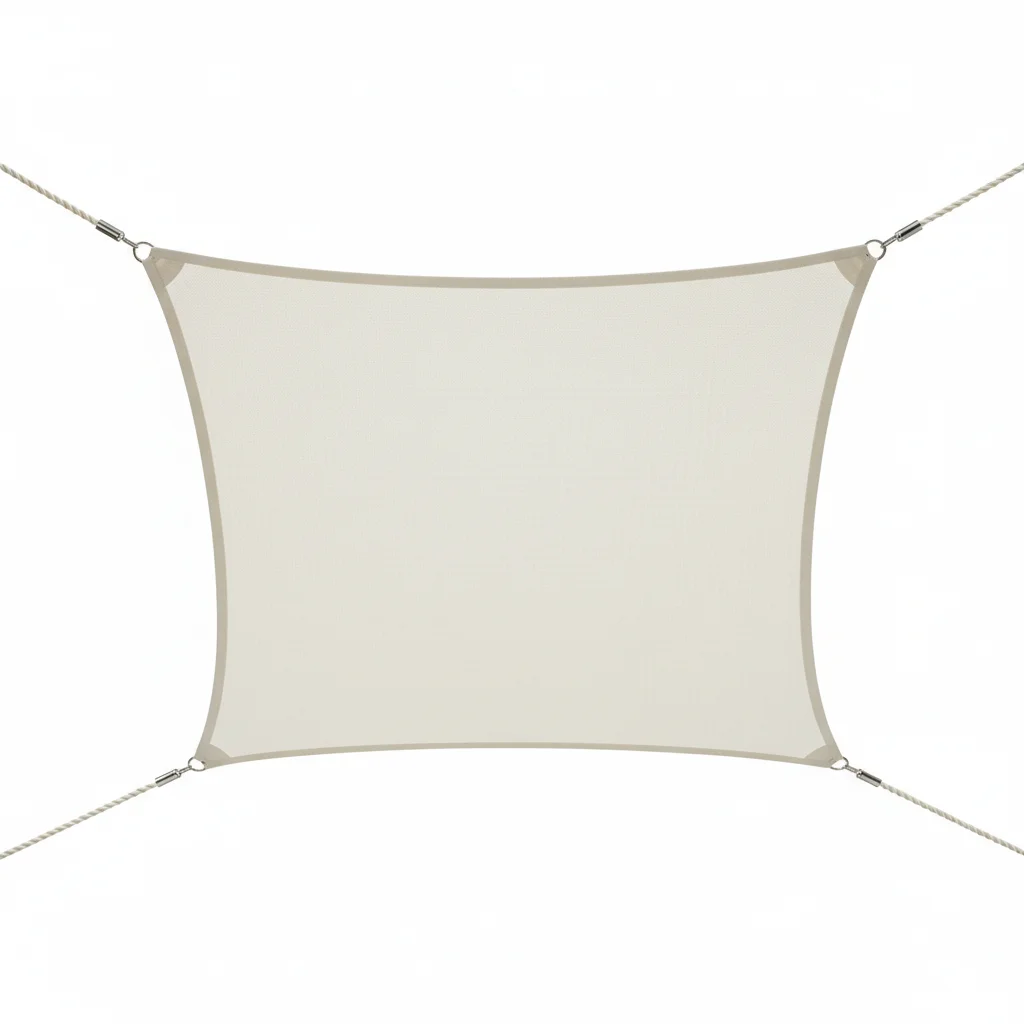
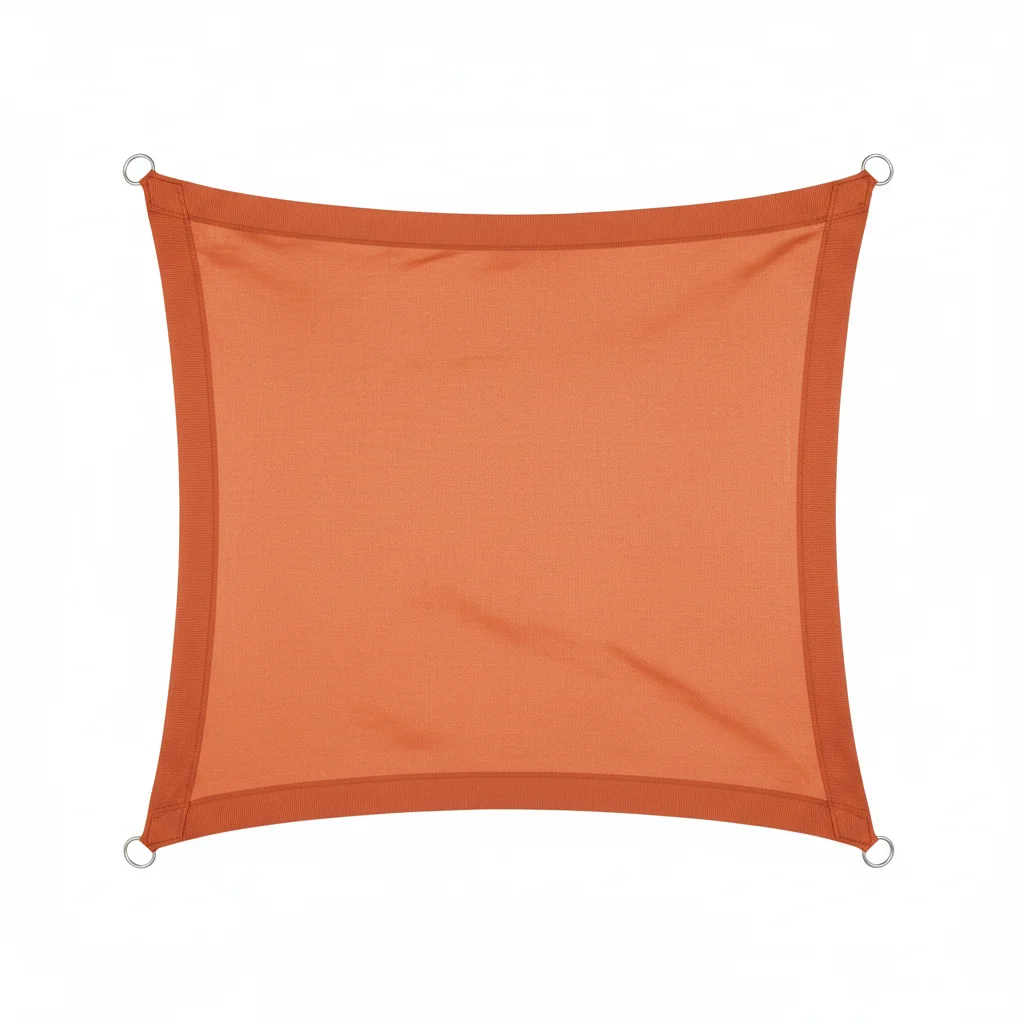
Installation in this town also requires a firm understanding of the local "Comunidad de Propietarios" or community rules. Many apartment blocks and urbanisations have strict regulations regarding the "uniformity of the facade." This often means you cannot install permanent structures like wooden pergolas or change the color of your awnings on a whim. Shade sails are often viewed more favorably by community presidents because they are technically "semi-permanent" or "removable" structures. However, you should always opt for neutral tones like sand, ivory, or silver-grey to stay within the general aesthetic of most complexes. A custom-cut rectangular sail in a "Sand" HDPE fabric, measuring 4m x 5m, usually costs around EUR 550 including the tensioning hardware and is generally accepted by even the strictest communities because it complements the Mediterranean landscape.
Another technical consideration is the wind. Because the terrain here is relatively flat, the wind can pick up speed quickly as it moves off the sea toward the salt lakes. A sail that is not tensioned correctly will act like a giant kite, putting immense pressure on your house walls. When I install these, I use chemical anchors—a two-part resin that bonds the bolt into the brick or stone—rather than standard plastic wall plugs. This ensures that the sail stays put during a "Levante" wind. If the wind exceeds 50km/h, I recommend taking the sail down, which is a five-minute job if you have the right carabiner system in place. This flexibility is a huge benefit compared to fixed awnings which can be ripped off their tracks in a heavy storm.
What We Recommend for Local Property Types
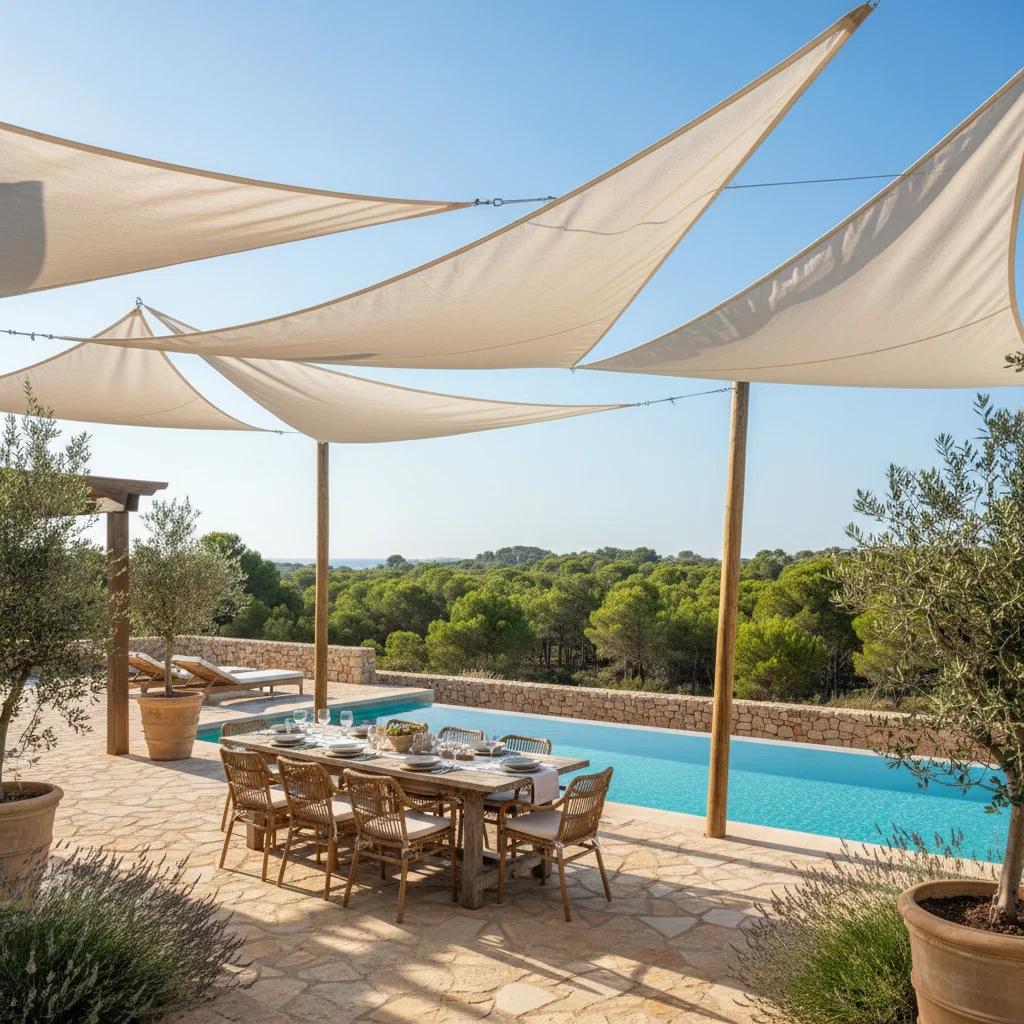
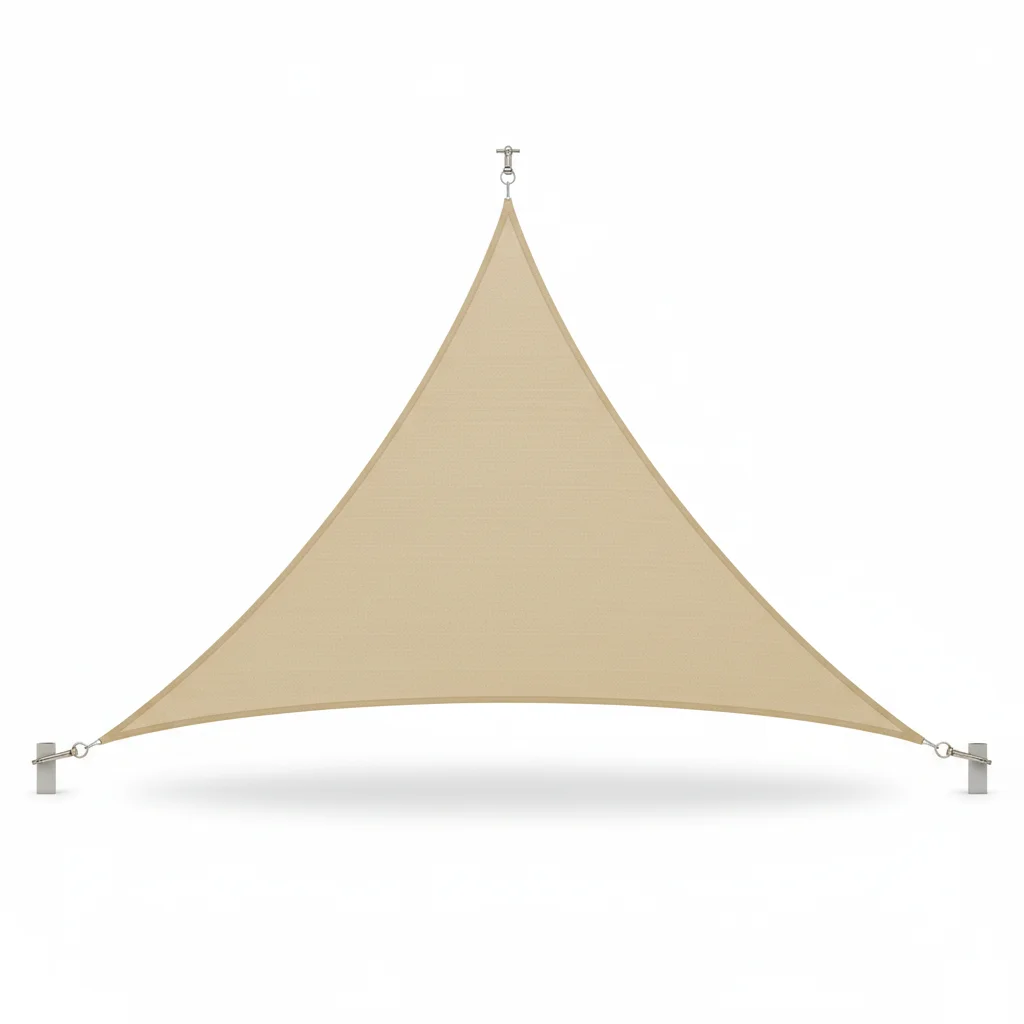
For those living in the urbanisation villas, I typically suggest a "layered" approach using two or three triangular sails rather than one large square. The reason for this is twofold: aesthetics and wind management. By overlapping two triangles at different heights, you create a dynamic, architectural look that mimics the dappled shade of the Pine Dune Forest. It also creates a gap between the sails that allows wind to escape, reducing the total load on your mounting points. For a standard villa terrace of about 40m², a combination of two 5m x 5m x 5m triangles in contrasting tones like "Ivory" and "Desert Sand" works beautifully. This setup usually falls into the EUR 900 to EUR 1,200 range including all the heavy-duty mounting poles if your walls aren't positioned correctly.
If you are in one of the apartments near the Reina Sofía Park, space is at a premium. Here, we often look at a single, high-tension rectangular sail that can cover the entire width of the balcony. Because these balconies often have glass railings, we have to be careful about where we mount the hardware. We focus on the structural concrete pillars or the header beam above the sliding doors. A 4m x 3m rectangular sail is a workhorse in these settings. It provides full coverage for an outdoor dining table and can be angled sharply to block the low afternoon sun that hits our coast so hard. For these smaller setups, you might also consider a high-end cantilever parasol as a secondary option for when the sun moves, but the sail remains the primary "ceiling" of your outdoor room.
I also frequently see residents combining shade sails with other products for a tiered shade strategy. For example, you might have a bioclimatic pergola over your main outdoor kitchen area to provide 100% rain protection, and then extend the shaded area over your pool or sun loungers using a custom shade sail. This creates different "zones" in your garden. The pergola is your solid, year-round structure, while the sail provides that breezy, summer-vibe shade for the relaxation areas. It is a very effective way to manage a larger plot without the massive expense of building a permanent roof over the entire garden. A bespoke sail for a pool area typically runs between EUR 700 and EUR 1,500 depending on whether we need to install independent steel posts or can use existing structures.
Delivery and Expert Local Knowledge
We have spent years navigating the logistics of the southern Costa Blanca. Delivering and installing in Guardamar del Segura requires more than just a GPS. We know the layout of the local urbanisations, the height restrictions for delivery vehicles in certain apartment complexes near the center, and the specific wind patterns that affect the street layouts near the Segura River. Whether you are in the heart of the town or in the neighboring areas like Torrevieja, Rojales, or the quiet streets of San Fulgencio, we understand the local building materials—from the hollow "ladrillo" bricks to the solid concrete used in newer builds—and we bring the specific tools needed to ensure a secure fit.
Our service isn't just about dropping off a box. We understand that every terrace is different, and a "one size fits all" sail from a big-box retailer rarely works here because the mounting points are never in the perfect place. We provide the expertise to calculate the exact tension needed and the correct "twist" or "hypar" shape to ensure water doesn't pool in the middle of the fabric during a rare rain shower. This technical knowledge is what prevents the common "sagging" look that ruins so many DIY installations.
If you are looking to reclaim your outdoor space from the intense heat, I am always happy to chat. I can come out to your property, take a look at your terrace or garden, and give you an honest assessment of what will work best for your specific orientation and property type. We don't just sell shade; we design outdoor living solutions that are built to withstand the salt, the wind, and the relentless sun of this beautiful region. A quick consultation can save you hundreds of Euros in mistakes and ensure that your outdoor space is ready for the long, hot summer ahead. Reach out to us, and let’s make sure your terrace becomes the sanctuary it was meant to be.
 JW'"
/>
JW'"
/>