Outdoor Living in Santa Pola
Santa Pola is a traditional Spanish fishing town of 35,000 residents with around 12% expats — British, German, and Dutch — offering a more authentically Spanish lifestyle than most Costa Blanca towns, centred on its working port, famous salt pans, and the ferry to Tabarca Island.
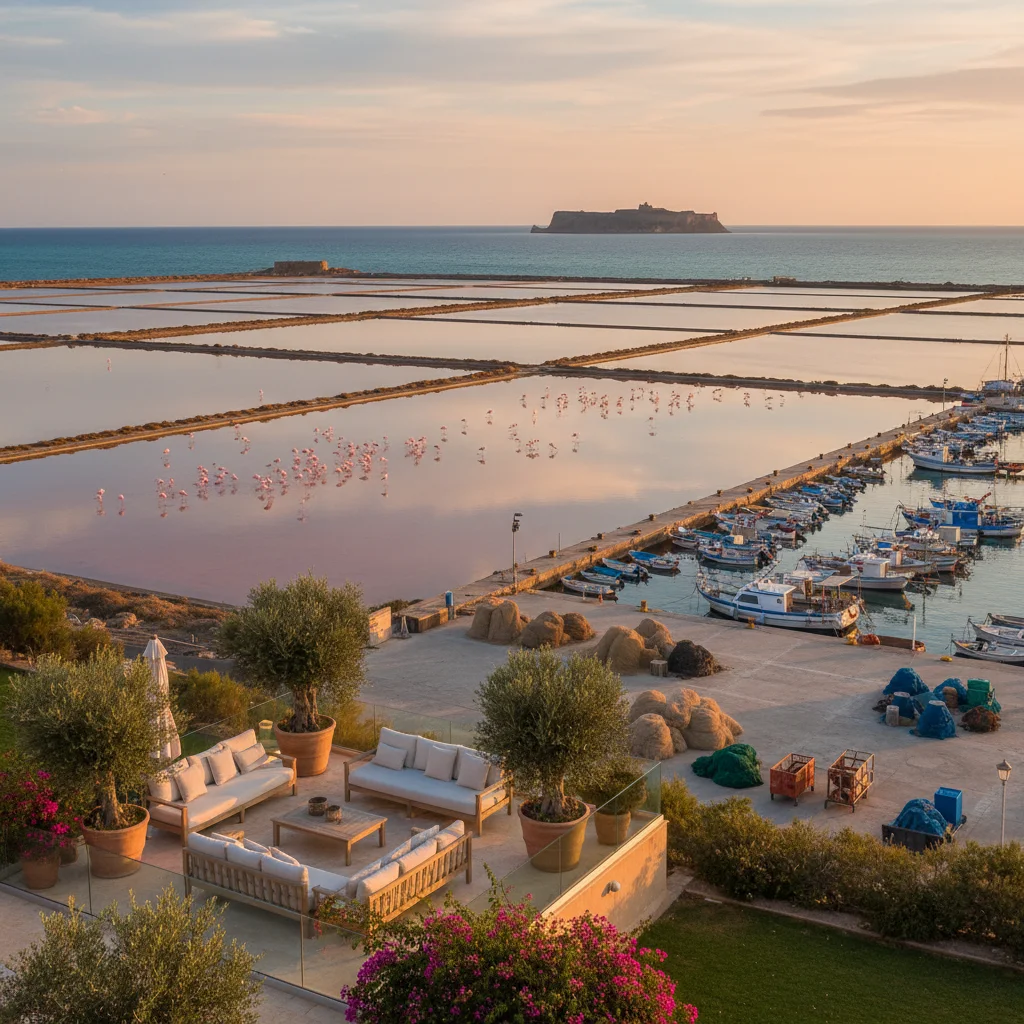
Santa Pola has resisted the full transformation that tourism brought to many of its neighbours. The fishing port still lands catches daily, the salt pans on the southern edge of town remain a working landscape that attracts flamingos and birdwatchers, and the town centre feels genuinely Spanish — busy with locals rather than expat-oriented businesses. The castle overlooking the port hosts a maritime museum, and the Cape Santa Pola lighthouse marks the dramatic cliffs that separate the town from neighbouring Gran Alacant.
The expat community here is smaller in proportion than towns further south, but it is well-established and tends to attract people who want a Spanish experience rather than a British enclave. Properties average around €200,000, with seafront apartments near the port from €150,000, townhouses in the streets behind the Paseo Marítimo from €180,000, and villas on the elevated ground near Cape Santa Pola from €300,000 upwards.
Outdoor cooking in Santa Pola carries a particular pleasure: the proximity of the fishing port means you can buy the morning’s catch and have it on the grill within the hour. Gambas from Santa Pola are renowned across Spain, and they are never better than cooked over charcoal within sight of the harbour where they were landed.
Santa Pola’s working fishing port, salt pan nature reserve, and traditional Spanish character set it apart from typical expat towns — with fresh seafood from the harbour to the grill making outdoor cooking here a genuinely local experience.
Choosing Your Setup in Santa Pola
Santa Pola’s property mix runs from compact port-side apartments to clifftop villas near the cape — your outdoor cooking setup should match both your space and your access to some of Spain’s best fresh seafood.
For the seafront apartments along the Paseo Marítimo and near the port, a compact gas BBQ or a small kamado is the practical choice. These properties often have terraces with sea views, and a 2-burner gas unit lets you grill those Santa Pola prawns without overwhelming the space. The salt air here is worth noting — Costa Blanca Outdoors recommends stainless steel construction for any equipment exposed to the coastal atmosphere, as painted steel corrodes noticeably faster this close to the water.
Townhouse owners in the residential streets behind the centre — particularly around the market area and towards the Gran Playa beach — typically have rear patios or rooftop terraces. A full-size gas BBQ with a protective cover works well here, and many of our customers in these properties add a tabletop pizza oven that stores indoors between uses.
The villas on Cape Santa Pola and the elevated residential areas towards Elche offer the space for a complete outdoor kitchen. The views from these properties — across the salt pans to the south, or out to Tabarca Island — make them natural entertaining spaces. A built-in BBQ island with a large kamado and a wood-fired pizza oven turns these terraces into destination dining spots.
Costa Blanca Outdoors recommends stainless steel equipment for Santa Pola’s seafront properties due to salt air exposure, compact setups for port-side apartments, and full outdoor kitchen builds for the elevated villas near Cape Santa Pola.
Delivery to Santa Pola
We deliver throughout Santa Pola, from the port-side apartments and Paseo Marítimo to the cape villas and Gran Playa residential areas, on our central coastal route.
Santa Pola’s compact layout makes deliveries efficient. The town centre and port area are flat and well-connected, with most apartment buildings accessible from wide main roads. Cape Santa Pola deliveries involve the winding road up to the elevated residential areas, but our team knows the route and access points well.
For seafront apartment deliveries, we confirm lift access in advance — some of the older blocks near the port have narrow staircases that require planning for heavier items like kamado grills and stone pizza ovens. Newer buildings along Gran Playa typically have goods lifts that handle our largest products without difficulty.
Santa Pola sits on our route between Alicante to the north and Guardamar to the south, with Gran Alacant immediately adjacent around the cape. We combine deliveries across all four areas regularly. Standard delivery is 5–10 working days for in-stock products, with custom outdoor kitchen projects taking 3–4 weeks from initial design consultation to completed installation.
Architectural Shade Solutions for the Santa Pola Microclimate
Living on this specific stretch of the southern Costa Blanca requires a different approach to outdoor design than you might find in the greener, wetter north of the province. Since moving here in 2019 and working with over 200 families, I have observed how the unique geography of this town dictates the lifespan of your garden furniture and shade structures. We are situated in a landscape dominated by the vast salt pans and the jutting headland of the Cape, which creates a microclimate that is significantly hotter and drier than Alicante city or the northern marinas. The 35,000 residents here, roughly twelve percent of whom are international, understand that the sun is relentless from June through September. British, German, and Dutch expats have integrated a culture of long-form outdoor living, often centered around terrace dining and poolside lounging, which makes high-quality shade an absolute necessity rather than a luxury.
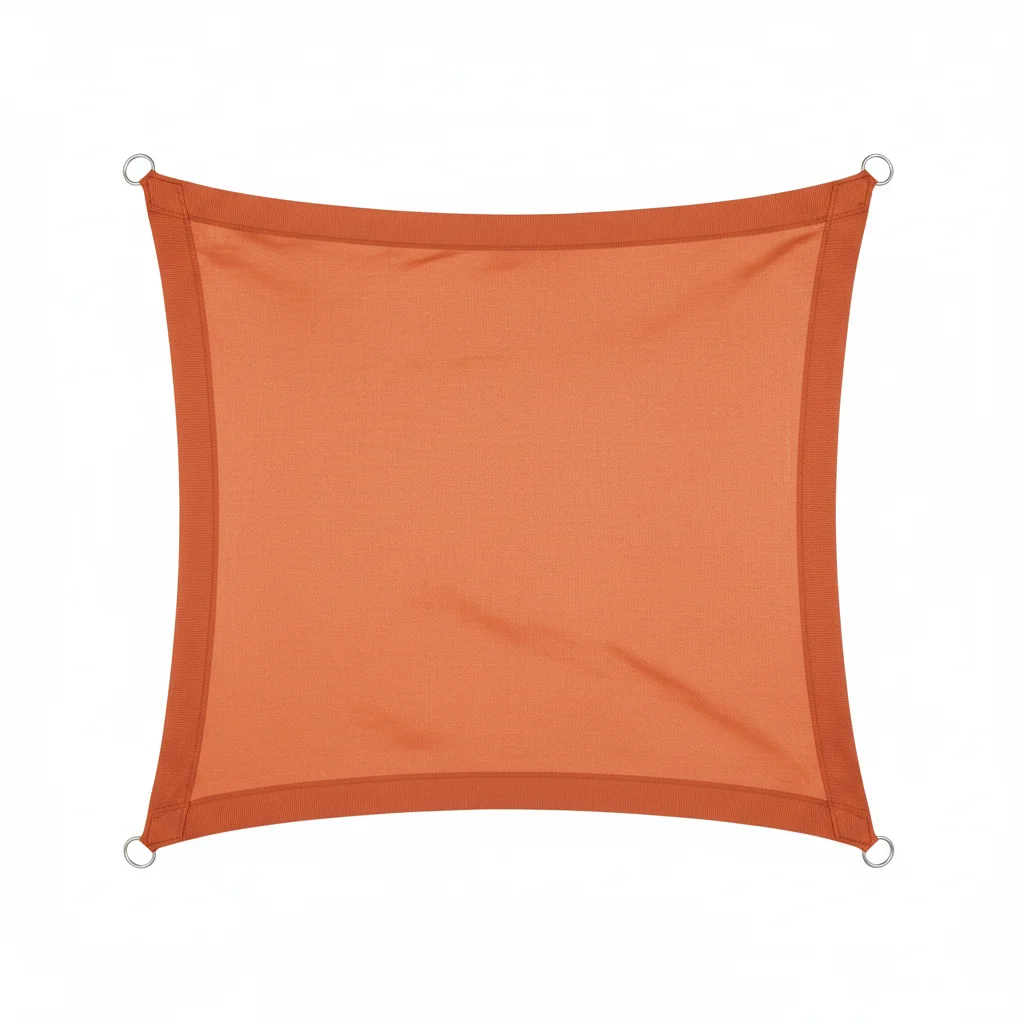
The property landscape here is distinct, characterized by a mix of affordable urbanisation villas and apartments within golf resort communities. Many of these homes feature shared gardens or compact private terraces where space is at a premium. A traditional fixed pergola often feels too bulky for these plots, obstructing views of the Mediterranean or the silhouette of Tabarca Island on the horizon. This is precisely why shade sails have become the preferred choice for local homeowners. They offer a lightweight, architectural aesthetic that provides essential UV protection without the heavy structural footprint of a wooden or brick gazebo. Whether your home sits near the bustling fishing port or further up toward the lighthouse, the goal is to create a usable outdoor room that remains cool when the thermometer hits thirty-five degrees.
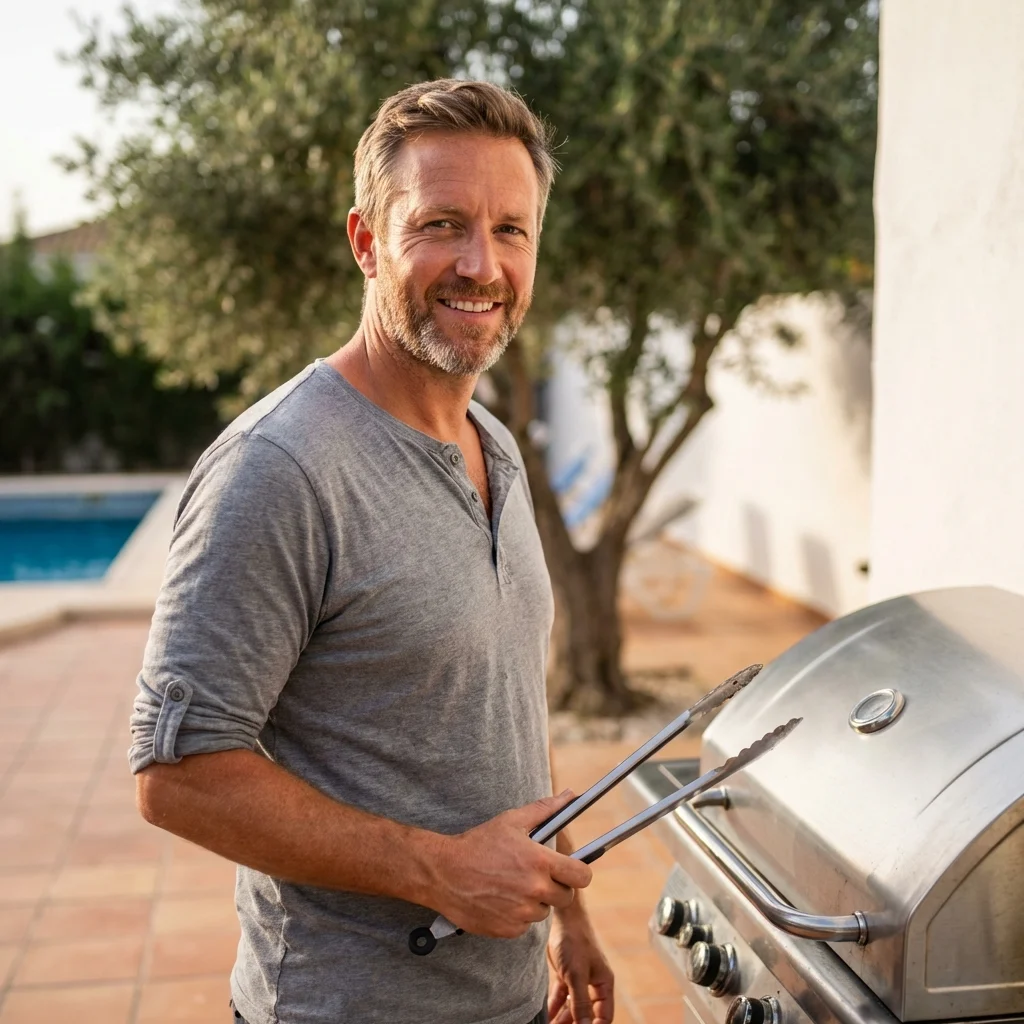
The outdoor cooking scene among the expat community here is particularly vibrant, with many residents investing in high-end grill setups and outdoor kitchens. However, cooking over hot coals or gas burners in the direct glare of the afternoon sun is uncomfortable and often dangerous. A strategically placed shade sail, custom-cut to the dimensions of your terrace, transforms a scorching slab of tiles into a functional extension of your living room. The fabric’s ability to block up to ninety-five percent of harmful UV rays while allowing hot air to rise through the weave is a technical advantage that solid roofs cannot match. In a town where life revolves around the water and the salt lakes, your outdoor space should be a sanctuary, not a heat trap.
Practical Considerations for Marine and Salt Lake Environments
When selecting a shade sail for this specific location, you must account for environmental factors that do not exist just ten kilometers inland. The proximity to the salt lakes and the sea creates a high-level humidity that carries salt particles, which is incredibly corrosive to standard outdoor hardware. I have seen many DIY kits purchased from hardware chains fail within a single season because the turnbuckles and pad eyes were made of low-grade galvanized steel rather than marine-grade AISI 316 stainless steel. For a town exposed to the saline air of the fishing port and the Cape, I only recommend 316-grade hardware. It costs roughly twenty percent more upfront, but it prevents the unsightly rust streaks that can ruin the appearance of your white-washed villa walls.
The most significant local challenge is the calima—the fine Saharan dust that coats everything in a reddish-orange film several times a year. This dust, combined with the humidity from the salt pans, can create a sticky residue on outdoor fabrics. This is why I advise against cheap, non-porous polyester sails which trap water and dust, leading to sagging and mold growth. Instead, we use High-Density Polyethylene (HDPE) knitted fabric. A 340 GSM (grams per square meter) HDPE sail is porous, meaning it breathes. When the calima hits, you simply hose it down. The dust passes through the mesh or washes off the surface rather than becoming embedded in the fibers. For a medium-sized terrace of approximately twenty square meters, a high-quality HDPE sail with professional-grade tensioning hardware typically ranges from 450 EUR to 800 EUR depending on the complexity of the anchor points.
Community rules, or comunidad de propietarios, are another critical factor for residents in the golf resort communities and urbanisations. Many communities have strict regulations regarding permanent structures like bioclimatic pergolas or tiled porch extensions, which often require a unanimous vote and a formal building license from the town hall. Shade sails frequently fall into a different category because they are technically removable. This "temporary" status often allows you to install significant shade without the bureaucratic headache of a full construction project. However, it is always professional practice to ensure your sail color matches the community’s aesthetic guidelines, usually sticking to neutral tones like sand, ivory, or silver-grey which reflect the heat more effectively than darker blues or greens.
Installation in this area also requires an understanding of the local wind patterns. The afternoon sea breeze, while refreshing, can create significant uplift on a large fabric surface. In the villas situated on the flatter plains near the salt pans, the wind has a clear run, meaning your anchor points must be chemically anchored into the structural concrete of the building or set in deep, steel-reinforced footings if using poles. We avoid fixing directly into single-skin brick walls without reinforcement. A 5m x 5m square sail can exert over 500 kilograms of force in a strong gust, so the engineering behind the tensioning is just as important as the fabric itself.
Custom Configurations for Local Property Types
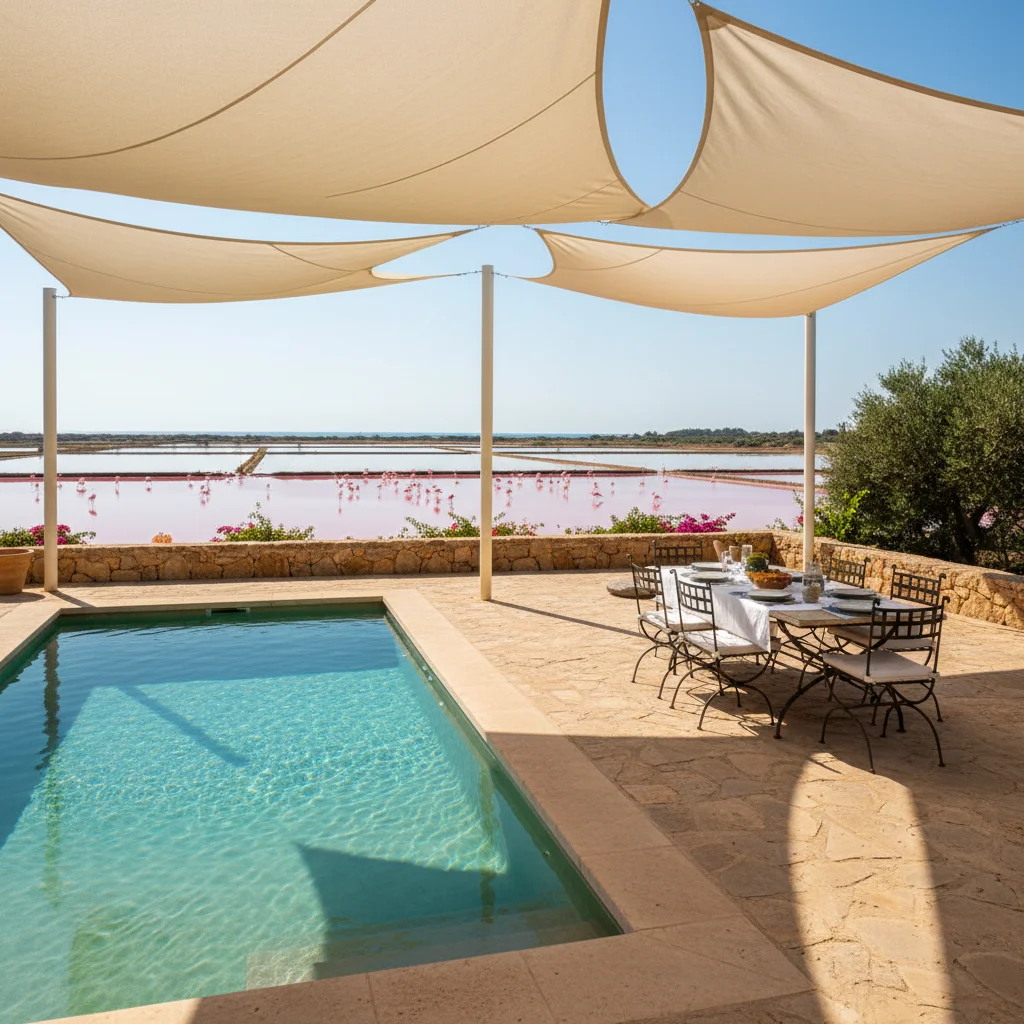
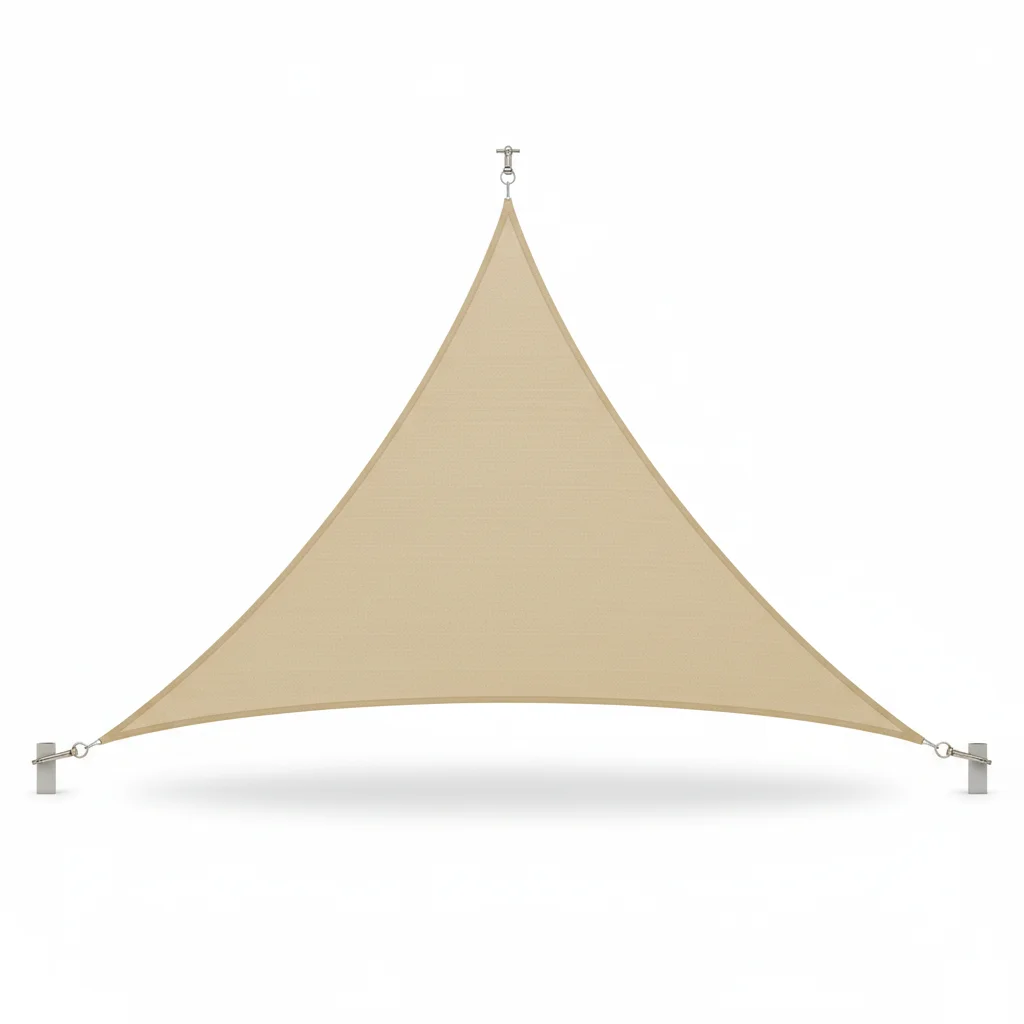
The diversity of housing in this area means there is no one-size-fits-all solution for shade. For the detached villas found in the newer urbanisations, I often recommend a multi-sail configuration. Instead of one massive 40-square-meter sail, which acts like a giant kite in the wind, we often design an overlapping layout using two or three smaller triangular sails. This not only looks more modern and architectural but also allows air to circulate through the gaps between the fabrics, further cooling the area below. By using different heights for the mounting points—perhaps two points at 2.8 meters and one at 2.2 meters—you create a three-dimensional "hypar" shape that sheds rainwater and prevents the fabric from flapping. A three-sail triangular setup for a pool deck typically costs between 1,200 EUR and 1,800 EUR, including heavy-duty masts and chemical wall anchors.
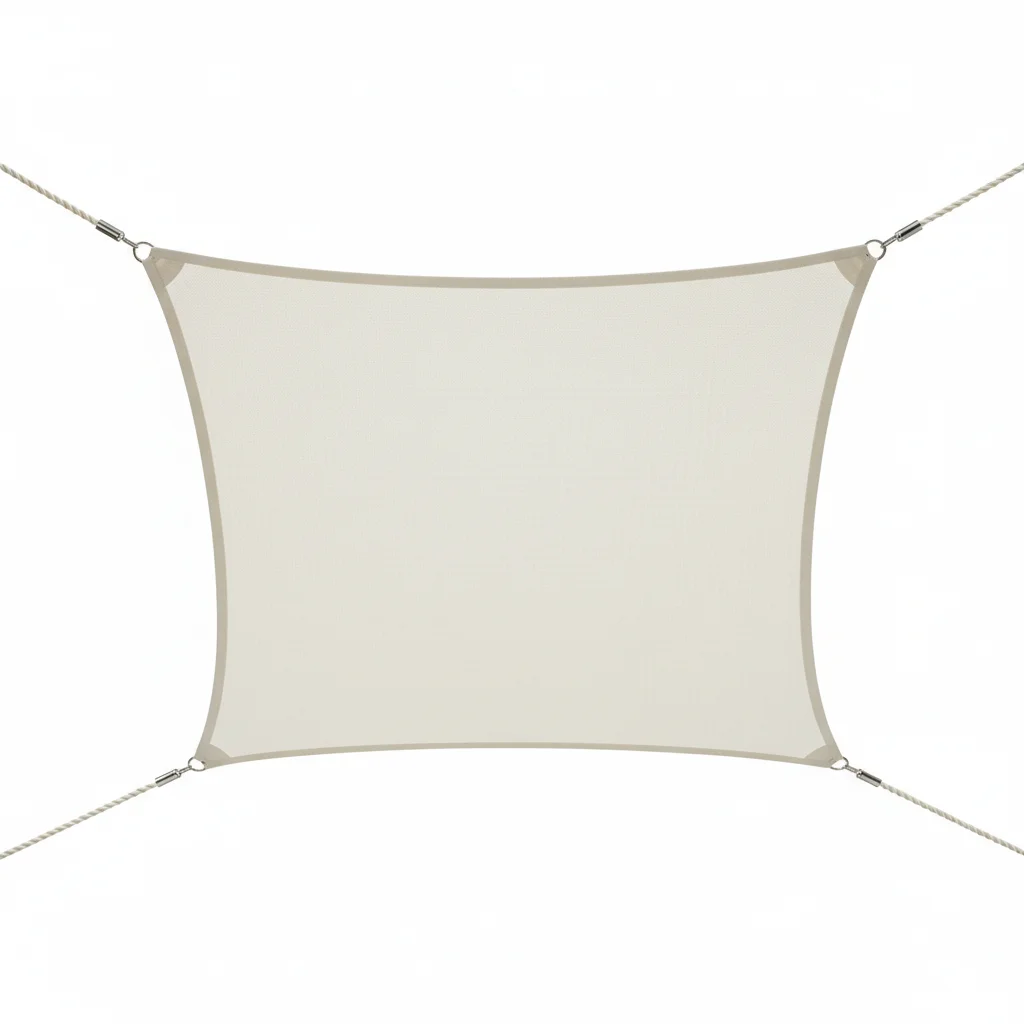
For the apartments located closer to the fishing port or within the town center, space and mounting options are often more restricted. Here, a rectangular or square sail is usually the most efficient way to maximize coverage on a narrow balcony. If you have a terrace of 3m x 5m, a custom-cut rectangular sail can be tensioned using the existing pillars of the building or specialized wall tracks. This provides a much more stable and durable solution than a traditional parasol. While a high-end parasol-shade system is useful for flexibility, it takes up valuable floor space with a heavy base. A shade sail clears that footprint entirely, allowing you to fit a full dining set or a couple of sun loungers comfortably on even a modest balcony.
We often see residents combining these products for the ultimate outdoor setup. You might have a bioclimatic pergola over your main dining area for year-round waterproof protection, but then use shade sails to extend that cover over a lounge area or a children’s play pool. This layered approach to shade allows you to manage different micro-zones of your garden based on how the sun moves across your property. In the south-facing gardens typical of the golf resort areas, the sun stays high and intense for many hours. A sail positioned to intercept the western sun from 4:00 PM onwards can drop the temperature on your terrace by as much as ten degrees Celsius, making that early evening "borrel" or gin and tonic much more enjoyable.
The cost-to-benefit ratio of these installations is particularly high for the local market. With an average property price around 200,000 EUR, spending roughly one percent of the property value on a professional shade system significantly increases the usable square footage of the home. It moves the living area from the dark interior of the villa out into the fresh air. For those renting out their properties to holidaymakers, a shaded terrace is often the top requirement for guests. Providing a safe, UV-protected environment for families to eat outside is a massive selling point that justifies the initial investment within a single rental season.
Local Service and Technical Expertise
Our team is regularly on the road between the fishing port and the elevated slopes of Gran Alacant. We have a deep understanding of the local logistics, including the access restrictions in the older parts of the town and the specific building regulations in the surrounding areas of Elche, Guardamar, and Alicante. When we deliver and install in these neighborhoods, we come prepared for the specific masonry we encounter, whether it is the older, solid stone found in some townhouses or the modern hollow-core bricks used in the newer urbanisations. Knowing which fixings to use in which substrate is the difference between a sail that lasts ten years and one that pulls out of the wall during the first autumn storm.
The road network around the salt pans and the Cape is familiar to us, and we manage all the logistics of getting materials to your site, including the heavy steel masts which can be up to four meters in length. If you are located in Gran Alacant, we are well aware of the challenging terrain and the way the wind whips up the hillside, which influences how we tension the sails in that specific zone. We don't just drop off a box; we ensure the geometry of the installation is correct for the sun's path across your specific plot. We use solar modeling to determine exactly where the shadow will fall at 2:00 PM in August, ensuring the sail actually protects the area you intended to use.
We offer a free consultation for residents across the local area to discuss these technical details in person. I personally find that a twenty-minute walk around your terrace reveals more about the wind direction and mounting possibilities than a dozen photos could. We can discuss the various HDPE color swatches—like Graphite, Desert Sand, or Steel Grey—and how they will interact with your existing masonry and the intense local light. Our goal is to provide a solution that is architecturally integrated into your home, standing up to the salt, the sun, and the calima for years to come. Whether you are looking to cover a small balcony near the port or a large poolside deck overlooking the salt lakes, we have the local experience to get the tension and the fabric choice exactly right.
 JW'"
/>
JW'"
/>