Outdoor Living in Guardamar del Segura
Guardamar del Segura is a distinctive coastal town of 17,000 residents with around 25% expats — British, Scandinavian, and German — drawn by its unique pine dune forest, the Segura river mouth, and a genuine Spanish town atmosphere that many expat-heavy resorts lack.
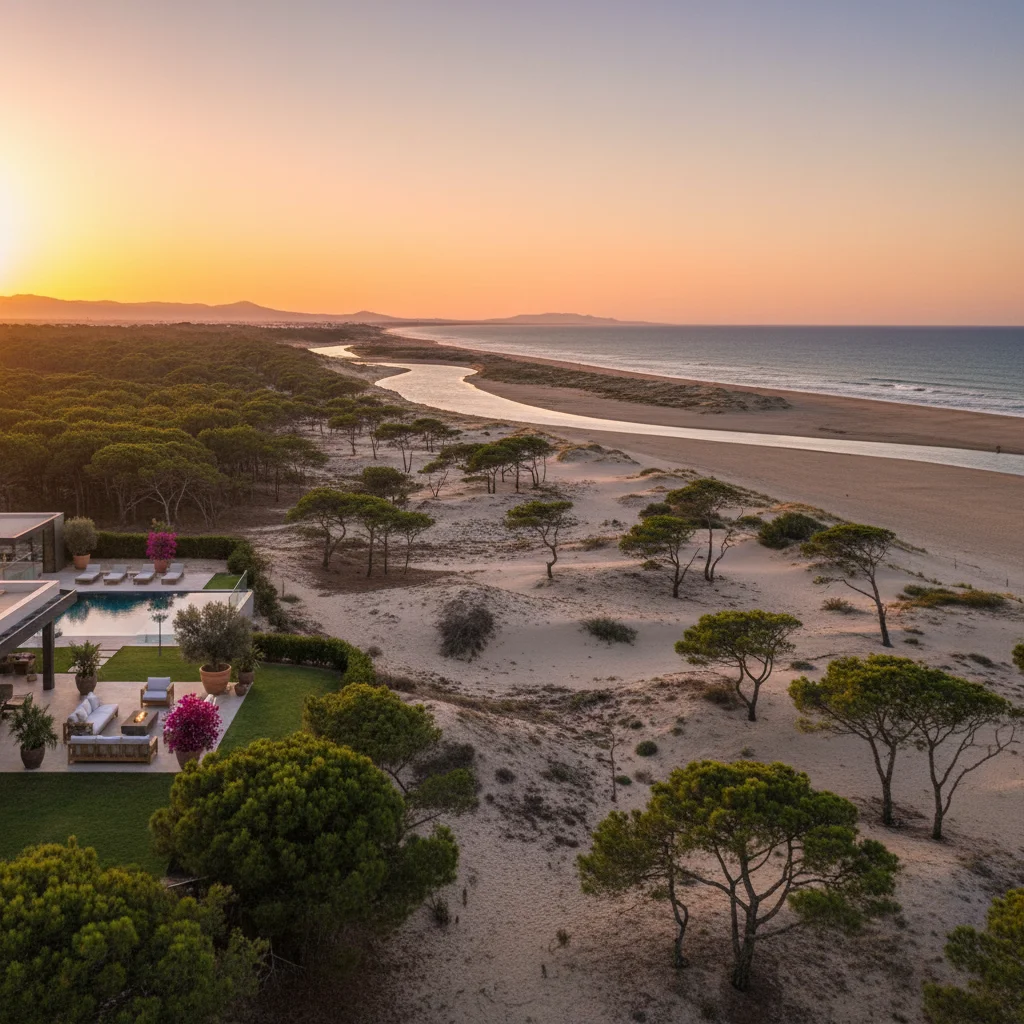
Guardamar occupies a special position on the southern Costa Blanca. It has a long sandy beach backed by a remarkable pine forest planted in the early twentieth century to stabilise the shifting dunes — a landscape you will not find anywhere else on this coastline. The town itself feels authentically Spanish: a busy fishing port, a lively Reina Sofía park where families gather in the evenings, and a centre full of independent tapas bars and cafés rather than the English pubs that dominate nearby resorts.
The expat community here is more mixed and integrated than in purpose-built urbanisations. British, Scandinavian, and German residents live alongside Spanish families in neighbourhoods stretching from the beachfront apartments near the pine forest up to the residential villas on the higher ground behind town. Property prices average around €180,000, covering everything from compact two-bedroom seafront apartments to detached villas with pools in the quieter residential zones inland.
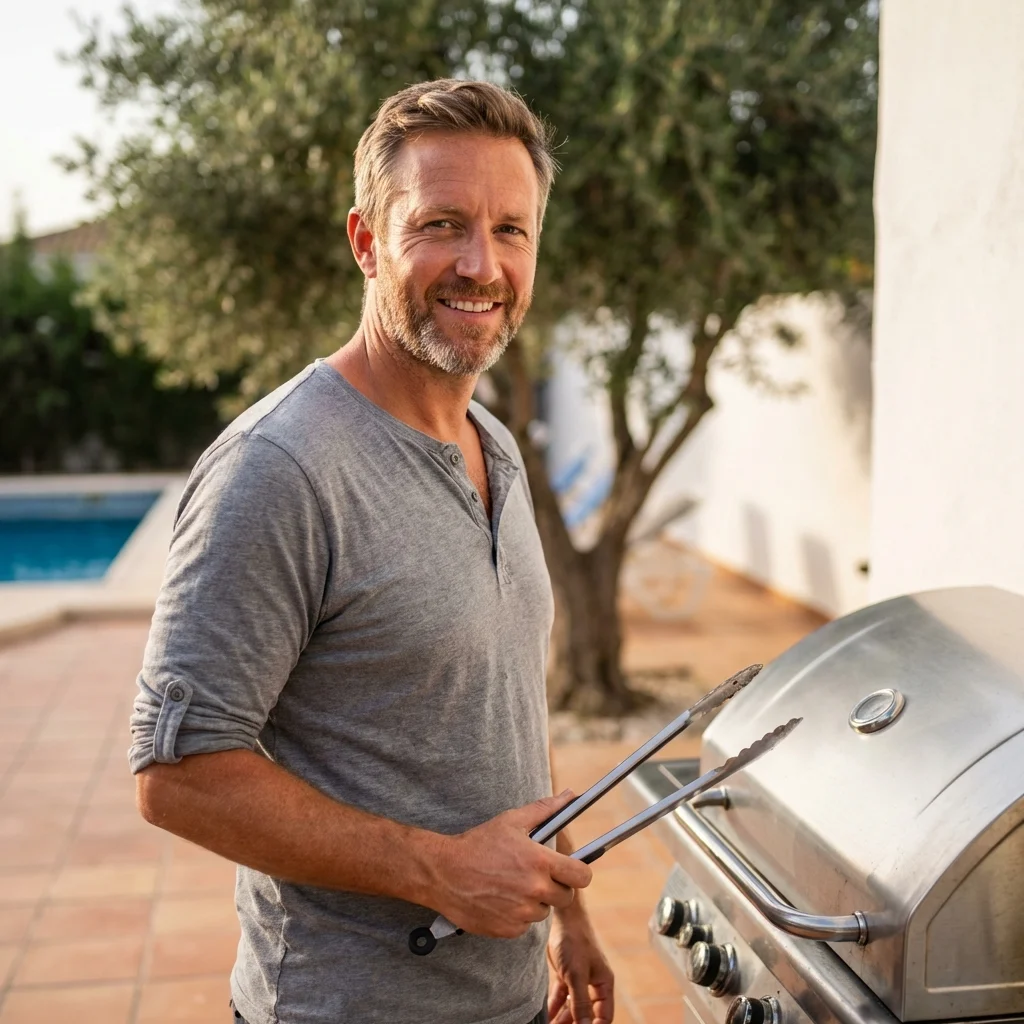
This variety of property types means outdoor cooking setups in Guardamar range from compact balcony grills to full garden kitchen installations. The mild coastal microclimate — tempered by sea breezes and the shade of those famous pines — makes outdoor cooking comfortable even in the peak of summer, when inland towns can feel oppressively hot.
Guardamar combines genuine Spanish town character with a diverse expat community, offering property types from beachfront apartments to inland villas — each suited to different outdoor cooking approaches.
Choosing Your Setup in Guardamar del Segura
Your equipment choice in Guardamar depends heavily on whether you are working with a villa garden, a townhouse patio, or an apartment terrace — the town has all three in abundance.
For the beachfront and central apartments, space is the primary constraint. Costa Blanca Outdoors recommends a compact kamado — 18 inches is ideal — or a quality portable gas BBQ that can sit on a terrace without overwhelming the space. A small kamado is remarkably versatile: it grills, smokes, roasts, and bakes, replacing several appliances in a single unit that fits comfortably on a two-metre-wide balcony.
Townhouse owners in the streets behind Reina Sofía park and along the Segura river typically have courtyard patios or small rear gardens. Here a full-size gas BBQ with three or four burners works well, positioned against a wall with a heat shield. Add a tabletop pizza oven for weekend entertaining and you have a setup that punches well above its footprint.
Villa owners on the higher ground — particularly in the residential areas towards San Fulgencio — have the space for a complete outdoor kitchen. A built-in gas BBQ island, a large kamado for low-and-slow sessions, and a wood-fired pizza oven make a combination that turns a garden into a genuine year-round entertaining space.
Costa Blanca Outdoors tailors recommendations to your property type — compact kamados for apartments, gas BBQs with pizza ovens for townhouses, and full outdoor kitchen builds for Guardamar’s inland villas.
Delivery to Guardamar del Segura
We deliver across Guardamar del Segura, from the beachfront apartments near the pine forest to the residential villas on the higher ground, on our regular southern coastal route.
Guardamar’s layout is more spread out than it first appears, stretching from the port and beach area up through the town centre to the residential zones inland. Our delivery team knows the access points for the beachfront blocks — including which buildings have lifts suitable for heavy equipment and which require ground-floor handover. For villa deliveries on the higher ground, wide residential roads make access straightforward.
Every delivery includes full white-glove service: unpacking, assembly, placement, and a thorough equipment walkthrough. For apartment and townhouse deliveries, we confirm access logistics in advance to ensure a smooth installation on the day.
Guardamar sits centrally on our southern coastal route between Torrevieja to the south and Santa Pola to the north. We also cover nearby Rojales and San Fulgencio on the same runs. Standard delivery is 5–10 working days for in-stock items, with custom outdoor kitchen builds taking 3–4 weeks from design to completion.
Maximising Year-Round Living with Glass Curtains and Glass Rooms in Guardamar del Segura
Living in this corner of the Costa Blanca since 2019 has taught me that the environment here is far more nuanced than the travel brochures suggest. While many people think of this region simply as a sun-drenched coastline, the reality of living between the mouth of the Segura River and the vast Pine Dune Forest brings unique challenges to property maintenance and outdoor enjoyment. This town is a fascinating blend of cultures, where about a quarter of the 17,000 residents are internationals, primarily from the UK, Scandinavia, and Germany. This demographic shift has fundamentally changed how we use our terraces. The British contingent often looks to recreate a conservatory-style lounge space, while our Scandinavian neighbors usually prioritise light-filled dining areas that remain functional even when the cooler winter breezes roll in off the Mediterranean.
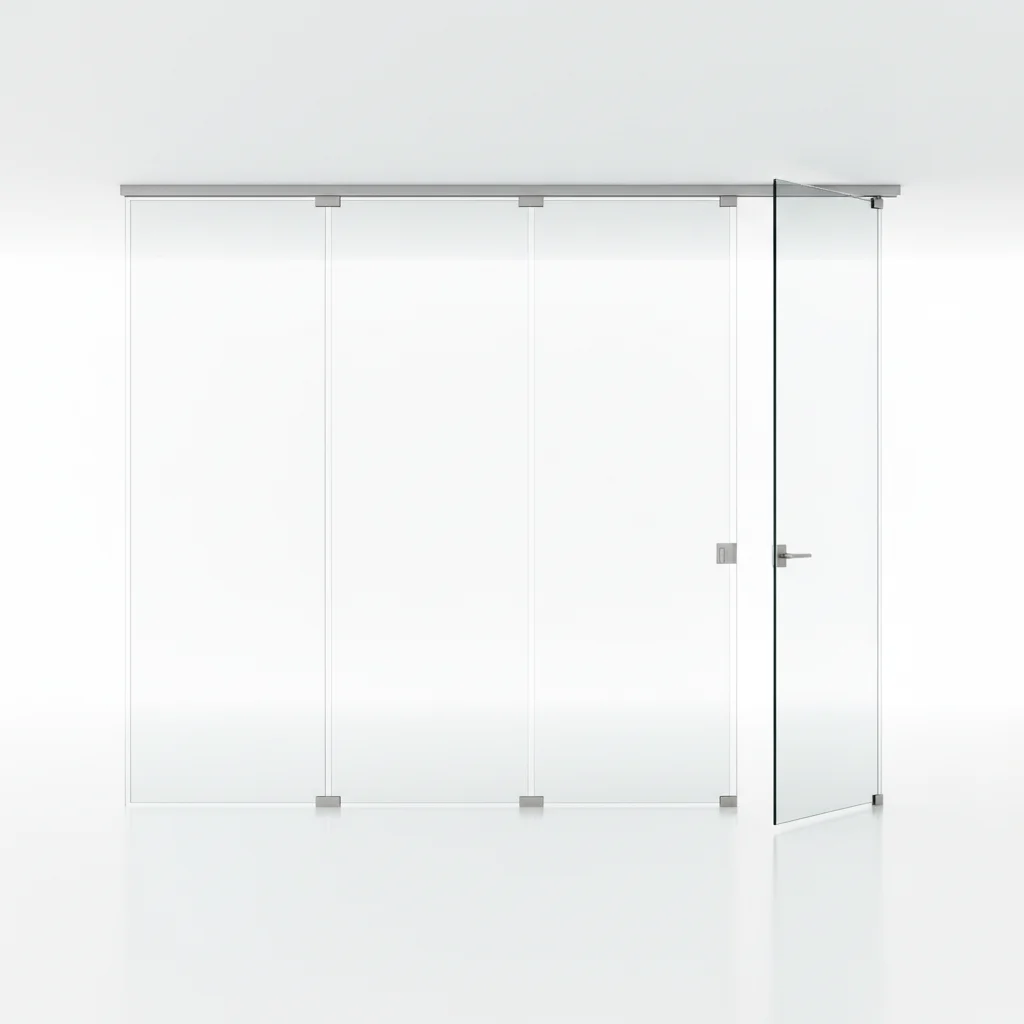
The property landscape here is dominated by a mix of urbanisation villas and mid-rise apartments, with an average property price hovering around the €180,000 mark. Unlike the luxury estates further north, the focus here is on maximizing every square metre of available space. Whether you own an apartment overlooking Reina Sofía Park or a villa in a golf community nearby, your terrace is likely your most underutilised asset. For much of the year, it is either too hot, too windy, or covered in a fine layer of dust. Installing a glass curtain system or a fully enclosed glass room is the most effective way to reclaim that space without the legal headaches of a traditional brick-and-mortar extension. Because these systems are frameless and technically "removable," they generally fall outside the strict planning permission requirements that often stymie home improvements in the Segura basin.
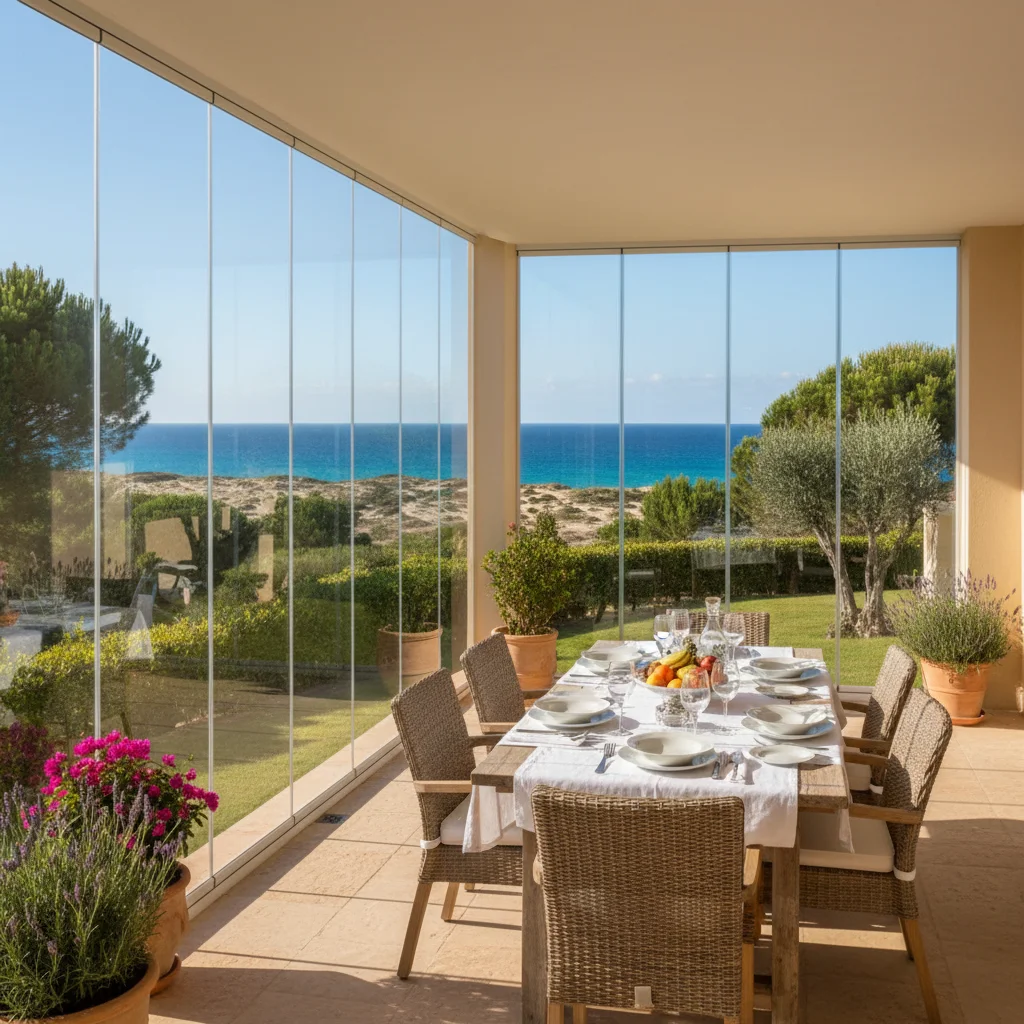
The climate in this specific southern stretch of the coast is noticeably hotter and drier than the northern Costa Blanca. We experience a higher frequency of the Calima—that thick, orange Saharan dust that can coat an outdoor terrace in minutes. By installing a frameless glass system, you effectively create a seal against this dust, protecting your furniture and reducing your cleaning schedule from a daily chore to a weekly wipe-down. Furthermore, the wind patterns near the Segura River mouth can be unpredictable. An afternoon breeze might feel refreshing in July, but by November, it makes sitting outside impossible. Glass curtains allow you to slide the panels shut in seconds, maintaining your panoramic view of the dunes or the sea while completely blocking the wind chill.
When considering an installation in this area, you must account for the high salt content in the air. The proximity to both the Mediterranean and the salt lakes toward Torrevieja creates a corrosive environment that can wreak havoc on inferior hardware. I always insist on using 10mm or 12mm toughened safety glass paired with high-grade aluminium profiles that have been treated for marine environments. For a standard apartment balcony spanning four metres, you should expect to invest between €3,500 and €5,000 for a high-quality glass curtain system. While cheaper options exist, they often use plastic components in the rollers that will degrade under the intense UV radiation and salt exposure we see here. I have seen countless systems fail within three years because the internal bearings were not 316-grade stainless steel.
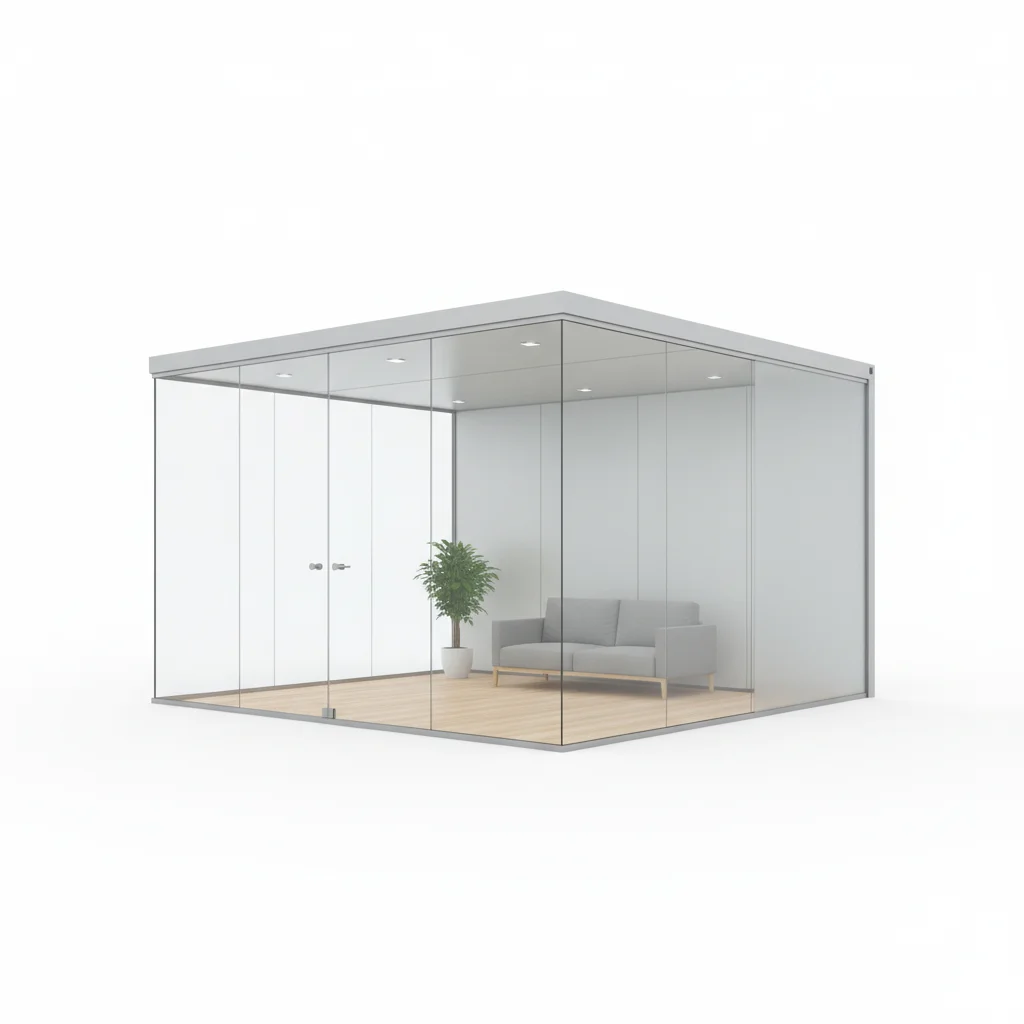
The afternoon sun in the Segura valley is particularly fierce. If your terrace faces south or west, a glass room can quickly become a greenhouse if you don't plan for ventilation and shading. I often recommend integrating your glass curtains with an automated awning or a bioclimatic pergola. The glass provides the protection from wind and rain, while the overhead shading manages the thermal gain. In a typical south-facing villa, a glass room configuration—combining a fixed roof or pergola with sliding glass walls—might range from €8,000 to €15,000 depending on the square footage. This investment is significant, but when you consider that it adds twenty or thirty square metres of usable living space to a property valued at €180,000, the mathematical return on investment is clear. It effectively adds another room to your house for a fraction of the cost of moving or building.
Navigating the rules of a Comunidad de Propietarios is another local hurdle that requires careful handling. In many urbanisations across the Segura region, there are strict rules about altering the external appearance of the building. This is where frameless glass curtains have a distinct advantage. Because there are no vertical frames, the visual impact on the building’s facade is negligible. Most communities have grown to accept these systems, but I always advise checking your specific community statutes before proceeding. I have worked with many presidents of communities in the area to ensure our installations meet their aesthetic requirements, often matching the powder-coated finish of the top and bottom tracks to the existing terrace railings or window frames.
Maintenance in this environment is relatively straightforward but non-negotiable. The salt humidity I mentioned earlier means that even the best systems need a freshwater rinse and a silicone spray on the tracks every few months. Unlike the northern part of the coast, where rainfall is slightly more frequent, our dry spells mean that salt and dust sit on the glass for longer periods. If you are located in one of the communities closer to the salt lakes, you will notice a white film developing on the glass faster than those living further inland. This is simply the reality of life in the southern Costa Blanca, and it is a small price to pay for the ability to sit "outside" in February while wearing a t-shirt.
For owners of townhouses and villas, particularly those in areas like Rojales or San Fulgencio, we often suggest a more robust glass room setup. These properties usually have larger footprints but suffer from a lack of "middle ground" space—somewhere that isn't the dark interior of the house nor the scorching heat of the garden. A glass room built over an existing porch or a new concrete pad provides that transition. We typically use a combination of fixed glass panels for the sides that face the prevailing winds and sliding or folding curtains for the front. This allows for total flexibility. On a July evening, you can slide everything open to catch the Levante breeze; on a January morning, you can keep the glass shut and let the Spanish sun heat the space naturally, often reaching 25 degrees Celsius inside even when the outside temperature is in the low teens.
In apartment settings, space is at a premium. A standard glass curtain system that folds inward can take up a bit of "stacking space" on one side of the balcony. If your terrace is narrow, I often recommend a sliding system instead of a folding one. While sliding systems don't allow for a 100% opening like the folding curtains do, they don't require any clearance space for the glass panels to swing, making them much more practical for smaller balconies overlooking the park or the sea. These systems are also generally easier to operate for those with limited mobility, as the weight of the glass is distributed across the bottom track rather than hanging from the top.
Delivery and installation in this region require a specific logistical understanding. Many of the streets in the older parts of town or the narrow access roads in the dune-side developments are not suitable for large lorries. I personally oversee the logistics for every project, often coordinating with local authorities if we need to park a crane or a delivery vehicle near busy areas like the Reina Sofía Park. We serve not just the town centre but also the surrounding areas including Santa Pola, Gran Alacant, and down toward Torrevieja. Knowing the layout of these urbanisations—where the sun hits, which way the wind blows through the Segura valley, and how the salt air migrates—allows us to provide advice that a national company simply cannot match.
The transition from a seasonal terrace to a year-round glass room fundamentally changes how people live here. I’ve seen it dozens of times: a family who only used their outdoor table four months a year suddenly finds themselves eating breakfast there every single morning. They stop worrying about the rain ruining their cushions or the wind blowing their papers away. They gain a quiet sanctuary where they can watch the sunset over the Segura without being bothered by mosquitoes or the evening chill.
If you are considering upgrading your outdoor space, the best place to start is with a conversation about how you actually intend to use it. I don't believe in one-size-fits-all solutions because a balcony in the town centre faces different environmental pressures than a villa on the outskirts of San Fulgencio. I offer free on-site consultations where we can look at your orientation, measure the wind exposure, and discuss which glass thickness and track system will serve you best over the next twenty years. My goal is to ensure that your investment in your home is practical, durable, and suited to the specific microclimate we enjoy here in the southern Costa Blanca.
 JW'"
/>
JW'"
/>