Outdoor Living in Gran Alacant
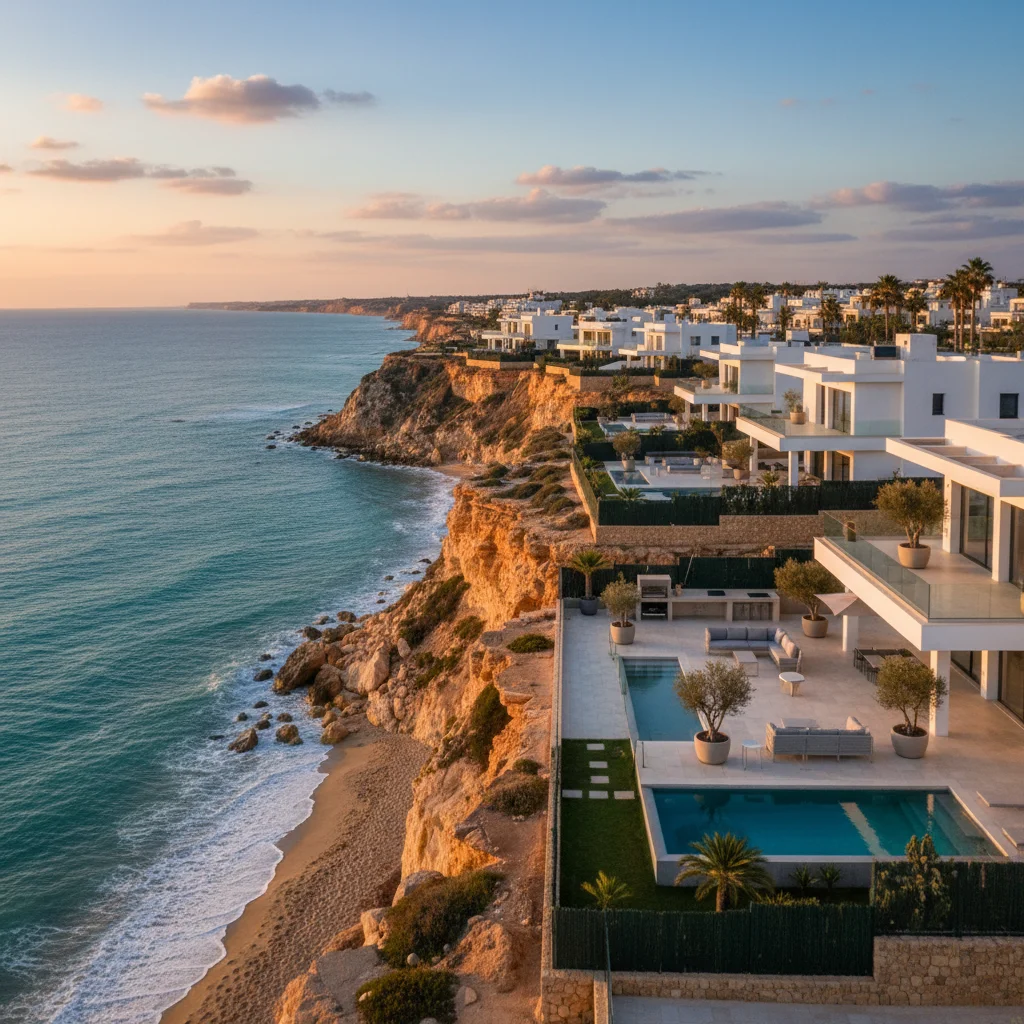
Gran Alacant is a modern residential development of 10,000 residents with around 18% expats — British, Scandinavian, and German — perched above the dramatic Carabassí Beach cliffs, just five minutes from Alicante-Elche airport and popular with families and professionals who want coast, convenience, and community.
Gran Alacant was purpose-built from the 1980s onwards on the elevated ground between Santa Pola and Alicante, and it shows in the layout: wide streets, modern infrastructure, communal pools, and a commercial centre with supermarkets, restaurants, and services that mean residents rarely need to leave. El Faro, the central commercial and social hub, gives the development a focal point that many sprawling urbanisations lack.
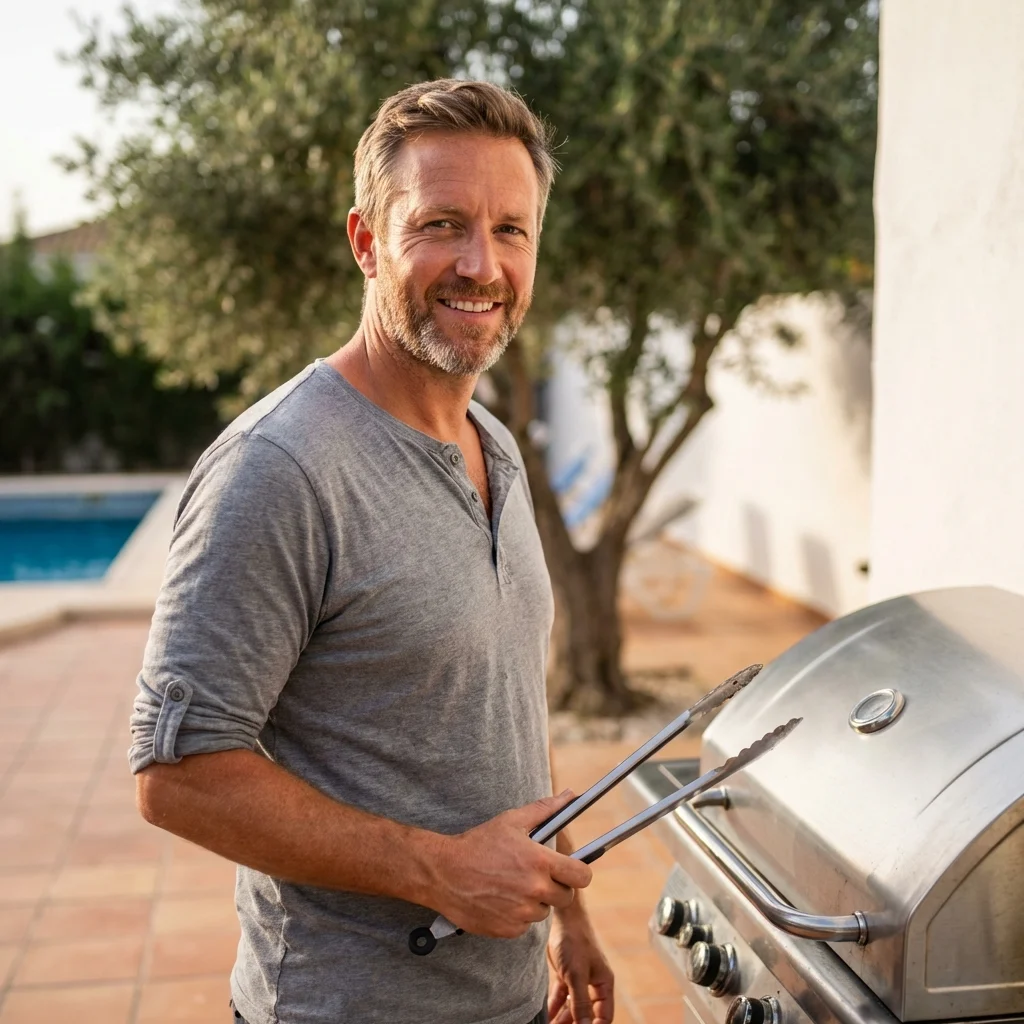
The star attraction is Carabassí Beach, a long stretch of golden sand backed by low sandstone cliffs that glow orange at sunset. The beach is accessed by wooden walkways down the cliff face, and the relatively undeveloped coastline — no beachfront towers here — gives Gran Alacant a more natural feel than you might expect from a planned development. The cliffs themselves create a spectacular backdrop for evening barbecues on the terraces above.
Property prices average around €190,000, with modern two-bedroom apartments from €130,000 and three-bedroom townhouses with private gardens from €200,000. Detached villas are less common but available from €280,000 upwards. The modern construction throughout means terraces are generous, gardens are flat and well-drained, and utility connections are straightforward — all factors that simplify outdoor kitchen installations.
Gran Alacant combines modern infrastructure, proximity to Alicante airport, and the dramatic Carabassí Beach cliffs to create a practical yet scenic setting for outdoor cooking — with property designs that make equipment installation straightforward.
Choosing Your Setup in Gran Alacant
Gran Alacant’s modern apartments and townhouses are designed with outdoor living in mind — generous terraces, flat gardens, and good utility access make equipment choice the enjoyable part rather than the logistical challenge.
The majority of Gran Alacant properties are apartments or townhouses, and most come with terraces of 15 to 30 square metres — significantly larger than typical Spanish apartment balconies. For these spaces, Costa Blanca Outdoors recommends a mid-size gas BBQ with three burners, which fits comfortably against a terrace wall while providing enough cooking surface for a family dinner or a gathering of six to eight. The modern tile and stone terrace surfaces common here are heat-resistant and easy to clean, which simplifies placement.
A kamado grill is an increasingly popular choice in Gran Alacant, particularly among the international community. A 21-inch model sits well on a townhouse patio or a larger apartment terrace, and its versatility — grilling, smoking, roasting, baking — appeals to residents who want one piece of equipment that does everything. The sheltered position of most Gran Alacant terraces, tucked behind walls and windbreaks, means kamado temperature control is easier here than on exposed coastal properties.
Townhouse owners with private gardens have the option of a more ambitious setup. A built-in BBQ counter with storage, a pizza oven on a stone base, and space for a dining table creates an outdoor room that extends the living space of the property substantially — particularly valuable given that Gran Alacant’s elevation catches cooling sea breezes that make outdoor dining comfortable even in August.
Costa Blanca Outdoors recommends 3-burner gas BBQs or 21-inch kamados for Gran Alacant’s generous terraces, with built-in outdoor kitchen options available for townhouse owners with private gardens.
Delivery to Gran Alacant
We deliver throughout Gran Alacant, covering all residential phases from the El Faro commercial centre to the cliff-edge properties overlooking Carabassí Beach, on our central coastal route.
Gran Alacant is one of the most delivery-friendly developments we serve. The wide, well-maintained roads were designed for modern vehicle access, and most apartment blocks have goods lifts and ground-floor loading areas. Townhouse streets have ample parking and direct access to front gardens, making heavy item placement straightforward.
The development is organised in numbered phases, and our delivery team knows the layout well — including the one-way systems and speed bumps that can catch first-time visitors off guard. We confirm your exact phase and street number when scheduling to ensure the driver arrives without delays.
Gran Alacant sits between Santa Pola to the south and Alicante to the north, and we combine deliveries across all three areas regularly. Elche is also on the same route, just fifteen minutes inland via the motorway. Standard delivery takes 5–10 working days for in-stock products, with custom outdoor kitchen builds requiring 3–4 weeks from design to installation.
Navigating the Challenges of Sun and Wind in Gran Alacant
Living on the elevated headland of the Cape of Santa Pola offers some of the most commanding views on the Costa Blanca, but the geography of this specific plateau creates a unique set of challenges for any homeowner trying to create a functional outdoor space. Since I moved to this coast in 2019 and began helping families transform their terraces, I have seen how the intense exposure at the top of the cliffs requires a much more robust approach than the sheltered valleys further inland. In this municipality, where approximately eighteen percent of our ten thousand residents come from international backgrounds including the UK, Scandinavia, and Germany, the outdoor area is often the heart of the home. Whether you are living in a beachfront apartment near the dunes of Carabassí Beach or a detached villa closer to the iconic El Faro lighthouse, the way you manage solar gain and airflow will define how much you actually enjoy your property.
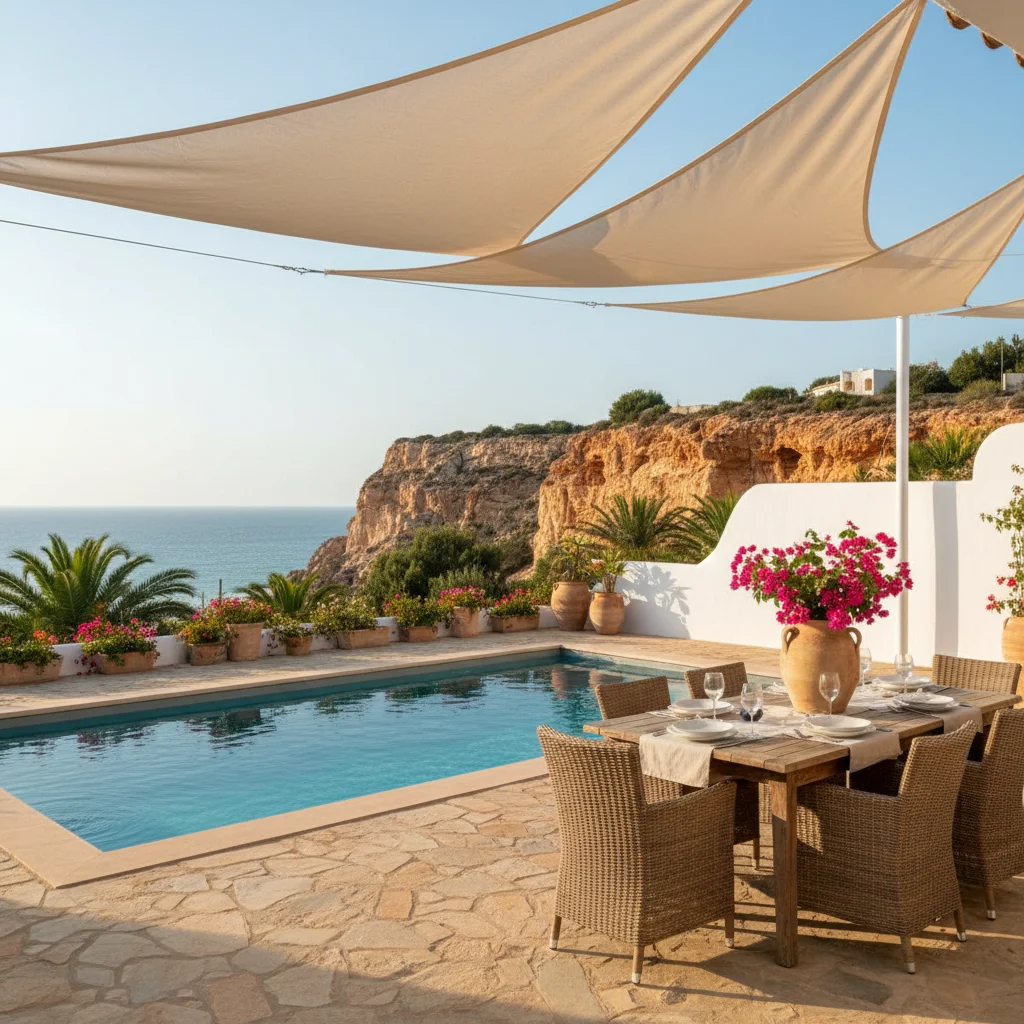
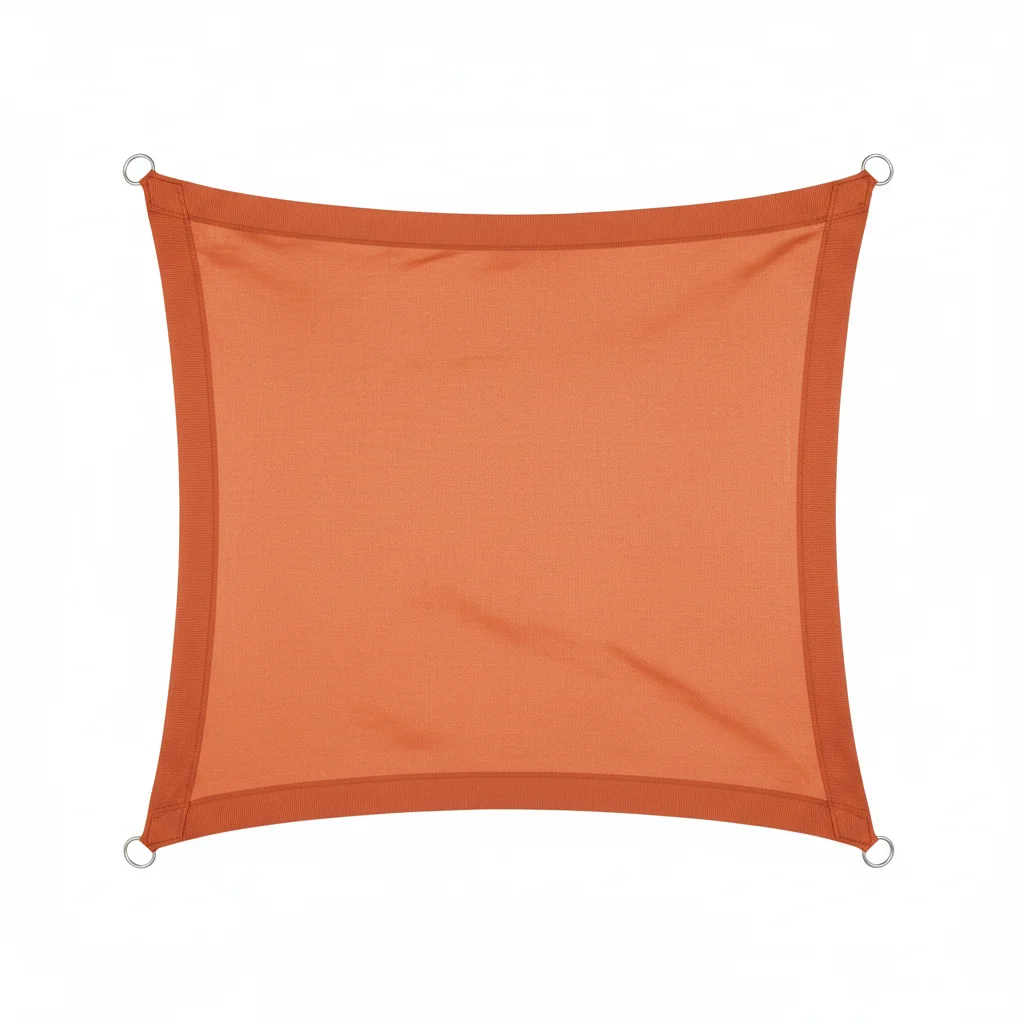
The property stock here is remarkably diverse, ranging from compact balconies in high-density urbanisations to expansive gardens in villas that often command prices around the EUR 190,000 mark or higher. This diversity means that a one-size-fits-all shade solution rarely works. British and Scandinavian residents, in particular, tend to prioritise outdoor kitchens and dining areas, viewing the terrace as a genuine extension of the interior. However, the sheer intensity of the UV radiation on this exposed coastal position can make these spaces unusable between the hours of 13:00 and 17:00. Shade sails have become the preferred architectural solution here because they offer a lightweight, modern aesthetic that complements the contemporary white-walled architecture found in many local developments while providing the structural flexibility to handle the varying terrace sizes. Unlike traditional fixed structures, a well-engineered sail allows for air circulation, which is critical when the summer temperatures begin to climb.
Technical Considerations for the Coastal Environment
When we install shade sails in this specific part of the coast, we have to account for two primary environmental factors: the wind and the salt. Because the town sits on a prominent headland, it is hit by both the Levante wind from the east and the Poniente from the west. The Levante brings high humidity and salt spray directly from the Mediterranean, while the Poniente can be a scorching, dry wind that puts immense physical pressure on any fabric surface. For a shade sail to survive more than a single season here, the material must be a High-Density Polyethylene (HDPE) knitted fabric. I always recommend a commercial-grade HDPE with a weight of at least 280g/m² to 340g/m². This knitted construction is vital because it features millions of tiny pores that allow hot air to escape upwards, preventing the "parachute effect" that often destroys solid polyester sails during a sudden afternoon gust. These HDPE sails are designed to block up to ninety-five percent of harmful UV rays while remaining breathable, which can lower the temperature underneath by as much as ten degrees Celsius.
The proximity to the sea, particularly for properties within two kilometres of the shoreline or those perched near the cliffs, makes the choice of hardware non-negotiable. I have replaced countless sets of rusted hardware that were sold as "weatherproof" but were actually Grade 304 stainless steel. In this salt-heavy environment, only Grade 316 Marine Grade stainless steel should be used for turnbuckles, D-rings, and mounting plates. Grade 316 contains molybdenum, which provides essential resistance to the pitting and corrosion caused by chloride. Furthermore, the installation must account for the local "Comunidad de Propietarios" or community of owners' rules. Many urbanisations in this area have strict aesthetic guidelines regarding the colours and heights of exterior structures. It is common for communities to mandate specific tones—often sand, bone, or silver—to maintain a cohesive look across the development. Before committing to a EUR 1,500 custom installation, it is imperative to verify that your chosen colour and mounting method align with your specific community’s statutes. We often provide technical drawings that residents can present to their community presidents to ensure a smooth approval process.
Strategic Shade Solutions for Different Property Types
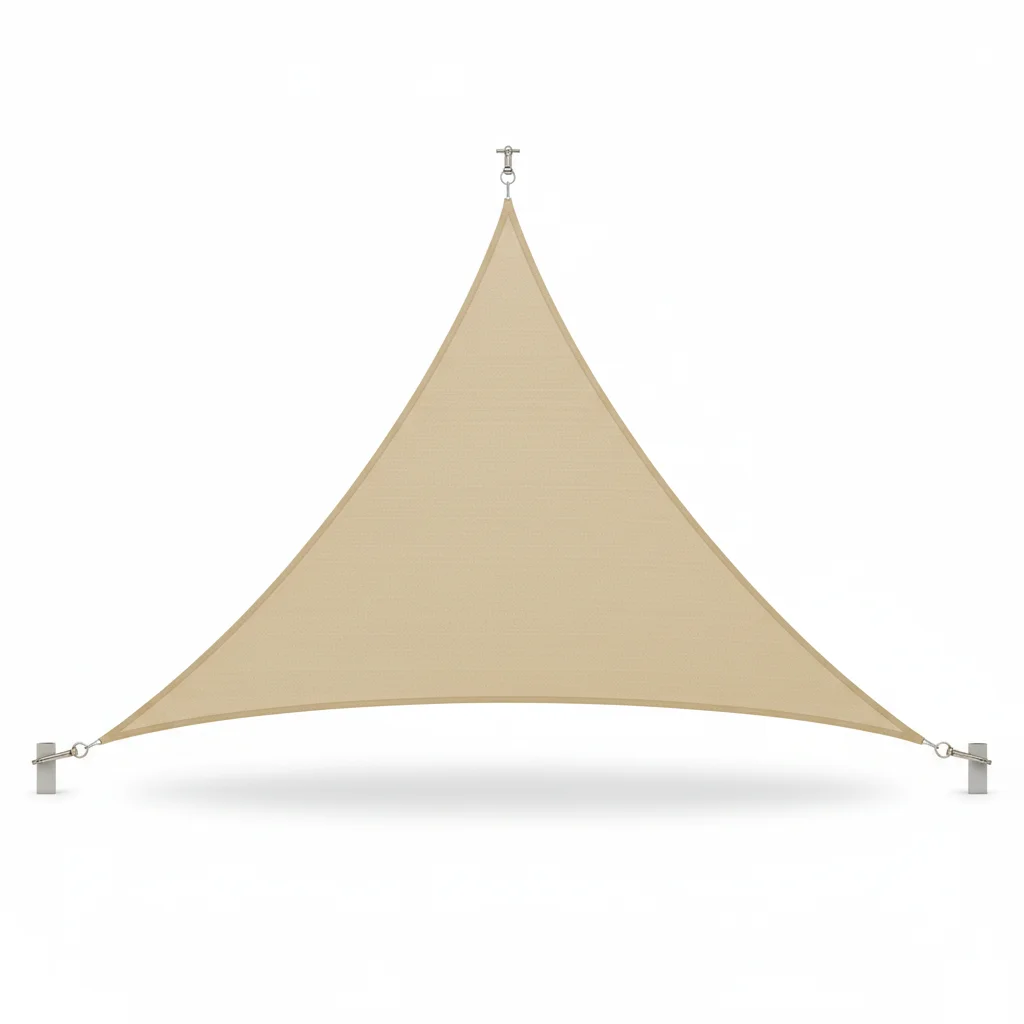
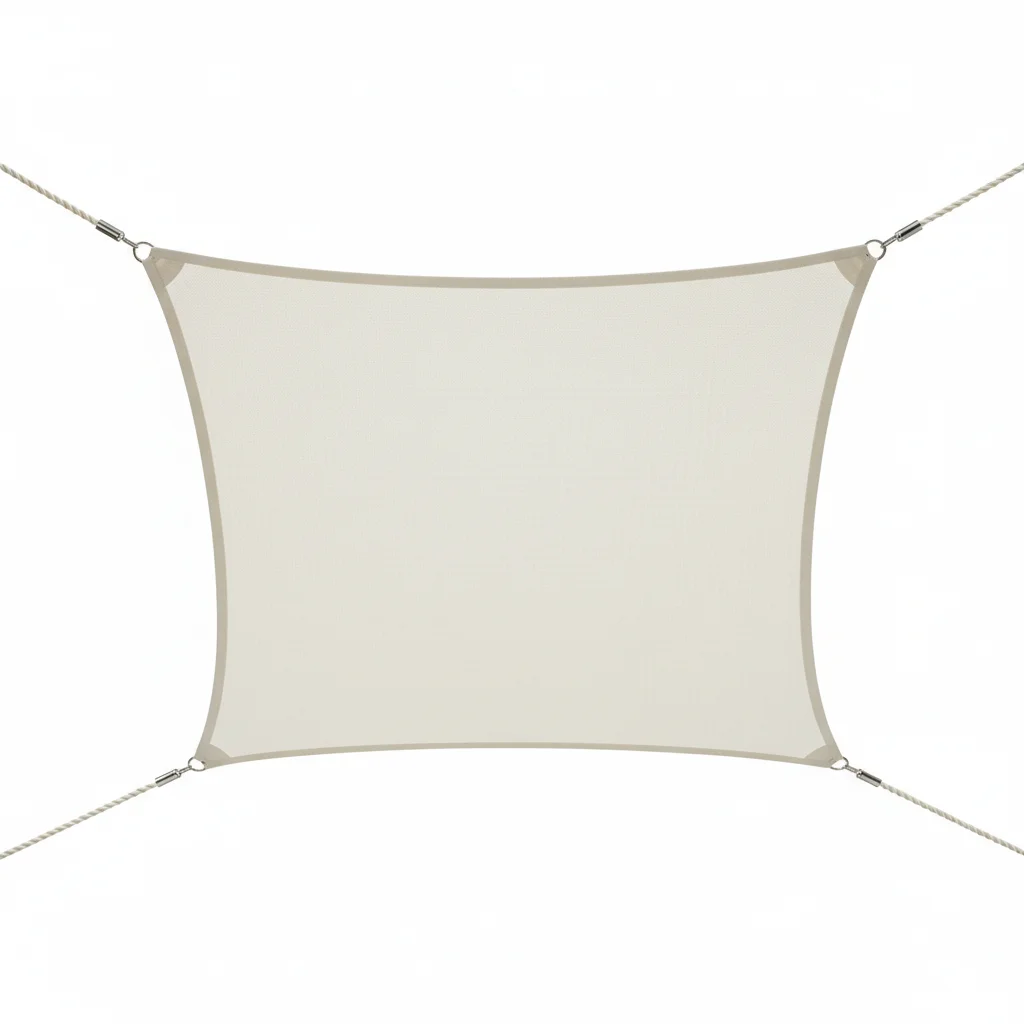
The application of shade technology varies significantly depending on your specific location within the town. For owners of villas in areas like Monte y Mar, where garden space is more generous, I typically recommend a multi-sail configuration. A large rectangular sail of approximately 5m x 4m can cover a primary dining area, but the most effective setups often involve overlapping two or three triangular sails. This creates a layered, architectural look and allows for "hypar" or hyperbolic designs where two points are high and two are low. This twist in the fabric is not just for aesthetics; it provides the structural stability needed to shed rainwater and resist wind flap. A custom-cut, three-point triangular HDPE sail for a villa terrace usually starts around EUR 450, while a larger, fully tensioned square setup with heavy-duty steel posts can range up to EUR 2,000 including professional mounting.
For those residing in apartments closer to Carabassí, the constraints are different. Space is at a premium, and you are often dealing with shared walls or concrete balustrades. In these scenarios, we often integrate shade sails with other products like high-quality parasols or lateral awnings to provide low-angle sun protection during the late afternoon. A smaller, custom-made triangular sail of 3m x 3m x 3m can be the perfect solution for a balcony, providing a fixed point of shade that doesn't take up the floor space a parasol base would. We also see many residents combining these sails with bioclimatic pergolas. While the pergola provides a permanent, louvred roof for a main seating area, a secondary shade sail can be extended over a barbecue zone or a child’s splash pool to provide flexible, cost-effective coverage. This hybrid approach allows you to manage different micro-climates within your own property, ensuring that there is always a comfortable corner regardless of the sun's position.
Logistics and Local Expertise in the Santa Pola Region
Executing a successful installation in this area requires a deep understanding of the local landscape and the logistical quirks of the various urbanisations. Access can often be a challenge, particularly in the older, more established phases where narrow streets and steep inclines toward the lighthouse can make the delivery of large mounting poles or heavy equipment difficult. My team and I are intimately familiar with these routes, and we regularly coordinate deliveries and installations not just within this immediate headland but also across neighboring Santa Pola, Alicante, Elche, and down towards Guardamar. We understand the building materials used in this region, from the hollow ceramic bricks common in Spanish construction to the reinforced concrete pillars that provide the best anchor points for high-tension sails. Knowing exactly which chemical anchors and expansion bolts to use in these specific materials is the difference between a sail that stays taut for years and one that pulls a mounting plate out of the wall during the first autumn storm.
When we talk about maintenance in this part of the world, we are really talking about salt management. Even the best marine-grade stainless steel requires a rinse with fresh water every few months to remove the salt crust that builds up from the Mediterranean winds. I also advise my clients to check the tension of their sails twice a year. The HDPE fabric is designed to be under significant tension to prevent flapping, but the intense heat can cause minor stretching over time. A simple adjustment of the 316 stainless steel turnbuckles is usually all it takes to keep the sail performing as it should. If you are considering upgrading your outdoor space, I am happy to offer a consultation to discuss the specific wind loads and sun angles of your terrace. We can walk through the technical specs of different fabric weights and hardware options to find a solution that fits your property type and your budget, ensuring your outdoor living area remains a functional, cool retreat throughout the Spanish summer.
 JW'"
/>
JW'"
/>