Why Expats in Moraira Love Outdoor Cooking
With 55% of its 14,000 residents from abroad, Moraira is the most international small town on the Costa Blanca — and its villa-heavy property market makes it a hotspot for premium outdoor kitchen installations.
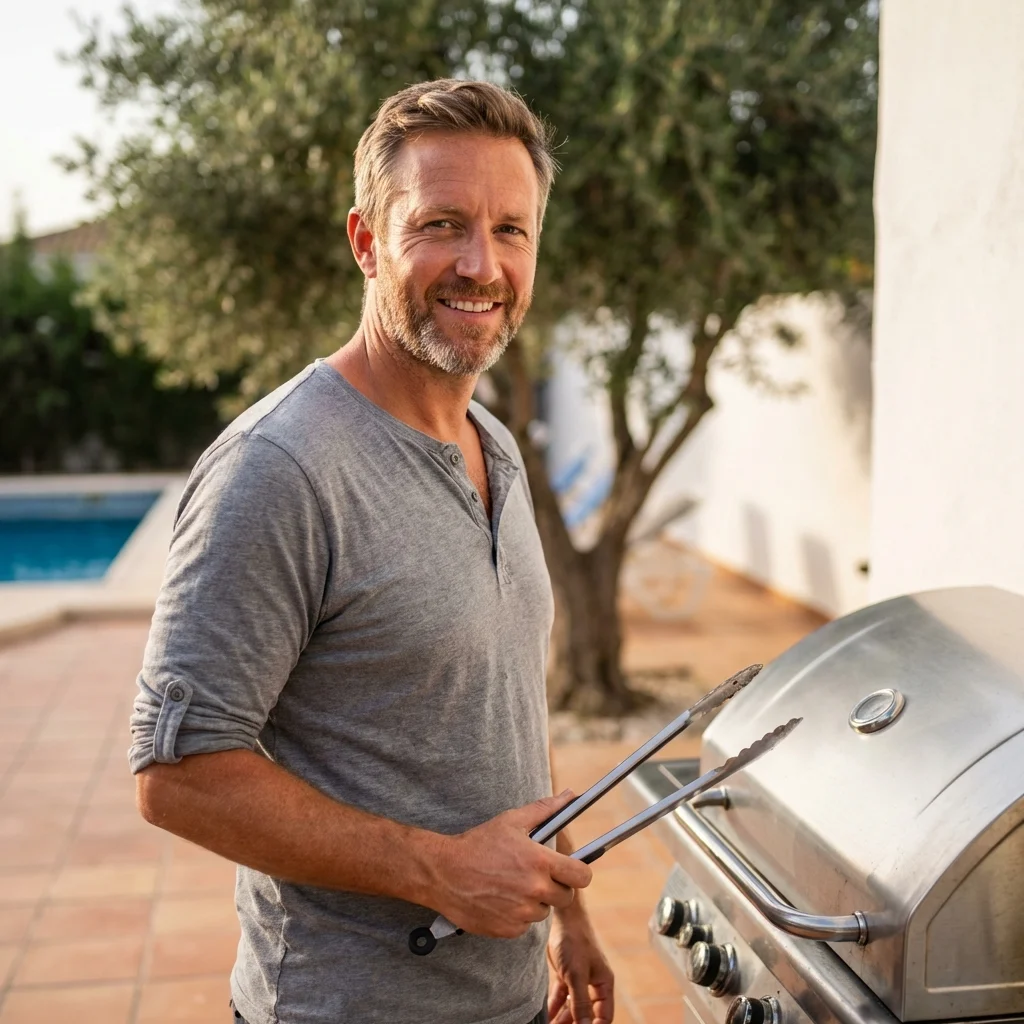
Moraira punches well above its weight. This small coastal town between Jávea and Calpe has quietly become one of the most sought-after addresses on the Spanish Mediterranean. Walk through the Benimeit hillside or the Cap d’Or headland on any evening between April and November, and you will catch the unmistakable scent of charcoal and wood smoke drifting from terrace after terrace.
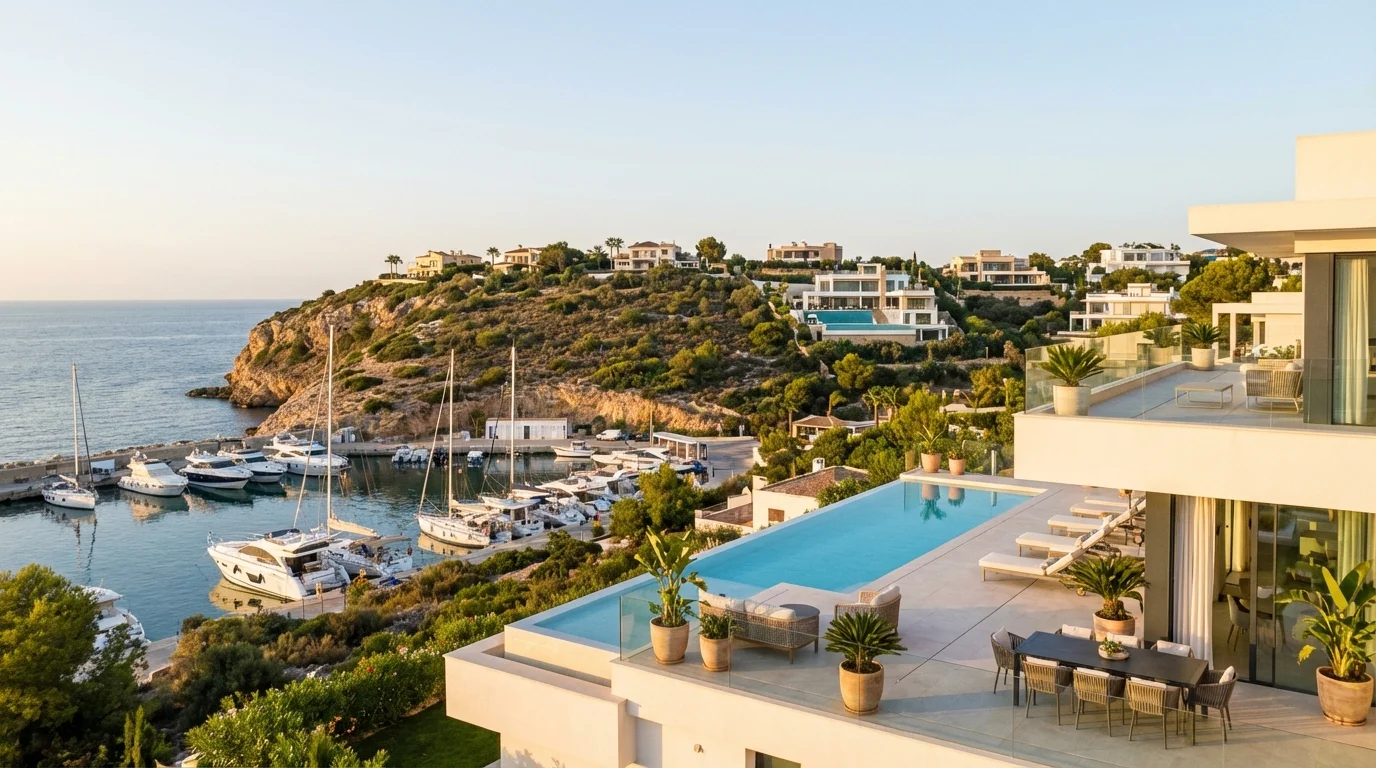
With an average property price around €450,000 — the highest of any town in our delivery zone — homes here tend to be spacious villas with large gardens, infinity pools, and terraces designed for entertaining. The British and Dutch communities have brought a culture of weekend barbecues and al fresco dinner parties that has become inseparable from life in Moraira.
Answer capsule: Moraira’s high-end villa market and 55% expat population create strong demand for premium outdoor kitchens, kamado grills, gas BBQs, and pizza ovens built for serious entertaining.
Your Moraira Outdoor Kitchen Setup
Moraira’s generous villa terraces — often 50–100m² with sea views — are ideally suited to full outdoor kitchen islands with built-in grills, pizza ovens, and prep stations.
Villas in Benimeit, Moravit, and the Pla del Mar areas routinely feature covered terraces and expansive pool surrounds that are perfect for a complete island setup: built-in gas BBQ on one side, kamado station in the centre, and wood-fired pizza oven at the end, tied together with natural stone countertops.
For El Portet properties — closer to the beach and slightly more compact — a standalone kamado paired with a rolling prep cart works beautifully. The covered terraces common in El Portet townhouses provide natural shelter for cooking even during autumn rain showers.
Costa Blanca Outdoors recommends that Moraira homeowners with existing summer kitchens consider a retrofit rather than a full rebuild. Many villas built in the 1990s and 2000s have solid masonry summer kitchens that just need modernising with new appliances — saving 30–40% compared to building from scratch.
Answer capsule: Moraira’s villas often have existing summer kitchens ideal for retrofit upgrades, while El Portet townhouses suit standalone kamado grills and countertop pizza ovens.
Gas, Charcoal, or Wood-Fired? Choosing Right for Moraira
Moraira’s sheltered coastal position and premium property stock make it suitable for all fuel types — from convenient gas to atmospheric wood-fired cooking.
The Dutch and Scandinavian residents often gravitate toward gas BBQs — clean, predictable, and perfect for the frequent midweek dinners that Moraira’s social scene demands. Most Benimeit and hillside villas already have either a butane connection or mains gas, making installation straightforward.
The British contingent leans heavily toward kamado grills. There is a genuine community of kamado enthusiasts — we have heard of informal cook-off competitions between neighbours in the Moravit and Pinar de l’Advocat urbanisations. The ceramic construction handles Moraira’s mild winters without issue, and the versatility from low-and-slow smoking to 400°C pizza cooking makes the kamado a natural centrepiece.
Wood-fired pizza ovens are where Moraira really shines. Local olive and almond wood from suppliers in nearby Benissa is abundant, and the flavour is incomparable. Costa Blanca Outdoors recommends the Alfa Forni range for Moraira customers who want authentic Neapolitan-style results with manageable fuel consumption.
Answer capsule: Gas BBQs suit Moraira’s active social calendar, kamado grills have a devoted local following, and wood-fired pizza ovens complement the town’s strong dining culture.
Delivery & Setup in Moraira
Our team delivers throughout Moraira weekly, with experience navigating the hillside access roads of Benimeit, Cap d’Or, and Moravit urbanisations.
Moraira is one of our most active delivery areas, sitting at the heart of our northern Costa Blanca zone. Access to the hillside urbanisations requires local knowledge, and our drivers know every tight turn on these roads.
For larger installations, we work with Moraira-based builders who understand local construction standards and community regulations. Many urbanisations have specific rules about exterior modifications, and we ensure every installation complies fully.
Based near Calpe or Jávea? You are on our regular Moraira route. We also deliver to Benissa and inland areas around Lliber. Expect 5–10 working days for in-stock products, with custom outdoor kitchen projects taking 3–4 weeks including design, fabrication, and installation.
Fixed Pergolas and the Architectural Landscape of Moraira
The architectural landscape of Moraira is distinct from the high-rise density of Calpe or the sprawling urbanisations further south. Here, the property market is dominated by luxury hillside villas, particularly in elevated areas like Benimeit or the prestigious enclave of El Portet. These homes typically feature expansive terraces ranging from forty to eighty square meters, designed to capitalize on the Mediterranean vista. However, a common challenge I see when visiting clients in these areas is that these large, open spaces often become unusable during the peak of the Spanish summer. A fixed pergola provides the structural permanence required to turn a sun-baked stone floor into a functional outdoor room that feels like a natural extension of the villa’s interior.
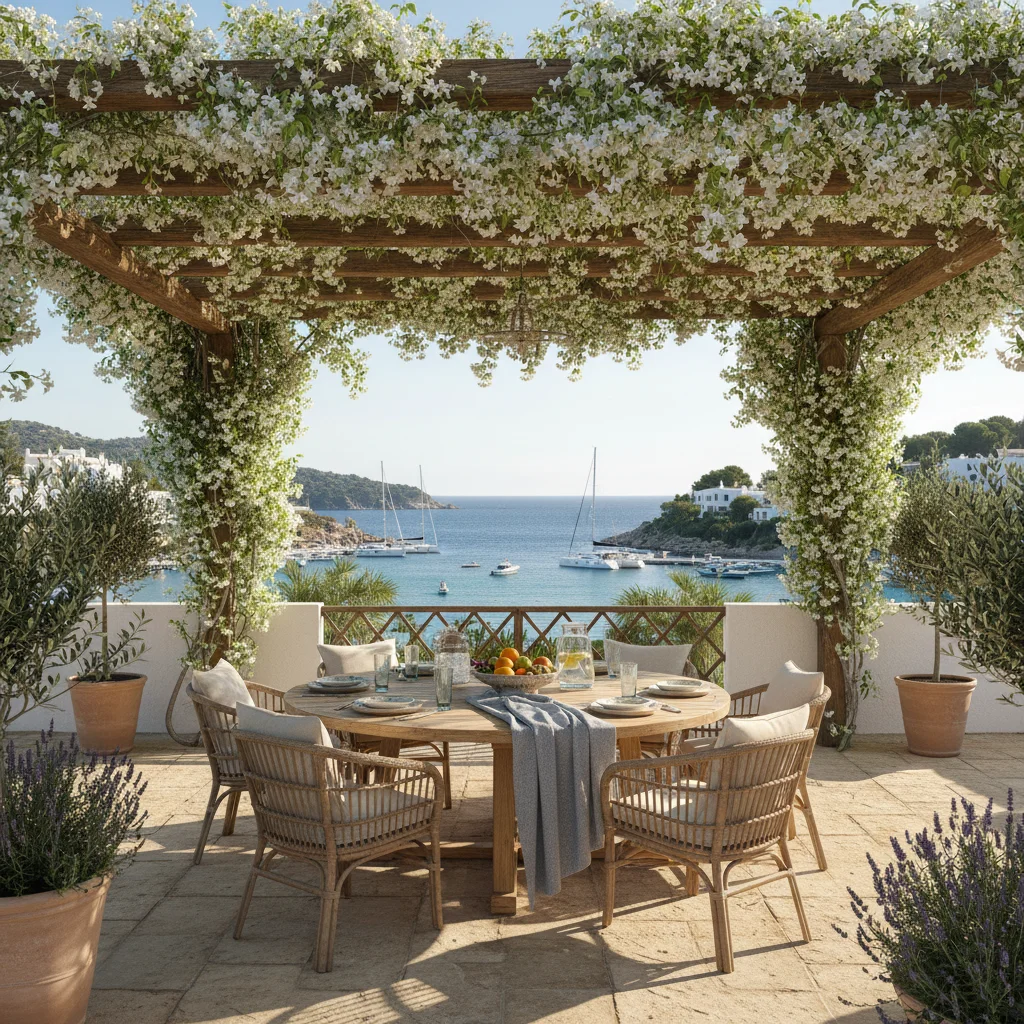
With over fifty-five percent of the local population being international—primarily British, Dutch, and German—the demand for high-quality outdoor living solutions is driven by a desire for northern European comfort combined with the Spanish climate. The British contingent often looks for that "outdoor lounge" feel, while our Dutch and German clients frequently prioritize sleek, minimalist lines and technical precision. A fixed pergola, whether constructed from pressure-treated timber or architectural-grade aluminium, serves as the anchor for this lifestyle. Near landmarks like the Castle of Moraira, where the coastal breeze is moderate but the sun is relentless, these structures provide the essential shade that allows for long lunches and evening gatherings without the constant need to adjust temporary umbrellas or flimsy gazebos.
In the luxury villas of Cap d'Or, where property prices frequently exceed the town average of four hundred and fifty thousand euros, homeowners are looking for investments that add tangible value. A fixed pergola is not a temporary fixture; it is a structural addition. Because many of these properties are situated on steep inclines, the outdoor space is often the most valuable part of the home. By installing a permanent frame, you are essentially creating a protected zone that defines the transition between the kitchen and the pool. This is particularly relevant in areas with Montgó-style mountain protection, where the microclimate is sheltered but the heat can still be trapped against the hillside. A fixed structure allows for the integration of lighting, heating, and even sound systems, ensuring the space is utilized year-round, not just during the summer months.
Technical Considerations for the Local Microclimate
When planning a fixed pergola in this specific part of the Costa Blanca, you have to account for the unique geographical factors that influence material longevity. Moraira benefits from a sheltered microclimate, largely thanks to the protection offered by the surrounding hills and the distant influence of the Montgó massif. This results in lower humidity compared to the southern zones of the province, which is an advantage for both timber and metal structures. However, for properties located within five hundred meters of the shoreline, such as those near the El Portet beach or the marina, salt air is the primary adversary.
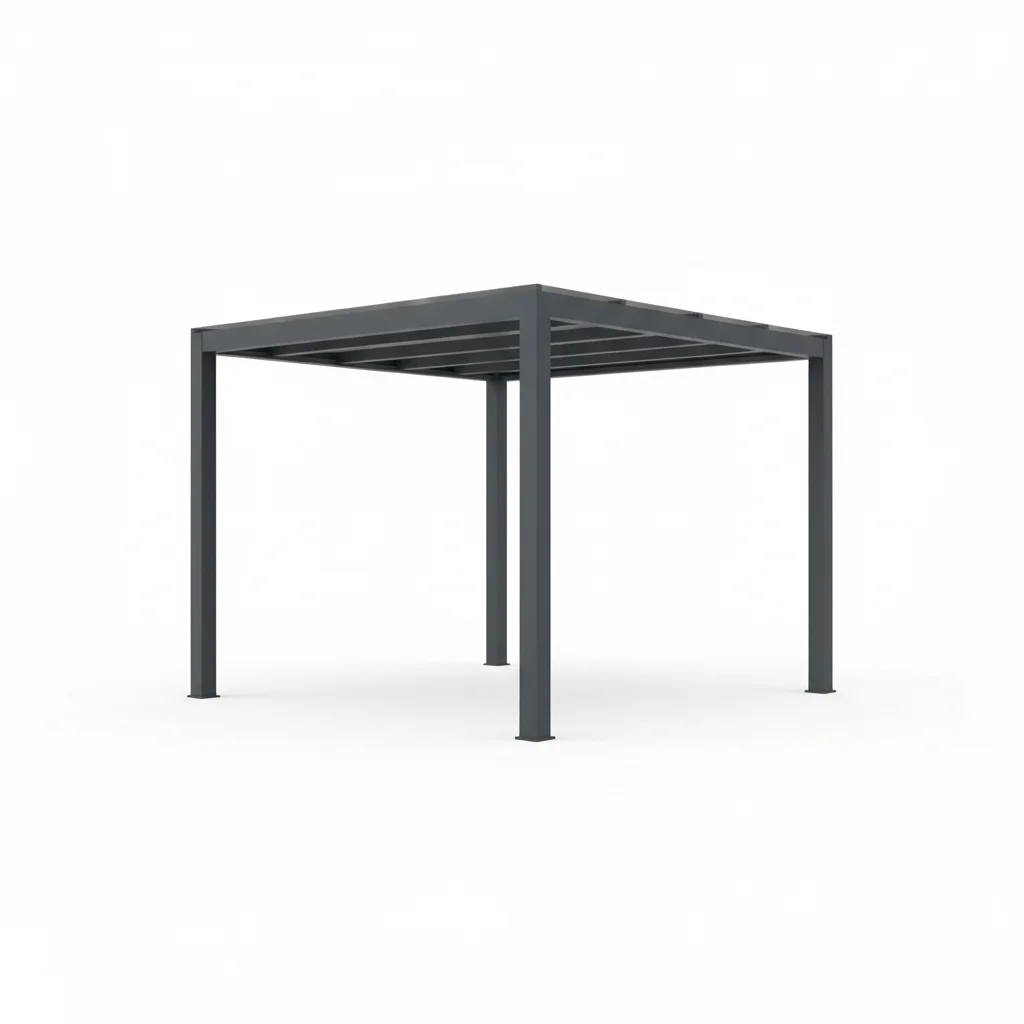
For these coastal locations, I always recommend high-grade 6063-T5 aluminium with a maritime-grade powder coating. This finish is specifically designed to resist the corrosive effects of the salt spray that the moderate coastal breeze carries inland. A fixed aluminium pergola in a standard four-by-four-meter configuration typically starts at around four thousand five hundred euros, including professional installation. This investment ensures that the frame will not pit or peel, a common issue with cheaper, store-bought alternatives that aren't rated for Mediterranean coastal environments. The structural integrity of a fixed frame is also vital here because, while the microclimate is generally calm, the region can experience sudden Gota Fría events with high winds that would easily destroy a non-permanent structure.
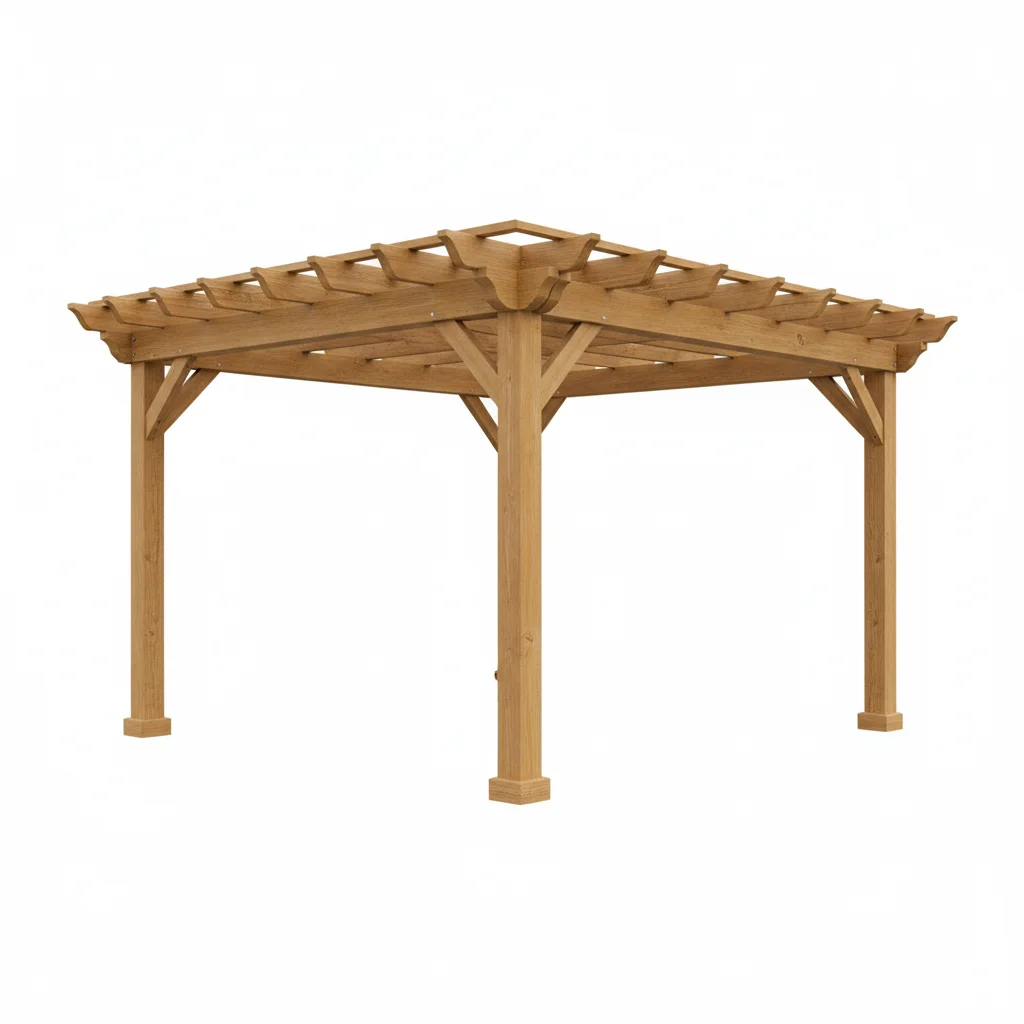
If you prefer the rustic aesthetic that complements the traditional stone walls found in Benimeit, timber is a viable option, but it requires specific local knowledge. We use laminated pine or fir that has been treated to Class 4 standards, which is essential for resisting the boring insects prevalent in the Valencian region. A well-constructed timber pergola, roughly twenty square meters in size, usually falls into the three thousand to five thousand euro range. It is important to remember that even with the lower humidity of our local area, timber requires a bi-annual application of a high-quality lasur to protect against UV degradation. Unlike paint, a lasur allows the wood to breathe, which is critical when the temperature fluctuations between a hot July afternoon and a cool January night can cause significant expansion and contraction.
Community rules, or the rules of the Comunidad de Propietarios, are another crucial factor for residents. In many urbanisations, there are strict regulations regarding the height and color of permanent outdoor structures to maintain a cohesive look. Because a fixed pergola is considered a permanent or semi-permanent addition, it is always wise to check your specific community statutes. In most cases, because these structures do not have solid walls, they are viewed more favorably than full extensions. However, we often have to match the powder coating of an aluminium frame to the specific RAL color code of the existing window frames or shutters—a service we provide to ensure the installation is fully compliant with local aesthetic standards.
Tailored Recommendations for Local Property Types
For the typical luxury villa found in Moraira, the goal is usually to cover a significant portion of a large terrace without sacrificing the view of the sea or the surrounding greenery. In these instances, I recommend a large-format fixed aluminium pergola with a minimalist profile. By using a frame with reinforced beams, we can achieve spans of up to six or seven meters without the need for middle pillars. This is essential for properties with panoramic views over the Mediterranean. A premium configuration like this, perhaps spanning thirty square meters and featuring integrated LED lighting and a fixed-slat roof for permanent shade, would be priced toward the upper end of the scale, around nine thousand to twelve thousand euros. This setup creates a grand "alfresco" dining area that can easily accommodate a table for twelve, reflecting the social outdoor culture of the international community here.
For the smaller townhouses or apartments located closer to the town center or the Castle, space is more constrained, and the focus shifts to privacy and maximizing a smaller footprint. In these settings, a wall-mounted fixed pergola is often the best solution. By anchoring one side of the structure directly to the villa’s facade, you save valuable floor space on the terrace. For an apartment terrace of perhaps fifteen to twenty square meters, a compact timber pergola provides a warm, organic feel that softens the surrounding masonry. You might consider adding manual side awnings to these structures to provide relief from the low-hanging sun in the late afternoon, or even integrating glass curtains later on. A fixed pergola acts as the perfect foundation; once the frame is in place, you can add glass curtains for three thousand euros or more, effectively creating a sunroom that can be opened or closed depending on the season.
Many of my clients choose to combine their fixed pergola with other solar protection products. For example, a fixed frame with a retractable fabric canopy—often called a "pergo-awning"—gives you the best of both worlds: the structural strength of a permanent installation with the flexibility to see the stars at night. In our experience working across Javea, Calpe, and Benissa, we find that Moraira residents particularly value this versatility. Integrating a high-quality acrylic fabric from manufacturers like Dickson or Sauleda ensures that the canopy won't fade under the intense Spanish sun. This combination of a fixed frame and a flexible roof is a middle-ground solution that typically costs between four thousand and seven thousand euros, depending on the motorized options and the total area covered.
Logistics and Local Expertise in the Marina Alta
Executing a successful installation in Moraira requires more than just high-quality materials; it requires an understanding of the local geography and logistics. If you live in the winding, narrow streets leading up to the Cap d'Or or in the higher reaches of Benimeit, you know that access can be a challenge. We manage the entire logistical process, ensuring that our delivery vehicles can navigate these tight coastal roads without disrupting the neighborhood. We have been operating in this region since 2019, and we understand that a project isn't just about the final product—it’s about the respect we show to your property and your neighbors during the installation.
Our service extends beyond the town limits to include neighboring Javea, Calpe, Benissa, and Benitachell. This regional presence means we are familiar with the specific weather patterns of the Marina Alta. For instance, we know that a property on the Benissa Costa might face different wind loads than one tucked away in a valley in Benitachell. This local insight allows us to specify the correct anchoring systems for your pergola. We don't just bolt structures into the tiles; we ensure they are chemically anchored into the underlying concrete slab, providing the security needed to withstand the occasional high-wind gusts that come off the sea.
When you invest in a fixed pergola, you are making a long-term commitment to your home. That is why I personally oversee the consultation process for our clients. We don't do "sales pitches." Instead, we sit down on your terrace, look at the orientation of the sun, consider the prevailing winds, and discuss how you actually intend to use the space. Whether you are looking for a rustic timber frame to match a traditional finca or a ultra-modern aluminium structure for a contemporary villa, we provide the technical expertise to ensure the result is both beautiful and durable. If you are ready to transform your outdoor space into a year-round living area, I invite you to contact us for a free consultation. We can walk through the options together, right there on your terrace, and find the solution that best fits your lifestyle and your budget.
 JW'"
/>
JW'"
/>