Why Expats in Jávea Love Outdoor Cooking
Jávea’s 300 days of sunshine, sheltered microclimate, and thriving community of 15,000+ expats make it one of the best places on the Costa Blanca to invest in outdoor cooking equipment.
With nearly half the population hailing from abroad — British, German, and Dutch residents leading the pack — Jávea has developed an outdoor dining culture that rivals anything back in northern Europe. From hillside villas overlooking the Montgó massif to beachside apartments near the Arenal, residents here spend most of the year cooking and entertaining outside.
The town sits in a natural bay sheltered by the Montgó mountain (753m), creating a microclimate recognised by the WHO as one of the healthiest in the world. Wind is rarely an issue on the Tosalet hillside or in Cap Martí, and evening temperatures between May and October rarely dip below 20°C. Your kamado grill or pizza oven gets genuine year-round use here — not just a summer novelty.
Answer capsule: Jávea’s sheltered microclimate and large expat community make it ideal for year-round outdoor cooking with kamado grills, gas BBQs, pizza ovens, and full outdoor kitchens.
Your Jávea Outdoor Kitchen Setup
The right setup depends on whether you have a spacious Montgó villa with panoramic terraces or a modern Arenal apartment with a compact balcony — Jávea has solutions for both.
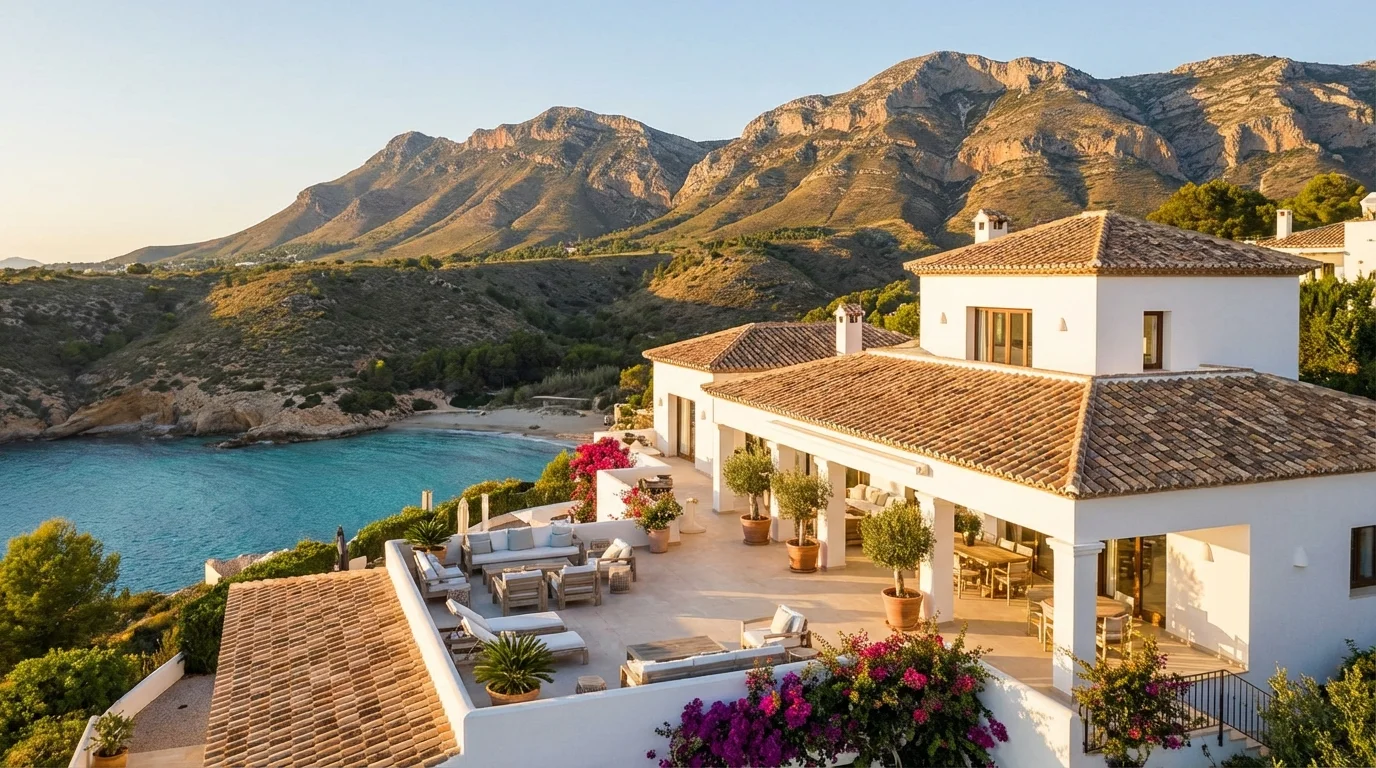
Villas in the Montgó and Tosalet areas regularly feature terraces of 40–80 square metres, many with existing summer kitchens or covered naya spaces — perfect foundations for a complete outdoor kitchen build with built-in gas BBQ, kamado station, and wood-fired pizza oven.
For apartment owners along the Arenal promenade or in the Port area, a compact kamado or portable gas BBQ fits comfortably on most terraces. Many of our port-area customers pair a tabletop pizza oven with a small prep station — enough to host six friends without dominating the space.
Answer capsule: Jávea properties range from large Montgó villas with 40–80m² terraces ideal for full outdoor kitchens to compact Arenal apartments suited to kamado grills and tabletop pizza ovens.
Gas, Charcoal, or Wood-Fired? Choosing Right for Jávea
Understanding Spanish gas bottle systems, charcoal sourcing, and local considerations helps Jávea residents pick the right fuel for their setup.
Gas BBQs are the most popular choice among expats — convenient, clean, and ready in minutes. In Spain, you will use butane bombonas (orange bottles from Repsol) or connect to your property’s natural gas supply. Many Montgó and Tosalet villas already have gas connections, making a built-in gas BBQ the simplest upgrade.
Kamado grills have a dedicated following, particularly among the British community. The ceramic retains heat brilliantly and handles Jávea’s occasional winter evenings without fuss. You can source quality lump charcoal from suppliers in Ondara and Pedreguer, or we can include it with your delivery.
Wood-fired pizza ovens are having a genuine moment in Jávea. Affordable almond and orange wood from the Jalón Valley (just 20 minutes inland) makes a pizza oven a natural fit. Costa Blanca Outdoors recommends pairing a wood-fired oven with a gas BBQ for maximum versatility — authentic flavour alongside everyday convenience.
Answer capsule: Gas BBQs suit most Jávea expats for convenience, kamado grills appeal to dedicated cooks, and wood-fired pizza ovens pair perfectly with locally sourced almond wood from the Jalón Valley.
Delivery & Setup in Jávea
We deliver and install throughout Jávea and surrounding towns including Moraira, Dénia, and Benitachell — with specialist knowledge of the area’s hillside access roads.
Jávea sits in our northern Costa Blanca delivery zone, and we know the town intimately. Deliveries to the Arenal, Port, and town centre are straightforward. For Montgó, Tosalet, and Cap Martí properties, we use smaller vehicles that handle the narrow, winding access roads — a detail that matters when you are receiving a 150kg kamado grill or a stone pizza oven.
Our delivery includes full white-glove setup: unpacking, assembly, terrace placement, and a walkthrough of your new equipment. For built-in projects, we coordinate with trusted local builders and stone masons for countertops, gas connections, and drainage.
Living near Moraira or Dénia? We cover the entire northern Costa Blanca on the same routes. Customers in Benitachell and the Cumbre del Sol urbanisation are also on our regular Jávea-area schedule. Typical delivery is 5–10 working days for in-stock items.
Hot Tubs & Swim Spas in Jávea: What You Need to Know
Since moving to the coast in 2019 and helping over 200 families settle into their Mediterranean lives, I have observed a significant shift in how people utilize their outdoor square footage. This town, with its permanent population of 33,000, has evolved into much more than a summer retreat. With nearly 48% of the residents coming from abroad—primarily the UK, Germany, and the Netherlands—the demand for high-specification outdoor living has increased. Most of the international community here is used to northern European standards of comfort, which often means that a standard 10x5 meter swimming pool, while beautiful, remains unused for six months of the year because the water temperature drops below 18 degrees Celsius in November. This is exactly where the logic of installing a hot tub or a swim spa becomes undeniable for residents in areas like Cap Martí or the heights of Tosalet.
The property landscape here is dominated by luxury hillside villas and expansive terraces, many ranging from 40 to 80 square meters. These spaces are often underutilized during the "shoulder seasons" of autumn and spring. Unlike the flatter coastal plains further south, the topography near the Port of Jávea and the surrounding cliffs provides a dramatic backdrop but also creates specific thermal conditions. When the sun dips behind the Montgó in the late afternoon, the air temperature drops rapidly, even if the day was warm. A premium hot tub allows you to reclaim those evening hours. I often tell my clients that a hot tub is not just a luxury purchase; it is a way to extend the usable lifespan of a €350,000+ property investment by ensuring the outdoor areas are functional 365 days a year, not just during the peak months of July and August.
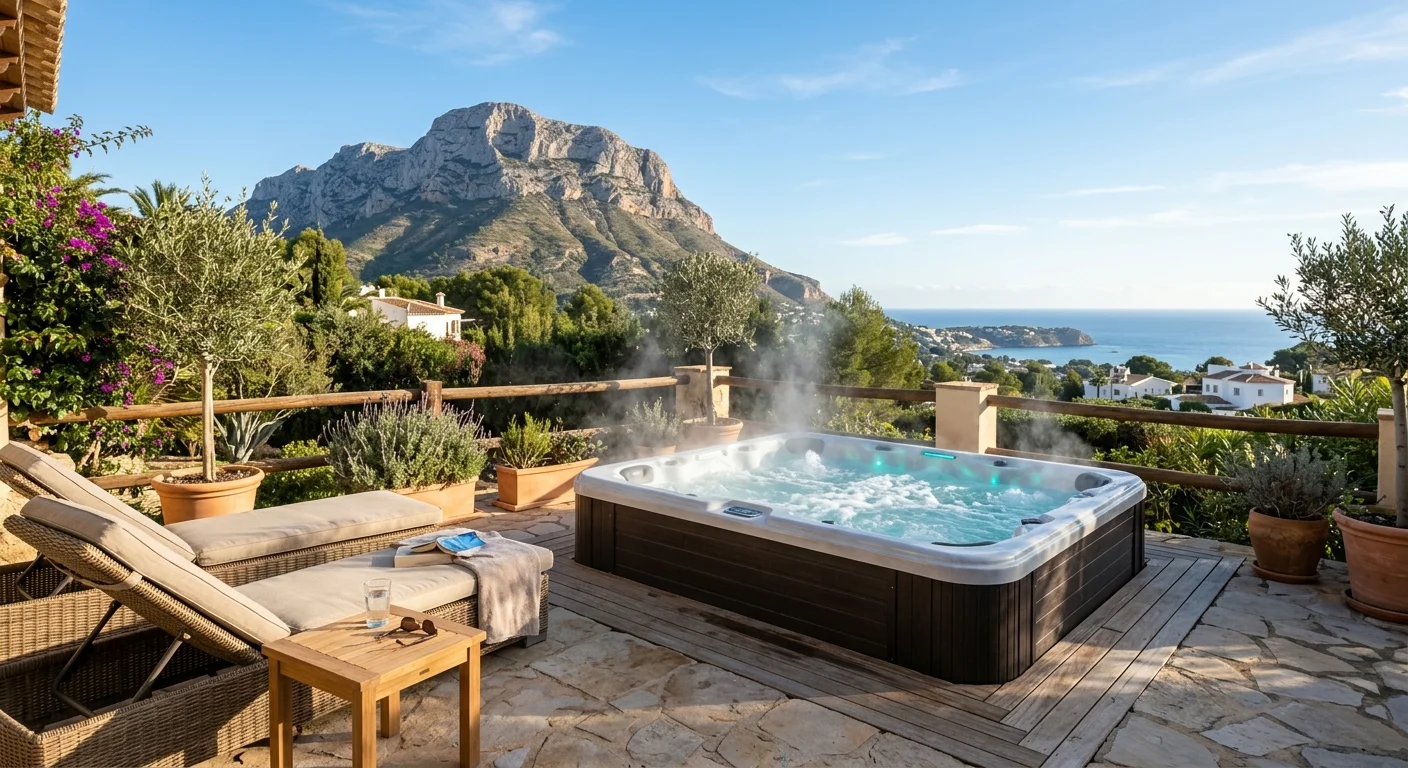
The British and Dutch residents in particular tend to prioritize the social aspect of outdoor living. They are looking for a lifestyle that mirrors their indoor comforts but takes advantage of the Mediterranean light. This usually involves a combination of hydrotherapy and a dedicated space for hosting. In urbanizations like Cap Martí, where villas are often perched on substantial plots, there is ample room to create a "wellness zone." This usually starts with a hot tub and evolves into a full outdoor kitchen setup. The goal is to create a flow where you can move from a swim to the spa, and then directly to a seated dining area without ever needing to go back inside the house.
The microclimate here plays a vital role in why these products are so popular. Because the town is sheltered by the massive limestone bulk of the Montgó mountain, we are protected from the harshest northern winds that batter places like Dénia. This creates a pocket of relative calm, but the coastal breeze still carries a moderate salt content. When we look at the terraces of villas near the Arenal or the Port, we see a lifestyle that is deeply connected to the sea views, yet residents want to avoid the high maintenance of a full-sized chlorinated pool during the winter. A swim spa provides the perfect middle ground, offering a place for exercise and relaxation with a much smaller footprint and significantly lower heating costs than a traditional pool.
Living under the protection of the Montgó provides a unique environment that is vastly different from the more humid southern zones of the Costa Blanca. The lower humidity levels here mean that while the days are pleasant, the nights can feel remarkably crisp. This specific microclimate is the primary reason I recommend high-density foam insulation for any spa installed in the area. Many people make the mistake of buying "Spanish spec" tubs designed for the heat of Murcia or Alicante, but here, especially if you are located on the slopes of the mountain, you need a cabinet that can retain heat when the mercury drops to 8 or 9 degrees in January.
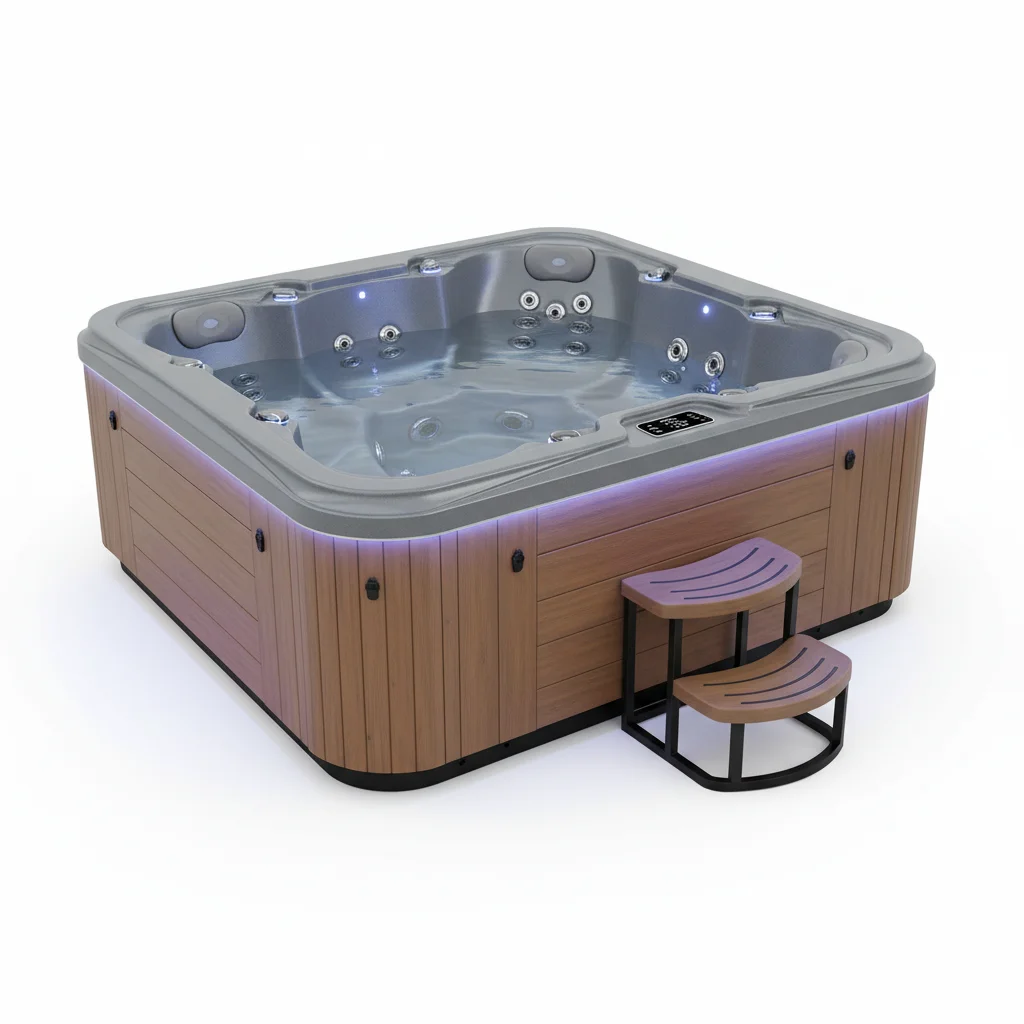
Salt air is another factor that I constantly discuss with homeowners. Even if your property is a few kilometers inland in an area like Benitachell or Pedreguer, the moderate coastal breeze carries salt particles that are incredibly corrosive to low-grade components. If you are looking at a budget hot tub from a national hardware chain priced at €3,000, you are likely looking at a lifespan of only three to four years before the heater element or the jet housings begin to fail. For this coastline, I strongly recommend a tub with marine-grade 316 stainless steel components and a reinforced ABS base. A mid-range hydrotherapy tub, such as the Aqua-Flow 5-seater which typically retails around €7,500, is built to withstand the salt air while providing the therapeutic pressure required for genuine muscle recovery.
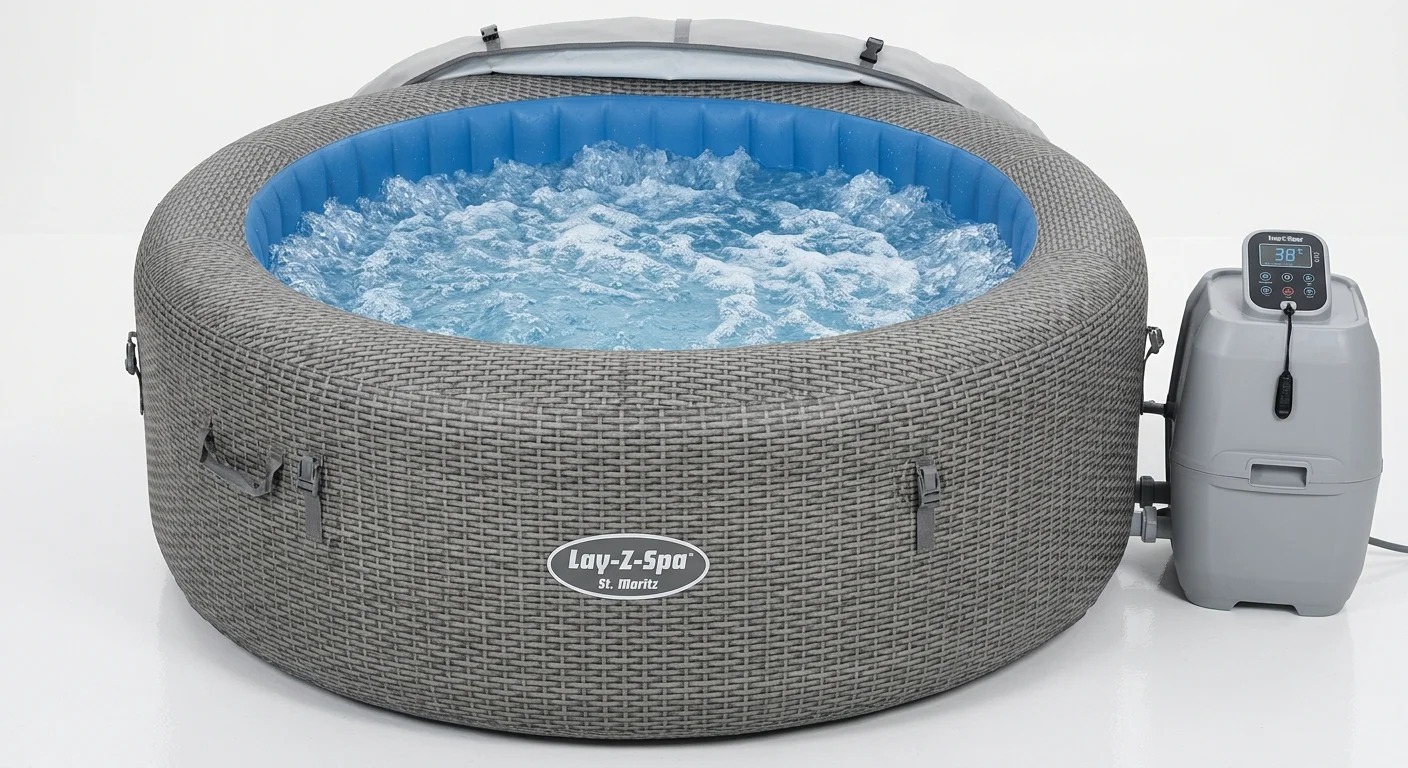
If you live in one of the apartment complexes near the Port or the Arenal, the "comunidad de propietarios" or community of owners rules are your first hurdle. It is a common misconception that you can simply crane a hot tub onto a penthouse terrace. Most modern terraces in Jávea are built to support a load-bearing weight of approximately 200kg to 300kg per square meter. A standard 4-person hot tub, when filled with water and occupants, can easily exceed 500kg per square meter. Before I even show a client a catalog, we discuss structural integrity. In many cases, for apartment dwellers, we opt for a high-end inflatable spa or a smaller, 2-person compact tub that spreads the weight across a larger footprint using a reinforced sub-frame. These smaller units, priced around €4,200, offer the luxury experience without risking the structural safety of the building.
Maintenance in this part of Spain also requires a specific approach due to the water hardness. The local water supply is notoriously high in calcium. If you do not manage the pH levels and use a high-quality sequestering agent, the internal pipes and pumps of your hot tub will "calcify" within twelve months. I advise all my clients to install a pre-filter on their garden hose when filling the tub. This simple €50 tool can save you thousands in pump replacements down the line. Furthermore, given the abundance of sunshine, UV degradation is a real threat to the spa cover. I recommend treating the vinyl cover with a UV protectant every three months to prevent the sun from "baking" the foam cores, which eventually makes them heavy and useless as insulators.
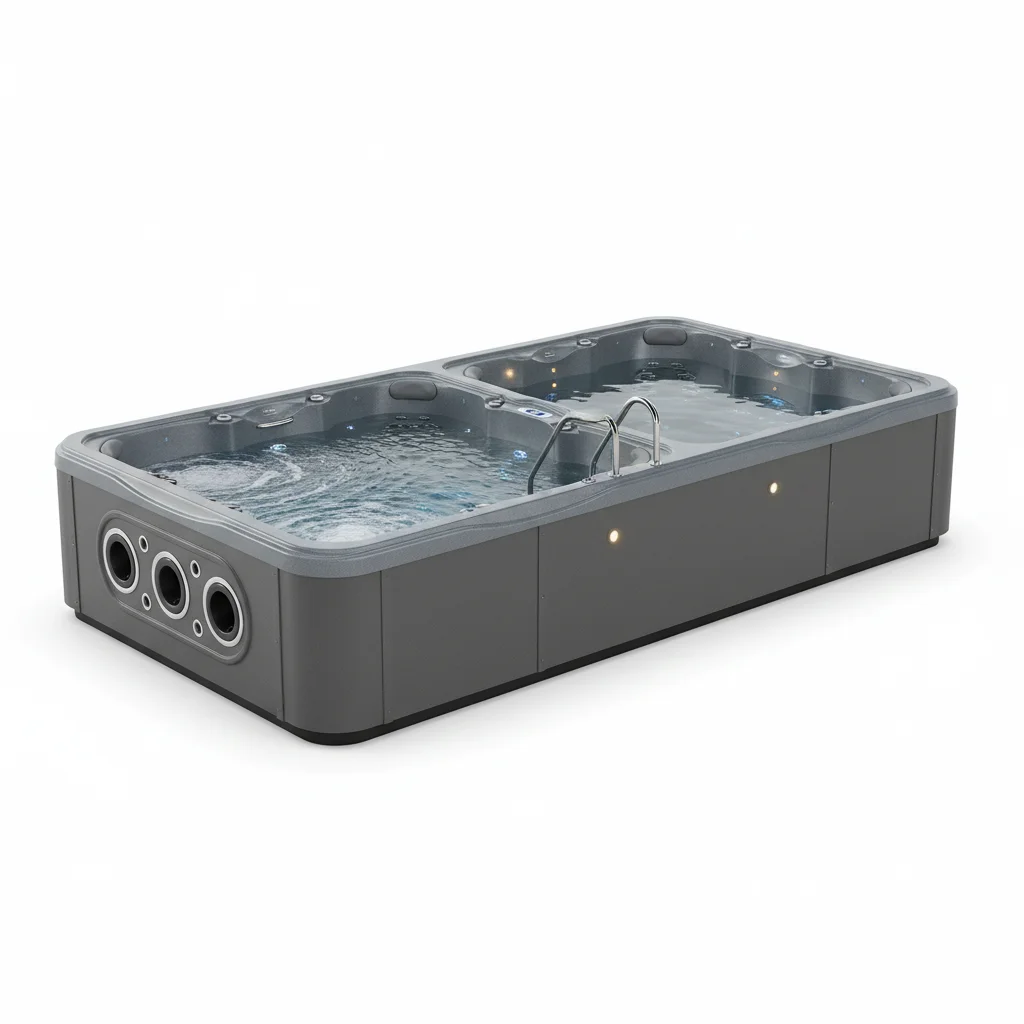
When I am consulting with villa owners in areas like Tosalet, I usually recommend a more robust setup that integrates with the existing architecture. For a large villa with a terrace of 60 square meters or more, a dual-zone swim spa is the gold standard. These units are approximately 5 to 6 meters in length and feature two separate bodies of water. One end is kept at 28 degrees for swimming against a powerful counter-current, while the other end is a hot tub kept at 38 degrees for hydrotherapy. A unit like this will cost between €12,000 and €15,000, but it effectively replaces the need for a swimming pool while adding the benefits of a year-round spa. We often suggest placing these adjacent to a custom outdoor kitchen. Combining a high-end grill with a swim spa creates a central social hub that keeps the family outdoors long after the sun has set.
For the more compact villas or those with established gardens in Cap Martí, a standalone 5-person hot tub is the most practical choice. I recommend a configuration that features at least two "lounger" seats. People often think they want maximum seating capacity, but in my experience, most couples spend 90% of their time in the loungers. Look for a tub with at least 40 jets and a dedicated circulation pump. The dedicated pump is crucial; it runs silently 24/7 to keep the water filtered, which is much more energy-efficient than having the main jet pumps cycle on and off. In our local climate, an energy-efficient tub should only cost about €1 to €1.50 per day to run, provided you have a high-quality, 10cm thick tapered cover to lock in the heat.
If you are living in a townhouse or a modern apartment with a smaller balcony, you don't have to forgo the experience. We have seen great success installing "plug-and-play" models. These are designed to run on a standard 13-amp Spanish domestic socket, meaning you don't need to hire an electrician to run a dedicated 32-amp armored cable from your main fuse board—something that is often impossible in older buildings near the Port. These models are usually circular, around 180cm in diameter, and offer a more social, "soaking" experience rather than intense hydrotherapy. They are light enough (when empty) to be moved by two people and are perfect for the 40-square-meter terraces commonly found in newer developments.
Delivering these units in this municipality presents a unique set of logistical challenges that only someone who has worked here for years can truly appreciate. The "Tosca" stone walls that characterize many of the older estates in Tosalet and Cap Martí are beautiful but incredibly fragile. You cannot simply drag a 400kg spa over a Tosca coping stone without causing permanent damage. We utilize specialized "spa dollies" with high-clearance wheels and, in many cases, we coordinate with local crane companies to lift the unit directly over the villa walls. This is particularly common in the hillside urbanizations where narrow, winding driveways make it impossible for a delivery truck to get close to the terrace.
My team and I serve the entire surrounding area, including Moraira, Dénia, Benitachell, and the Jalon valley. Each of these locations has its own quirks. For instance, delivering to the narrow, steep streets of the Jalon valley requires a much smaller transit vehicle than a delivery to a wide-avenue plot in Moraira. We also understand the local building regulations. While a hot tub is generally considered a "portable" item and doesn't usually require a "licencia de obra" (building license), a swim spa might be viewed differently if you are planning to sink it into the ground. We can advise you on the best way to install your spa to stay within the local bylaws while achieving the aesthetic you want.
When we deliver a spa here, we don't just drop it and leave. We provide a full "handover" session that covers the specific chemistry needed for our local water. We show you how to balance the levels to account for the high calcium content and how to clean the filters to deal with the fine Saharan dust (Calima) that occasionally coats the region. This local knowledge is what prevents a luxury purchase from becoming a maintenance headache. If you are considering adding a hot tub or swim spa to your home, I invite you to reach out for a conversation. I am happy to visit your property to assess the access, check your electrical capacity, and help you determine which model fits your specific terrace or garden layout. There is no substitute for an on-site evaluation by someone who knows these streets and these houses inside and out.
 JW'"
/>
JW'"
/>