Outdoor Living in La Nucia
La Nucia is a modern inland town of 20,000 residents where 52% are expats — British, Dutch, and Scandinavian — attracted by affordable hillside properties, world-class sports facilities, and a thriving Sunday rastro market.
La Nucia has reinvented itself over the past two decades. Once a sleepy agricultural village behind Benidorm, it is now one of the most forward-thinking municipalities on the Costa Blanca, with a nationally recognised sports complex and infrastructure that rivals towns three times its size. The Sunday rastro market draws thousands weekly as one of the largest fresh-produce markets in the Alicante province.
Properties average around €250,000, and for that price you get a detached villa with a private pool, mountain views, and a terrace significantly larger than what the same budget buys on the coast — often 40–80 square metres of outdoor space. At roughly 200 metres elevation, summer evenings are cooler than the seafront and winter days are crisp and sunny — perfect for a long kamado cook.
The community is active and outdoorsy. Hiking, cycling, and using the town’s Olympic-grade sports facilities are all part of daily life. That culture feeds directly into outdoor cooking — residents here treat grilling as fuel for an active lifestyle, not just a weekend novelty.
La Nucia offers hillside villas with 40–80m² outdoor spaces averaging €250,000, cooler summer evenings than the coast, and an active expat community of 10,000+ who cook outdoors year-round.
Choosing Your Setup in La Nucia
La Nucia’s spacious hillside terraces and mild inland climate make it ideal for versatile setups combining gas BBQs for convenience with kamado grills or pizza ovens for weekend cooking projects.
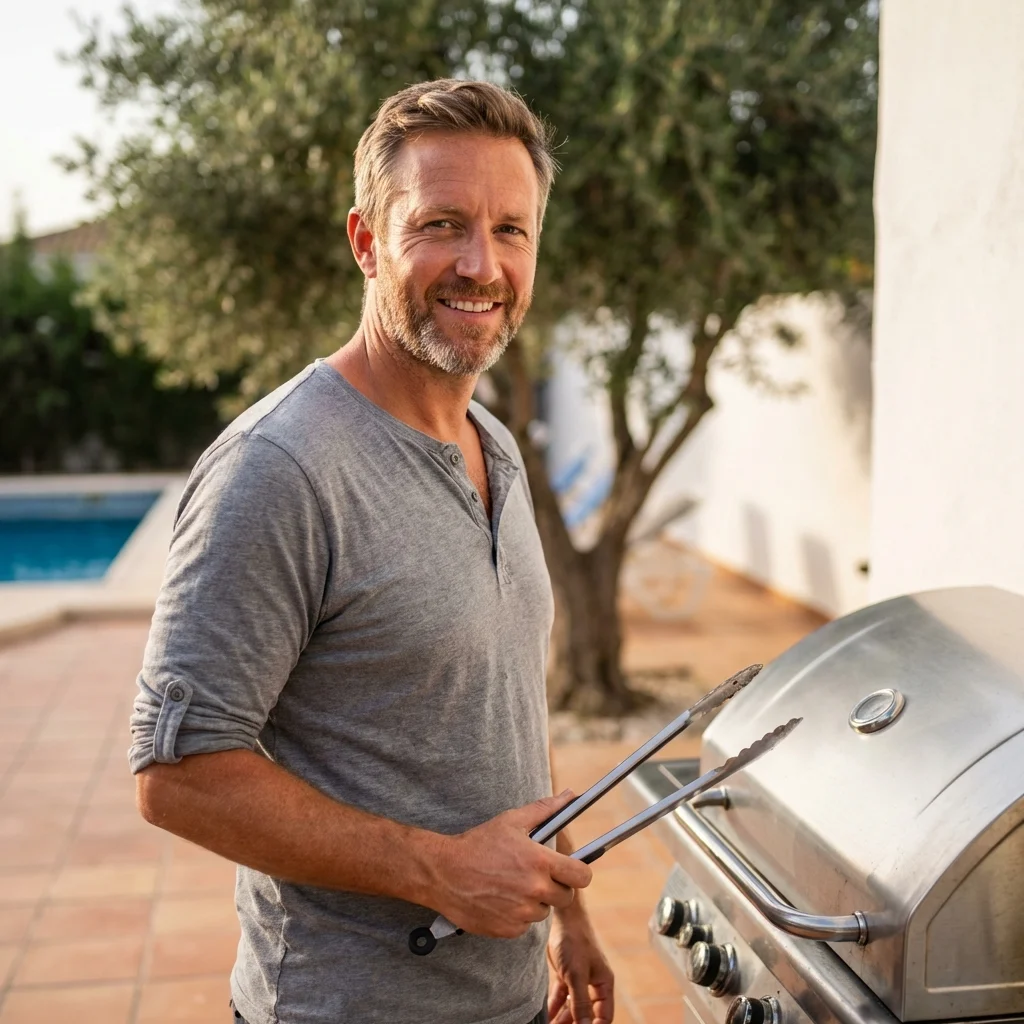
The typical La Nucia property has enough space for a multi-piece outdoor cooking setup without feeling crowded. A common configuration we install here is a gas BBQ for weeknight speed paired with a kamado grill for weekend slow-cooking — positioned apart on the terrace so both can run simultaneously when entertaining.
Costa Blanca Outdoors recommends considering the slightly cooler inland evenings when choosing equipment. A kamado grill retains heat brilliantly and performs just as well at 12°C in January as it does at 35°C in July — making it arguably the best single-piece investment for La Nucia’s year-round cooking season. The ceramic insulation also means fuel efficiency, using roughly half the charcoal of an open grill for the same cooking time.
Wood-fired pizza ovens are a natural fit. La Nucia’s inland position means firewood is more accessible and affordable than on the coast. Orange groves and almond orchards surround the town, and suppliers sell seasoned wood by the sack or trailer load. The Sunday rastro itself is a reliable source for firewood and charcoal.
Costa Blanca Outdoors recommends kamado grills as the best single-piece investment for La Nucia, with ceramic insulation performing equally well in January at 12°C and July at 35°C while using half the charcoal of open grills.
Delivery to La Nucia
We deliver to La Nucia on our central inland route weekly, with experience navigating the town’s hillside residential streets and gated urbanisations.
La Nucia sits just inland from our Benidorm–Alfaz del Pi coastal route, making it a natural addition to our central delivery schedule. Most residential areas have wide roads, though some older hillside urbanisations require smaller vehicles for heavy items.
Every delivery includes full setup: unpacking, assembly, placement on your terrace or in your garden, and a walkthrough of your new equipment. For built-in outdoor kitchen projects, we work with local builders who understand La Nucia’s municipal building guidelines and community regulations.
Alfaz del Pi and Benidorm are on the same delivery corridor, and we also reach Altea and the northern coast from here. Expect 5–10 working days for in-stock items, or 3–4 weeks for custom kitchen installations including design, fabrication, and professional fitting.
Swimming Pools in La Nucía: What You Need to Know
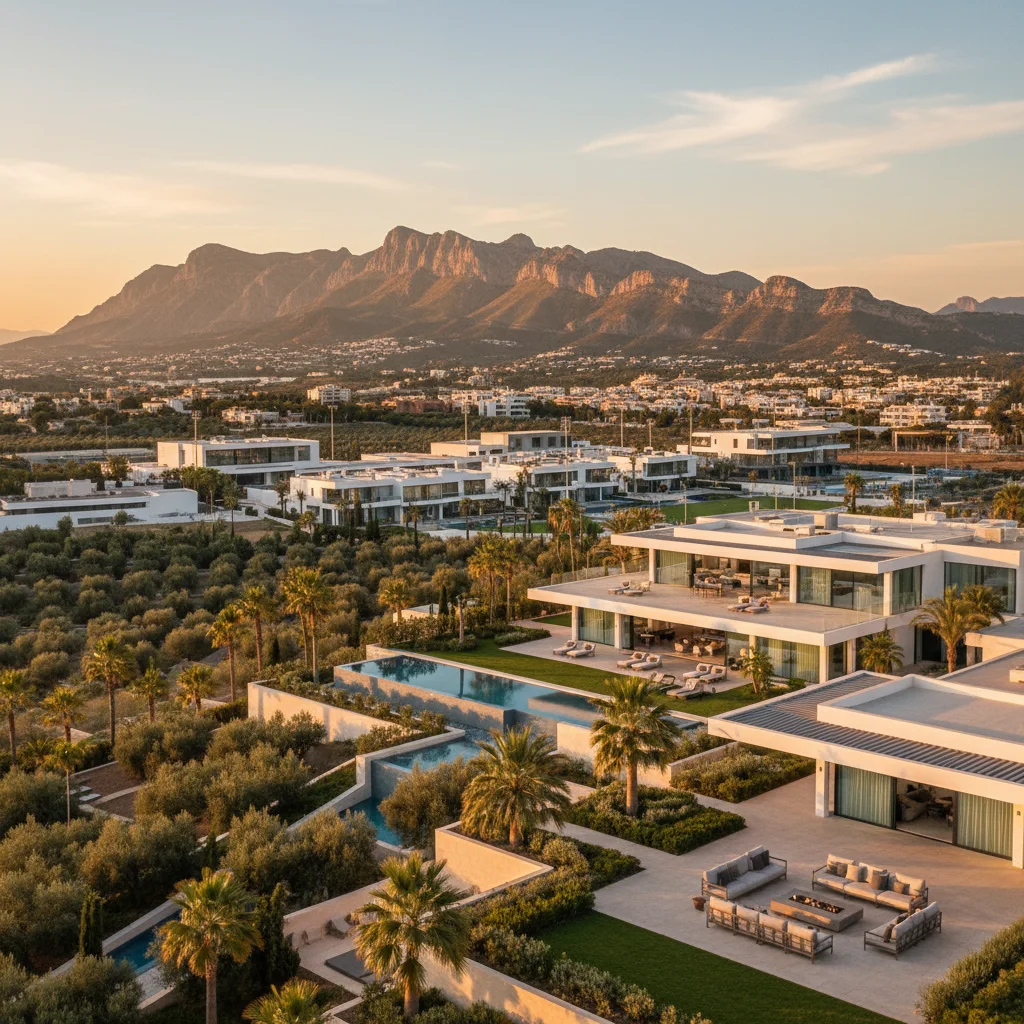
Integrating a permanent swimming pool into your home in this part of the Marina Baixa is less about luxury and more about essential temperature management. Having lived here since 2019 and assisted over 200 families with their outdoor transitions, I have observed how the local lifestyle dictates the design of these spaces. This municipality is unique because it manages to balance a high-density international population with a traditional inland feel. With over 52% of residents coming from outside Spain—predominantly from Britain, the Netherlands, and Norway—the expectations for outdoor living are exceptionally high. These residents often view the garden not as a secondary space, but as the primary living room for eight months of the year. The diverse property stock here reflects this, ranging from the older, more compact plots near the historic center to the sprawling villas tucked under the shadow of the Ponoig mountain.
The culture of outdoor living in this area is heavily influenced by the proximity to the Ciutat Esportiva Camilo Cano, which has fostered a community that values health, fitness, and active recovery. For the Norwegian and Dutch contingents, this often translates to a demand for pools that allow for genuine lap swimming or integrated resistance jets. Meanwhile, the British community frequently centers their social life around the pool, often timing their weekend gatherings to coincide with a morning visit to the local Sunday Market before retreating to the privacy of their terrace. Because property prices here average around €230,000, homeowners are generally looking for installations that add tangible equity to their investment rather than just a temporary cooling solution. A well-installed in-ground pool in a neighborhood like El Tossal or Panorama can significantly increase the resale appeal of a villa, especially when the mountain backdrop is factored into the architectural orientation of the water feature.
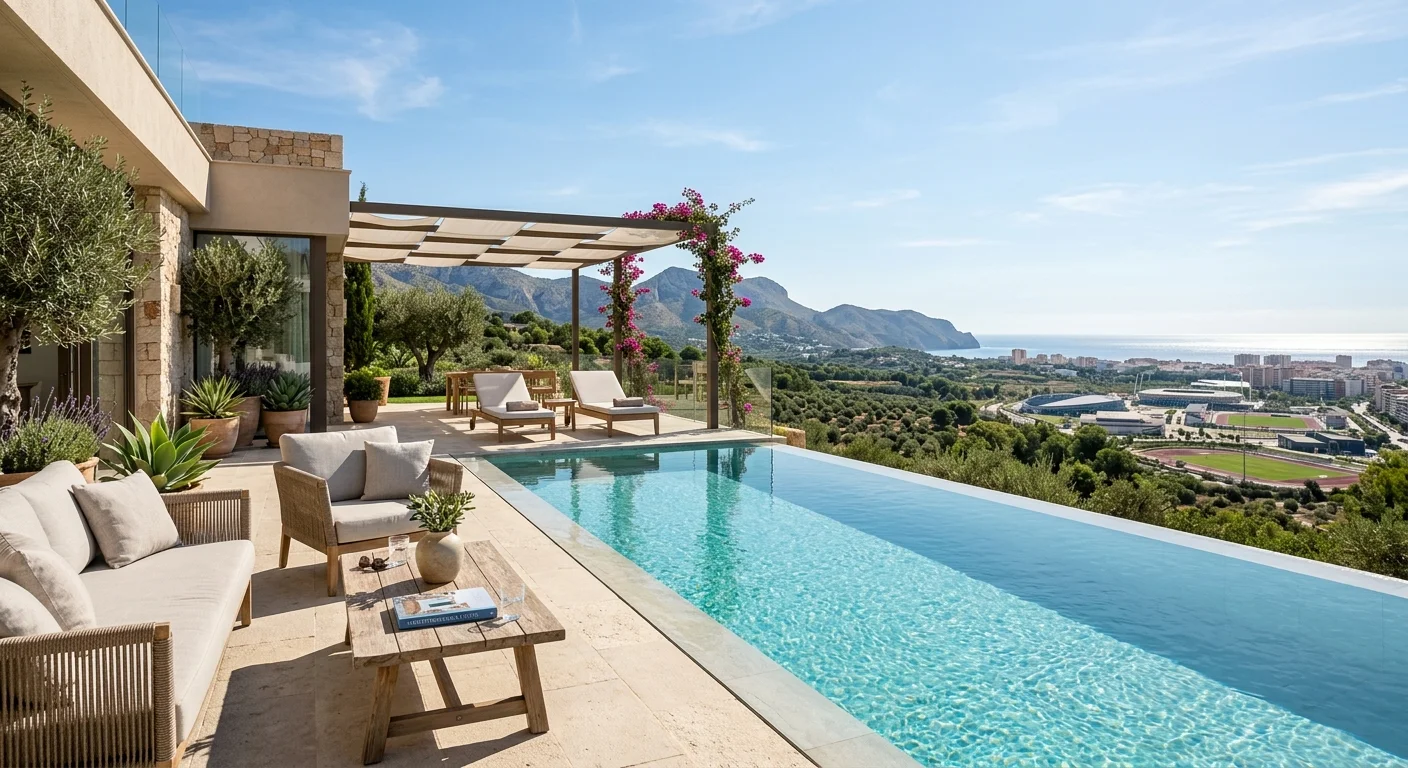
Understanding the terrain is the first step toward a successful installation. The land sitting between the coast and the mountains is often characterized by a mix of hard limestone and pockets of clay, which dictates the type of excavation required. For those living in the more elevated urbanizations, the sloping ground provides an opportunity for infinity edges that look out toward the Mediterranean, but it also necessitates professional structural engineering to ensure the basin remains stable over decades of seismic micro-shifts common in the Marina Baixa. The goal is always to create a seamless transition from the indoor tiling to the pool surround, utilizing the natural light that reflects off the limestone peaks to illuminate the water well into the evening hours.
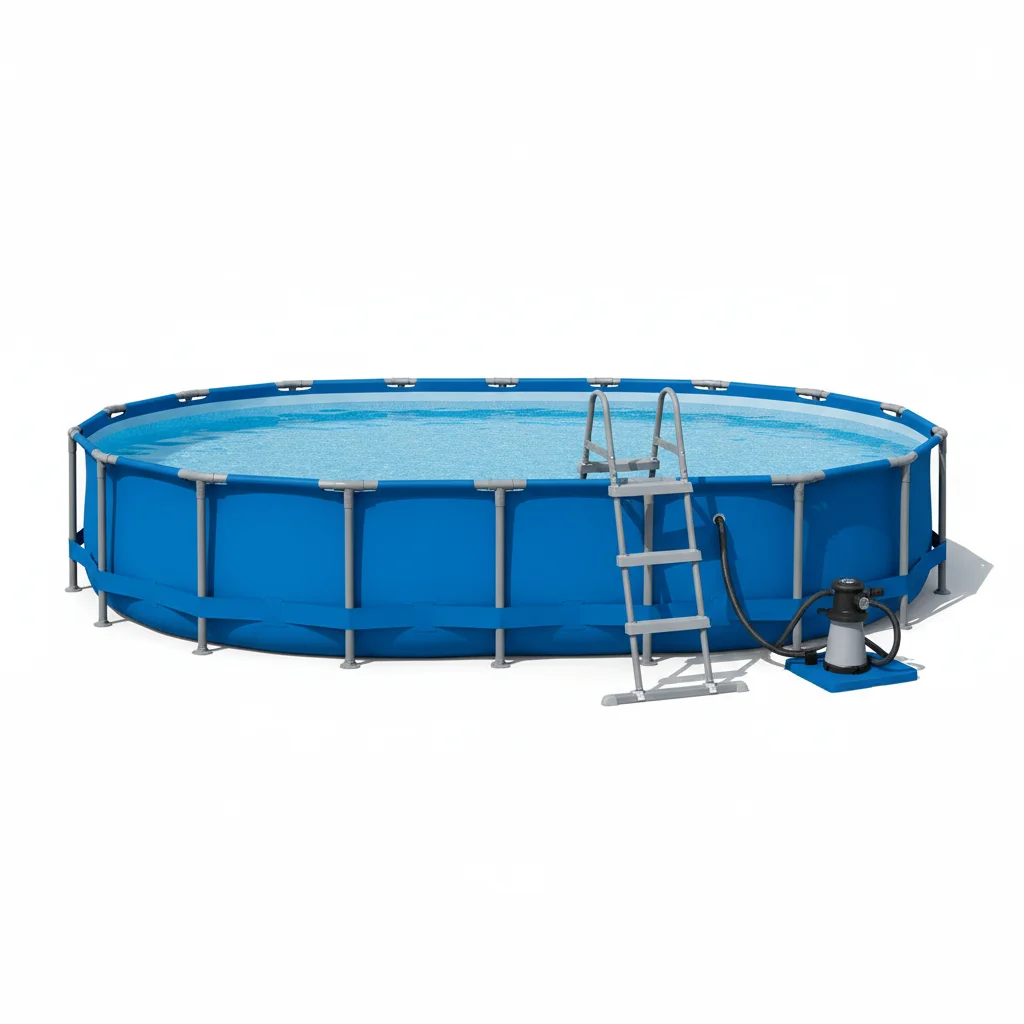
The technical requirements for a pool in this specific geographic corridor are influenced by both the intense UV exposure and the specific wind patterns. When you are situated on this coastal shelf, you are caught between the humid Levante winds from the east and the dry, dusty Poniente winds from the interior. These elements do more than just blow leaves into your water; they dictate the chemical balance and the structural integrity of your equipment. For instance, the salt spray from the Mediterranean can travel several kilometers inland, especially during a strong Levante gale. This means that even if you cannot see the sea from your terrace, the salt air is likely impacting any exposed metal components of your pool pump or ladder. I always advise residents to opt for high-grade 316 stainless steel or, better yet, to hide equipment within ventilated subterranean housing to prevent the premature corrosion that plagues cheaper installations in Benidorm or Altea.
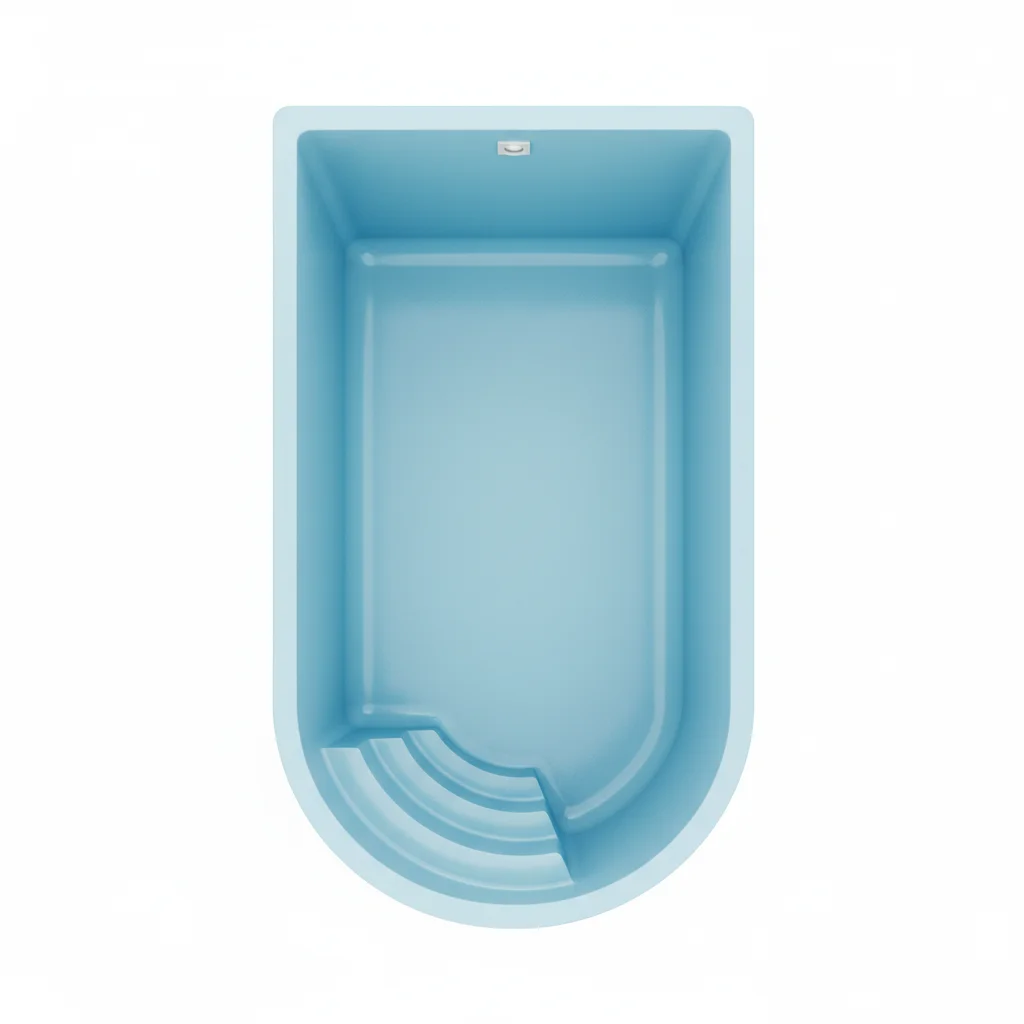
Maintenance is another area where local knowledge is vital. The intense UV radiation here is relentless, often leading to the rapid degradation of standard PVC liners or low-quality pool covers. When the sun beats down on a still body of water in July, the chlorine burn-off is significant. This is why I frequently recommend salt-water chlorination systems over traditional liquid or tablet chlorine. A salt-water system for a standard 8m x 4m pool typically costs between €1,200 and €1,800 to install as an upgrade, but it pays for itself by providing a more stable chemical environment and being far gentler on the skin and eyes during the height of summer. Furthermore, the "Comunidad de Propietarios" or community of owners plays a huge role here. In many urbanizations, there are strict rules regarding the height of pool enclosures and even the color of the tiling. Before any earth is moved, you must ensure your project aligns with both the municipal building regulations and your specific community’s bylaws. A standard 6m x 3m fibreglass pool shell, fully installed with filtration and basic terracing, usually starts around €14,500 in this area, but that price can fluctuate based on the ease of access for heavy machinery.
Access is a logistical hurdle that many homeowners overlook until the crane arrives. The narrow, winding roads leading to some of the more established villas can be a nightmare for a large delivery truck. In some cases, we have had to coordinate with the local Policia Local to temporarily close a street just to get a fibreglass shell over a perimeter wall. If your property is tucked away in the older parts of the village, a concrete-poured pool might be your only option because a pre-moulded shell simply won't fit through the access points. This is the kind of detail that a generic national installer will miss, but a local expert will flag during the first site visit. We also have to consider the "Licencia de Obra," the building permit. The local town hall is generally efficient, but they require precise technical drawings, especially if the pool is located near a boundary wall or involves significant structural retaining work.
What We Recommend for La Nucía
When recommending a specific setup for a villa in one of the outlying urbanizations, I usually point people toward a medium-sized in-ground fibreglass pool with an integrated heat pump. For a typical family home with a garden of around 500m², an 8m x 4m pool provides the best balance between swimming space and garden preservation. The reason I suggest fibreglass in this region is its flexibility. The ground here can move slightly due to thermal expansion and minor tectonic activity; whereas a tiled concrete pool might develop hairline cracks in the grout, a high-quality fibreglass shell will flex without leaking. I recommend pairing this with a light-colored interior—either white or pale blue—to keep the water temperature from soaring too high in August. To extend your swimming season into the British or Dutch "winter" months, a high-efficiency heat pump is essential. This allows you to maintain a comfortable 28°C from March through to November, making the investment much more cost-effective.
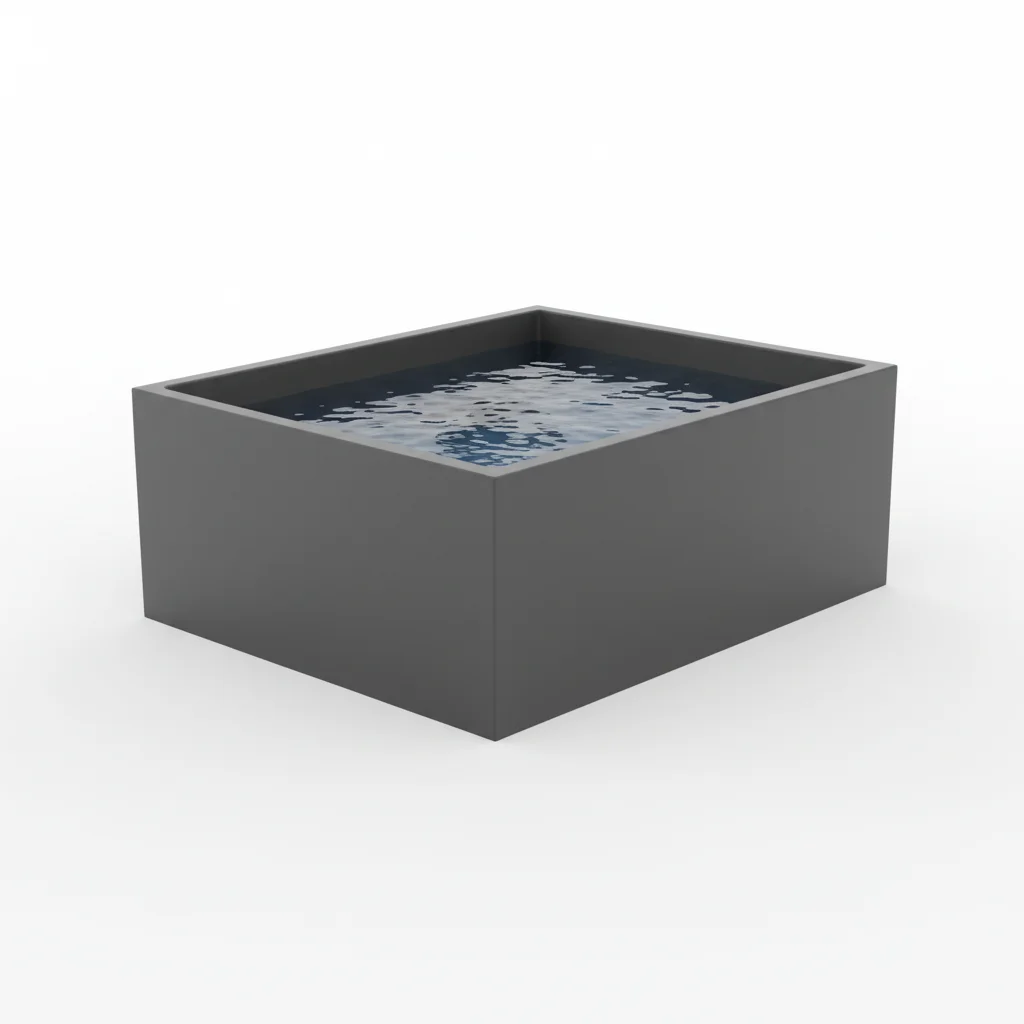
For residents in townhouses or properties with more restricted terrace space, the "plunge pool" or "cocktail pool" is becoming the gold standard. A 4m x 2m or 5m x 3m pool is surprisingly functional when equipped with a powerful counter-current jet. This turns a small body of water into an endless swimming lane, perfect for the fitness-conscious residents who frequent the Ciutat Esportiva. These smaller installations are also much easier to heat and maintain, often falling into a price bracket of €8,000 to €12,000 depending on the finishes. On a smaller terrace, the aesthetics are paramount, so we often suggest using non-slip porcelain tiles that mimic the local stone to create a seamless look that makes the space feel larger than it is.
One of the most effective ways to maximize your outdoor area is by combining a swimming pool with a high-quality hot tub. In this climate, a pool is a refreshing escape during the day, but a hot tub becomes the focal point of the evening once the sun dips behind the mountain and the temperature drops. I have seen many clients successfully integrate a 4-person hot tub onto a raised deck overlooking their pool. This configuration is particularly popular with the Norwegian community, who value the hydrotherapy benefits after a day of hiking or cycling in the nearby hills. By having both, you essentially create a year-round outdoor spa. The hot tub serves as the warm retreat during the cooler months of December and January, while the pool remains the centerpiece for the rest of the year. When designing these combined spaces, we always look at the prevailing winds. Positioning the hot tub in a sheltered corner, perhaps protected by a glass balustrade, ensures that the Poniente wind doesn't strip the heat away while you are trying to relax.
Another recommendation I feel strongly about is the installation of an automatic slatted cover. Given the dusty environment and the proximity to pine forests in the surrounding hills, a pool can become dirty very quickly. A cover not only keeps the debris out but acts as a massive solar heater and a safety barrier for families with young children or pets. In a town with so many international families and holiday rentals, safety and ease of maintenance are non-negotiable. An automatic cover can be integrated into the pool design so that it disappears under the decking when not in use, maintaining the clean lines of your terrace while providing peace of mind and reducing chemical consumption by up to 50%.
Delivery & Local Knowledge
Operating in the heart of the Marina Baixa means we have developed a deep understanding of the local logistics that go far beyond a simple delivery. When we bring a pool or heavy equipment into this municipality, we aren't just looking at a map; we are considering the specific gradients of the roads leading up from Alfaz-del-Pi or the tight corners encountered when coming through from Altea or Finestrat. Our teams are accustomed to the unique challenges of the local landscape, such as the Terrer (the local red clay) which can become incredibly slick after a rare rainstorm, making site access for heavy machinery difficult. We work closely with local crane operators who know exactly how to navigate the power lines and narrow gateways that are common in more established neighborhoods.
Our knowledge also extends to the administrative side of the project. We understand the specific requirements of the local Ayuntamiento when it comes to waste management (RCDs) and the disposal of excavated earth. You cannot simply dump soil in a ravine here; it must be taken to authorized processing centers, and we handle all of that documentation to ensure your project remains fully legal and doesn't result in unwanted fines. This local expertise is what prevents a three-week installation from turning into a three-month headache. We also maintain strong relationships with English and German-speaking technicians, ensuring that the handover process is clear and that you fully understand how to operate your new system, from the sand filter to the salt chlorinator.
Whether you are located near the bustling sports center or in a quiet retreat at the base of the mountains, we offer a level of insight that only comes from years of working in this specific micro-climate. We understand how the salt air, the mountain shadows, and the local building codes intersect. If you are considering adding a pool to your property, I invite you to reach out for a free consultation. I will personally visit your site to assess access, discuss your specific needs, and provide a detailed quote that reflects the reality of building in this beautiful but demanding part of the Costa Blanca. We serve all surrounding areas, including Benidorm and the various urbanizations of Alfaz, ensuring that your outdoor space becomes the functional, durable retreat you expect.
 JW'"
/>
JW'"
/>