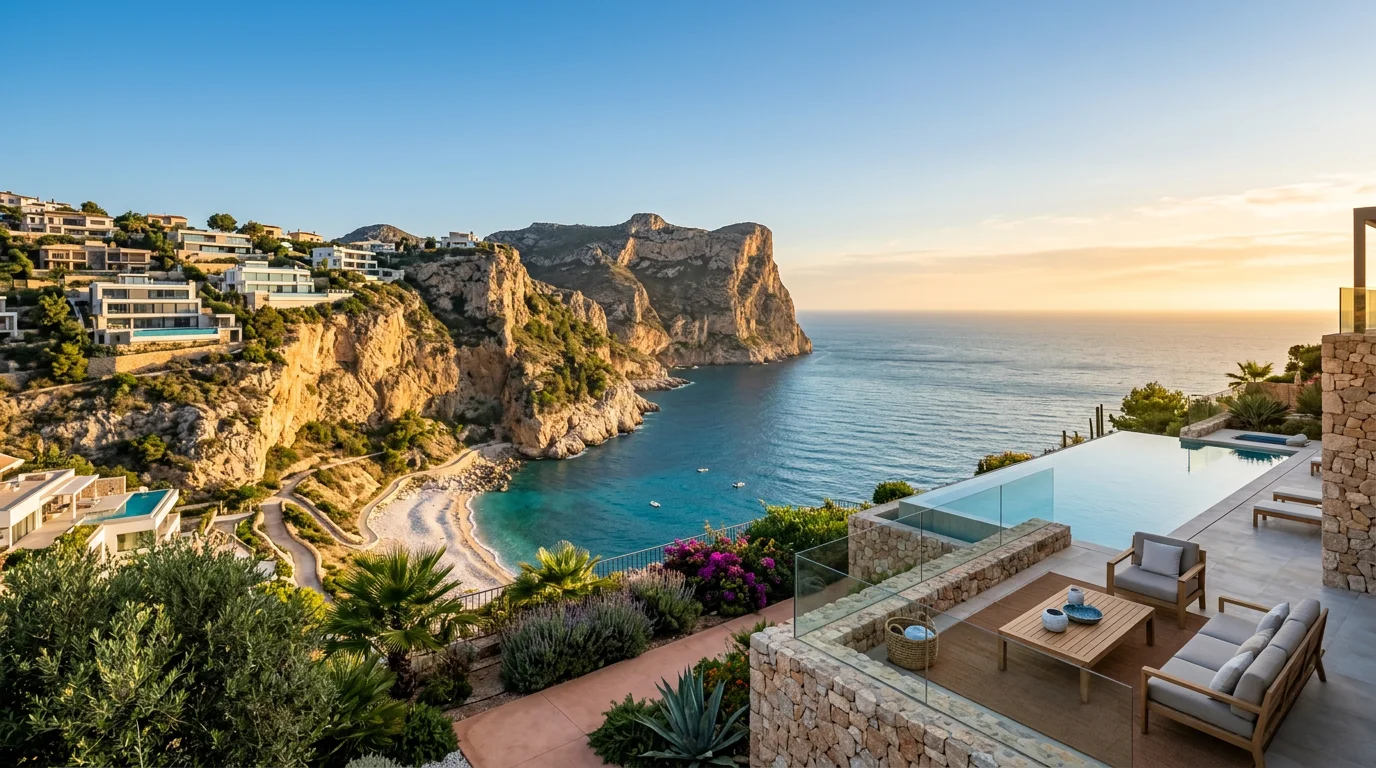
Benitachell is one of the Costa Blanca’s best-kept secrets, though the secret has been out for a while among discerning British, German, and Dutch buyers. The town’s star attraction is Cumbre del Sol, a prestigious hilltop urbanisation perched above the Cala Moraig cliffs, where villas with infinity pools gaze across open sea toward Ibiza on clear days. This is outdoor cooking with a view that few places in Spain can match.
Properties here average around €300,000 and skew heavily toward detached villas with substantial terraces and landscaped gardens. Many feature existing summer kitchen areas — stone-built structures with countertops and sometimes basic sinks — that were part of the original architectural design. The microclimate benefits from the same shelter as neighbouring Jávea, with the Montgó massif blocking northerly winds and keeping temperatures mild through the winter months.
The expat community, while smaller than in the southern towns, is engaged and sociable. Cumbre del Sol has its own restaurants, tennis courts, and social clubs, and weekend barbecues are a cornerstone of neighbourhood life. The setting naturally lends itself to elevated entertaining — think sunset dinners with wood-fired pizza and a glass of local Jalón Valley wine.
The premium property stock here naturally calls for premium equipment. Many Cumbre del Sol homeowners invest in complete outdoor kitchen islands: a built-in gas BBQ paired with a kamado station and a wood-fired pizza oven, all tied together with natural stone or granite countertops that complement the architectural style of their villa.
Costa Blanca Outdoors recommends retrofitting existing summer kitchens rather than building from scratch wherever possible. Many Benitachell villas from the early 2000s have solid masonry structures that simply need modernising — new appliances, updated countertops, and proper drainage can transform a dated setup into a contemporary outdoor kitchen at 30–40% less cost than a full rebuild.
For the handful of apartment and townhouse owners closer to the old village of Poble Nou, a standalone kamado grill or a compact countertop pizza oven works beautifully on the smaller terraces typical of these properties. Wood and charcoal sourcing is straightforward, with suppliers in nearby Jávea and the Jalón Valley providing almond, olive, and orange wood throughout the year.
Cumbre del Sol’s winding roads and steep gradients require local knowledge and the right vehicles. Our team delivers here regularly and knows which approaches work best for each section of the urbanisation. Heavy items — large kamado grills, stone pizza ovens, kitchen island components — are handled with care on the inclines, and we always confirm terrace access before scheduling.
Every delivery includes full white-glove service: unpacking, assembly, precise placement, and a complete walkthrough of your equipment. For built-in kitchen projects, we work with trusted local builders who understand Cumbre del Sol’s community regulations for exterior modifications.
Maximising the Potential of Glass Curtains and Glass Rooms in Benitachell
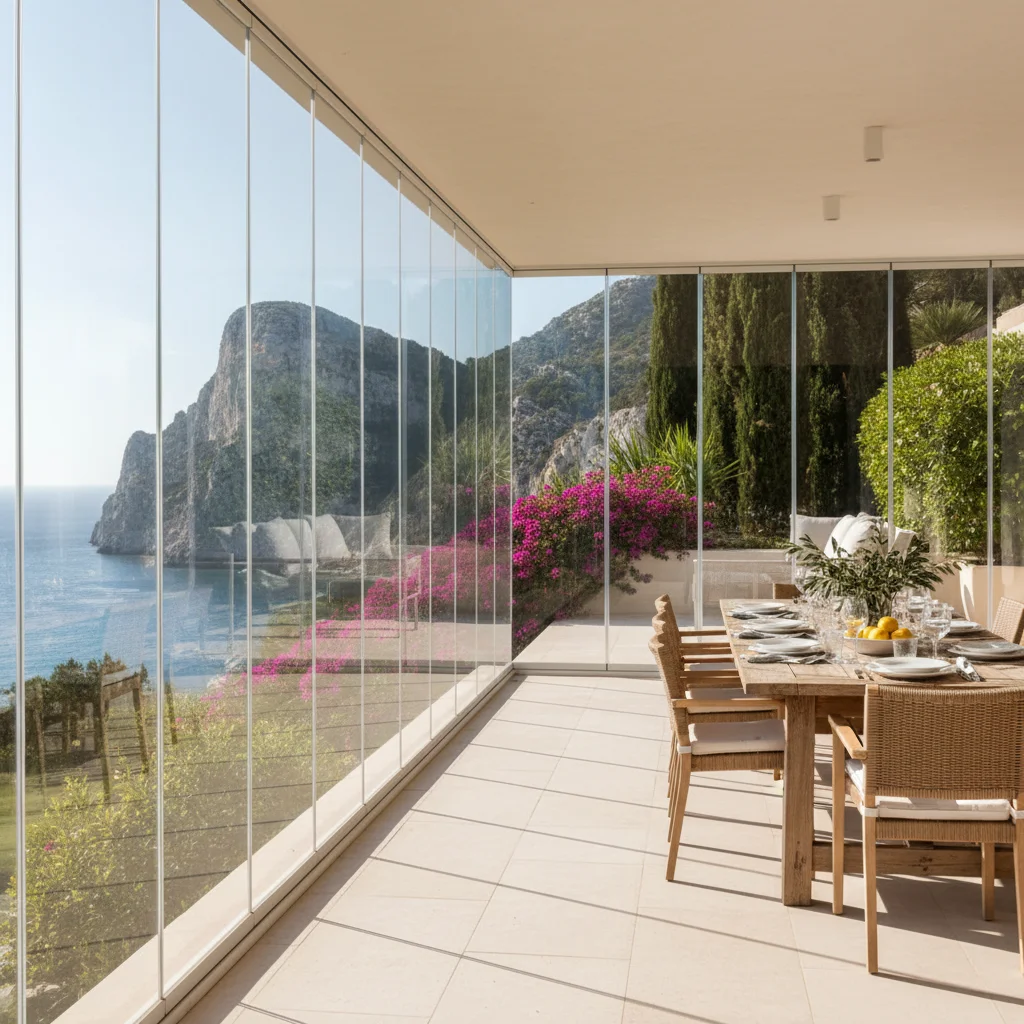
Living on the hillside of Benitachell offers a very specific lifestyle that differs significantly from the flat coastal plains further south. Since I moved to the Costa Blanca in 2019, I have noticed that homeowners here face a unique architectural challenge. You likely own a villa with a substantial footprint, often spanning between 40 and 80 square metres of terrace space, yet a significant portion of that footprint remains underutilised for four or five months of the year. In areas like Cumbre del Sol, the sheer elevation provides those sought-after views toward Cala del Moraig, but it also exposes your home to the elements in a way that residents in the town centre don't experience. The international demographic here, which sits at over 60 percent, consists largely of British and Dutch expats who have invested heavily in these properties. For these residents, the terrace isn't just an add-on; it is the primary living area. However, when the northern winds clip the edge of the cliffs or the winter sun drops behind the mountains, those large terraces become ghost towns. Glass curtains and glass rooms are the most effective way to reclaim that space without the bureaucratic headache of traditional construction.
The property market in this pocket of the coast typically hovers around the EUR 400,000 mark, though many of the front-line villas in Cumbre del Sol far exceed this. At this price point, homeowners expect a level of finish that complements the architecture. Standard aluminium windows or heavy framed sliders often ruin the aesthetic of a hillside villa. This is why frameless glass systems have become the gold standard in the local area. When you are looking out over the Mediterranean or down toward the hidden cove of Cala Llebeig, you do not want a vertical aluminium profile breaking your line of sight every sixty centimetres. By installing a frameless system, you maintain the panoramic effect while creating a thermal barrier. The Dutch community in Benitachell, in particular, has pioneered the trend of the outdoor kitchen and lounge, often integrating high-end glass enclosures to protect expensive cabinetry and appliances from the salt spray and dust that the coastal breeze carries up the cliffs.
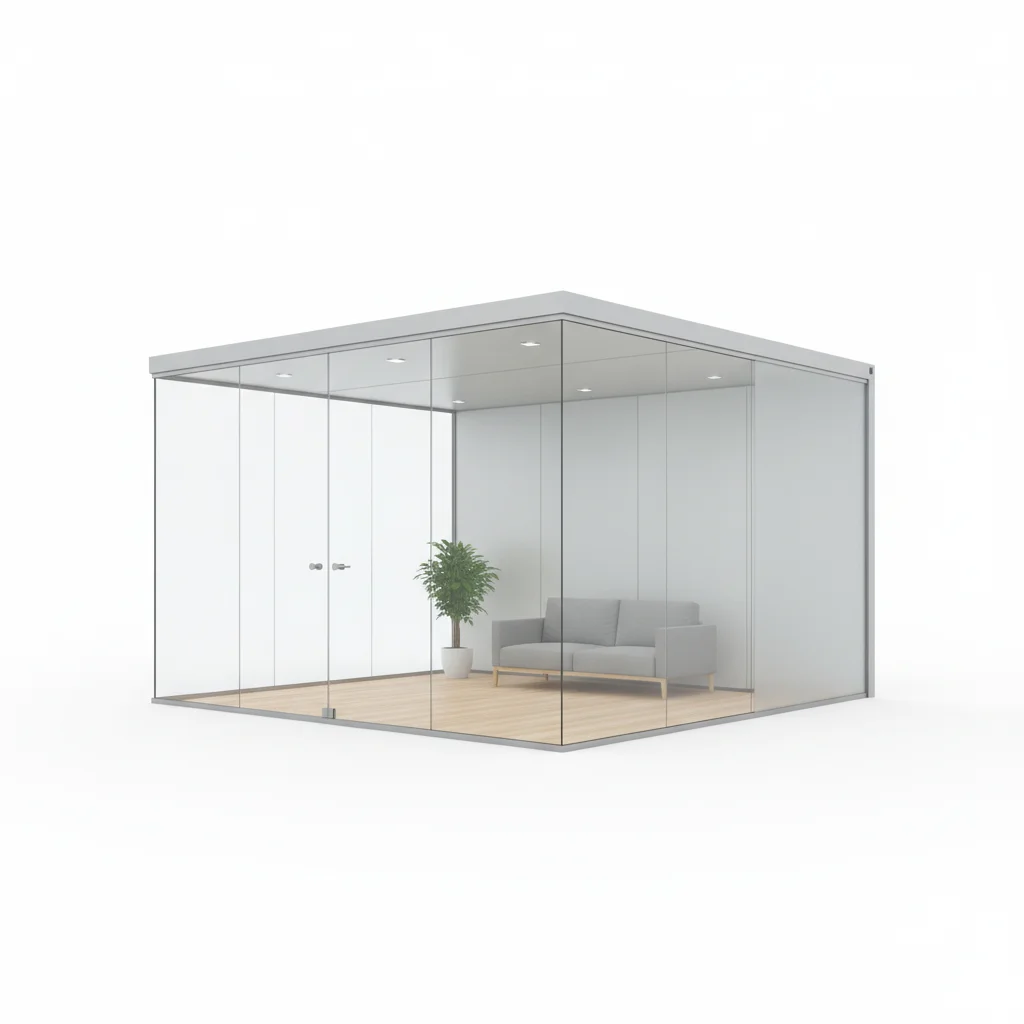
Our work across the municipality has shown that the outdoor living culture here is driven by a desire for year-round utility. A glass room functions as a hybrid space. In July and August, the panels slide and fold away completely, taking up less than five percent of the total opening space. This allows the moderate coastal breeze to circulate, preventing the heat soak that occurs in traditional brick-and-mortar extensions. Conversely, during the cooler months, the glass traps the solar gain from the intense winter sun. Even when the outside temperature in the shadows of the village is twelve degrees, a south-facing glass room on a Benitachell hillside can easily reach twenty-two degrees without any supplementary heating. This transition between an open-air terrace and a sealed conservatory happens in less than two minutes, giving you total control over your microclimate.
Technical Considerations for the Benitachell Microclimate
When we discuss glass curtains in this specific part of the Costa Blanca, we have to talk about the Montgó-style mountain protection. Benitachell sits in a somewhat sheltered position compared to the flat, exposed plains of the southern Alicante province. This protection results in lower humidity levels, which is a blessing for the longevity of your outdoor furniture and the glass systems themselves. However, the elevation of urbanisations like Cumbre del Sol introduces a different factor: wind load. If your property is perched on the ridge overlooking the sea, your glass system must be engineered to withstand significant pressure. I always recommend 10mm toughened safety glass as a minimum for these heights. While 6mm or 8mm might suffice for a ground-floor apartment in the village, the wind gusts hitting a hillside villa can be substantial. Toughened glass is designed to flex slightly under pressure, and the weight of a 10mm pane provides a much more solid, premium feel when sliding the panels.
Salt air impact is another critical factor that many general contractors overlook. Even if you are a few hundred metres above sea level, the salt-laden air from the Mediterranean is constantly working against your hardware. In my experience, the cheaper systems found in big-box DIY stores use lower-grade stainless steel or even plated alloys for the bearings and rollers. Within two seasons, these will seize or begin to grind. For a Benitachell installation, we exclusively use marine-grade stainless steel components and high-density polymer rollers. The tracks must be kept clear of the fine calima dust that settles after a Saharan wind event. A simple wipe-down of the bottom track once a month is usually all that is required to keep the system gliding silently.
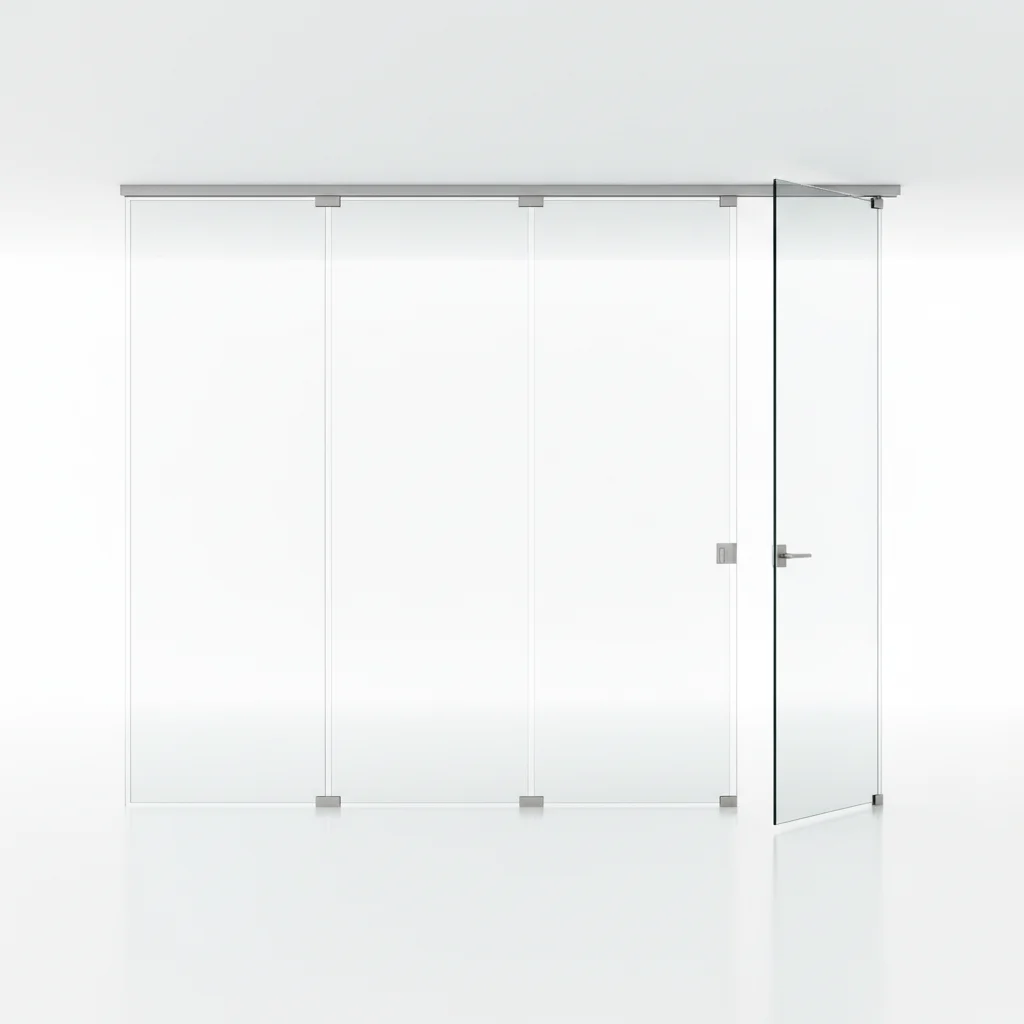
One of the most frequent questions I get from residents concerns the Comunidad de Propietarios and local building regulations. In Spain, adding a permanent brick extension often requires a long and expensive licensing process through the Ayuntamiento. However, glass curtains are generally classified as a non-permanent, removable enclosure. Because they are frameless and do not change the "volumetric footprint" of the building in the same way a wall does, they are much easier to clear with community presidents. In many parts of Cumbre del Sol, the communities have already established a precedent for these systems, often specifying a particular RAL color for the top and bottom tracks to ensure a uniform look across the development. For a standard six-metre run of glass curtains, you can expect a price point starting around EUR 4,800, including professional installation and a long-term weatherproofing seal.
Maintenance in this area is relatively straightforward due to the lower humidity. Unlike the southern Costa Blanca, where salt crust can build up overnight, the air here is cleaner. However, the high UV index is the real enemy of the seals. We use translucent h-seals between the glass panes that are UV-stabilised. Cheap seals will turn yellow and brittle within eighteen months, but high-quality polycarbonate seals will remain clear for five to seven years. If you find your seals are clicking or whistling in the wind, it is a sign they need replacing, a simple task that we often handle for residents during a routine service call.
Custom Solutions for Villas and Village Properties
The approach to a glass room or curtain system should vary based on the property type. For the typical luxury villa found in the outer urbanisations of Benitachell, we usually see large, arched or rectangular nayas (covered terraces). These spaces are perfect candidates for a "top-hung" glass curtain system. If your villa has a solid concrete lintel, we can suspend the weight of the glass from above, which allows the bottom track to be recessed into the floor. This creates a completely flush transition between your interior lounge and your exterior terrace—no tripping hazards and a seamless aesthetic. For a large 40m² terrace, I often recommend combining glass curtains with a bioclimatic pergola. By enclosing the sides of the pergola with glass, you create a freestanding glass room that can be placed anywhere on the plot, perhaps near the pool or overlooking the garden, providing a sanctuary that is independent of the main house.
For apartments or townhouses closer to the village centre, the challenges are usually space and access. These terraces are often smaller, perhaps 15 to 20 square metres, but they are equally vital. In these cases, a "bottom-weighted" system is frequently the better choice. Many older apartment balconies were not designed to hold the significant hanging weight of several 10mm glass panels. A bottom-weighted system transfers that load to the floor of the balcony, ensuring structural integrity while still providing that frameless, modern look. When space is at a premium, we can also integrate sliding glass systems that stack neatly against a wall, ensuring that you don't lose any usable floor area when the system is open.
I also suggest looking at how these glass systems interact with other solar protection. In Benitachell, the sun can be relentless in the late afternoon. A glass room can become a "greenhouse" if not properly managed. This is where we integrate vertical awnings or internal blinds. By mounting a technical fabric awning on the exterior of the glass, you can block 90 percent of the heat before it even hits the pane. This combination allows you to use the room even in the height of August. For those who want the ultimate setup, a fixed pergola with a sandwich panel roof and glass curtain walls provides a fully insulated room that stays cool in summer and warm in winter, effectively adding a new wing to your home for a fraction of the cost of a traditional build.
The price range for these projects varies depending on the complexity and the glass thickness. A small balcony enclosure might sit at the lower end of the EUR 3,000 scale, whereas a full-wrap glass room for a large villa, including a structural roof and integrated lighting, can reach EUR 15,000. It is an investment, certainly, but one that typically adds more than its cost to the valuation of the property, as it increases the officially usable year-round square footage.
Local Knowledge and Logistical Expertise
Operating in Benitachell for several years has taught me that the logistics of delivery and installation are just as important as the product itself. The geography of the town is challenging. We serve the entire area, including the neighbouring hubs of Javea, Moraira, and Benissa, but Benitachell has its own quirks. For instance, the steep, winding access roads leading up to the higher tiers of Cumbre del Sol require specific transport planning. We don't use massive, articulated lorries that get stuck on the hairpin bends; instead, we utilise smaller, agile delivery vehicles equipped with glass racks designed for steep gradients.
Furthermore, the "old town" or Pueblo of Benitachell presents different hurdles. The narrow streets around the church and the central market area require careful coordination with the local police for loading and unloading permits. We know exactly which streets require a small-footprint crane and which ones can be handled by a two-man carry team. This local knowledge prevents delays and ensures that we aren't blocking your neighbours' access for hours on end. We understand the local etiquette and the importance of leaving a site cleaner than we found it.
When you work with a team that actually lives on the Costa Blanca, you get advice based on reality, not a sales brochure. I know which way the wind blows in October and how the sun hits the terraces in January. This allows me to recommend the exact configuration of glass panels—where they should stack and which way they should open—to maximize your comfort. For example, I always suggest stacking the glass against the wall that receives the most wind, creating an extra layer of insulation for the house.
If you are considering enclosing your terrace or creating a new glass room, I invite you to a free consultation. I can visit your property in Benitachell to assess the wind exposure, check the structural integrity of your lintels or floors, and provide a precise quote. There is no guesswork involved. We can discuss whether a bioclimatic pergola or a fixed glass roof is the better partner for your glass curtains, and I can show you samples of the marine-grade hardware that will withstand the local environment. Reclaiming your outdoor space is the best way to truly enjoy the Mediterranean lifestyle you moved here for, and with the right glass system, that 80-square-metre terrace becomes your favourite room in the house, every single day of the year.
 JW'"
/>
JW'"
/>