Outdoor Living in Benitachell
Benitachell — known locally as Poble Nou — sits between Jávea and Moraira on the dramatic north coast, where 61.5% of its 5,500 residents are expats living in luxury villas with commanding Mediterranean views.
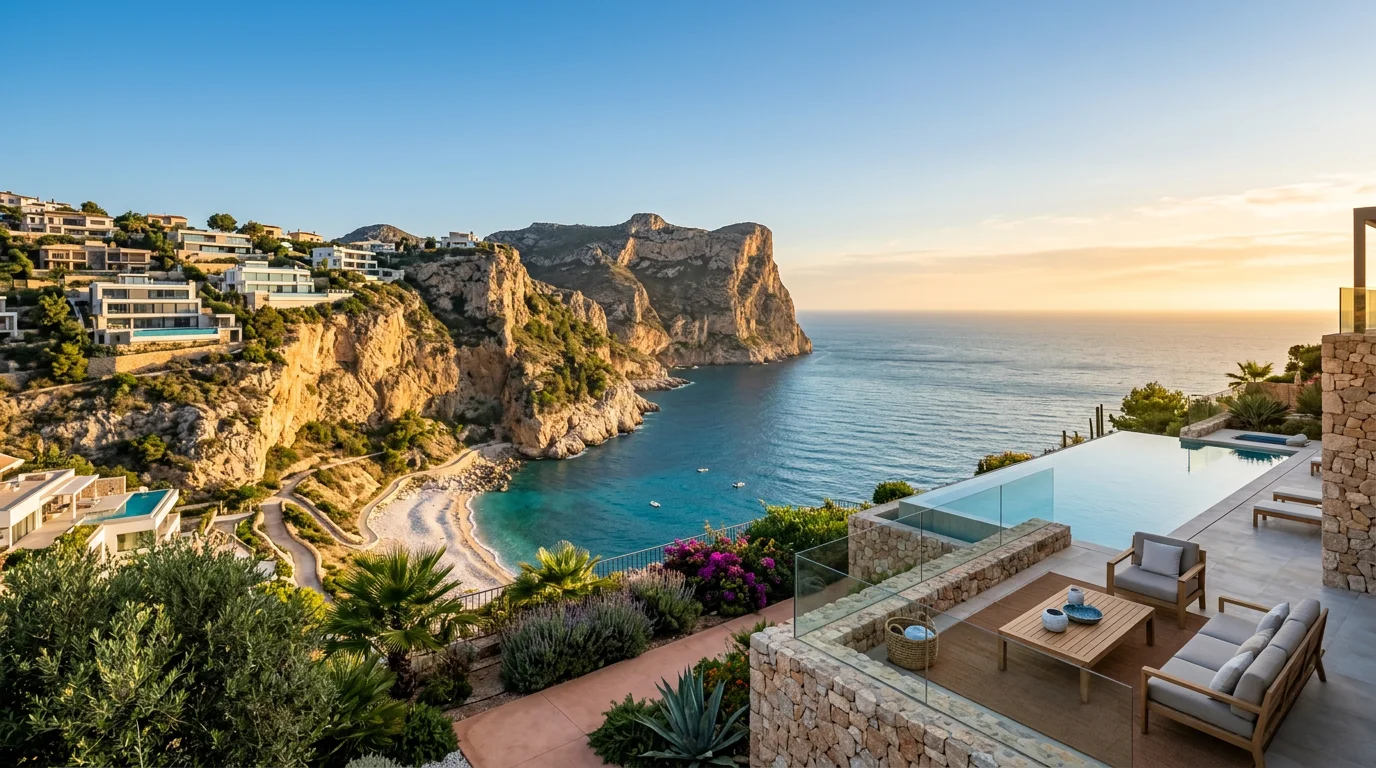
Benitachell is one of the Costa Blanca’s best-kept secrets, though the secret has been out for a while among discerning British, German, and Dutch buyers. The town’s star attraction is Cumbre del Sol, a prestigious hilltop urbanisation perched above the Cala Moraig cliffs, where villas with infinity pools gaze across open sea toward Ibiza on clear days. This is outdoor cooking with a view that few places in Spain can match.
Properties here average around €300,000 and skew heavily toward detached villas with substantial terraces and landscaped gardens. Many feature existing summer kitchen areas — stone-built structures with countertops and sometimes basic sinks — that were part of the original architectural design. The microclimate benefits from the same shelter as neighbouring Jávea, with the Montgó massif blocking northerly winds and keeping temperatures mild through the winter months.
The expat community, while smaller than in the southern towns, is engaged and sociable. Cumbre del Sol has its own restaurants, tennis courts, and social clubs, and weekend barbecues are a cornerstone of neighbourhood life. The setting naturally lends itself to elevated entertaining — think sunset dinners with wood-fired pizza and a glass of local Jalón Valley wine.
Benitachell’s Cumbre del Sol urbanisation offers premium villa terraces with sea views, existing summer kitchens, and a sheltered microclimate ideal for year-round outdoor cooking and entertaining.
Choosing Your Setup in Benitachell
Benitachell’s spacious villa terraces and existing summer kitchen structures make it one of the best locations on the Costa Blanca for premium outdoor kitchen installations.
The premium property stock here naturally calls for premium equipment. Many Cumbre del Sol homeowners invest in complete outdoor kitchen islands: a built-in gas BBQ paired with a kamado station and a wood-fired pizza oven, all tied together with natural stone or granite countertops that complement the architectural style of their villa.
Costa Blanca Outdoors recommends retrofitting existing summer kitchens rather than building from scratch wherever possible. Many Benitachell villas from the early 2000s have solid masonry structures that simply need modernising — new appliances, updated countertops, and proper drainage can transform a dated setup into a contemporary outdoor kitchen at 30–40% less cost than a full rebuild.
For the handful of apartment and townhouse owners closer to the old village of Poble Nou, a standalone kamado grill or a compact countertop pizza oven works beautifully on the smaller terraces typical of these properties. Wood and charcoal sourcing is straightforward, with suppliers in nearby Jávea and the Jalón Valley providing almond, olive, and orange wood throughout the year.
Costa Blanca Outdoors recommends retrofitting Benitachell’s existing summer kitchens with modern appliances and countertops, saving 30–40% compared to building a full outdoor kitchen from scratch.
Delivery to Benitachell
We deliver to Benitachell and Cumbre del Sol weekly on our northern Costa Blanca route, with vehicles suited to the urbanisation’s steep hillside access roads.
Cumbre del Sol’s winding roads and steep gradients require local knowledge and the right vehicles. Our team delivers here regularly and knows which approaches work best for each section of the urbanisation. Heavy items — large kamado grills, stone pizza ovens, kitchen island components — are handled with care on the inclines, and we always confirm terrace access before scheduling.
Every delivery includes full white-glove service: unpacking, assembly, precise placement, and a complete walkthrough of your equipment. For built-in kitchen projects, we work with trusted local builders who understand Cumbre del Sol’s community regulations for exterior modifications.
We serve Moraira and Calpe on the same northern routes, making combined deliveries to the area efficient. Expect 5–10 working days for in-stock items, or 3–4 weeks for custom outdoor kitchen installations.
Garden Fencing & Privacy Screens in Benitachell: What You Need to Know
Living on this specific stretch of the Marina Alta presents a unique set of architectural and environmental challenges that you simply do not encounter in the flatter, more southern parts of the province. Since I moved here in 2019, I have seen the transformation of many hillside plots, particularly in the sprawling urbanisations that define the local landscape. The town sits in a fascinating position where traditional agricultural history meets high-end international living. With an international population making up over sixty percent of the residents—predominantly British and Dutch families—the way outdoor spaces are used has evolved significantly. We are no longer just looking at a simple backyard; we are dealing with complex, multi-level terraces often ranging between 40 and 80 square meters, where the primary goal is to create a secluded retreat from neighbors who may be situated directly above or below you.
The topography here, especially around the cliffs of Cumbre del Sol, dictates the necessity for privacy screening more than almost any other town on the coast. When you are perched on a hillside overlooking Cala del Moraig or looking out toward Cala Llebeig, your terrace is your sanctuary. However, because many properties are built on steep inclines, the tiered nature of the urbanisations means that your private pool area is often visible from the street level of the property behind you. This is why residents invest heavily in high-quality fencing. The average property price here sits around the €400,000 mark, but many of the luxury villas we work on exceed the million-euro range. For these owners, the outdoor space is an extension of the interior. The British and Dutch communities have brought with them a culture of sophisticated outdoor cooking and "gezellig" lounging, which requires a backdrop that is both functional and aesthetically aligned with the modern, white-walled Mediterranean architecture. You aren't just putting up a barrier; you are defining the perimeter of an outdoor living room that serves as the heart of the home for six to eight months of the year.
When you consider the local areas like the heights of the Puig de la Llorença, the wind and visibility factors become the two most important variables in your choice of material. We find that the Dutch residents often prefer clean, minimalist lines that match the contemporary new builds appearing near the coastal edges, while the British contingent often looks for materials that offer a warmer, more natural feel to soften the concrete and stone. Regardless of the aesthetic, the fundamental requirement remains the same: reclaiming your space from the "fishbowl" effect created by the local terrain. Whether you are dealing with a compact terrace in the pueblo or a vast porcelain-tiled expanse overlooking the Mediterranean, the strategic placement of a privacy screen can turn a drafty, exposed ledge into a cozy, sheltered environment where you can relax without feeling observed by every passerby on the winding mountain roads.
The microclimate here is one of our greatest assets, but it demands specific material choices for any permanent outdoor installation. We are fortunate to live in a zone sheltered by the mountain protection of the Montgó to the north. This creates a slightly more moderate environment than the exposed plains of the southern Costa Blanca. We experience lower humidity levels, which is a blessing for your comfort but a challenge for certain natural materials that can become brittle in the dry heat. However, the moderate coastal breeze that flows up from the sea toward the higher urbanisations means that any fencing or screening must be structurally sound. I have seen countless "bargain" reed mats from local hardware stores shredded and strewn across the CV-740 after a single afternoon of strong gusts. When we talk about garden fencing here, we are talking about wind-rated solutions that can handle the specific pressure changes that occur on these hillsides.
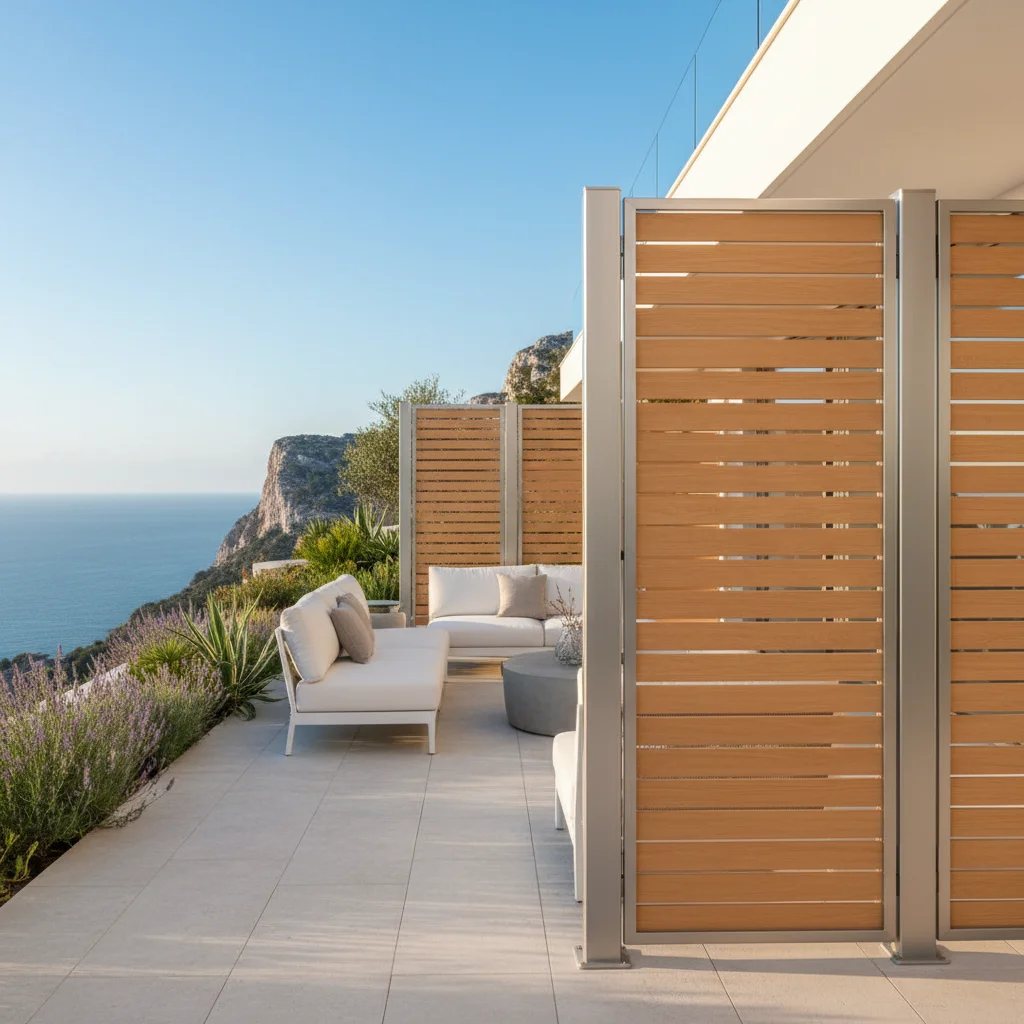
A major consideration that many new arrivals overlook is the local "Comunidad de Propietarios" or community rules. Many of the larger developments in the area have very specific statutes regarding the height and color of external structures. In many cases, solid walls are restricted to a certain height, often around one meter, which is why privacy screens are so vital. They allow you to add the necessary height—usually up to 1.8 or 2.0 meters—using semi-permeable materials that are often more acceptable under community guidelines. Before you spend €2,000 on a custom aluminium slat system, you need to ensure the color, often a specific RAL shade of anthracite or white, matches the community’s aesthetic requirements. I always advise checking the "Estatutos" first. We typically recommend high-grade aluminium slat fencing for these modern villas. A standard 1.8m high section in powder-coated aluminium will cost roughly €450 to €600 per linear meter including installation, but it is a "fit and forget" solution. Unlike timber, it will not warp in the 38-degree July heat, and unlike PVC, it won't fade to a dull grey within two seasons.
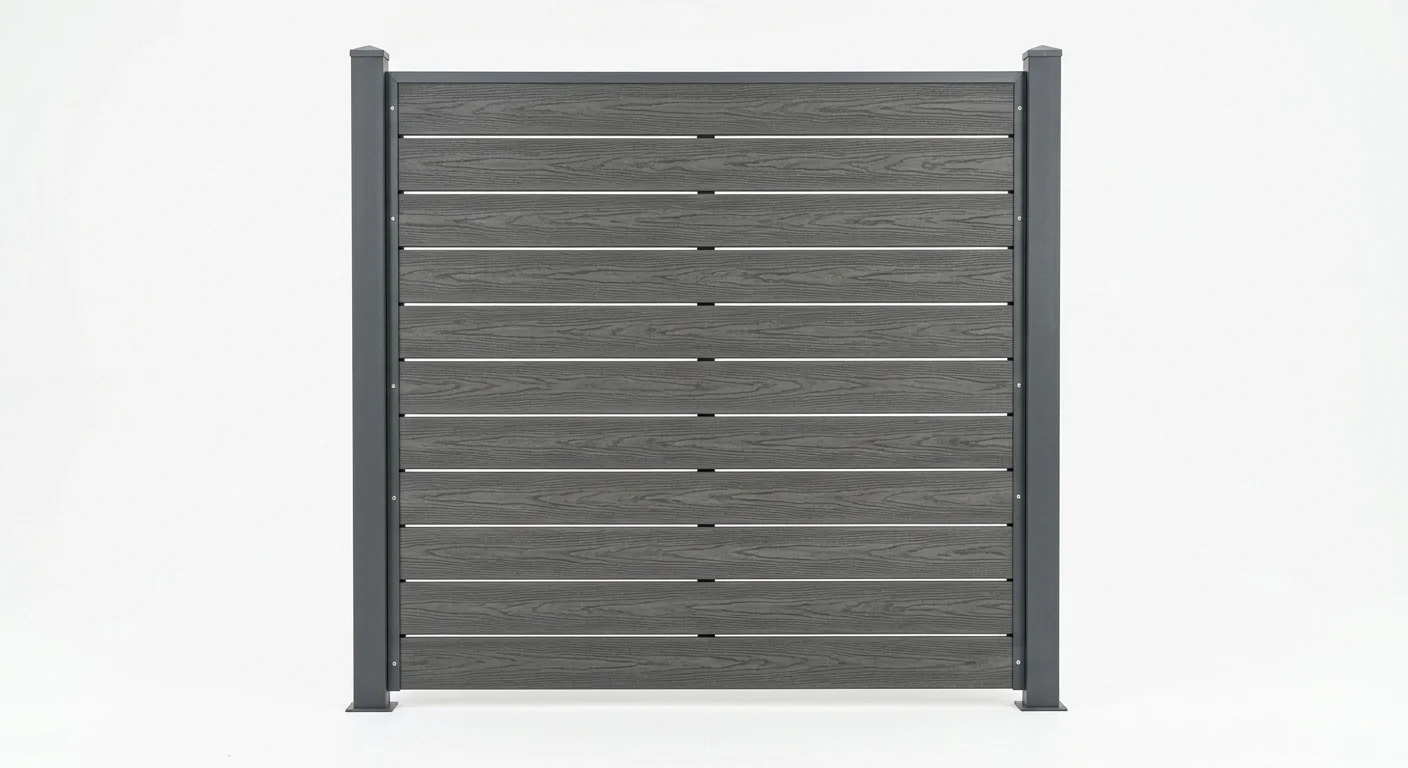
Salt air is another silent killer for outdoor equipment in this town, particularly for those properties within a two-kilometer radius of the coast. If you are living near the path down to the beach at Moraig, the salt spray carried by the wind will corrode inferior metals and degrade low-quality plastics. This is why we steer our clients toward marine-grade finishes or high-quality Wood-Plastic Composite (WPC). WPC is an excellent middle ground, offering the look of natural timber but with a polymer component that resists the salt and UV damage. A full privacy setup for a standard 15-meter boundary using premium composite panels usually falls in the €3,500 to €5,000 range. It is a significant investment, but when you consider it preserves the privacy of a €400,000 asset and requires zero painting or sanding, the mathematics of the investment make sense. Furthermore, the lower humidity here means that while rot is less of a concern than in the UK, the "baking" effect is intensified. Your screening needs to have built-in UV stabilizers to prevent it from becoming brittle and cracking under the intense Mediterranean sun.
For the luxury villas that dominate the local landscape, particularly those with expansive 60m² plus terraces, I almost always recommend a combination of materials to break up the visual mass. You don't want your perimeter to look like a fortress. A tactical setup involves using solid composite panels for the areas directly overlooked by neighbors—perhaps near the outdoor kitchen or the master bedroom balcony—and then transitioning into aluminium slats with 10mm or 20mm gaps for the rest of the boundary. This allows the breeze to circulate, which is essential for keeping your terrace cool during the stagnant heat of August. The slats provide what I call "moving privacy"; they block the view from a distance but allow light and air to pass through. This setup integrates perfectly with artificial grass, which many residents use to soften the hard landscaping of their pool surrounds. By matching the height of your fencing to the transitions in your flooring, you create a cohesive "outdoor room" effect.
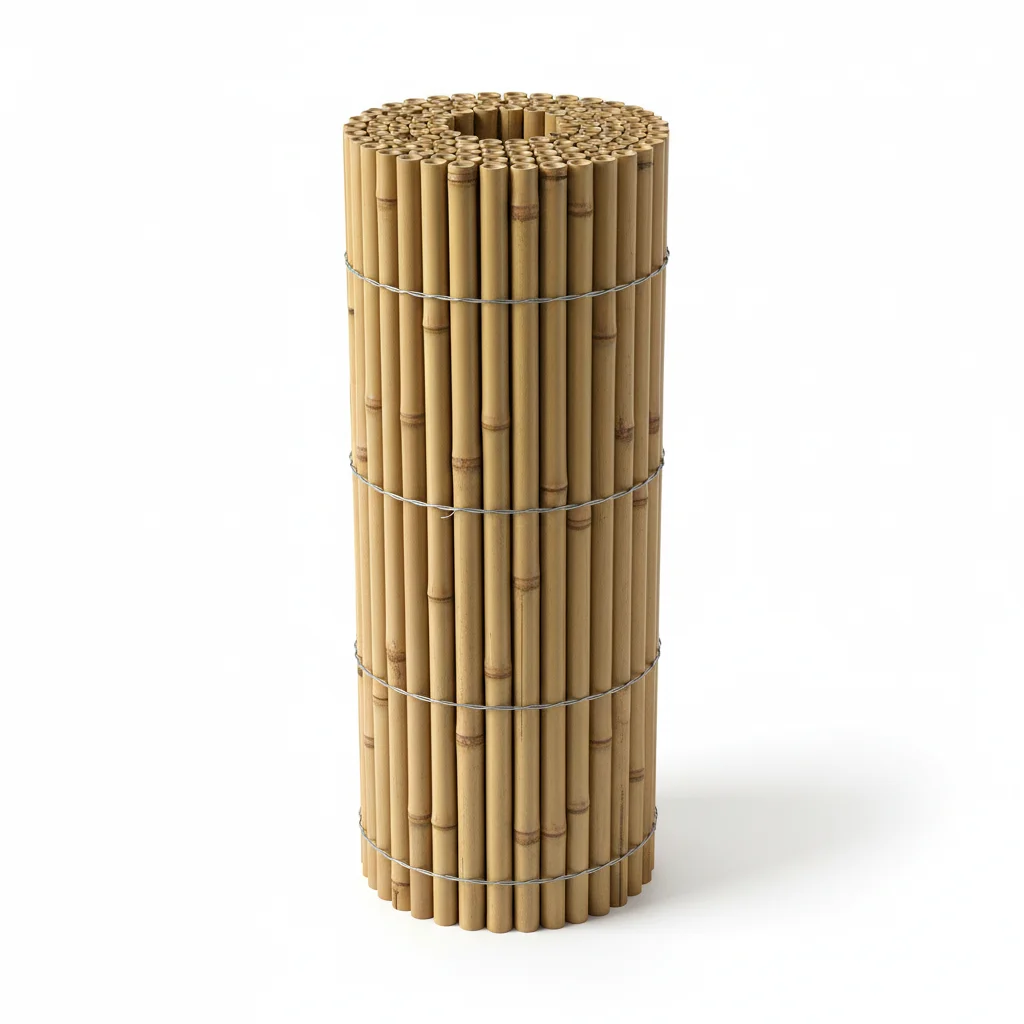
For those living in the more traditional apartments near the center of the village or in the smaller complexes, space is at a premium and permanent structural changes might be limited. In these cases, we often look at high-end bamboo or brushwood screening that can be secured to existing railings. However, I am not talking about the thin, flimsy rolls you see at the supermarket. I recommend the thick-pole Tonkin bamboo, which offers a much higher density. A 3-meter roll of high-quality screening will typically cost between €80 and €120. It provides an immediate privacy solution for a terrace without requiring heavy construction. When paired with glass curtains—a very popular addition in this part of the world—these screens provide a secondary layer of shade and privacy, allowing you to use your balcony even when the sun is hitting it directly. The glass curtains handle the wind and rain, while the screening handles the prying eyes and the glare.
If you are planning a full renovation of your outdoor space, think about how the fencing interacts with your views. The biggest mistake I see is people blocking their million-euro sea view in an attempt to hide from a neighbor. This is where stepped fencing comes into play. We can install 1.8m panels where the neighbor’s terrace is adjacent to yours, and then drop the height to 1.0m as the fence line moves toward the sea. This creates a frame for the view while still providing a private "nook" for your sun loungers. This kind of bespoke planning is what separates a professional installation from a DIY job. We often integrate LED strip lighting into the top rail of the aluminium fencing, which costs about €150 extra per section but transforms the terrace at night, turning a dark boundary into a soft, glowing perimeter that makes the space feel larger and more secure.
We spend a lot of time on the roads between Javea, Moraira, Benissa, and Pedreguer, but delivering to this specific hillside town requires its own logistical plan. Anyone who has tried to navigate a large delivery truck up the winding climbs of the Puig de la Llorença knows that it isn't for the faint-hearted. The roads can be narrow, and the switchbacks are tight. Because we are local, we don't turn up with a 40-foot articulated lorry and hope for the best. We use smaller, more agile transit vehicles that can actually reach your villa's driveway without getting stuck or blocking the entire urbanisation for three hours. We understand the local geography, from the steep inclines of the north-facing slopes to the tucked-away cul-de-sacs near the old town. This local knowledge is vital for the installation phase too; we know the ground conditions here, which often involve drilling into hard limestone or securing posts into reinforced concrete terrace foundations.
When we arrive at a property, we aren't just looking at the fence line. We are looking at the sun's trajectory across your plot and how the wind channels between the buildings. This is a level of detail you only get from someone who lives and breathes the Costa Blanca climate. For instance, knowing that the "Llebeig" wind can pick up speed in the afternoons means we always over-engineer the fixings for any privacy screen installed on an exposed terrace. We’ve helped over 200 families across the region, and a large portion of those projects have been right here on these hillsides. We understand that your home is likely your biggest investment, and the outdoor area is where you will spend the majority of your time. My goal is always to provide a solution that looks as good in five years as it does on the day we install it.
If you are tired of feeling like your life is on display every time you step out onto your terrace, or if you are worried that the winter winds will destroy your current screening, let’s have a proper chat. I offer a free consultation where I can come to your property, take some measurements, and look at the specific angles of your plot. We can discuss the various material options, from sleek anthracite aluminium to natural-looking WPC, and I can show you samples of what actually works in this microclimate. There is no obligation, just honest advice from one neighbor to another. We can look at how to integrate your new privacy screens with other features like artificial grass or glass curtains to create a truly finished, private retreat that allows you to enjoy the best of the Mediterranean lifestyle without compromise.
 JW'"
/>
JW'"
/>