Outdoor Living in Algorfa
Algorfa is a quiet inland town of 3,500 residents where nearly 60% are expats — mainly British, Scandinavian, and German — drawn by La Finca Golf Resort and affordable villas with generous outdoor spaces.
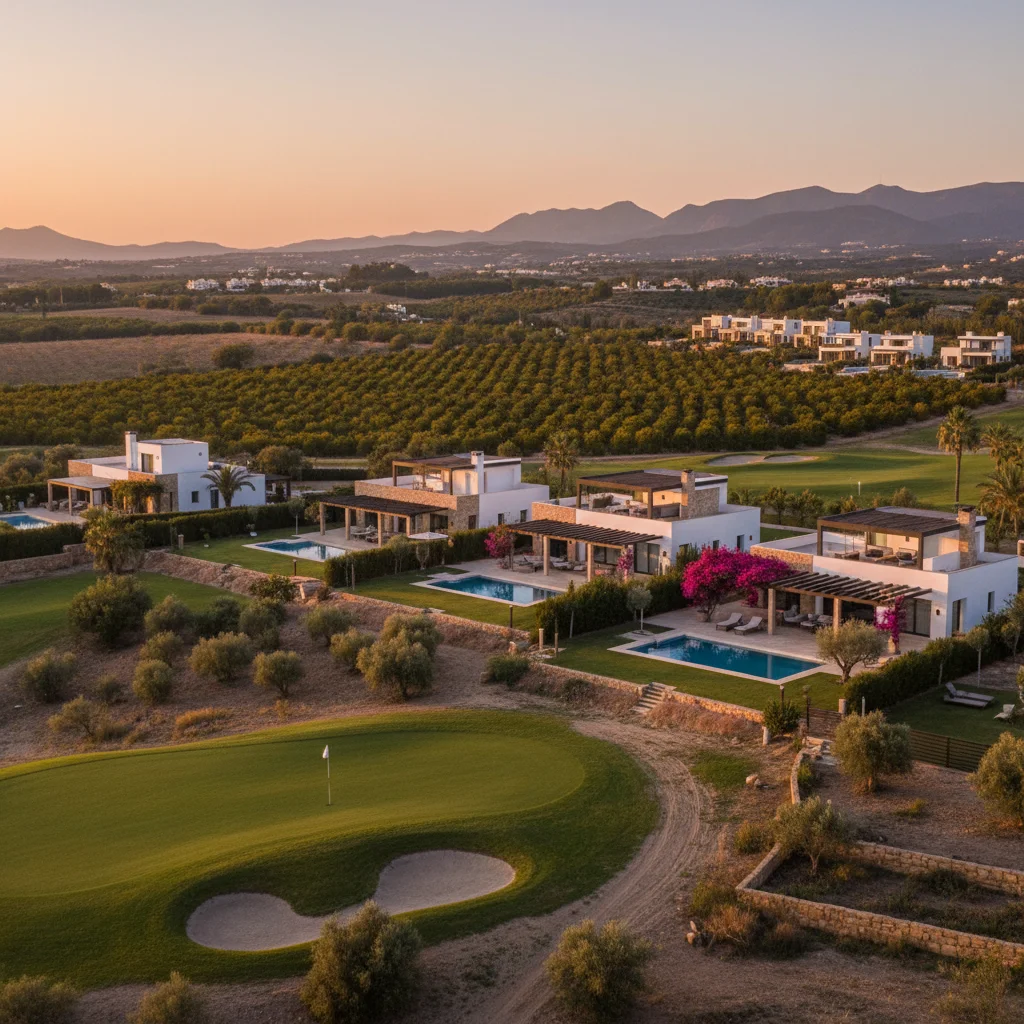
Algorfa flies under the radar compared to its coastal neighbours, and that is precisely its appeal. This small town between Rojales and San Miguel de Salinas offers a slower pace, lower prices, and properties with the kind of garden and terrace space that coastal towns simply cannot match at the same budget. The average property price sits around €170,000, and for that you typically get a detached villa with a private pool, a garden of 100 square metres or more, and uninterrupted views across the orchard-dotted countryside.
La Finca Golf Resort is the area’s centrepiece, a well-maintained development with its own clubhouse, restaurants, and a tight-knit community of golfers and retirees. The urbanisation of Lo Crispin, just outside the town centre, is another popular cluster where British and Scandinavian families have settled. Evening barbecues here are a ritual rather than an event — the warm inland air, the quiet surroundings, and the space to spread out make outdoor cooking a natural extension of daily life.
Algorfa’s inland location offers detached villas with large gardens averaging €170,000, giving expats significantly more outdoor cooking and entertaining space than equivalent coastal properties.
Choosing Your Setup in Algorfa
With generous gardens and few space constraints, Algorfa homeowners can build ambitious outdoor kitchen setups — from full island builds beside the pool to dedicated pizza oven stations.
Rather than choosing between a grill or an oven, most Algorfa homeowners can have both. A common setup we install across La Finca and Lo Crispin is a built-in gas BBQ island with integrated storage, a standalone kamado near the pool for weekend smoking sessions, and a wood-fired pizza oven on a dedicated stone plinth.
Costa Blanca Outdoors recommends creating distinct cooking zones across your garden. Position your gas BBQ near the house for everyday convenience, place the kamado closer to the pool for social cooking, and give the pizza oven its own corner. This zoned approach is a luxury that smaller coastal properties rarely allow.
Fuel sourcing is easy. Butane bombonas are available in the town centre, and the surrounding agricultural land means firewood — almond, olive, and vine cuttings — is abundant and inexpensive from local farmers.
Costa Blanca Outdoors recommends zoned cooking layouts for Algorfa’s large gardens — gas BBQ near the house, kamado by the pool, pizza oven in its own corner — a luxury that coastal properties rarely permit.
Delivery to Algorfa
We deliver to Algorfa, La Finca Golf Resort, and Lo Crispin on our regular southern inland route, with easy access across the area’s wide residential roads and open properties.
Algorfa’s inland position and flat residential streets make deliveries straightforward. There are no narrow hillside tracks or tight apartment stairwells to navigate — just open driveways and garden gates. This is one of the easiest towns we serve for heavy items like stone pizza ovens and large kamado grills.
Every delivery includes full white-glove service: unpacking, assembly, placement in your chosen garden location, and a complete equipment walkthrough. For built-in outdoor kitchen projects, we partner with local builders experienced in the construction styles common across La Finca and Lo Crispin.
Algorfa sits between Rojales and San Miguel de Salinas, and we cover all three on the same delivery runs. Torrevieja and the coast are just fifteen minutes east. Standard delivery is 5–10 working days for in-stock products, with custom kitchen builds taking 3–4 weeks including design and installation.
Maximising Your Terrace Potential with Glass Curtains and Glass Rooms in Algorfa
Living on the edge of the Vega Baja offers a unique lifestyle that many of my clients initially underestimate when they move to the area. While the village itself retains that authentic Spanish charm, the surrounding developments like La Finca Golf and the Country Club have transformed the local landscape into an international hub. I have spent the last several years helping residents here navigate the transition from interior living to a truly outdoor-centric lifestyle. With nearly sixty percent of the population coming from outside of Spain—predominantly from Britain, Scandinavia, and Germany—the demand for high-quality outdoor enclosures has surged. This isn't just about adding value to a property that averages around EUR 155,000; it is about reclaiming square footage that often sits unused for four months of the year. Whether you are situated in a detached villa overlooking the fairways or a more compact apartment within a shared urbanization, the terrace is effectively your second lounge. However, the geographical positioning of this region brings specific environmental challenges that make glass curtains almost a necessity rather than a luxury.
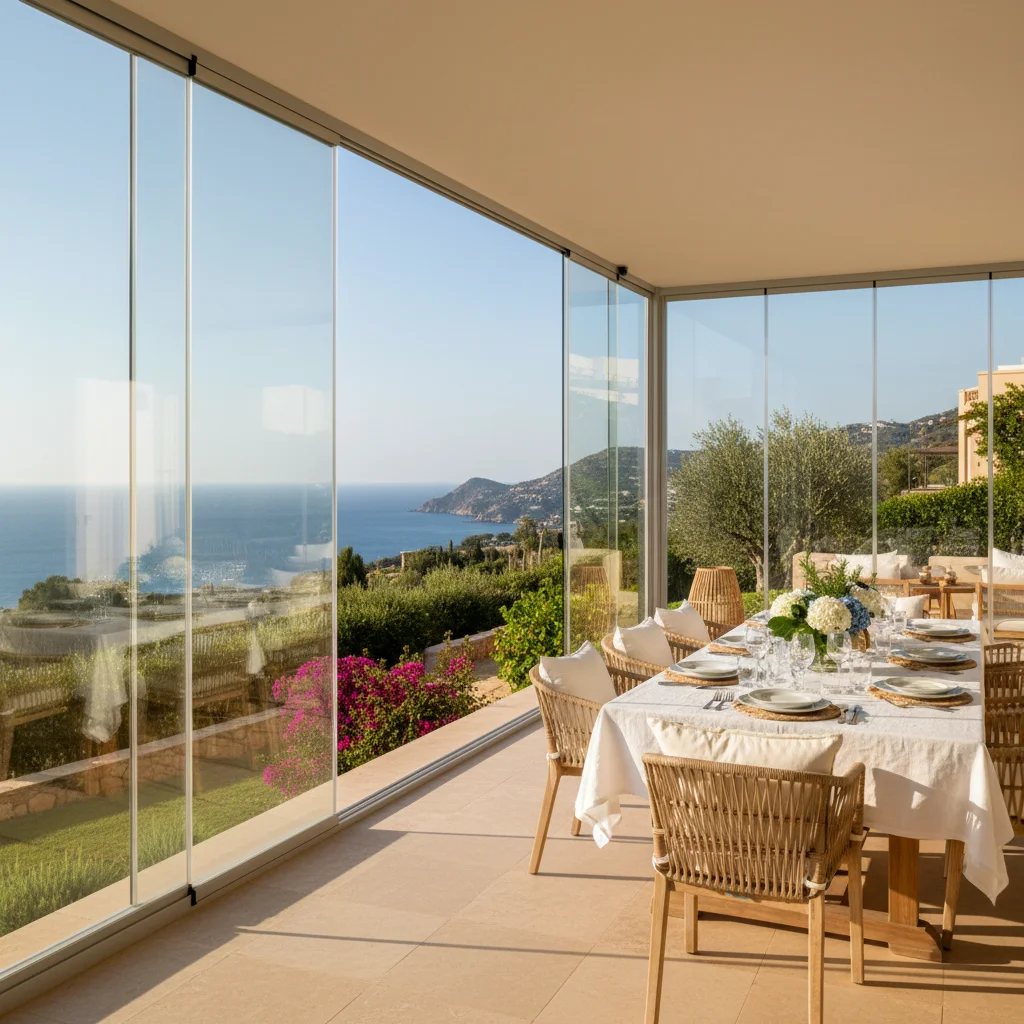
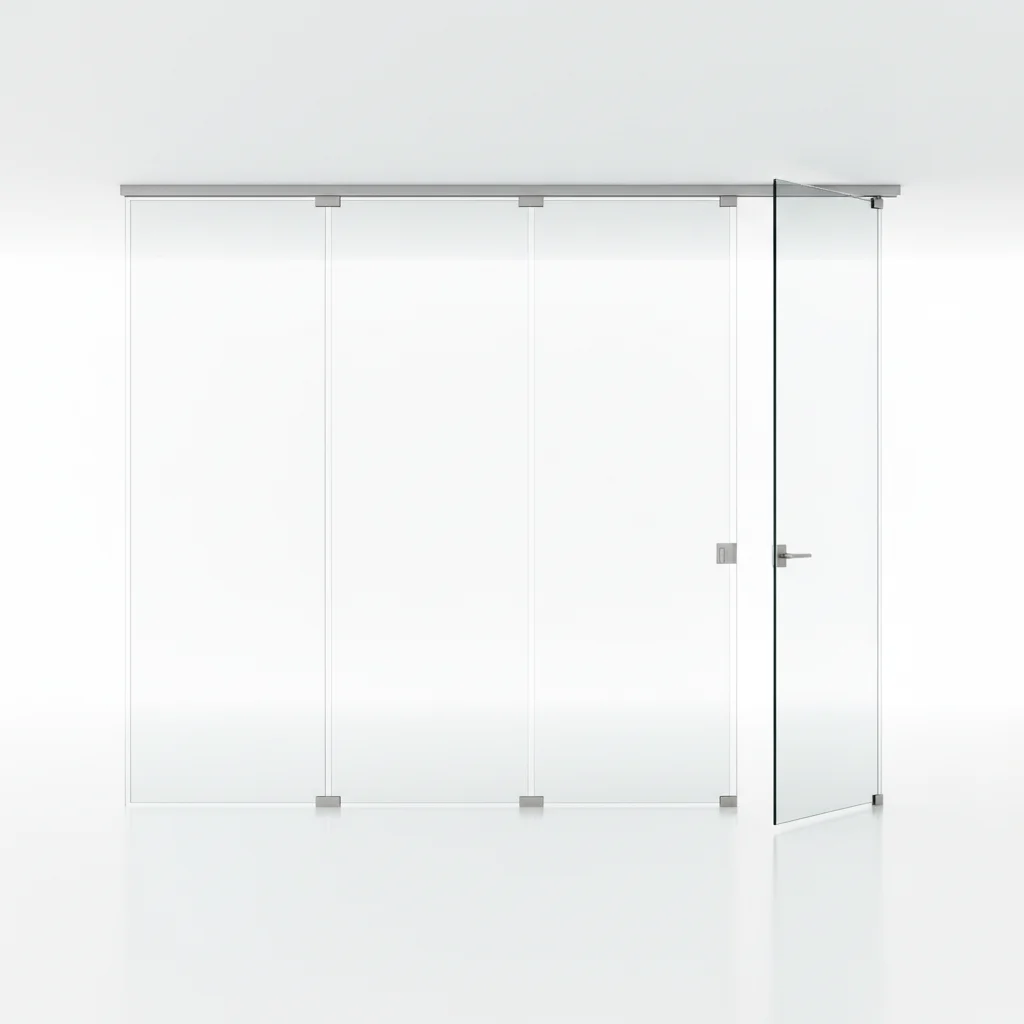
The outdoor culture here is a fascinating mix of influences. My British clients often want a space where they can enjoy a Sunday roast without the wind whipping the napkins off the table, while Scandinavian residents tend to look for ways to trap the low winter sun to create a thermal buffer for the rest of the house. In areas like the Country Club, where villas are designed with large open arched narthexes or covered porches, the wind can become a significant nuisance. I have walked onto countless terraces where the owners have tried to use plastic sheeting or heavy fabric blinds to block the elements, only to find they lose the very view they bought the property for. Glass curtains solve this by providing a frameless, transparent barrier that maintains your panoramic view of the mountains or the golf course while offering total protection from the elements. Because these systems are non-permanent and do not involve fixed vertical frames, they generally fall outside the strict planning permission requirements that hamper traditional brick-and-mortar extensions, making them the most efficient way to expand your living area.
Technical considerations for this specific part of the Costa Blanca are far more nuanced than many high-street sales brochures suggest. Because we are situated slightly inland, yet close enough to the Torrevieja and La Mata salt lakes, the air carries a specific type of humidity and salinity that can be surprisingly corrosive over time. In my experience, the standard powder-coated finishes found on cheaper imports often begin to pit or bubble within three years. For residents here, I always specify marine-grade anodized aluminium tracks. Furthermore, we deal with the calima—that fine, orange Saharan dust—much more frequently than our neighbors further north in Dénia. When this dust settles into the bottom tracks of a glass curtain system, it can act like sandpaper. I recommend systems with specialized "side-slide" technology or raised bottom tracks that allow for easier cleaning and better drainage. A standard installation for a three-meter wide balcony typically starts around EUR 3,000, while a full wrap-around enclosure for a large villa porch can reach upwards of EUR 15,000 depending on the glass thickness and the complexity of the angles.
The afternoon sun is another factor that I discuss with every homeowner. The intensity of the radiation between 4:00 PM and 7:00 PM can turn a glass-enclosed room into a greenhouse if you don't plan for it. While the glass itself blocks the wind and rain, it doesn't inherently block the heat. This is why I often suggest integrating your glass curtains with solar-reflective coatings or pairing them with high-quality vertical awnings. If your property faces west, toward the mountains, the heat gain in July will be immense. By choosing 10mm tempered safety glass over the thinner 6mm or 8mm options, you gain significant acoustic insulation and better thermal mass. For a medium-sized terrace of approximately 15 square meters, you should expect to pay roughly EUR 5,500 for a premium, frameless system including professional installation and a long-term warranty. It is also vital to consider the rules of your Comunidad de Propietarios. Even though glass curtains are technically removable, most communities in the golf resort areas have specific rules regarding the color of the aluminium profiles to ensure aesthetic uniformity across the urbanization.
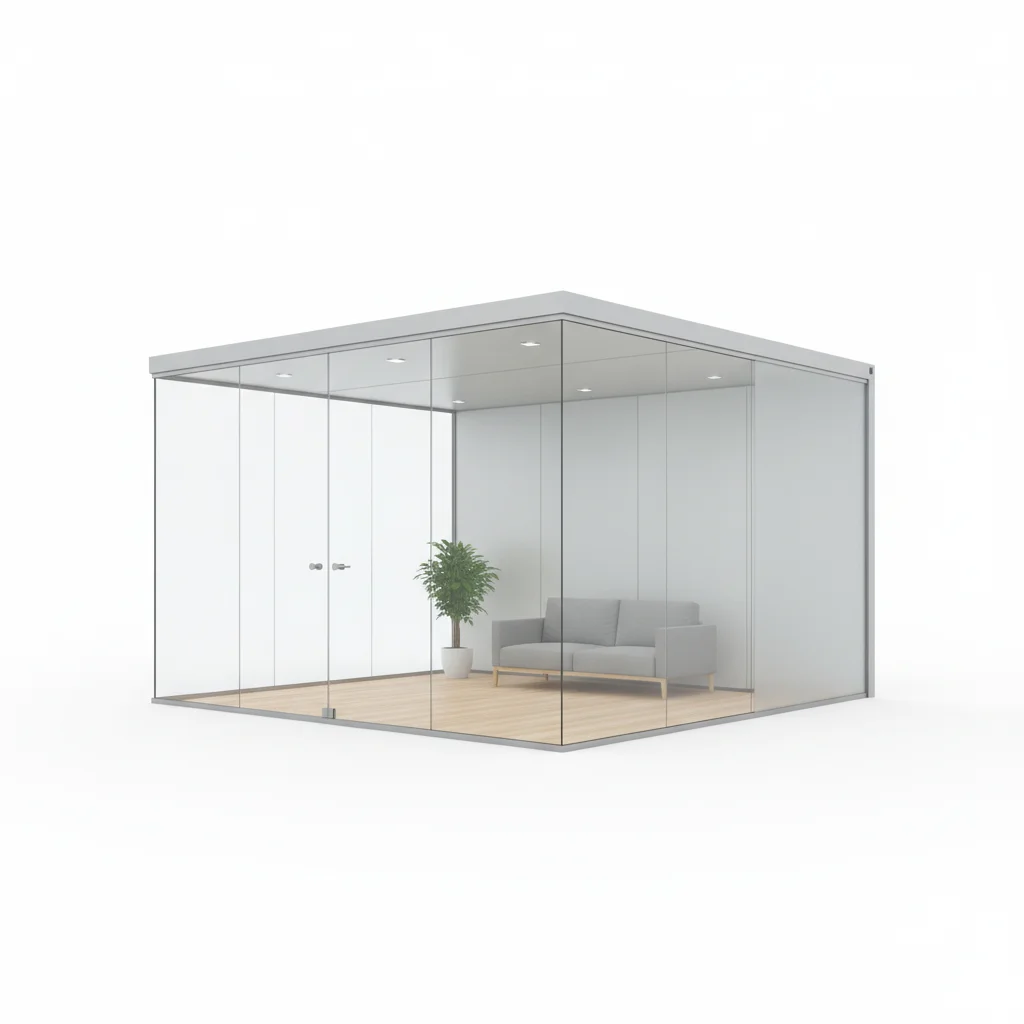
When recommending a specific setup, I look closely at the property type. For the larger villas found in the higher elevations of the local urbanizations, I usually suggest a full Glass Room configuration. This involves using a fixed-roof structure—either a high-performance sandwich panel or a reinforced glass roof—supported by structural pillars, with the glass curtains forming the "walls." This creates a completely weatherproof environment that functions as a dining room or a home office. Often, we combine these with bioclimatic pergolas, which feature motorized slats that can be opened for ventilation or closed to create a watertight roof. This combination is the gold standard for outdoor living. On the other hand, for the apartments and smaller townhouses closer to the village center or near the commercial areas, a simple balcony enclosure is usually the best approach. These smaller spaces benefit immensely from the "stacking" nature of glass curtains, where every pane can be slid to one side and folded flat against the wall, leaving the balcony 100% open when the weather is perfect.
Integration with other products is where you truly customize the climate of your home. If you have an existing fixed pergola, we can often retro-fit glass curtains to the sides to create a hybrid space. One insight that only a local installer would know is the importance of the "floor-to-ceiling" level. Many older properties in this area were built with a slight "fall" on the terrace to allow rainwater to run off toward the garden. When installing a precision glass system, the floor must be perfectly level, or the panes will not meet correctly, leading to drafts and whistling sounds in high winds. I frequently have to install sub-frames or leveling tracks to compensate for these architectural quirks. For those living in the more exposed parts of the Country Club, where the wind can pick up speed across the open valley, I insist on heavy-duty bottom locks and reinforced glass. A single 10mm glass pane is incredibly strong, but when you have eight of them acting as a sail in a gale, the quality of the track fixings into the concrete substrate is what actually determines the safety of the installation.
Our team is frequently on the road throughout the surrounding municipalities, serving clients in Rojales, San Fulgencio, San Miguel de Salinas, and Los Montesinos. We know the logistical hurdles of working in these communities, from the tight access roads that make delivering large glass sheets a challenge to the specific working hours permitted by various community presidents. If you are in a gated community, we handle the coordination to ensure our delivery vehicles don't block access for your neighbors. My knowledge of these local areas means I can often tell you exactly what kind of wind load your terrace faces just by knowing which street you live on. We don't just drop off the materials; we provide a full turnkey service that includes the initial structural assessment and the final fine-tuning of the sliding mechanisms.
I invite you to take advantage of a free on-site consultation where I can personally assess your outdoor space. We can look at the orientation of your property, measure the spans, and discuss which glass thickness and track system will best suit your budget and your lifestyle. Whether your goal is to create a wind-free zone for your morning coffee or a fully enclosed glass room for entertaining guests throughout the winter months, we have the local expertise to make it happen without the stress of dealing with contractors who don't understand the specific micro-climate of this region. My focus is on providing a solution that looks as good ten years from now as it does on the day of installation, ensuring your investment in your home is protected and your quality of life is genuinely enhanced.
 JW'"
/>
JW'"
/>