Outdoor Living in Rojales and Ciudad Quesada
Rojales and Ciudad Quesada form one of the Costa Blanca’s largest expat hubs, where 69% of the 16,000 residents — mainly British, Scandinavian, and German — have built a year-round barbecue culture across sprawling urbanisations.
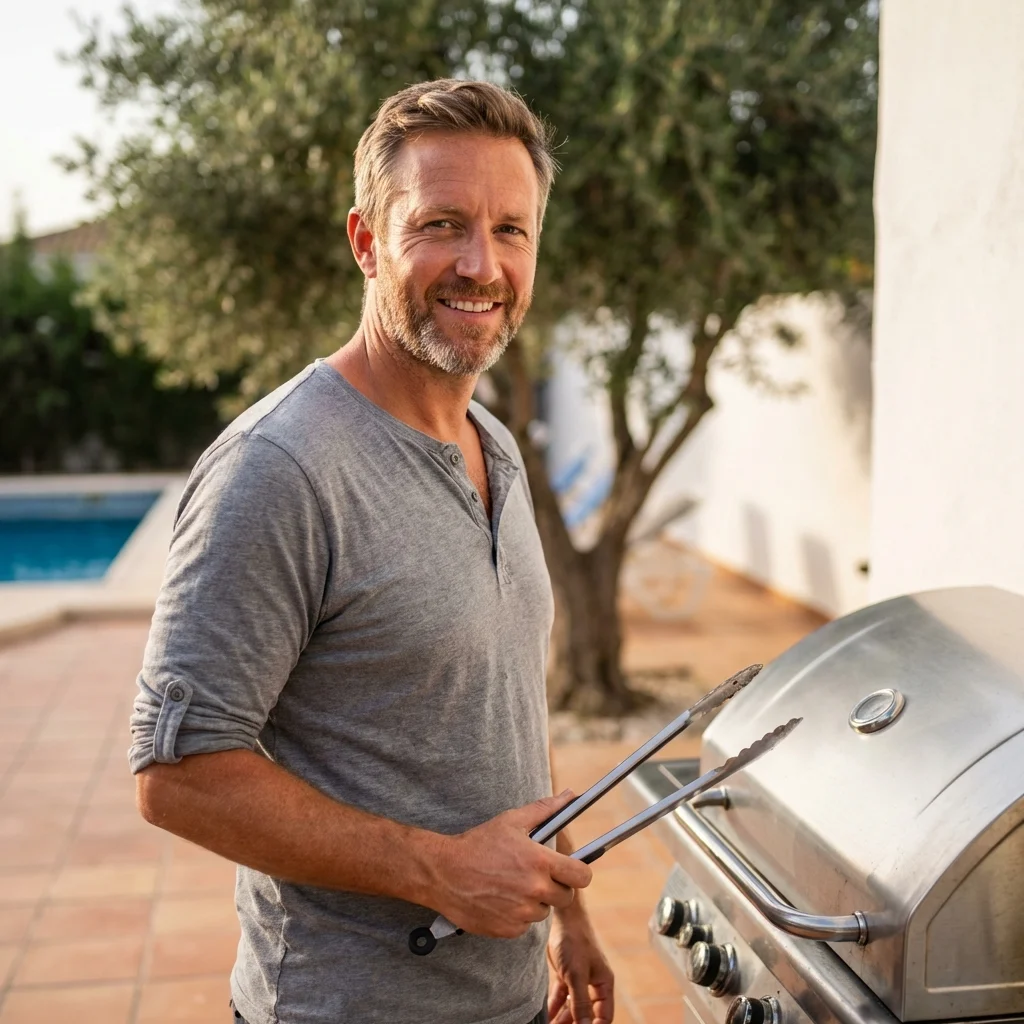
Ciudad Quesada sits on a hillside just above Rojales town, and it is here that most of the outdoor cooking action happens. The urbanisation was purpose-built for northern European buyers, so nearly every property comes with a south-facing terrace or rooftop solarium designed for exactly the kind of entertaining that a gas BBQ or kamado grill makes possible. Walk through Doña Pepa or Benimar on a Saturday afternoon and you will hear the familiar hiss of fat hitting hot grates from almost every other garden.
The surrounding areas — La Marquesa golf course, the riverside walk along the Segura, and the Sunday market in Rojales old town — give the area a community feel that keeps expats rooted here for decades. Properties average around €180,000, typically two- or three-bedroom villas with private pools and terraces between 20 and 50 square metres. That is more than enough space for a complete outdoor cooking station.
Rojales and Ciudad Quesada’s purpose-built expat urbanisations offer terraces ideally sized for gas BBQs, kamado grills, and compact pizza ovens, with 69% of residents from abroad.
Choosing Your Setup in Rojales
The typical Ciudad Quesada villa terrace of 20–50m² suits a standalone grill with room to spare, while rooftop solariums open up creative possibilities for elevated cooking stations.
Gas BBQs remain the top seller across the Rojales area. Spanish butane bombonas are available from multiple local suppliers, and the convenience of gas suits the midweek dinner culture that British and Scandinavian residents have established. For those who want richer flavour, a kamado grill handles everything from slow-smoked ribs to searing-hot steaks, and the ceramic body shrugs off the occasional cool evening from November to February.
Pizza ovens have gained serious traction here over the past two years. Neighbours in Ciudad Quesada trade tips on dough recipes and wood sourcing — almond and olive wood is readily available from agricultural suppliers inland. Costa Blanca Outdoors recommends a mid-sized wood-fired oven for Quesada terraces: large enough to cook for a dinner party of eight, compact enough to leave room for seating.
Properties near La Marquesa golf course tend to have larger gardens, making them ideal candidates for a full outdoor kitchen island with built-in gas BBQ and prep space. If you are working with a smaller Benimar terrace, a portable kamado paired with a folding prep table delivers impressive results without crowding the space.
Costa Blanca Outdoors recommends mid-sized wood-fired pizza ovens for Ciudad Quesada terraces, balancing cooking capacity for eight guests with enough remaining space for comfortable outdoor seating.
Delivery to Rojales and Ciudad Quesada
We deliver throughout Rojales, Ciudad Quesada, and surrounding urbanisations weekly, with reliable access to hillside properties and gated communities.
Rojales sits in our southern Costa Blanca delivery zone, one of our busiest corridors. Ciudad Quesada’s grid-pattern roads make access straightforward for even the largest deliveries — a welcome contrast to some of the narrower hillside urbanisations further north. Every delivery includes full setup: unpacking, assembly, placement on your terrace, and a hands-on walkthrough of your new equipment.
For built-in outdoor kitchen projects, we coordinate with local builders experienced in the construction standards common across Quesada and Benimar. Typical lead time is 5–10 working days for in-stock items, or 3–4 weeks for custom kitchen installations including design and fabrication.
Living nearby? We cover Orihuela Costa and San Fulgencio on the same southern routes, and customers in Torrevieja are just minutes away. One delivery run covers the entire southern corridor efficiently, keeping costs down for everyone in the area.
Sustainable Landscaping and Artificial Grass Solutions for Rojales Property Owners
The transition from the traditional core of the village, with its historic cave houses and narrow streets, to the sprawling residential developments surrounding the golf course represents a unique challenge for any homeowner looking to maintain a green space. Living in the Vega Baja region since 2019 has taught me that the traditional British concept of a garden—centered around a thirsty natural lawn—simply does not hold up against the realities of the local environment. Most of the 16,000 residents here, nearly 70% of whom are international expats from Britain, Scandinavia, and Germany, quickly realize that water scarcity and intense ultraviolet exposure turn natural grass into a costly, brown liability within a single season. Whether your property is a compact terrace near Pueblo Español or a sprawling villa overlooking La Marquesa Golf, the goal is always the same: creating a functional, heat-resistant outdoor area that serves as an extension of the home rather than a weekend chore. The international community here has significantly influenced the local outdoor culture, moving away from decorative-only gardens toward multi-functional "outdoor rooms" where cooking, dining, and lounging take precedence. Our Scandinavian neighbors often prioritize clean lines and low-maintenance functionality, while British residents typically seek that lush, deep-green aesthetic that reminds them of home but can withstand the forty-degree heat of a Spanish July.
The local property market, where average prices hover around 160,000 EUR, consists largely of urbanization villas and apartments designed for outdoor living. However, these plots are often characterized by thin topsoil and hard, rocky ground that makes traditional landscaping difficult and expensive. This is where high-quality artificial turf becomes more than just a convenience; it becomes a structural necessity. When I assist families in Ciudad Quesada, we aren't just rolling out green carpet. We are engineering a drainage and cooling system that manages the intense afternoon sun and the occasional but violent Gota Fría rainstorms. The shift toward artificial solutions is driven by the sheer practicality of the Mediterranean climate. You are looking at a landscape that receives less than 300mm of rain a year, yet the demand for a soft, green space for grandchildren to play on or for a clean area to host a dinner party remains high. By removing the need for constant irrigation and chemical fertilizers, homeowners are not only saving roughly 600 EUR to 1,200 EUR annually on water bills and maintenance but are also protecting the local water table in a region frequently hit by drought restrictions.
The local climate factors are the most critical consideration when selecting landscaping materials in this part of the Costa Blanca. Being situated slightly inland but close enough to feel the influence of the salt lakes means we deal with a specific set of environmental pressures. The humidity from the nearby Salinas de La Mata can create a sticky atmosphere that traps dust, particularly during a Calima. This Saharan dust phenomenon is a significant factor for any Rojales resident. When the red dust settles, it mixes with the high humidity to create a fine mud. If you choose a cheap, low-density artificial grass with a flat blade profile, that mud becomes trapped in the thatch, making it incredibly difficult to clean. I always recommend a "C-shaped" or "W-shaped" memory fiber for this area. These profiles allow for better airflow between the blades, which keeps the surface up to 10 degrees cooler than flat blades, and they make it much easier to hose down the Calima silt. Furthermore, the salt air can be highly corrosive to sub-standard garden equipment and even the backings of lower-quality turf. We use a reinforced polyurethane backing rather than standard latex because it is more resistant to the salt-rich humidity and won't expand or contract as aggressively during the extreme temperature swings we see between the scorching mid-afternoons and the cooler winter nights.
Community rules, or the "comunidad de propietarios," play a massive role in how we approach installation here. Many of the newer developments near the golf resort have strict aesthetic guidelines to ensure a uniform look across the urbanization. Before spending 3,000 EUR or 5,000 EUR on a new lawn and fencing setup, it is vital to check if there are restrictions on the specific shade of green allowed or the height of any accompanying garden-fencing. In terms of maintenance, the common misconception is that artificial grass is "zero maintenance." In this town, it is "low maintenance." To keep a premium 40mm pile grass looking its best, you need to account for the UV intensity. Even the highest-rated turf will eventually show signs of wear if it isn't properly "infilled" with kiln-dried silica sand. This sand sits at the base of the fibers, protecting the backing from direct sun exposure and providing the weight necessary to prevent the grass from rippling as the ground heats up. For a standard 50-square-meter installation, which typically costs around 2,250 EUR including a professional sub-base preparation, this sand infill is the difference between a lawn that lasts five years and one that lasts fifteen.
For the detached villas common in the hills of the area, I recommend a comprehensive landscaping approach that treats the lawn as the centerpiece of a larger ecosystem. A typical villa setup might involve 60 to 80 square meters of premium 40mm "Mediterranean Lush" turf, which features a mix of lime and olive green blades with a tan thatch to mimic the local grasses. This grade of turf usually sits around 45 EUR per square meter for the material alone. To complement this, I suggest integrating professional outdoor-lighting to extend the use of the garden into the late evening. Low-voltage LED spike lights tucked into the perimeter can highlight the texture of the grass without the glare that traditional floodlights produce. For privacy, which is often a concern in these dense urbanizations, we frequently install composite garden-fencing. Unlike traditional wooden panels that bleach and warp in the sun, composite materials hold their color and provide a sleek, modern backdrop for the greenery. A full villa transformation including grass, a 30mm crushed aggregate sub-base, and perimeter lighting generally ranges between 4,000 EUR and 7,500 EUR, depending on the complexity of the site access and the existing ground conditions.
Apartment owners and those in the Pueblo Español area often face different constraints, primarily involving smaller terraces or balconies where weight and drainage are the primary concerns. You don't need a heavy sub-base on a tiled terrace, but you do need a specialized drainage matting. Without it, water can trap underneath the turf, leading to mold issues and unpleasant odors, especially if you have pets. For these smaller spaces, a shorter 30mm pile height is often more practical. It is easier to vacuum and keep clear of the dust that accumulates in more built-up areas. A high-quality 30mm turf for a 20-square-meter terrace usually costs between 600 EUR and 900 EUR installed. I often suggest pairing this with vertical green walls or slimline garden-fencing to create a "cocoon" effect on the terrace, blocking out the view of neighboring buildings while providing a soft surface underfoot. This setup is particularly popular among our Scandinavian clients who appreciate the "hygge" feel of a soft, green balcony during the mild winter months.
Logistics in this part of the Vega Baja require a fair bit of local knowledge. Delivering several tons of aggregate and large rolls of turf to the narrow, winding streets of the old town center is a very different job than delivering to a modern villa with wide road access. We operate our own fleet and understand the specific challenges of the local geography, from the steep inclines around the golf course to the tighter access points in some of the older parts of the village. Our service extends beyond the town limits to neighboring communities like San Fulgencio, Guardamar, Torrevieja, and Algorfa. We know, for instance, that properties closer to the Guardamar border deal with more sandy soil, requiring a different approach to ground stabilization than the clay-heavy soils found toward Los Montesinos. When we bring a 7.5-tonne truck into a quiet urbanization, we ensure we have the right permits and that we aren't blocking essential access for neighbors—a small detail that makes a huge difference in maintaining good community relations for our clients.
Every project we undertake starts with an understanding of how the sun moves across your specific plot. A north-facing garden in the shadow of a two-story villa requires a different density of turf than a south-facing terrace that takes the full brunt of the afternoon heat. Because we are based locally and have spent years observing how materials react to the specific micro-climate of the region, we can provide advice that a national retailer simply cannot. We don't just sell a product; we install a solution that is built to survive the local conditions for a decade or more. If you are considering upgrading your outdoor space, I invite you to reach out for a conversation. I can visit your property to take precise measurements, assess the drainage requirements of your soil, and show you physical samples of the grass types that work best in this specific environment. There is no substitute for seeing how a specific shade of green looks in the actual light of your garden. We provide detailed, transparent quotes that cover everything from the initial excavation to the final brush-up of the sand infill, ensuring there are no surprises once the work begins. My goal is to ensure your outdoor space becomes the most used part of your home, providing a cool, clean, and beautiful environment regardless of what the Mediterranean summer throws at us.
 JW'"
/>
JW'"
/>