Outdoor Living in Benidorm
Benidorm has 77,000 residents with a remarkable 35% expat population — a year-round resort city with the largest British and Northern European community on the Costa Blanca, where high-rise terraces and hilltop villas create a unique vertical outdoor living market.
Benidorm defies the clichés. Behind the famous skyline lies a genuine residential city with a well-established international community that lives here permanently, not just on holiday. The British contingent is the largest, followed by significant German and Dutch populations, creating a social infrastructure — clubs, restaurants, and activity groups — that operates twelve months a year.
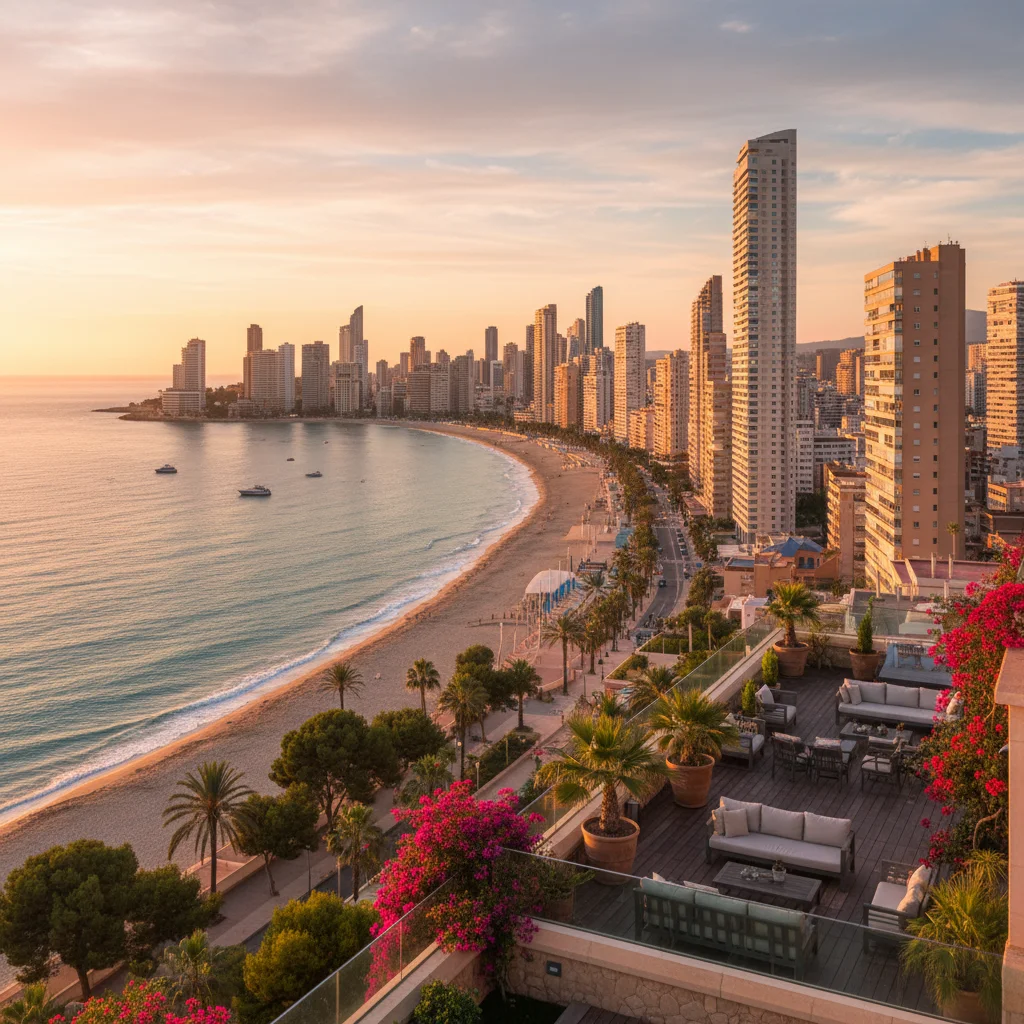
The city divides naturally into distinct zones. Levante Beach on the east side is the busier, more commercial strip, while Poniente Beach to the west has a more residential feel with modern apartment towers and the striking promenade designed by Carlos Ferrater. Between them, the Old Town clusters around the Balcón del Mediterráneo headland with its whitewashed streets and traditional restaurants. Behind the beaches, the terrain rises sharply into the hills toward Finestrat and La Nucia, where villa communities enjoy elevated panoramas over the entire bay.
Property prices average around €250,000, though the range is wide. High-rise apartments with sea-view terraces of 10–20 square metres dominate the beachfront, while hillside villas behind the city offer gardens and covered terraces of 40–80 square metres. Penthouse apartments in newer Poniente towers can have wraparound terraces exceeding 30 square metres — prime outdoor cooking territory.
Benidorm’s massive year-round expat community, diverse property types, and unrivalled social scene make it the highest-volume market on the Costa Blanca for outdoor cooking equipment.
Choosing Your Setup in Benidorm
Benidorm’s vertical living means compact, high-performance equipment for apartment terraces, while hilltop villa owners have the space for full outdoor kitchen installations with views over the bay.
High-rise living dominates Benidorm, and that shapes equipment choices. A typical Levante or Poniente apartment terrace of 10–15 square metres suits a compact kamado (38cm) or a quality two-burner gas BBQ — small footprint, serious output. Kamados are particularly popular in high-rise settings because they produce minimal smoke, an important consideration when neighbours are directly above and below. Costa Blanca Outdoors stocks several kamado models specifically suited to balcony use, with stand options that protect terrace tiles from heat.
Penthouse owners along the Poniente strip and in newer developments near the Old Town have more room to work with. A three- or four-burner gas BBQ with side burner, paired with a portable pizza oven, creates a complete outdoor cooking station on a 25–30 square metre terrace. These setups become the social hub of the home — Benidorm’s active community calendar means regular hosting is the norm rather than the exception.
Villa owners in the hills behind Benidorm, toward Sierra Cortina and the Finestrat border, have space for the full range. Built-in outdoor kitchens with gas grills, wood-fired pizza ovens, and preparation areas are increasingly popular in these elevated properties, where entertaining on a terrace overlooking the Mediterranean is the ultimate selling point.
For Benidorm apartments, Costa Blanca Outdoors recommends low-smoke kamado grills or compact gas BBQs designed for high-rise terrace use — with full outdoor kitchen solutions available for hillside villa owners.
Delivery to Benidorm
We deliver throughout Benidorm, from the Levante and Poniente high-rises to the Old Town and hillside villa communities, on our weekly central Costa Blanca route.
Benidorm’s high-rise apartment blocks require careful delivery planning. We coordinate lift access, building entry codes, and delivery timing with building administrators in advance. For towers without freight lifts, we assess stairwell access and arrange appropriate equipment — our team regularly delivers to upper floors in Levante and Poniente towers and knows the logistics of Benidorm’s major residential buildings well.
The Old Town area around the Balcón del Mediterráneo has narrow, pedestrianised streets. Deliveries here are scheduled during early morning access windows, with smaller vehicles navigating the historic quarter. Hillside villa deliveries toward Sierra Cortina and the Finestrat border are typically straightforward, with direct road access to most urbanisaciones.
Neighbouring Alfaz del Pi and La Nucia are on the same delivery route, and we also serve Altea and Villajoyosa on our central coastal schedule. In-stock items ship within 5–10 working days, while custom outdoor kitchen projects require 3–4 weeks for design, fabrication, and professional installation.
High-Performance Textiles for the Unique Microclimate of Benidorm
Living on this specific stretch of the white coast requires a different approach to outdoor comfort than almost anywhere else in Spain. The skyline here is iconic for a reason, but the high-rise nature of the residential landscape, particularly along the Levante and Poniente beachfronts, creates a set of environmental challenges that standard garden furniture accessories simply cannot handle. I have spent the last five years working with over 200 families across the region, and I have seen firsthand how the intense combination of verticality and proximity to the Mediterranean Sea destroys low-quality textiles within a single season. The 35% of residents who come from the UK, Germany, and the Netherlands often arrive with a northern European mindset regarding outdoor fabrics, expecting a standard polyester cushion to survive. However, the reality of life near the Balcón del Mediterráneo is that your terrace is a high-exposure zone. Whether you are occupying a compact 12m² balcony in the heart of the Old Town or a sprawling terrace in one of the newer developments climbing toward the Sierra Helada, your textiles are the primary contact point between you and your home’s outdoor potential.
The property stock here is incredibly diverse, ranging from the classic 1970s apartments with narrow, deep terraces to modern villas in the surrounding hills where average prices sit around €250,000. Each of these spaces demands a specific textile strategy. In the dense urban center, outdoor living is often about maximizing small footprints for morning coffee or evening gin and tonics. Here, the heat retention between buildings can be suffocating, making breathable fabrics essential. Conversely, as you move toward the more open areas near the golf courses or the cliffs, the wind becomes the primary factor. In these locations, the outdoor lounge is the heart of the home, acting as a secondary living room for at least nine months of the year. The international community here has brought a sophisticated approach to outdoor styling, blending the clean lines of northern European design with the rugged durability required by the Spanish sun. When you invest in high-end textiles, you aren't just buying decoration; you are buying the ability to actually use your outdoor furniture during the peak heat of July and August without burning your skin or sinking into a soggy, heat-trapping foam pad.
Technical Requirements for Coastal Exposure and Community Living
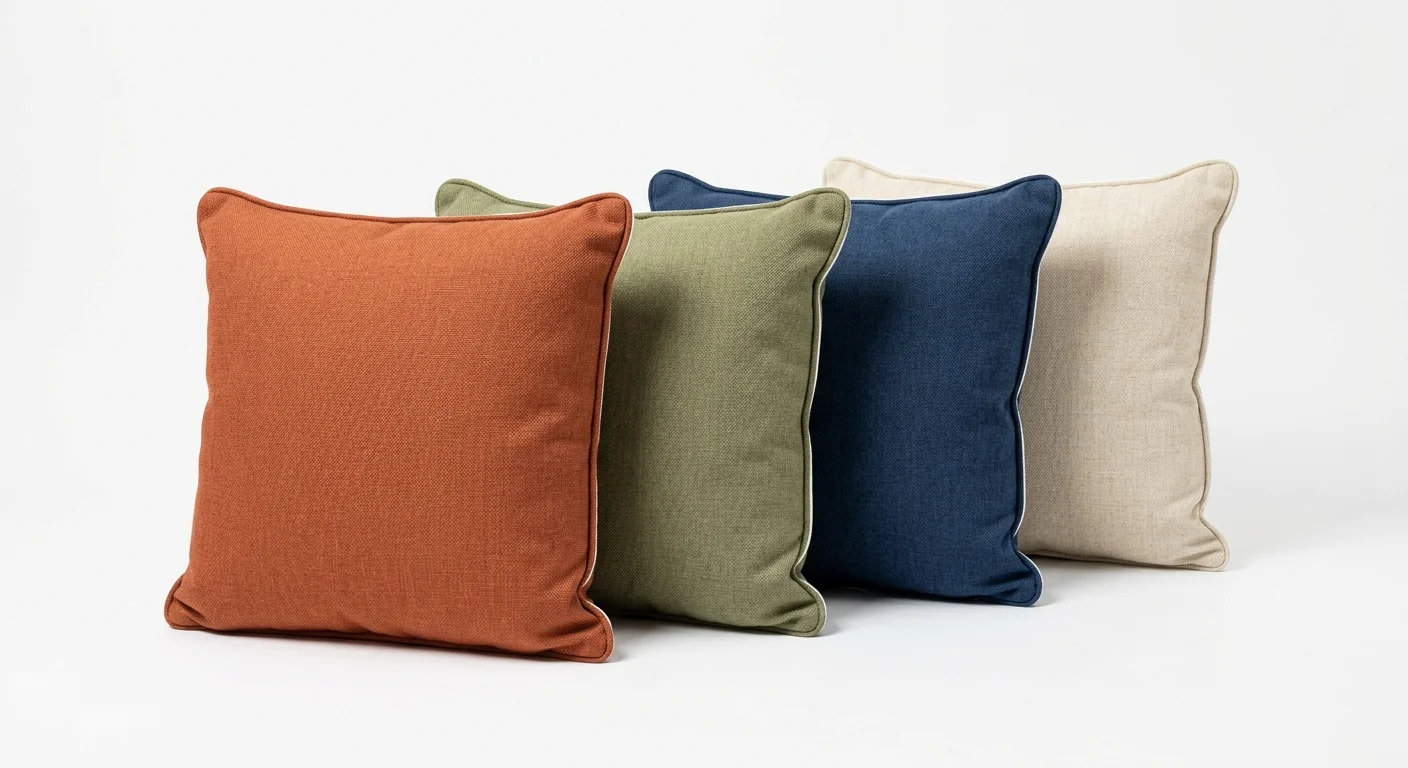
When I visit a client within the 2km salt spray zone—which covers almost the entire residential core of the city—my first check is always the existing fabric quality. The environment here is defined by the Levante and Poniente winds. The Levante brings humidity and salt-laden air from the sea, which settles on your cushions and acts as a desiccant, drawing moisture out of the fibers and making them brittle. The Poniente is a dry, hot wind that can skyrocket temperatures on a terrace in minutes. This constant push and pull, combined with a UV index that regularly hits 10 or 11 in the summer, will bleach a standard retail cushion in less than 60 days. To counter this, I only recommend solution-dyed acrylics. Unlike piece-dyed fabrics where the color is only on the surface, solution-dyed fibers have the pigment locked into the polymer before the yarn is even spun. This ensures that even after 3,000 hours of direct sunlight, a €45 scatter cushion will retain the same vibrant Mediterranean blue or charcoal grey as the day it was delivered.
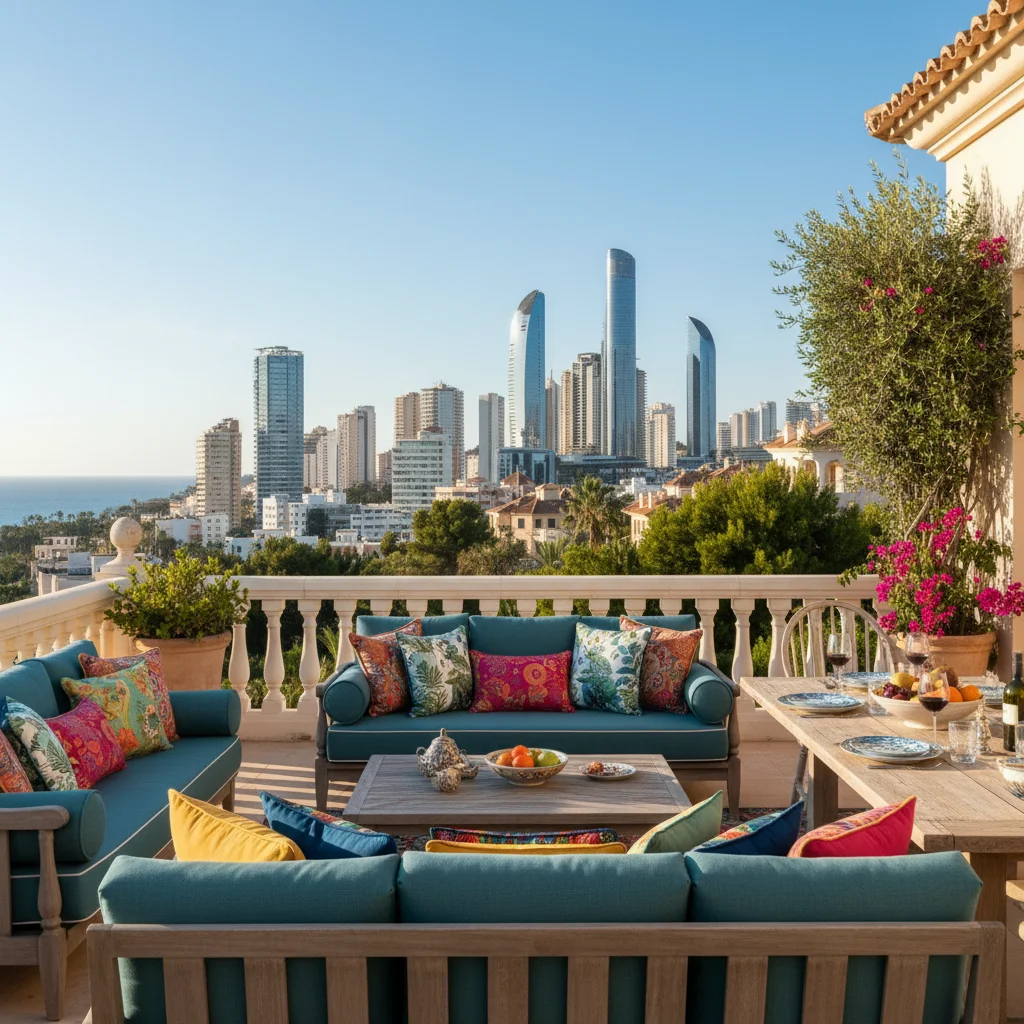
Beyond the climate, residents must navigate the specific regulations of their Comunidad de Propietarios. Many of the high-rise buildings along the main avenues have strict rules regarding the visual uniformity of the facade. This often dictates the color of sunshades and even the visible textiles on balconies to maintain a cohesive look for the building. I often advise clients to use neutral, community-compliant tones for their main lounge bases—perhaps a slate or sand color—and then use the smaller, non-permanent throw pillows to express personal style. Furthermore, the wind at the 15th or 20th floor is no joke. I have seen many unweighted cushions end up in a neighbor's pool or, worse, on the street below. For this reason, we focus on cushions with integrated tie-downs or heavy-duty Velcro straps that wrap around the frame of your rattan-lounge-sets. For those on the most exposed corners, we even look at weighted interior liners. A standard 45cm x 45cm outdoor throw pillow should ideally feature a hidden YKK plastic zipper to prevent salt corrosion, which frequently seizes metal sliders within months of exposure.
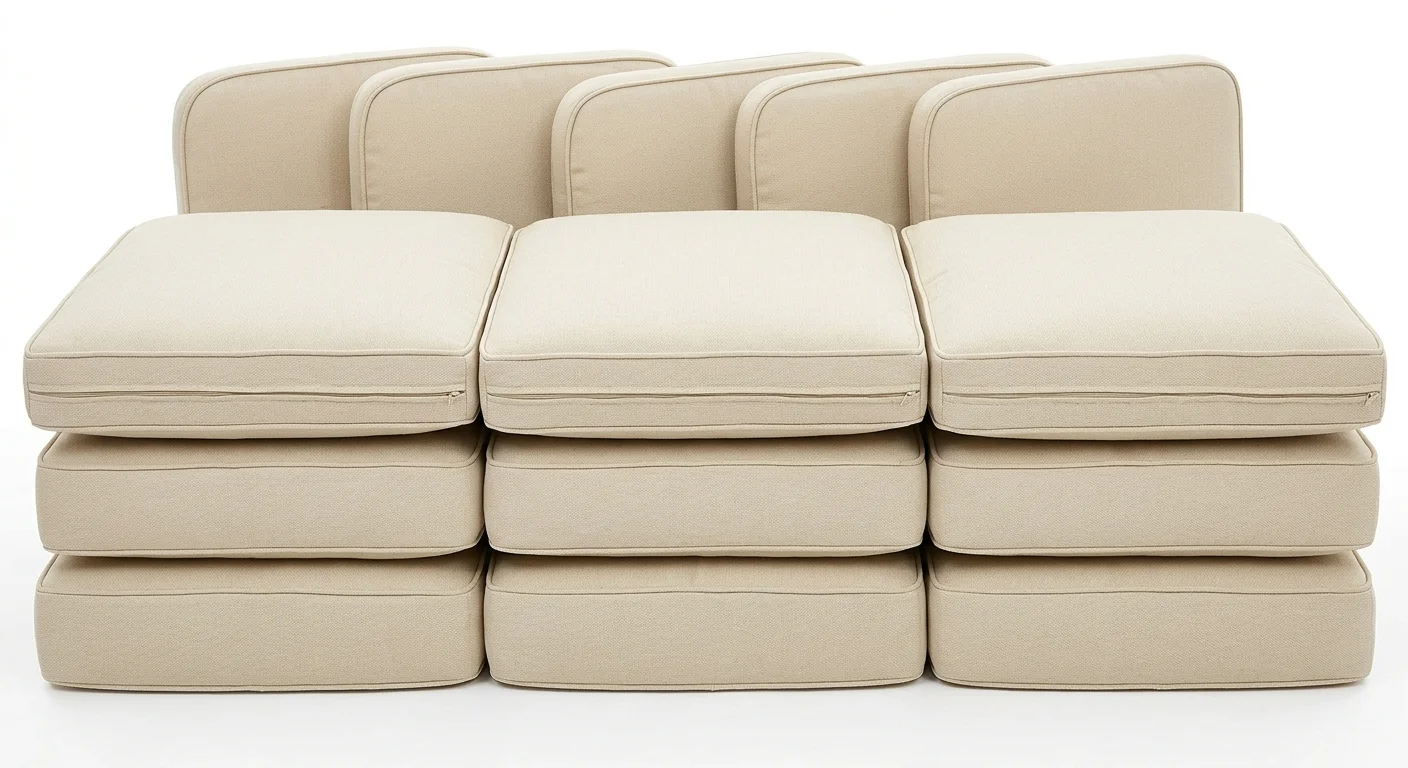
Maintenance in this environment is also a specialized task. The salt air doesn't just sit on the surface; it penetrates the weave. If you don't choose a textile with an open-cell reticulated foam insert, that salt and moisture get trapped inside, leading to mold and "stale" smells. We recommend cushions that are not only machine-washable at 30°C but also feature a water-repellent coating that allows rain or spilled drinks to bead and roll off. For a full replacement set for a three-seater sofa, you should expect to invest between €350 and €500 for professional-grade materials. This might seem high compared to big-box retailers, but when you consider that these materials last five to seven years rather than one, the value proposition is clear. You are paying for the technical engineering that keeps the fabric cool to the touch even when the mercury hits 35°C.
Tailored Textile Configurations for Every Property Type
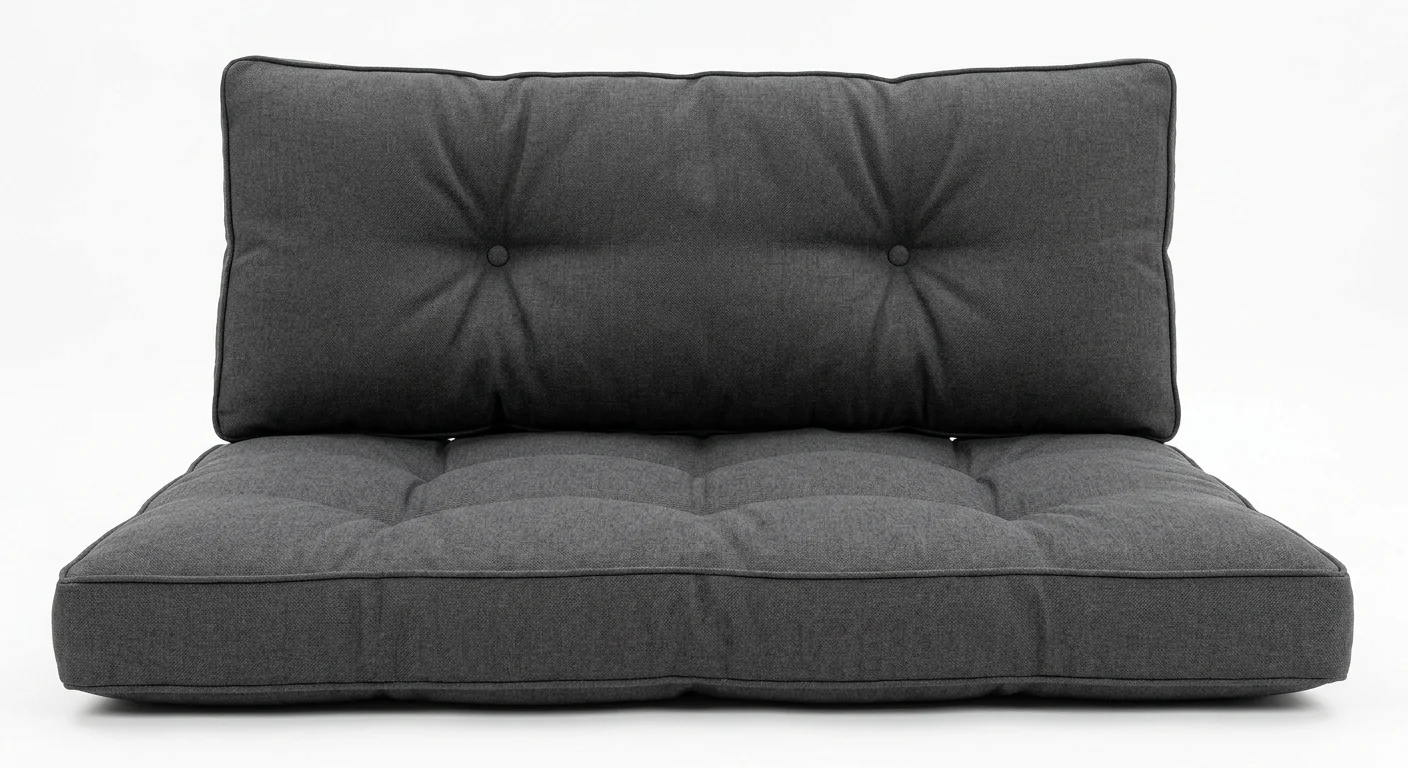
In the apartment blocks surrounding the Poniente promenade, space is at a premium. Here, we often see residents opting for compact dining-sets or slimline bistro arrangements. The goal in these spaces is comfort without bulk. I recommend high-density foam (at least 30kg/m³) for these cushions. Because the seating is often used for both dining and working from home, the foam needs to be firm enough to prevent you from "bottoming out" against the hard frame. A 5cm thickness is usually sufficient if the foam quality is high. For these urban balconies, I suggest a palette that reflects the sea—teals, turquoises, and crisp whites—but always with a Teflon or similar protective coating to guard against the soot and dust that naturally accumulates in a bustling coastal city. Combining these with a pair of weather-resistant sun-loungers tucked into a corner creates a multi-functional retreat in as little as 10m² of space.
For the villas located further inland or in the quieter residential pockets near the cross, the scale of the outdoor area allows for much more ambitious textile setups. In these larger gardens, we move away from individual cushions and toward integrated lounge systems. These are the spaces where the 35% international demographic truly shines, often creating outdoor "rooms" that mirror the luxury of their interiors. For these clients, I recommend oversized floor cushions and large-format backrest pillows that create a "chill-out" zone. By using a mix of textures—perhaps a rugged canvas weave for the base and a softer, chenille-style outdoor fabric for the accents—you can break up the visual heaviness of large stone terraces. These larger setups pair perfectly with modular rattan-lounge-sets, where the textiles provide the necessary softness to counteract the geometric lines of the furniture. In these expansive settings, don't be afraid to go for deeper cushions; 12cm to 15cm of multi-layered foam provides a level of comfort that rivals any indoor sofa.
If you are outfitting a pool area, the requirements shift again. Chlorine and salt water are even more aggressive than the atmosphere. For sun-loungers, I always suggest textiles with a high light-fastness rating (Grade 7 or 8). Residents in areas like the hills of Finestrat or the outskirts of La Nucia often deal with more intense direct sun than those in the shadows of the city's towers. In these locations, we often use light-colored textiles to reflect heat, paired with quick-dry technology. A quick-dry cushion can be completely saturated by a summer thunderstorm or a wet swimsuit and be bone-dry within an hour of the sun coming back out. This prevents the internal degradation of the foam and ensures that your outdoor investment remains a hygienic and comfortable place to relax.
Local Logistics and Expert Implementation in the Marina Baixa
Navigating the logistics of Benidorm requires local knowledge that goes beyond a GPS. Delivering bulky items like full sets of lounge cushions or large sun-loungers to a 25th-floor apartment in a building with a small lift or strict delivery hours is something we handle regularly. We are intimately familiar with the access points along the Levante and Poniente beachfronts, where parking can be a nightmare and loading bays are strictly monitored. Our team knows which buildings require the use of a "montacargas" or service elevator and how to schedule deliveries to avoid the peak traffic hours that can paralyze the city center during the summer months.
Our service area extends well beyond the city limits into the surrounding municipalities of Alfaz-del-Pi, Finestrat, La Nucia, and Villajoyosa. Each of these areas has its own quirks. For instance, a delivery to the narrow, winding streets of Altea’s old town requires a much smaller vehicle than a delivery to a modern villa in Sierra Cortina. We understand these nuances because we live and work here every day. When we bring a set of textiles to your home, we don't just drop them at the door. We ensure they are fitted correctly, that all security straps are engaged, and that you understand how to care for them to maximize their lifespan in this harsh coastal environment.
The transition from a basic terrace to a true outdoor living room is almost entirely dependent on the quality of your textiles. They are the difference between a space that looks good from a distance and one that is genuinely comfortable to spend four hours in with a book. If you are tired of cushions that flatten out after a month or fabrics that turn from vibrant red to dusty pink by August, it is time to look at professional-grade outdoor textiles. I am always happy to discuss the specific needs of your property, whether you are dealing with the salt spray of the frontline or the wind tunnels of the high-rise district. Reach out for a free consultation, and we can look at your space together to find a textile solution that actually works for the long term in this unique part of the Costa Blanca.
 JW'"
/>
JW'"
/>