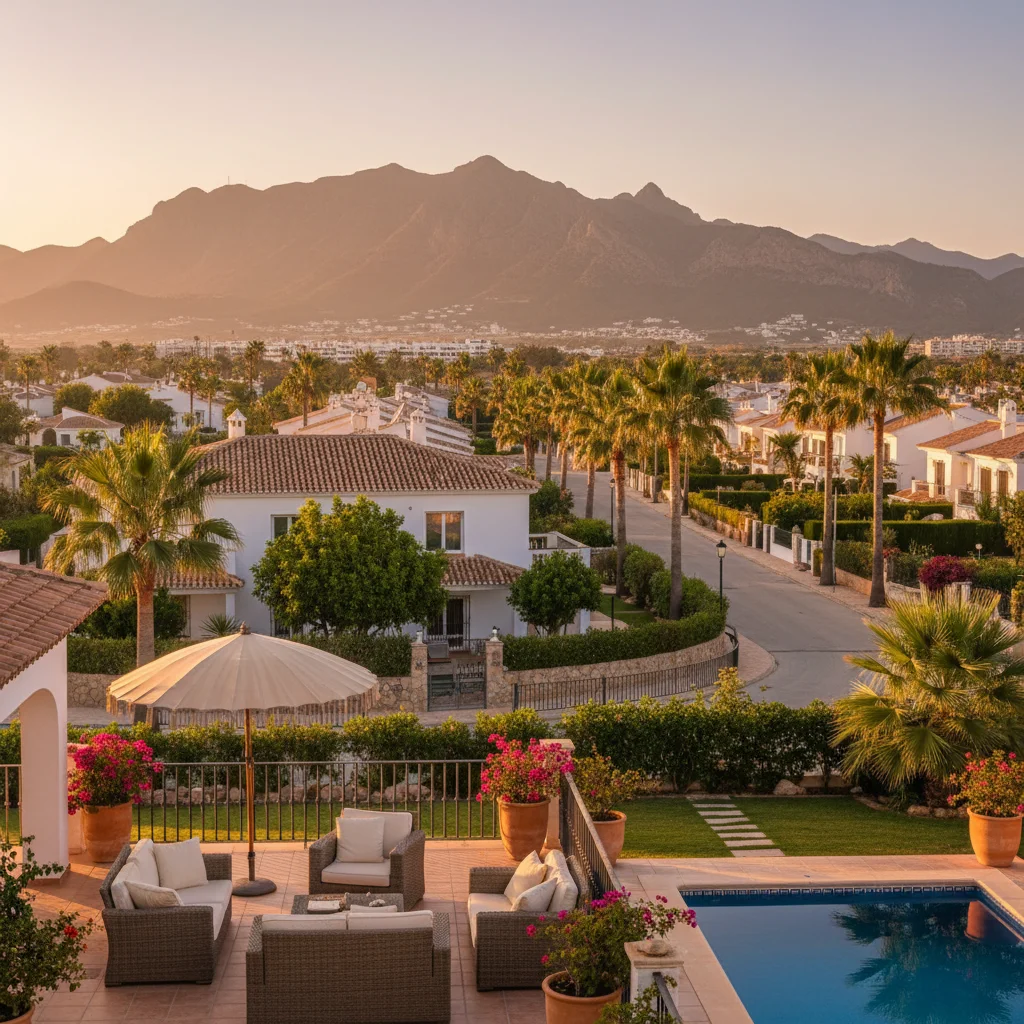
San Fulgencio is a tale of two places. The original Spanish village sits quietly on a hillside with views toward the salt lakes and the Segura river valley. A few kilometres east, La Marina urbanización sprawls across flat, sun-drenched terrain in one of the most established expat residential developments on the southern Costa Blanca. It is in La Marina where most of the demand for outdoor cooking equipment originates.
Properties here are predominantly detached and semi-detached villas priced around €150,000, nearly all with private gardens, pools, and terraces built for the outdoor lifestyle. The flat terrain and wide residential streets mean that garden spaces are generous compared to hillside towns further north. Many homes feature covered terraces — locally called porches — that extend the cooking season comfortably into the cooler months.
The community is tight-knit and social. British residents organise barbecue gatherings through local clubs and Facebook groups, while the German and Dutch communities bring their own grilling traditions — from currywurst on the plancha to Indonesian-style satay on portable charcoal grills. San Fulgencio averages 320 sunny days per year, making an outdoor kitchen investment one that genuinely pays for itself through daily use.
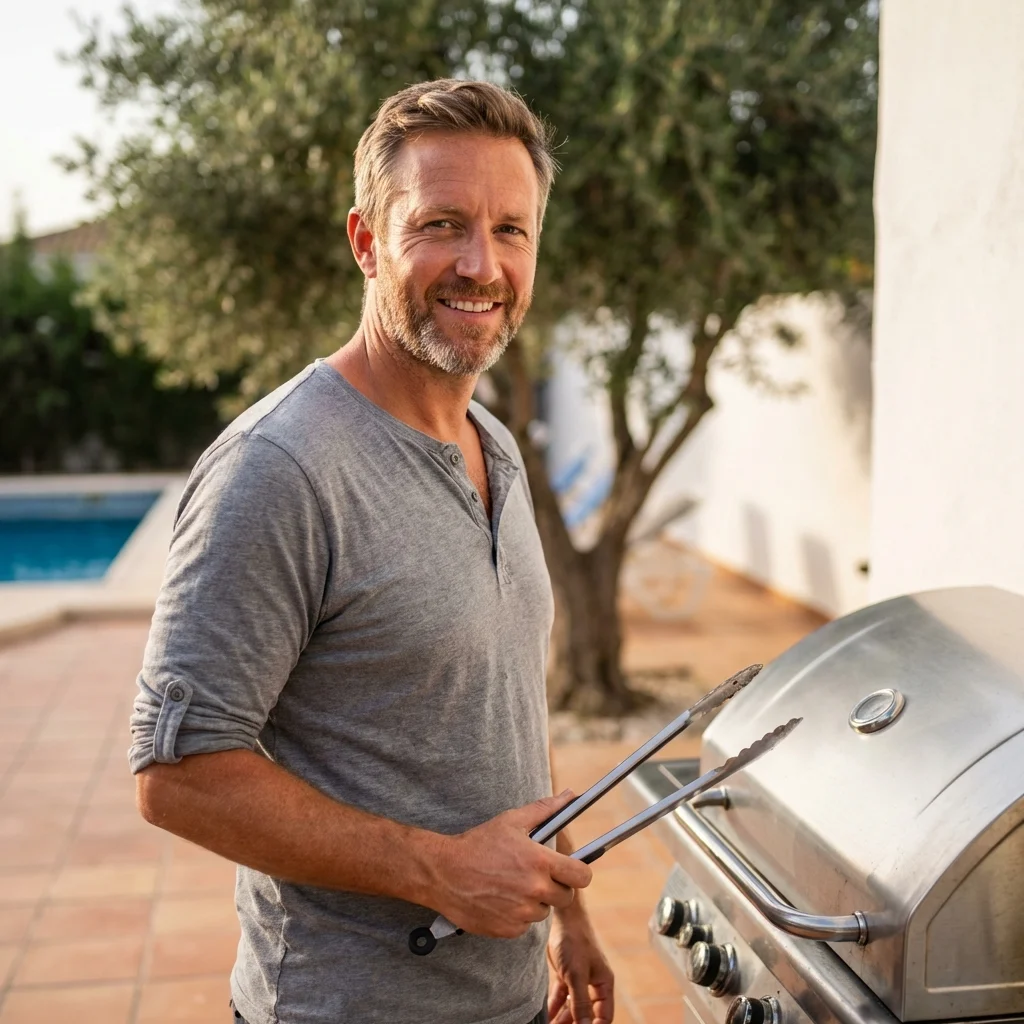
Gas BBQs dominate here, and for good reason. The convenience matches the relaxed pace of life — fire it up in ten minutes and you are cooking. Butane bombonas are easy to source locally, and several La Marina properties already have gas connections fitted during construction. For everyday grilling, a three- or four-burner gas BBQ with a side burner covers most needs.
Kamado grills have a growing following among San Fulgencio’s more dedicated outdoor cooks. The versatility — smoking, roasting, baking, and grilling in a single unit — appeals to retirees who have the time to experiment with low-and-slow techniques. Costa Blanca Outdoors recommends a medium kamado (around 47cm) for couples, or a large (around 60cm) for those who regularly entertain.
Wood-fired pizza ovens work brilliantly in La Marina’s generous gardens. Unlike apartment-heavy coastal towns, most San Fulgencio properties have enough space to position an oven safely away from walls and furniture. Almond wood from local agricultural suppliers burns hot and clean, delivering authentic results.
San Fulgencio is one of the most delivery-friendly towns we serve. La Marina’s flat layout and broad roads mean we can bring in heavy equipment — 150kg kamado grills, stone pizza ovens, full kitchen island components — without the access challenges common in hillside areas. Every delivery includes unpacking, full assembly, terrace or garden placement, and a walkthrough so you are confident using your new equipment from day one.
Fixed Pergolas in San Fulgencio: What You Need to Know
Living in San Fulgencio offers a lifestyle that is fundamentally different from the coastal bustle of Guardamar or the more mountainous terrain further north. Since moving to the Costa Blanca in 2019, I have spent a significant amount of time in the La Marina Urbanization and the surrounding areas, helping residents transform their outdoor spaces. What strikes me most about this town is its demographic composition; with over 67% of the population being international, predominantly British, German, and Dutch, the way outdoor spaces are used here is incredibly diverse. We are not just building shade structures; we are creating outdoor dining rooms for Sunday roasts, summer kitchens for German-style barbecues, and shielded lounges for Dutch-style coffee mornings. The property landscape here consists largely of affordable urbanization villas and apartments, often clustered within golf resort communities or shared garden complexes. These homes typically feature generous terraces, but they are often exposed to the elements in a way that makes them unusable for large portions of the year without a permanent structure.
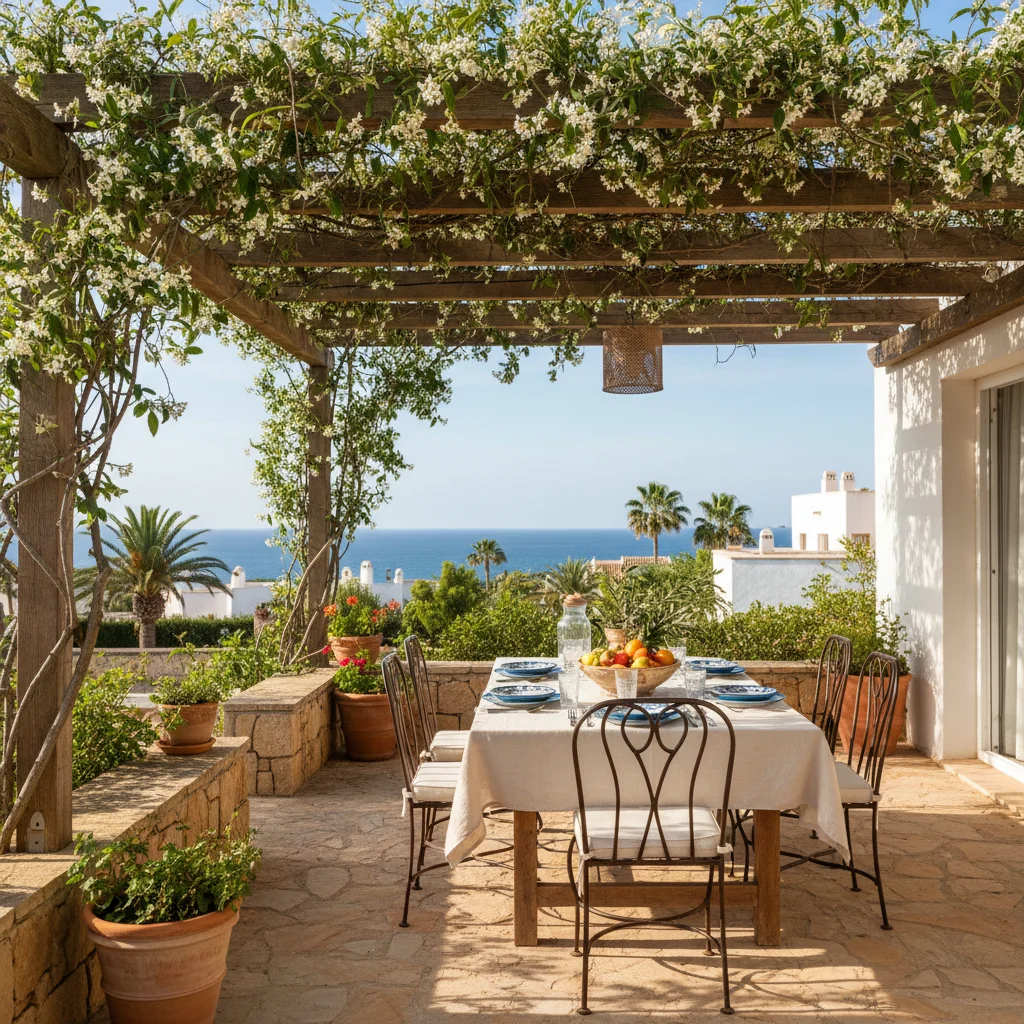
A fixed pergola makes absolute sense in this local context because the outdoor living culture here is permanent, not seasonal. Unlike holiday-heavy areas where people might only need a retractable awning for a few weeks a year, the residents of San Fulgencio live here year-round. This means you need a structure that can withstand the intense July heat as well as the occasionally fierce winter winds that sweep across the Segura River basin. Many of the villas in La Marina Urbanization were built with relatively small interior living spaces under the assumption that the "real" living happens outside. By installing a fixed pergola, you are effectively adding twenty or thirty square meters of usable floor space to your home for a fraction of the cost of a traditional brick-and-mortar extension. I have seen how a well-placed 4x4 meter timber or aluminum frame can change the entire flow of a property near the local market area, turning a scorching, dusty patio into the primary hub of the home.
The local architecture in San Fulgencio often leans towards the Mediterranean bungalow or the detached villa with a flat roof terrace. Because many of these properties are situated in close proximity to one another, privacy becomes just as important as shade. A fixed pergola provides the necessary framework to add side screens or decorative latticework, which is a common request from my British clients who want to enjoy their terrace without being overlooked by neighbors. The Dutch and German residents I work with often prioritize the structural integrity and thermal properties of the roof, frequently opting for insulated sandwich panels that keep the area beneath several degrees cooler than a standard fabric cover. Whether your property is a traditional villa near the town center or a modern apartment with a shared garden, a fixed pergola serves as the anchor for your outdoor life, providing a permanent sense of place that temporary solutions simply cannot match.
Practical Expert Advice for San Fulgencio Residents
When considering a fixed pergola in this specific part of the Costa Blanca, you have to account for a climate that is notably harsher than the northern end of the coast. San Fulgencio is hotter and drier than towns like Dénia or Jávea. We deal with an intense, direct sun that can degrade low-quality materials in a single season. Furthermore, the proximity to the Santa Pola and La Mata salt lakes introduces a specific type of humidity. While you might not be beachfront, the salt-laden air still reaches this area, meaning that any metal fixings used in your pergola must be high-grade stainless steel (A4/316 grade) to prevent "tea staining" or structural corrosion over time. I always tell my clients that if they choose an aluminum structure, it must have a high-quality powder coating of at least 60 to 80 microns to withstand the abrasive nature of the local environment.
The "Calima" is another factor that many newcomers underestimate. These Saharan dust storms regularly coat San Fulgencio in a layer of fine, orange silt. If you install a fixed pergola with a flat, horizontal roof made of polycarbonate, that dust will settle and, when mixed with a light rain, turn into a layer of mud that is visible from below. For this reason, I recommend a minimum roof pitch of five degrees to allow for natural runoff and easier cleaning. If you are opting for a wooden structure, the maintenance requirements are real. The strong afternoon sun will bake the oils out of the timber. In San Fulgencio, I suggest a high-pressure autoclave treatment followed by a specialized Lasur finish, which penetrates the wood rather than sitting on top like a varnish. A standard 3x4 meter treated timber pergola with a professional installation in this area will typically start around EUR 2,800, while a high-end aluminum version with an insulated roof can range up to EUR 7,500.
Community rules, or the "Comunidad de Propietarios," are particularly relevant in San Fulgencio. Many urbanizations have strict bylaws regarding the height and color of permanent structures to maintain a cohesive aesthetic. Before you commit to a design, it is vital to check if your community requires a specific RAL color for the aluminum or a certain shade of wood stain. In many cases, a "declaración responsable" or a minor works permit (obra menor) from the San Fulgencio Ayuntamiento is necessary, especially if the pergola is being anchored into a shared wall or if it exceeds a certain square meterage. I have seen installations halted because the owner didn't realize that their fixed pergola was considered a permanent addition to the building's footprint. We always advise checking these details first to avoid disputes with neighbors or the local council.
Regarding maintenance for outdoor cooking, which is huge in the international community here, you must consider ventilation. If you are placing a barbecue or a gas grill under a fixed pergola, the roof material matters immensely. Polycarbonate can yellow or even warp from the rising heat of a grill, and wooden beams can collect soot. For these setups, I recommend an aluminum frame with a height of at least 2.5 meters at the lowest point to allow for better air circulation. If you use gas-powered heaters during the cooler winter evenings near the Segura River, ensure you have at least 50cm of clearance between the heater head and the pergola roof to prevent heat damage.
What We Recommend for San Fulgencio
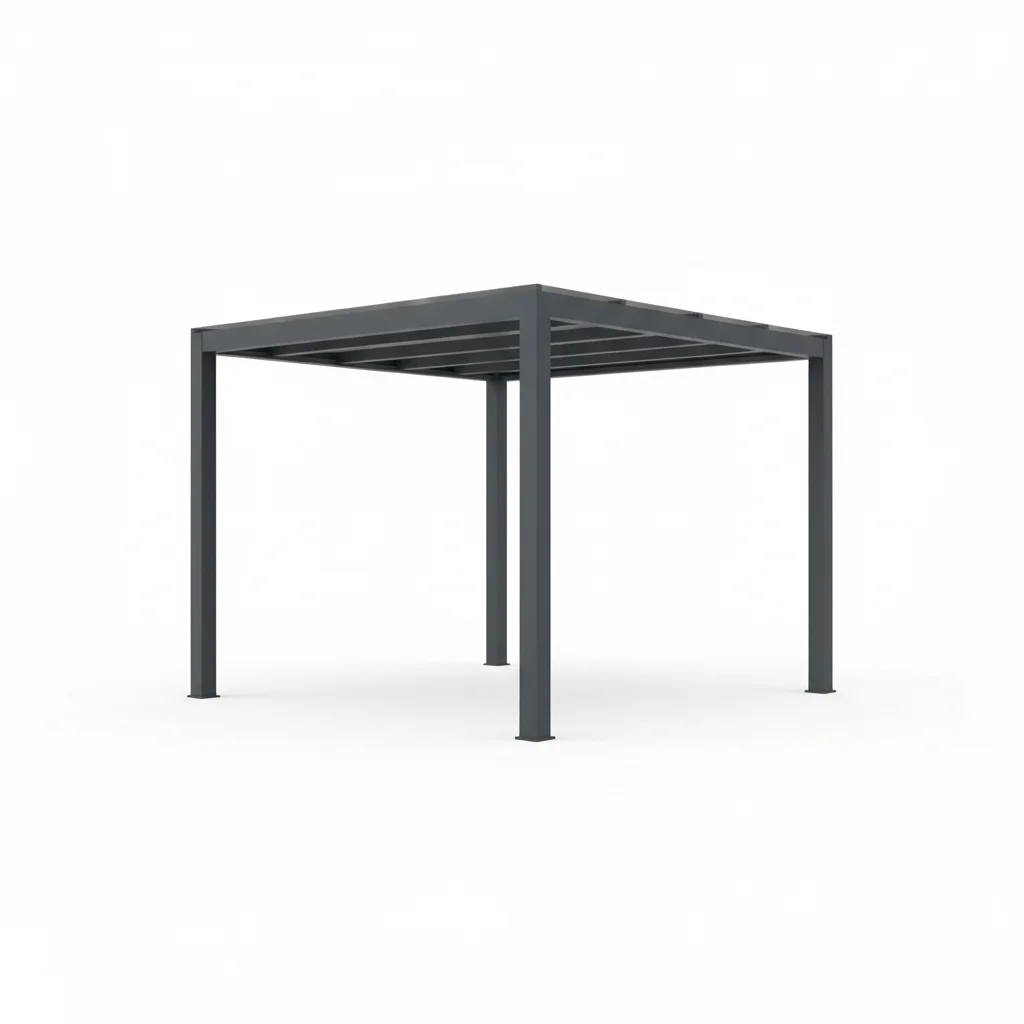
For the detached villas commonly found in La Marina Urbanization, I almost always recommend a 4x4 meter or 5x3 meter heavy-duty aluminum fixed pergola. This size is the "sweet spot" for most local plots, providing enough room for a six-person dining table and a separate lounge area. Specifically, an aluminum frame finished in a contemporary anthracite gray (RAL 7016) or a classic white tends to work best with the local architecture. If your budget allows, equipping this structure with a 30mm insulated sandwich panel roof is the best investment you can make. This configuration typically costs between EUR 5,000 and EUR 6,500 including installation. It provides total shade, 100% waterproof protection for your furniture, and a significant reduction in noise during the heavy autumn rains we get on the Costa Blanca.
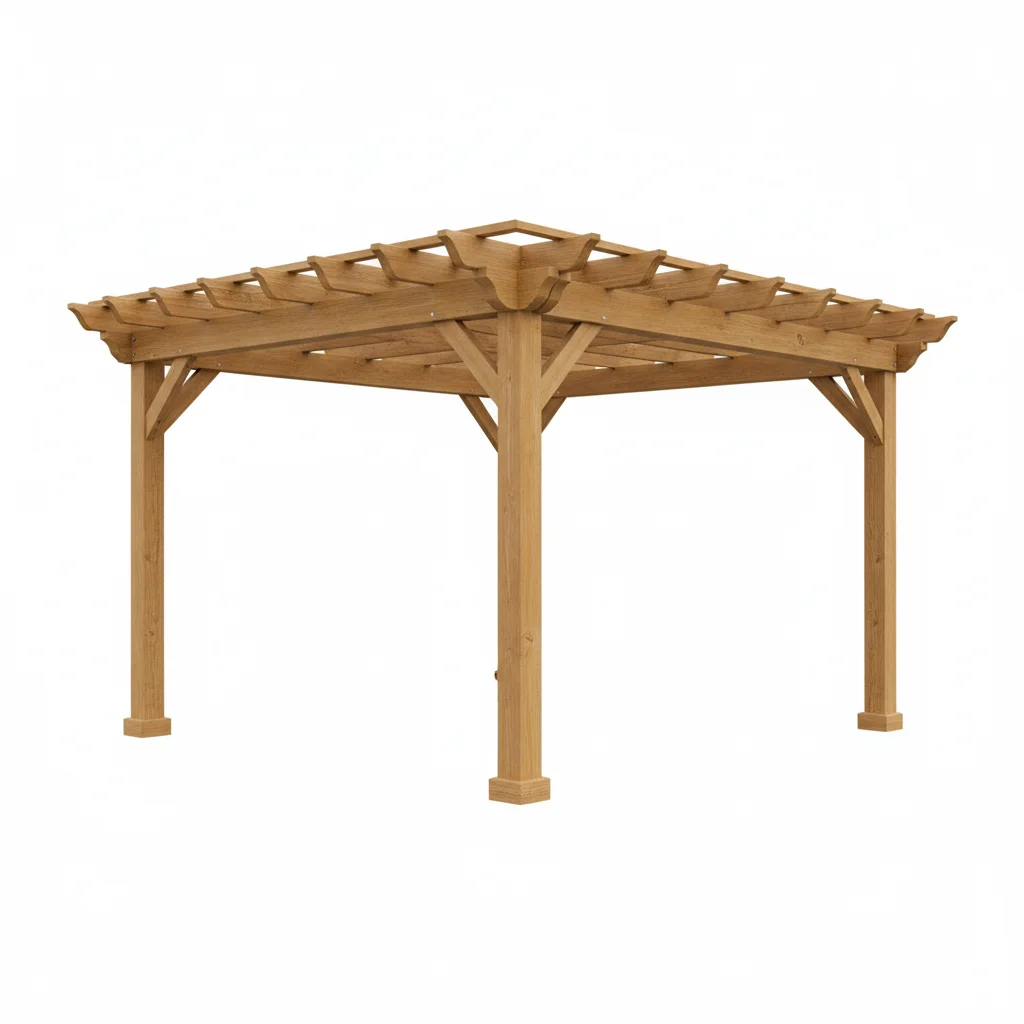
If you are living in one of the apartments or smaller townhouses with a more restricted terrace, a 3x3 meter timber pergola is often the most aesthetic and cost-effective choice. Using C24 grade structural timber, we can create a rustic yet modern frame that blends beautifully with a Mediterranean garden. To maximize the utility of a smaller space, I recommend combining the fixed pergola with vertical awnings or "drop down" screens. This allows you to block the low-angled afternoon sun that hits San Fulgencio particularly hard, as there are fewer tall buildings or mountains to provide natural shade in the late day. A 3x3 meter timber setup, professionally anchored and treated for the local climate, usually falls in the EUR 2,200 to EUR 3,500 range depending on the roofing material.
For those looking for the ultimate year-round outdoor room, the "Gold Standard" in San Fulgencio is a fixed aluminum pergola integrated with glass curtains. This combination is a game-changer for the local climate. During the windy months or when the calima dust is blowing in from the south, you can close the glass curtains to protect your space. On a scorching August day, you can slide them open to catch the breeze moving toward the Segura River. This setup effectively doubles your living area and protects your interior furniture from UV damage. While this is a more significant investment—often reaching the EUR 10,000 to EUR 12,000 mark for a full 20m² enclosure—it adds the most value to properties in this price bracket, which averages around EUR 150,000 in this area.
If you are on a tighter budget but still need a permanent solution, a fixed frame with a high-density polyethylene (HDPE) shade sail roof is an excellent alternative. This provides the structural permanence of a pergola but uses a breathable fabric that allows hot air to escape upwards. This is particularly effective in the hotter, drier parts of San Fulgencio where air stagnation can be an issue on walled terraces. However, keep in mind that these are not waterproof. For a truly "fixed" feel that offers protection from both sun and rain, the solid roof options remain my top recommendation for long-term residents.
Delivery & Local Knowledge
We have been operating across the Costa Blanca for years, and San Fulgencio is a core part of our service area. Our team is regularly in the area, not just for installations but for site surveys in nearby Rojales, Guardamar, Algorfa, and Los Montesinos. We know the logistics of these towns inside out. For instance, we understand that many of the streets within the older sections of La Marina Urbanization can be narrow and challenging for large delivery vehicles. We use smaller, more maneuverable transport for these areas to ensure that your materials arrive safely without blocking access for your neighbors—a small detail that makes a big difference in maintaining community harmony.
Our local knowledge extends to the technical side of the ground conditions here. The soil around San Fulgencio can vary from sandy patches near the coast to harder, clay-heavy ground as you move inland toward the river. This affects how we anchor your pergola. We don't use a "one size fits all" approach; we assess whether we need chemical anchors for existing terrace tiles or deep concrete footings for garden installations. We also account for the prevailing wind directions—the "Levante" from the east and the "Poniente" from the west—to ensure that the pitch and orientation of your pergola roof won't turn it into a giant sail during a storm.
When we deliver to San Fulgencio, we arrive with everything needed to complete the job, including the specific hardware required for local building materials like the hollow-core bricks common in Spanish construction. We take care of the heavy lifting and the precision leveling that a permanent structure requires. If you are considering a fixed pergola, I invite you to reach out for a free consultation. I can come to your property, measure the space, and discuss the best materials for your specific orientation and budget. There is no substitute for an on-site visit where we can look at the sun path together and decide exactly where that shade needs to fall. Whether you are looking for a simple timber frame for a few plants or a fully enclosed aluminum outdoor room, my goal is to ensure your investment stands up to the San Fulgencio sun for decades to come.
 JW'"
/>
JW'"
/>