Torrevieja operates at a different scale to every other town on the Costa Blanca. This is a proper city with year-round services, a full hospital, and an international population that creates a genuinely cosmopolitan atmosphere. The famous pink salt lakes, the beaches at La Mata and Los Locos, and the Habaneras commercial centre give the city an energy that smaller towns cannot replicate.
The property market is the most varied in the region. Seafront apartments with compact balconies sit alongside detached villas in the outskirts. La Mata has a more relaxed feel, while the centre around Los Locos beach buzzes with street life. Average prices around €160,000 make Torrevieja one of the most accessible entry points for expats on the Costa Blanca.
Over 30,000 foreign residents means every outdoor cooking culture is represented. British barbecue traditions, Scandinavian grilling techniques, Russian shashlik culture, and German Bratwurst expertise all coexist within a few square kilometres — a vibrant scene with no single dominant style.
Apartment owners — and there are many in Torrevieja — need equipment that works within building community rules. Many apartment complexes have regulations about open-flame cooking on balconies, making electric grills or gas plancha units the safest choice. Costa Blanca Outdoors recommends checking your community’s normas before purchasing, and we are happy to advise on compliant options for any specific building.
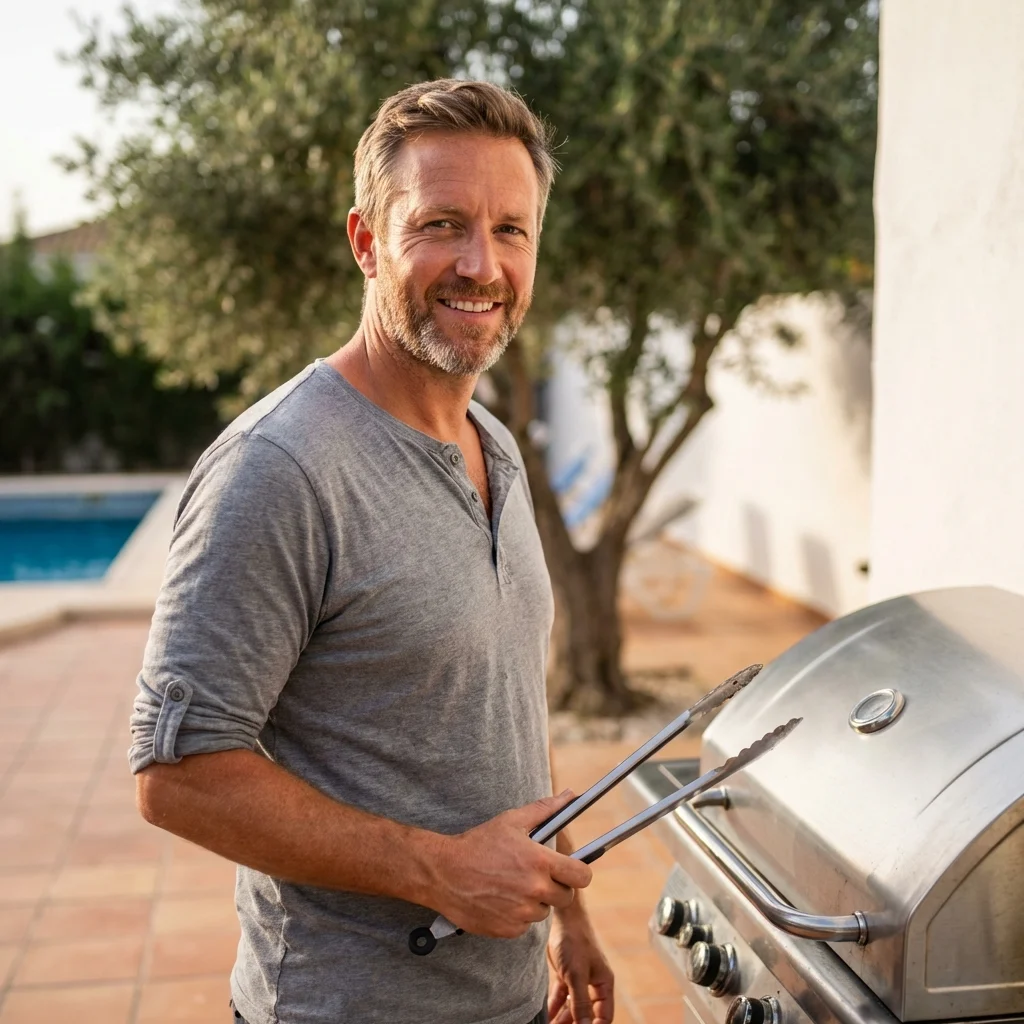
For townhouse and villa owners in the residential areas behind Los Locos, along the La Mata strip, or in the urbanisaciones toward San Luis, the full range of options opens up. A gas BBQ is the essential starting point — reliable, fast, and perfect for the spontaneous midweek grilling that Torrevieja’s social calendar demands. Add a kamado grill for weekend projects, or a countertop pizza oven for something different.
Torrevieja’s coastal position means salt air is a factor for any metal equipment. Stainless-steel construction or properly rated powder-coat finishes will outlast cheaper alternatives by years. Consider this an investment in longevity — replacing a corroded budget grill every two seasons costs more than buying quality once.
Torrevieja is the anchor point for our southern delivery operation. We know the city thoroughly — the one-way systems in the centre, the loading restrictions along the seafront, the access routes for apartment blocks near Los Locos, and the quieter streets of La Mata.
For apartment deliveries, we coordinate building access, lift capacity, and timing with building administrators in advance. Villa deliveries in the outskirts and urbanisaciones are straightforward, with wide roads and private driveways. Every delivery includes full unpacking, assembly, placement, and a walkthrough of your equipment.
Premium Bioclimatic Pergolas in Torrevieja: Engineered for the Vega Baja del Segura Climate
Torrevieja, a vibrant coastal city located in the comarca of Vega Baja del Segura, is home to a diverse and growing population of 98,533 residents (according to the 2024/Jan 2025 INE data). This bustling municipality features a unique demographic blend: while Spanish nationals make up approximately 60% of the population, around 40% of the residents are foreign nationals. This strong international presence includes a highly active contingent of British, Irish, German, and Scandinavian expats, alongside a significant Russian and Ukrainian community. In fact, due to its immense popularity among British buyers, parts of the area have long been affectionately nicknamed the 'Costa del Yorkshire'.
As a classic retiree and expat property market, homeowners in Torrevieja place a premium on outdoor living. The desire to enjoy the Mediterranean lifestyle year-round drives the demand for high-quality home improvements. However, creating a comfortable outdoor living space here requires addressing a highly specific and challenging microclimate. With an average of 3000 sun hours per year and summer high temperatures regularly reaching 32 C, reliable shade is an absolute necessity.
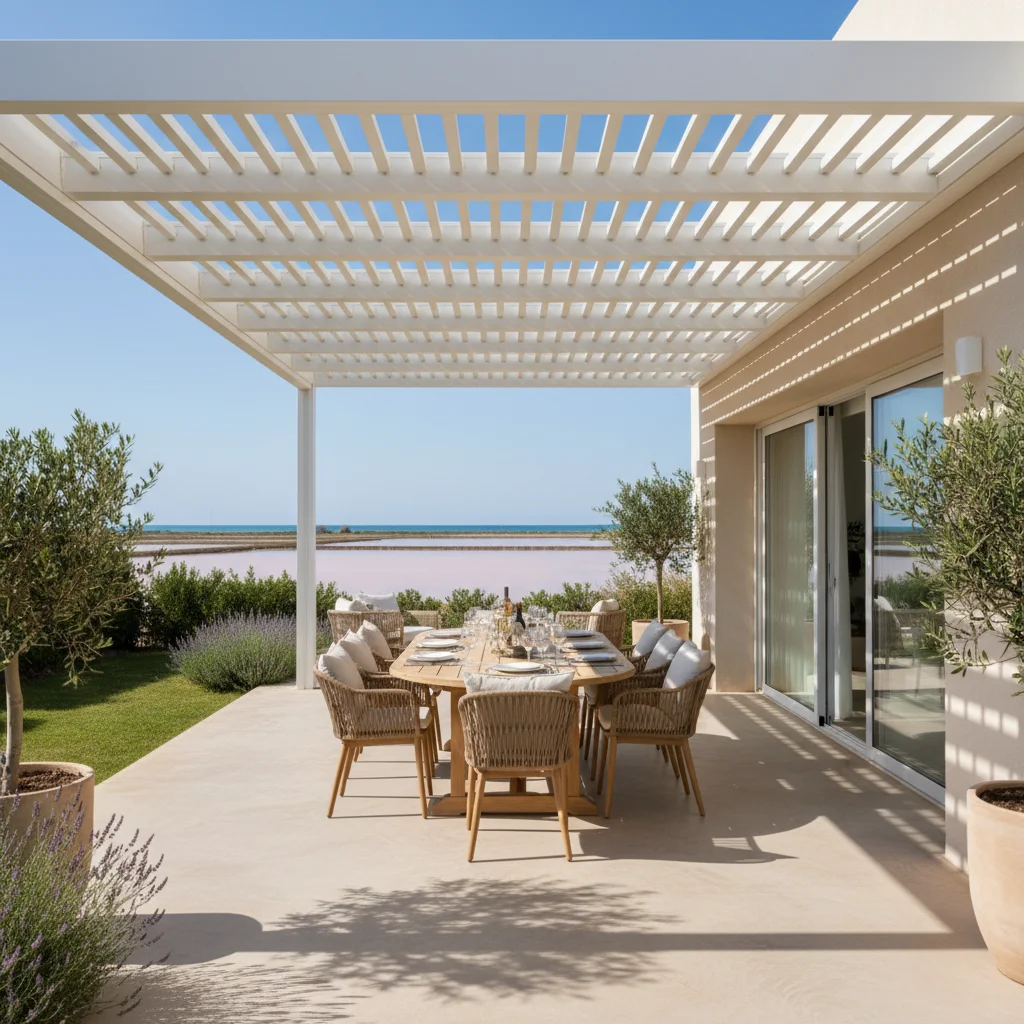
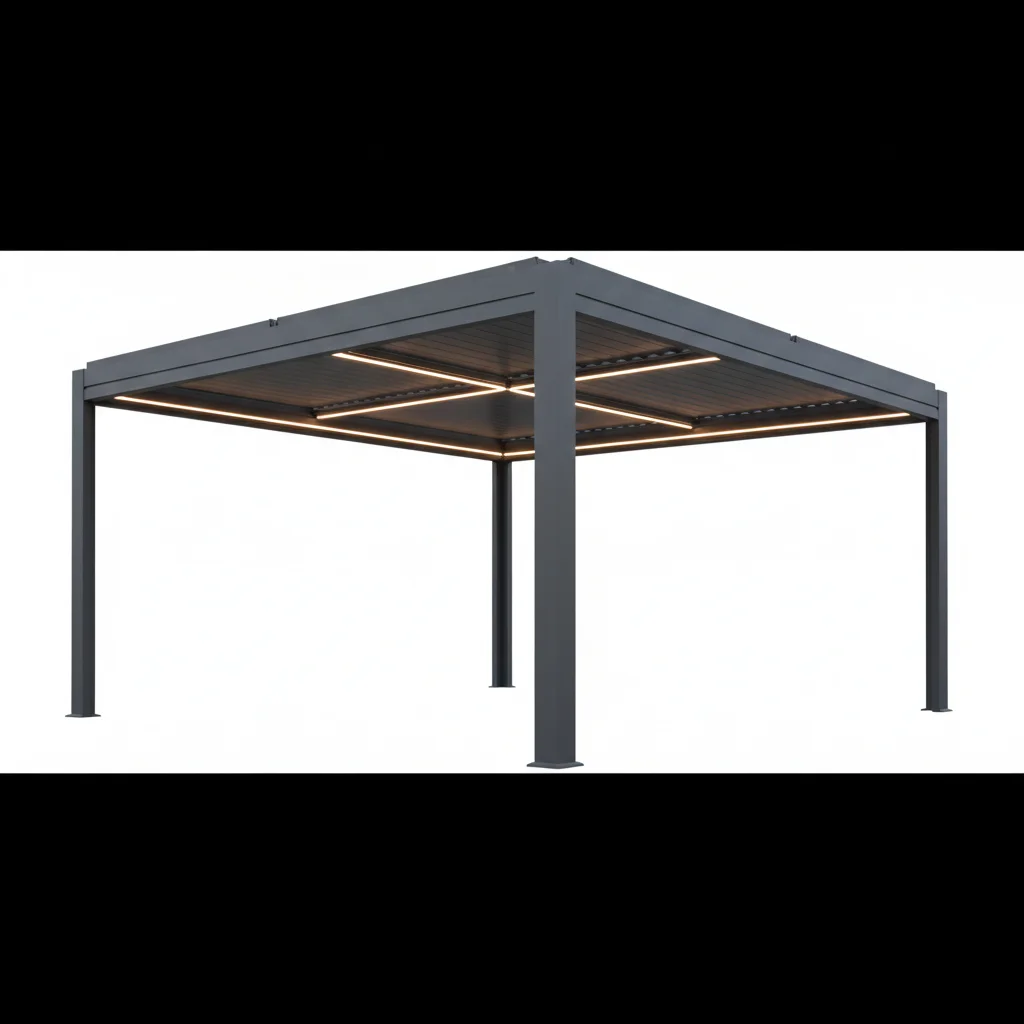
Traditional fabric awnings and wooden structures often fail to stand up to the intense local conditions. This is why motorised aluminium pergolas with orientable louvres—known locally as pergolas bioclimaticas—have become the premier choice for properties across Torrevieja. These structures provide adjustable shade, ventilation, and weather protection, transforming exposed terraces into luxurious, year-round living areas.
The Torrevieja Microclimate: Why Engineering Matters
Installing an outdoor structure in Torrevieja is not the same as installing one inland. The local geography and climate demand specific engineering standards to ensure durability and performance.
High Salitre (Sea-Salt) Exposure
Because Torrevieja is a coastal city, the air carries a high concentration of salitre (sea-salt spray). This airborne salt is highly corrosive to standard metals and low-grade coatings. Cheap steel gazebos or poorly treated aluminium will oxidise, blister, and fail within a few seasons. To combat this, we supply and install bioclimatic pergolas constructed from high-grade extruded aluminium treated with marine-grade powder coatings (Qualicoat Seaside standards). This specialized pre-treatment process strips impurities from the metal and applies a dense, salt-resistant protective layer, ensuring your pergola remains pristine despite constant exposure to the salty sea breeze.
The Double Glare: Sea and Salt Lagoons
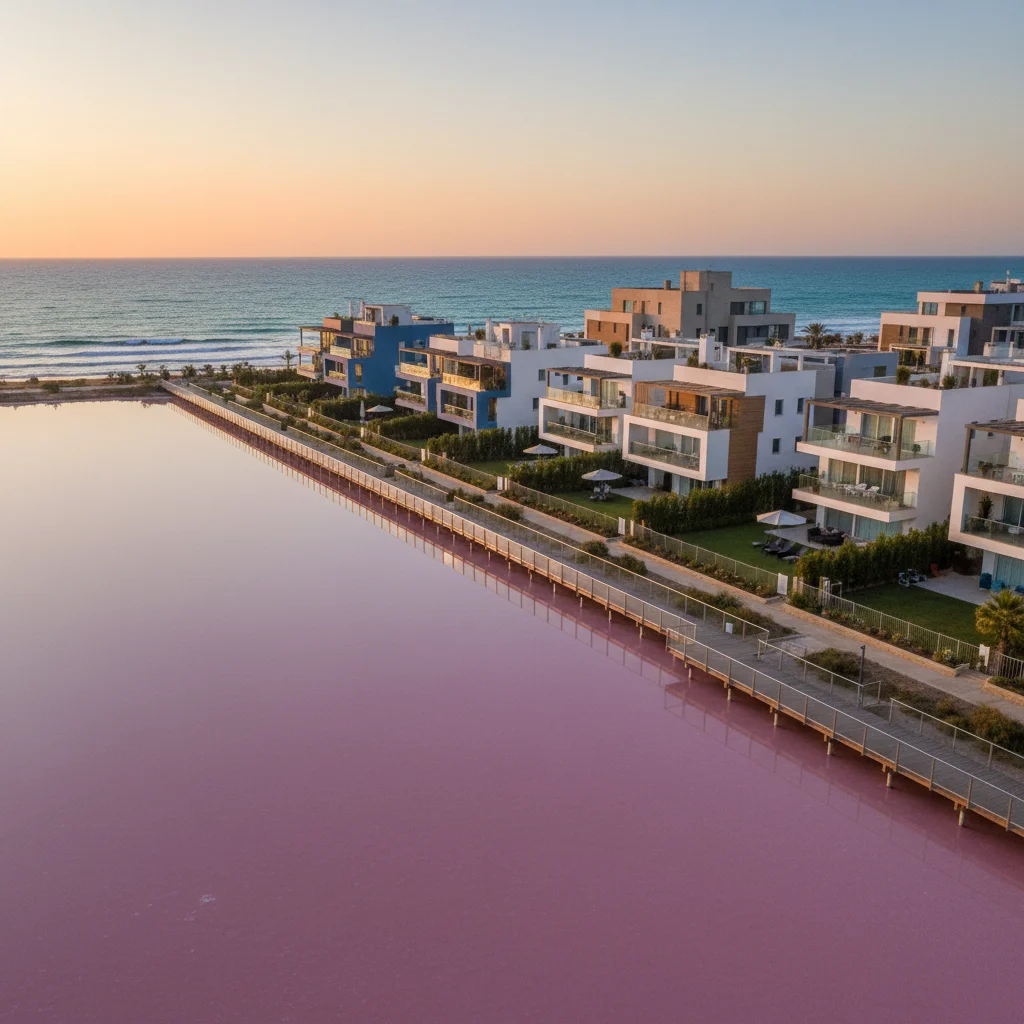
Torrevieja's geography is defined by its two massive salt lakes: the Laguna Rosa de Torrevieja and the Laguna de La Mata. These lakes lie within the Parque Natural de las Lagunas de La Mata y Torrevieja, supporting a historic and still highly active salt-extraction industry.
While beautiful, these vast bodies of water, combined with the Mediterranean Sea, create a double-glare effect. The intense summer sun reflects off the water and the white salt flats, creating very high summer UV levels and blinding horizontal glare. Standard overhead shading is often insufficient. Our bioclimatic pergolas can be equipped with integrated vertical ZIP screens. These screens utilize UV-stable fibres that block up to 95% of harmful radiation and eliminate glare while preserving your views of the surrounding landscape.
The Levante Wind and Sea Breezes
The dominant wind in Torrevieja is the Levante, a warm, humid easterly wind blowing directly off the sea, supplemented by daily thermal sea breezes. These winds can gust suddenly and violently.
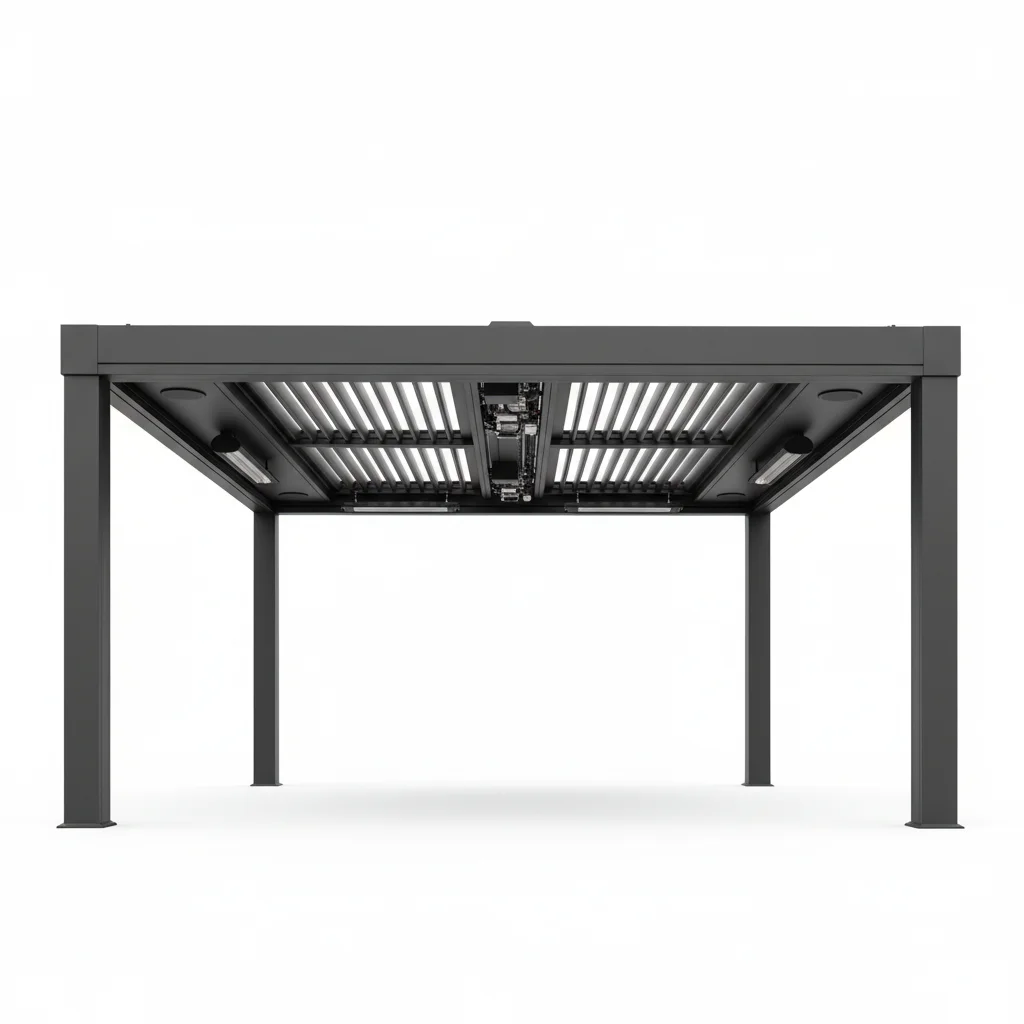
To ensure absolute safety, our bioclimatic pergolas are engineered and certified to withstand winds up to 175 km/h, achieving Clase 6 under the strict UNE-EN 13659 standard. The heavy-duty aluminium profiles and reinforced internal steel connections ensure the structure remains perfectly rigid. Additionally, we integrate automated wind sensors. If the Levante gusts exceed a safe threshold, the sensors automatically open the orientable louvres, allowing the wind to pass through harmlessly and protecting the structure from uplift forces.
Handling the Gota Fría (Torrential Rain)
Although Torrevieja is generally arid, with an average annual rainfall of just 328 mm, the region is prone to the gota fría (cold drop) phenomenon during autumn. These are sudden, highly concentrated, and torrential downpours that can cause rapid flooding on flat terraces.
Our pergolas are engineered with an advanced, high-capacity internal drainage system. When the orientable louvres are fully closed, they form a watertight seal. Rainwater is directed into perimeter gutters integrated within the support beams and down through the hollow corner posts. This system is rated to handle a drainage capacity of 60 l/m2, ensuring that even during a dramatic autumn storm, your patio furniture remains dry and protected.
Local Installation Spotlight: Urbanizaciones and Planning Regulations
Torrevieja is made up of several distinct residential zones, each with its own architectural styles and environmental exposures. Understanding these local nuances is key to a successful installation.
La Mata
Situated directly on the coast, properties in La Mata experience the highest levels of salitre and the most direct impact from the Levante wind. For beachfront apartments and villas in this area, we prioritize marine-grade powder coatings and heavy-duty, wind-resistant ZIP screens. A bioclimatic pergola here allows homeowners to enjoy their sea-facing terraces even when the coastal winds are blowing hard.
Los Balcones and Aguas Nuevas
These established, elevated urbanizaciones feature large detached villas with expansive, sun-drenched terraces. Because they sit higher up, they enjoy panoramic views but are highly exposed to both the midday sun and strong winds. Here, large-span, double-bay bioclimatic pergolas are highly popular, creating seamless transitions between indoor living rooms and poolside terraces.
La Siesta, El Chaparral, and San Luis
These peaceful residential areas are located further inland, bordering the salt lakes. Properties here experience intense afternoon heat and significant glare reflecting off the Laguna Rosa. Homeowners in these zones benefit greatly from dual-zone louvre systems, allowing them to shade one side of the terrace while keeping the other open for ventilation.
Navigating the Ayuntamiento de Torrevieja and Environmental Permits
When planning an outdoor installation, understanding local municipal regulations is essential. The Ayuntamiento de Torrevieja enforces strict guidelines regarding permanent building structures, particularly concerning closed-in brick extensions or solid concrete roofs, which add to the regulated "buildable volume" (edificabilidad) of a property.
Furthermore, a crucial environmental nuance applies to Torrevieja: Las Salinas de Torrevieja y La Mata were declared a protected Parque Natural in 1989. This protected area covers a significant portion of the municipality. For properties in urbanizaciones that border the park, such as San Luis, El Chaparral, and parts of La Siesta, building is strictly restricted near the protected lagoons and their designated ecological buffer zones. Permanent construction permits in these areas are incredibly difficult to obtain.
This is where a bioclimatic pergola offers a massive legal and practical advantage. Because these motorised aluminium structures are self-supporting, modular, and technically classified as non-permanent, demountable installations, they generally do not count as permanent buildable volume. This makes the approval process through the Ayuntamiento de Torrevieja significantly simpler, faster, and more straightforward, allowing you to legally extend your living space without violating local urban planning codes or the strict environmental protections of the Parque Natural.
Creating a Complete Outdoor Oasis: Pergolas and Premium Artificial Grass
Many of our clients in the expat and retiree communities—particularly in areas like La Siesta and El Chaparral—look to completely renovate their outdoor spaces to reduce maintenance. Traditional tiled terraces can become incredibly hot underfoot, while natural grass lawns are highly impractical due to Torrevieja's water restrictions and dry climate.
To solve this, we offer a complete terrace transformation service, combining our premium bioclimatic pergolas with the installation of high-quality artificial grass.
To ensure a luxurious, natural look and a soft feel underfoot, we supply and install artificial grass with a pile height of 32-47 mm. This specific pile density provides excellent resilience, a lush appearance, and remains comfortable to walk on even during the peak of summer.
Our pricing structure for these installations is transparent and tailored to the project scope:
- Bioclimatic Pergolas: 300 to 800 EUR/m2 (supplied and professionally installed, depending on size, motorisation, and integrated accessories).
- Artificial Grass Material: 10 to 40 EUR/m2 (depending on the chosen density and pile height within the 32-47 mm range).
- Professional Grass Installation: 25 to 60 EUR/m2 (including full ground preparation, weed-barrier membrane, silica sand infill, and perimeter securing).
By combining a motorised aluminium pergola with premium artificial grass, you can convert a dusty, underutilized garden or a scorching tiled patio into a clean, green, and shaded outdoor lounge that requires almost zero maintenance.
Investment and Pricing Guide for Torrevieja Homeowners
Investing in a bioclimatic pergola is a proven way to add significant value to your Torrevieja property. Given the high concentration of international buyers in the local real estate market, premium, low-maintenance outdoor features are highly sought after.
The overall cost of a bioclimatic pergola installation in Torrevieja typically ranges from 300 to 800 EUR/m2. Where your project falls within this range depends on several customizable factors:
- Dimensions and Configuration: Single-bay pergolas supported by four posts are highly cost-effective. Larger, multi-bay systems designed to cover expansive pool decks or wrap-around terraces require complex engineering and additional support profiles.
- Motorisation and Smart Automation: Premium systems feature fully integrated, silent motors (such as Somfy systems) controlled via remote control, smartphone apps, or automated weather sensors (wind, rain, and sun).
- Integrated Lighting and Heating: To enjoy your pergola during the cooler winter evenings in the Vega Baja, we can integrate dimmable LED strip lighting into the louvres or perimeter frame, along with discreet infrared heaters.
- Perimeter Enclosures: Adding vertical ZIP screens with UV-stable fibres or sliding glass curtains allows you to completely close in the structure, creating a fully insulated glass room for the winter months.
Why Choose Us for Your Torrevieja Installation?
As local specialists operating across the Costa Blanca and the Vega Baja del Segura, we understand the exact environmental and structural demands of installing premium outdoor systems in Torrevieja. We do not believe in one-size-fits-all solutions; every installation is custom-designed to match the specific wind exposure, solar orientation, and architectural style of your home.
Our team provides a seamless, end-to-end service, handling everything from the initial site survey and design consultations to the final professional installation. For our international clients, we offer clear, professional communication in English, ensuring a stress-free experience from start to finish.
Whether you want to shade a sun-drenched balcony in La Mata, create a wind-protected dining area in Los Balcones, or establish a low-maintenance garden oasis in San Luis, we have the expertise and the high-grade materials to bring your vision to life. Contact us today to schedule your on-site consultation and take the first step toward transforming your Torrevieja home.
 JW'"
/>
JW'"
/>