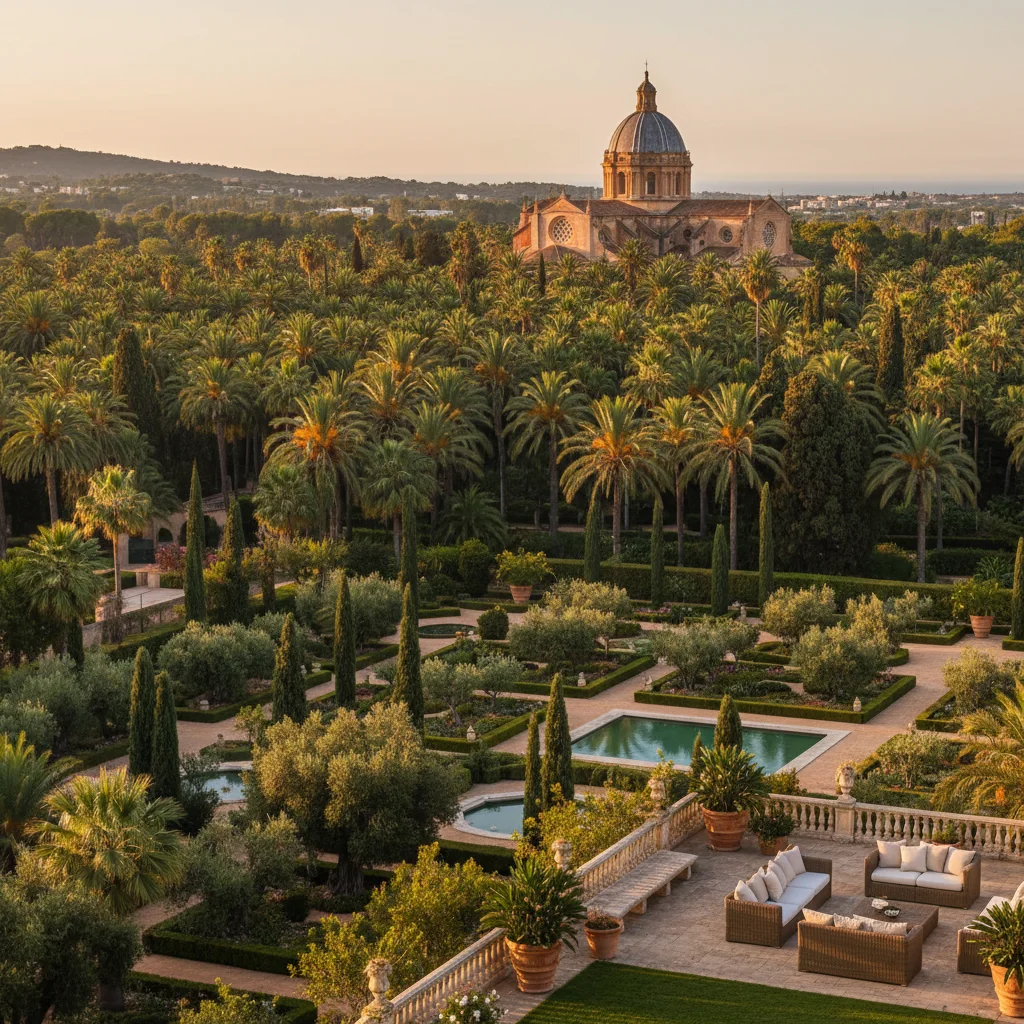
Elche is a city of contrasts. The historic centre, anchored by the Basilica of Santa María and the Altamira Palace, sits within the world’s largest palm grove — over 200,000 palm trees creating a microclimate that feels almost subtropical. Beyond the centre, residential zones like Altabix, Carrús, and El Pla spread out with spacious chalets and modern apartment blocks, while the outskirts give way to traditional fincas surrounded by pomegranate and palm groves.
The expat community here is diverse — North African, South American, Eastern European, and a growing contingent of Northern Europeans attracted by property prices averaging around €180,000, significantly below the coastal premium. That price point buys considerably more outdoor space than equivalent budgets in beachside towns. Chalets in zones like El Pla de Sant Josep or Torrellano regularly come with 50–100 square metre terraces or private gardens, making Elche one of the best-value locations on the Costa Blanca for serious outdoor cooking setups.
The city’s food culture runs deep. Elche is famous for its rice dishes and local produce, and the tradition of cooking outdoors — particularly weekend paellas — is embedded in local life. International residents quickly adopt this rhythm, and many find that a quality grill or outdoor kitchen becomes the social centre of their home.
The key advantage in Elche is space. Unlike coastal apartment living, many Elche properties come with substantial outdoor areas that can accommodate multi-zone cooking setups. A four-burner gas BBQ paired with a wood-fired pizza oven is a popular combination in the chalet zones around Altabix and El Pla, where covered terraces provide shade during Elche’s intense summer months — temperatures regularly exceed 35°C from June to September.
For urban apartment owners in the city centre or Carrús district, a compact kamado grill (38–46cm) delivers remarkable versatility on a balcony terrace. Kamados excel in Elche’s climate because their ceramic insulation maintains stable temperatures even in extreme heat, and their fuel efficiency means less charcoal consumption during long, slow cooks.
Rural finca owners on the outskirts toward Crevillente or Santa Pola have the luxury of dedicated outdoor kitchen builds. Costa Blanca Outdoors designs custom outdoor kitchens with built-in gas grills, preparation areas, and integrated pizza ovens — ideal for the large-scale entertaining that finca life naturally encourages. Local almond and olive wood from the surrounding groves provides excellent fuel for wood-fired cooking.
Elche sits on the A-7 motorway corridor, making it one of the most accessible cities in our delivery network. The city centre around the Palm Grove and Basilica area has restricted traffic zones, so we coordinate delivery timing carefully for properties in the casco antiguo. Residential zones like Altabix, Carrús, and El Pla have excellent road access with no special restrictions.
For finca deliveries outside the city, we confirm access routes in advance — some rural tracks require smaller vehicles, and we always arrange this before scheduling. Our team handles full assembly and placement, including a complete walkthrough of your equipment.
Professional Césped Artificial Installation in Elche: The Complete Guide for Baix Vinalopó Homes
Elche, the historic and bustling capital of the Baix Vinalopó comarca, is a city of remarkable contrasts. Home to 242,317 residents (according to the 2024 INE census), it seamlessly blends a deep-rooted industrial heritage as Spain's premier footwear hub with breathtaking natural landscapes. However, creating and maintaining a lush, green outdoor space in this region presents a formidable challenge.
Elche is characterized by a hot semi-arid, near-desert climate. With summer high temperatures averaging 31 degrees Celsius, approximately 2950 hours of sunshine per year, and an exceptionally low annual rainfall of just 276 mm, natural lawns are increasingly difficult, expensive, and ecologically irresponsible to maintain.
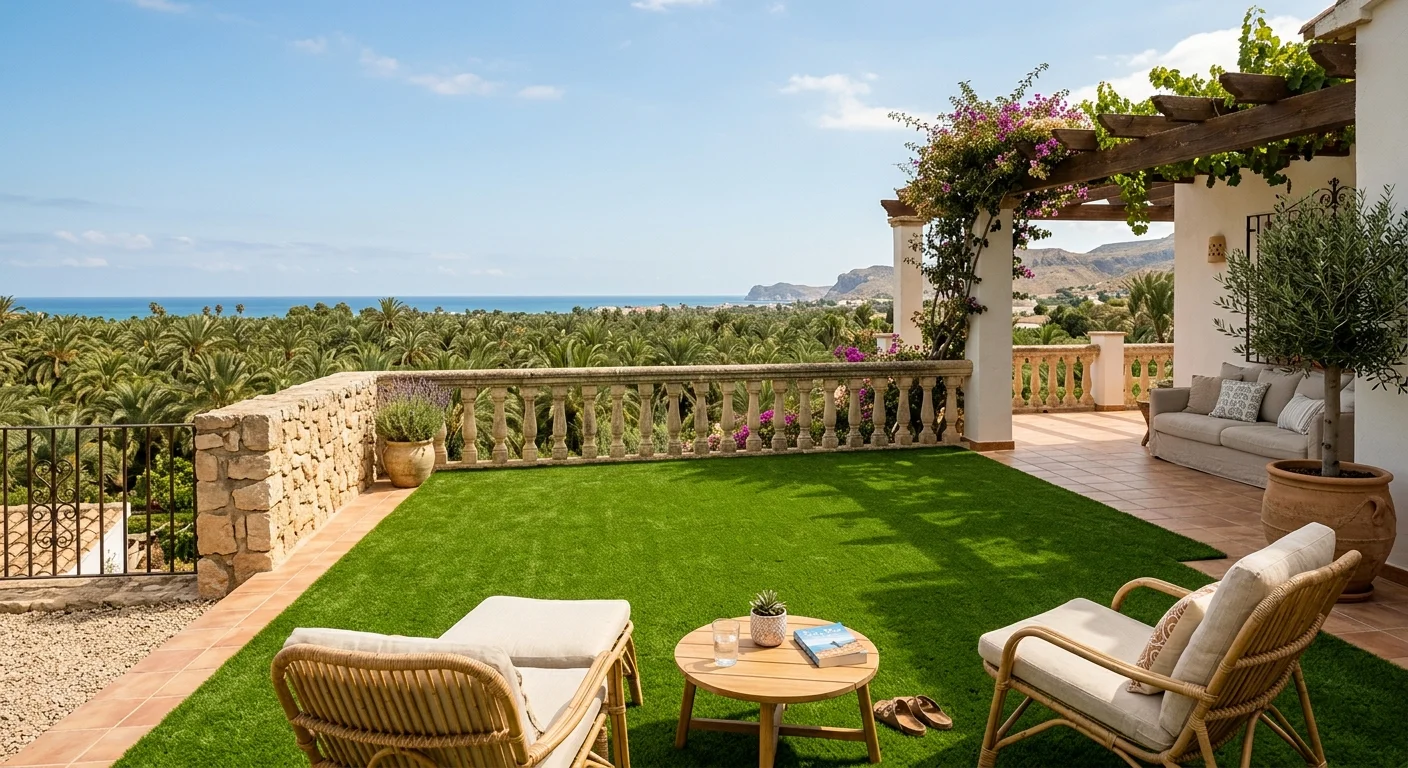
For homeowners across Elche, professional césped artificial (artificial grass) has transitioned from a modern alternative to an essential home improvement. Whether you are looking to transform a sun-drenched penthouse terrace in Altabix, a compact patio in the historic Barrio del Raval, a family garden in El Pla de Sant Josep, a busy urban plot in Carrús, or a spacious suburban villa in Torrellano or El Altet, high-quality synthetic turf offers a durable, vibrant, and water-wise solution.
The Elche Climate: Why Engineered Turf is Essential
To understand why professional-grade artificial grass is so vital in Elche, one must look at the local climate and geography. Elche is unique because it features both inland urban centers and coastal districts. The inland parts of the city experience significant thermal variation, with scorching summer days followed by rapid cooling at night, whereas the coastal areas near El Altet and the beaches of Arenales del Sol experience a slightly moderated marine influence.
This geographical layout exposes local properties to several harsh environmental factors:
- Very High Summer UV Radiation: With nearly 2950 hours of annual sunshine, the UV index in Elche during the summer months is extremely high. Standard, low-grade artificial grasses will quickly fade, become brittle, and disintegrate under this relentless exposure. Professional-grade installations require advanced UV-stabilized polyethylene fibers designed specifically for Mediterranean climates to ensure the lawn retains its rich green hue for decades.
- The Levante Wind: The dominant East wind, known as the Levante, blows across the Baix Vinalopó plains, carrying fine dust from agricultural fields and sand from the coastal dunes near the Clot de Galvany protected wetland. This wind can deposit abrasive particles onto outdoor surfaces. A high-density turf pile is crucial here, as it prevents dust from settling deep into the backing, making it much easier to clean with a simple leaf blower or garden hose.
- Medium Salitre (Sea-Salt) Exposure: Properties in the coastal district of El Altet and surrounding areas experience medium salitre exposure. Salt-laden air is highly corrosive to standard materials. Therefore, any landscape integration—including the sub-base fittings, securing pins, and surrounding structures like pergolas—must utilize marine-grade materials to prevent rust and structural failure.
Navigating Local Regulations: The Palmeral de Elche and Ayuntamiento Permits
One of the most critical aspects of planning an artificial grass installation in Elche is understanding the local municipal regulations set by the Ayuntamiento de Elche (Ajuntament d'Elx).
Elche is world-famous for the Palmeral de Elche, the largest palm grove in Europe, which was declared a UNESCO World Heritage Site in 2000. This cultural treasure is protected by a strict palm-grove conservation law (Ley del Palmeral).
The Permit Nuance for Homeowners
If your property is located within or directly borders the historic, protected palm orchards (the traditional huertos de palmeras), the Ayuntamiento enforces strict aesthetic and environmental protections. In these specific, highly protected historic zones, the installation of synthetic materials like artificial grass is generally prohibited or subject to rigorous municipal vetoes to preserve the authentic, historical agricultural soil and landscape.
However, if your home lies within the standard residential and urban expansion zones of the city, the regulations are highly favorable. In neighborhoods such as Altabix, Carrús, El Pla de Sant Josep, or the suburban developments of Torrellano and El Altet, installing césped artificial is widely accepted and encouraged as a highly effective water-conservation measure. For these standard residential properties, a complex heritage permit is not required. Instead, a standard minor works notification (declaración responsable) to the Ajuntament d'Elx is typically all that is needed to proceed with the ground preparation and installation.
Understanding the Elche Homeowner Profile
The demographic makeup of Elche differs significantly from many other municipalities on the Costa Blanca. While nearby coastal towns are often dominated by Northern European expat retirees, Elche remains a predominantly Spanish industrial city. Its foreign-born population stands at approximately 17.2% (2024 data), consisting primarily of Latin American and Moroccan residents rather than British, German, or Scandinavian expats.
This means that the typical buyer profile in Elche consists of local Spanish families, industrial professionals, and long-term residents who view their properties as primary, year-round homes. When investing in home improvements, Elche buyers prioritize:
- Long-Term Durability: Because these are primary residences, the artificial lawn will experience daily, high-intensity use by children, pets, and family gatherings.
- Return on Investment (ROI): Homeowners want a product that reduces their skyrocketing water and maintenance bills immediately while adding tangible value to their property.
- Thermal Comfort: Because local families actively use their gardens during hot summer evenings, the grass must be engineered to stay as cool as possible.
Technical Specifications for Elche's Demanding Environment
To ensure your artificial lawn survives the local climate and heavy foot traffic, we install products that meet strict technical benchmarks:
1. Pile Height and Density (32 mm to 47 mm)
For residential gardens in Elche, we recommend a pile height between 32 mm and 47 mm:
- 32 mm to 38 mm: Ideal for high-traffic family areas, households with pets, and play zones in Torrellano or Carrús. This height offers excellent resilience, is easy to brush clean of Levante dust, and recovers quickly from foot traffic.
- 40 mm to 47 mm: Perfect for front gardens, luxury villa lawns, and pool surrounds in El Altet. This range provides a lush, dense, and highly realistic aesthetic underfoot, offering maximum comfort and visual appeal.
The yarn must feature memory-shape technology (such as C-shape or W-shape fibers) which allows the blades of grass to spring back upright even after being stepped on in the softening 31 degrees Celsius summer heat.
2. High-Capacity Drainage (60 l/m2)
While Elche is dry for most of the year, the hot semi-arid climate is prone to the "gota fría" (cold drop) during autumn. These sudden, torrential storms can dump a massive volume of water in a matter of minutes.
To prevent pooling and flooding on your property, we only install artificial grass with a minimum drainage capacity of 60 liters per minute per square meter (60 l/m2). Combined with a professionally engineered, porous aggregate sub-base, this ensures that even the most violent autumn downpour drains away instantly.
3. Integrated Shade Structures and Wind Resistance
To make your outdoor space usable during the hottest hours of the day, many Elche homeowners pair their new synthetic lawn with a modern pergola. Due to the strong Levante winds that sweep across the Baix Vinalopó, any pergola installed must be structurally certified.
We supply and install high-quality pergolas engineered to withstand wind speeds of up to 175 km/h, meeting the stringent Clase 6 UNE-EN 13659 standard. These structures are often equipped with automated wind sensors that automatically adjust or retract the louvers during high-wind events to protect the system from damage.
Cost Orientation and Investment Guide
Investing in professional artificial grass and outdoor living spaces in Elche yields immediate savings on water bills, gardening services, and fertilizers. Here is a realistic breakdown of the costs involved for a professional, long-lasting installation in the Alicante province:
- Artificial Grass Material: 10 to 40 EUR per square meter. The price varies depending on the pile height (32-47 mm), fiber density, dtex rating, and the advanced cooling or antibacterial technologies incorporated into the yarn.
- Professional Installation Services: 25 to 60 EUR per square meter. This comprehensive service includes site excavation, weed eradication, the creation of a compacted, porous aggregate sub-base, geotextile weed membrane installation, precision cutting, seaming, perimeter anchoring, and silica sand infill.
- High-Quality Pergolas (Optional Integration): 300 to 800 EUR per square meter. This covers everything from classic aluminum shade structures to fully motorized, bioclimatic pergolas with wind sensors and integrated drainage systems.
The Professional Step-by-Step Installation Process
Achieving a flawless, long-lasting synthetic lawn in Elche requires a rigorous installation process, particularly given the clay-heavy soils found in parts of the Baix Vinalopó comarca.
[Excavation & Weed Removal]
       │
       ▼
[Compacted Aggregate Sub-Base] ──► Ensures 60 l/m2 drainage
       │
       ▼
[Geotextile Weed Membrane]
       │
       ▼
[Precision Fitting & Seaming] ──► Polyurethane weather-resistant adhesive
       │
       ▼
[Perimeter Anchoring] ──► Resists Levante wind uplift
       │
       ▼
[Silica Sand Infill & Brushing] ──► Adds ballast & cools fibers
Step 1: Excavation and Soil Preparation
We begin by excavating the existing soil to a depth of 5 to 8 cm, removing all natural grass, weeds, and root systems. This is a critical step in Elche, as local weeds are highly resilient and can easily damage poorly prepared installations.
Step 2: Creating the Porous Sub-Base
We lay a robust, multi-layered base of crushed gravel and fine granite sand (zahorra). This base is thoroughly moistened and compacted using heavy vibrating plates. This step is vital to ensure a perfectly level surface that will not sink over time and to guarantee the system meets the required 60 l/m2 drainage capacity.
Step 3: Weed Barrier Installation
A heavy-duty, non-woven geotextile weed membrane is laid over the compacted sub-base. This prevents any dormant seeds or weeds from pushing through the turf backing while allowing rainwater to pass through freely into the ground below.
Step 4: Laying, Cutting, and Seaming
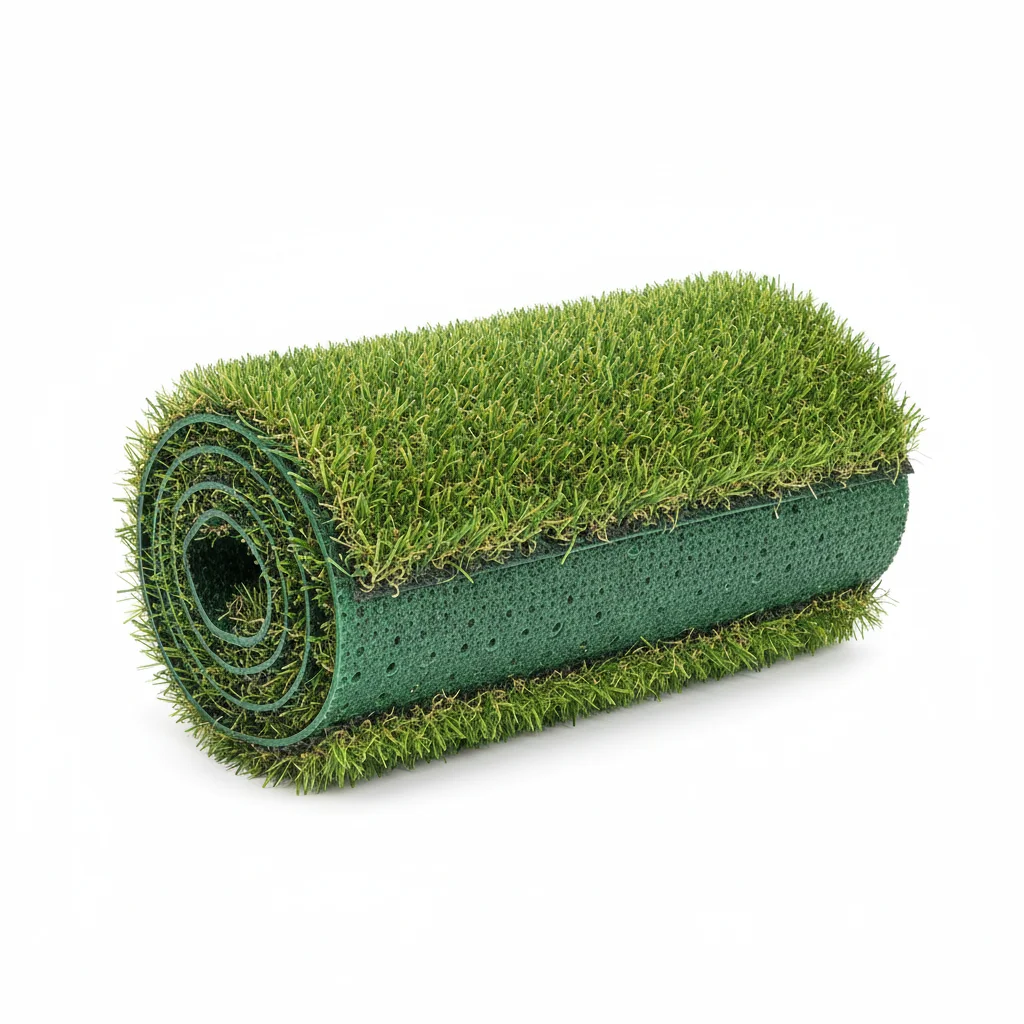
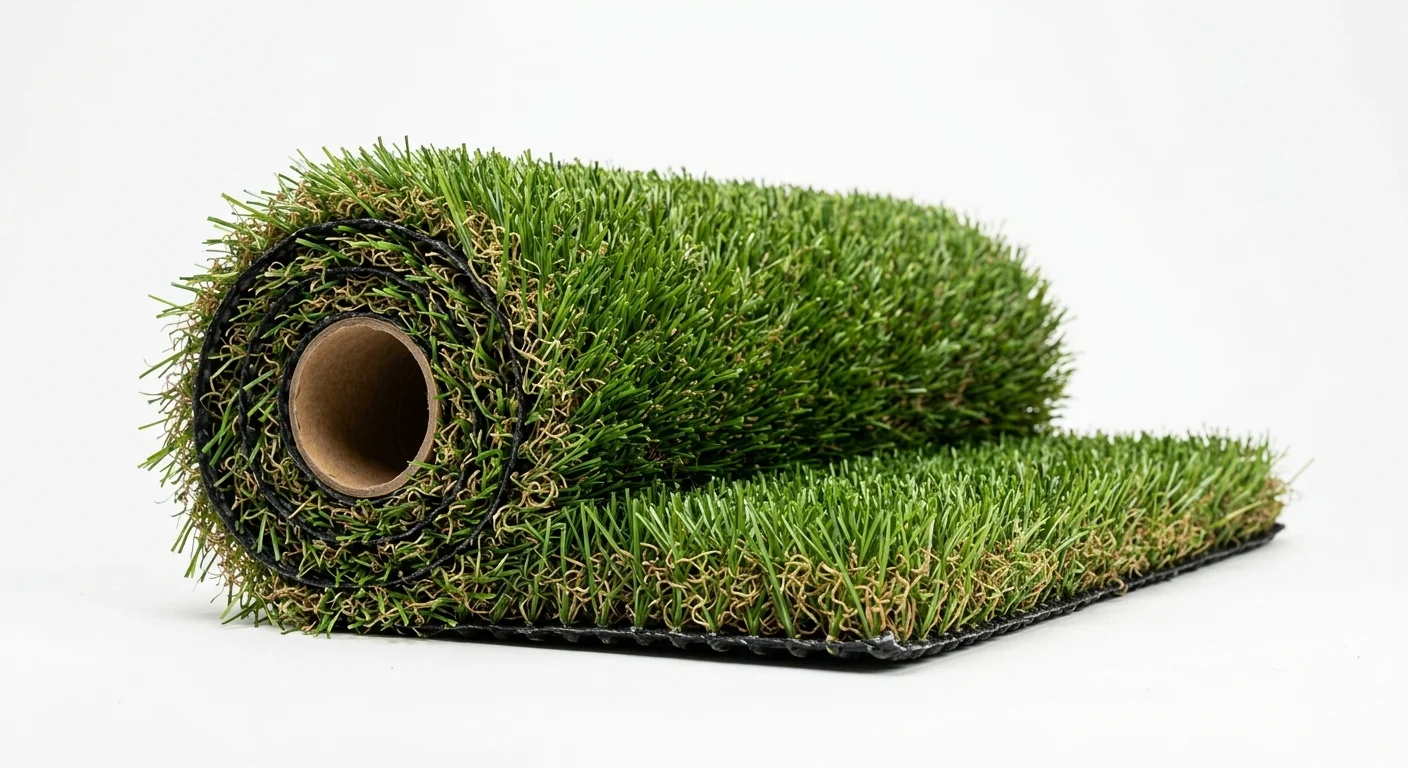
The rolls of artificial grass are carefully laid out. It is crucial that the pile direction of all rolls faces the primary viewing angle (usually looking out from the main house terrace or pool area) to ensure the most natural appearance. The edges are meticulously trimmed to fit the exact contours of your garden, walls, or pool coping. The seams are then joined using high-strength, weather-resistant polyurethane adhesive and specialized jointing tape.
Step 5: Securing the Perimeter
To prevent the edges from lifting during strong Levante wind gusts, the entire perimeter is anchored securely using non-corrosive ground anchors or specialized adhesive borders on hard surfaces.
Step 6: Silica Sand Infill and Brushing
We apply a uniform layer of kiln-dried silica sand infill (approximately 5 to 10 kg per square meter) across the lawn. Using a specialized motorized brushing machine, we brush the sand deep into the pile. The silica sand serves three critical purposes in Elche's hot climate:
- It adds heavy ballast to keep the turf perfectly flat and secure.
- It supports the 32-47 mm fibers, keeping them standing upright and resilient to heavy foot traffic.
- It retains moisture from morning dew or occasional light hosing, acting as a natural evaporative cooling system that keeps the lawn comfortable to walk on even when summer temperatures reach 31 degrees Celsius.
Simple Maintenance for Elche's Climate
While professionally installed artificial grass requires a fraction of the maintenance of natural turf, Elche's specific environment benefit from a few simple care habits:
- Clearing Levante Dust: Every couple of weeks, give the lawn a quick rinse with a garden hose. This washes away any fine agricultural dust or coastal sand carried by the East wind, keeping the green fibers looking bright and clean.
- Occasional Brushing: In high-traffic walkways or play areas, brush the grass against the pile direction with a stiff, non-metallic broom to keep the fibers standing tall.
- Summer Cooling: On peak summer afternoons, spray the grass with water for just 60 seconds. The silica sand infill will absorb the moisture and cool the surface temperature of the lawn instantly, making it perfect for children and pets to enjoy.
 JW'"
/>
JW'"
/>