Outdoor Living in El Campello
El Campello is home to 29,000 residents with a 20% international community — a laid-back coastal town between Alicante and Benidorm where dramatic coves, Roman ruins, and a genuine village atmosphere attract residents seeking quality over quantity.
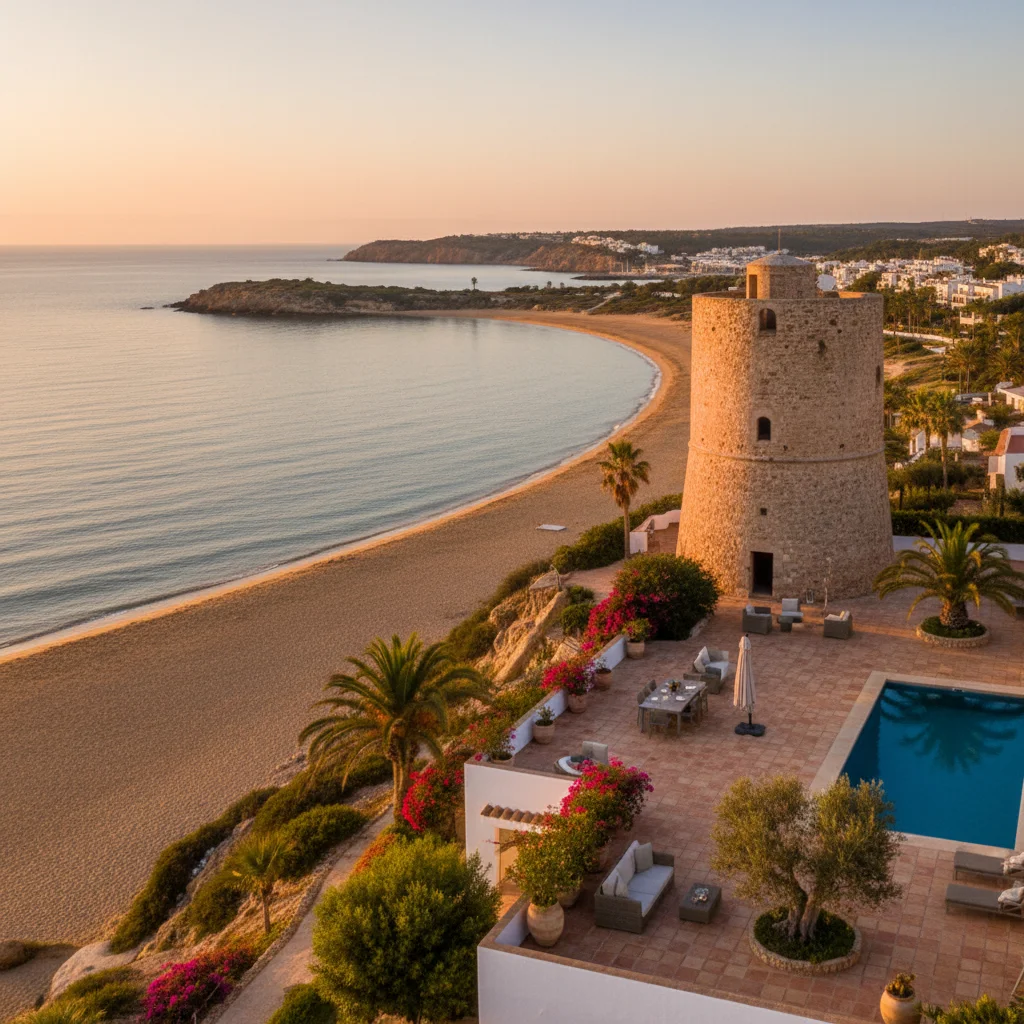
El Campello occupies one of the most visually striking stretches of the Costa Blanca coastline. The iconic 16th-century Watchtower stands guard above the fishing harbour, while the shoreline to the north reveals a succession of hidden coves and rocky inlets — Coveta Fumà, the Baths of the Queen (an ancient Roman fish pool), and the dramatic cliffs of the Cala del Amerador. It is coastal Spain at its most unspoilt.
The town draws a mix of British, Nordic, and German residents who want Mediterranean life without the crowds of larger resorts. Property prices average around €220,000, with options ranging from seafront apartments along the Muchavista beach strip to hillside villas with sweeping sea views in urbanisaciones like Pueblo Acantilado and Coveta Fumà. Townhouses in the centre, close to the weekly market and the harbour restaurants, offer a walkable village lifestyle with terraces of 15–25 square metres.
El Campello’s outdoor culture is shaped by its coastline. Residents live facing the sea, and terraces are oriented for sunset views over the Mediterranean. Evening cooking on a terrace above the coves is not a luxury here — it is the default way to spend a summer evening, and increasingly a winter one too.
El Campello’s stunning coastal setting, moderate property prices, and relaxed international community make it ideal territory for outdoor cooking enthusiasts who want space, views, and a genuine village feel.
Choosing Your Setup in El Campello
El Campello’s mix of seafront apartments and hillside villas means equipment choices range from compact terrace-friendly units to full outdoor kitchen installations — with salt-air resistance essential across the board.
Muchavista beachfront apartments typically have balcony terraces of 8–15 square metres. A compact kamado grill or a quality two-burner gas BBQ is the practical choice here, delivering real cooking performance without overwhelming the space. These terraces face the sea, which means salt exposure is significant — Costa Blanca Outdoors recommends marine-grade stainless steel or ceramic kamado grills for any property on the Muchavista strip.
Hillside villa owners in Coveta Fumà, Pueblo Acantilado, and the elevated urbanisaciones behind the town have the space for more ambitious setups. A built-in gas grill with side burner, paired with a wood-fired pizza oven, takes full advantage of those panoramic terraces. These properties often have covered naya-style outdoor living areas of 30–50 square metres — perfect for a complete outdoor kitchen installation with preparation counters and storage.
Wind is a factor in El Campello. The elevated coastal position means afternoon breezes can be brisk, particularly on hillside terraces. Kamado grills handle wind exceptionally well thanks to their sealed design, while gas BBQs benefit from windshield attachments. Costa Blanca Outdoors advises on wind-appropriate equipment selection based on your specific terrace orientation.
For El Campello, Costa Blanca Outdoors recommends wind-resistant, salt-proof equipment — ceramic kamados for exposed terraces and marine-grade stainless gas BBQs for sheltered villa setups.
Delivery to El Campello
We deliver throughout El Campello, from the Muchavista beachfront to the hillside urbanisaciones of Coveta Fumà and Pueblo Acantilado, on our weekly northern Alicante route.
El Campello sits on the N-332 coastal road between Alicante and Benidorm, making it a natural stop on our central delivery corridor. Beachfront deliveries along Muchavista are straightforward, with good road access and lift-equipped buildings. The town centre around the harbour and market area has narrower streets, so we schedule these deliveries during quieter morning hours.
Hillside properties in Coveta Fumà and the elevated urbanisaciones require careful planning. Some access roads are steep with tight turns, and we always confirm vehicle access and terrace entry points before scheduling heavy deliveries. Our team handles full assembly on-site, including positioning on elevated terraces and a complete equipment walkthrough.
Neighbouring Alicante and San Juan de Alicante are on the same southern route, while Villajoyosa and Benidorm connect on our northern schedule. In-stock items ship within 5–10 working days, while custom outdoor kitchen projects require 3–4 weeks for design, fabrication, and professional installation.
Shade Sails in El Campello: Practical Solutions for the Coastal Environment
Living on this specific stretch of the coastline requires a different approach to outdoor design than you might find further inland or even thirty minutes north. Since I moved to the Costa Blanca in 2019, I have seen how the unique geography of this area dictates the longevity of your terrace furniture and fixtures. The town sits at a pivot point where the landscape transitions from the flat expanses of San Juan beach into the rugged, elevated cliffs of Coveta Fumà and the Coves. This diversity in property types, from the dense apartment blocks lining the promenade to the detached villas perched on the hillsides, means a one-size-fits-all shade solution rarely works. With twenty percent of our neighbors coming from abroad—largely from Britain, Scandinavia, and Germany—there is a high demand for outdoor spaces that function as secondary living rooms or full-scale summer kitchens. We are not just looking for a place to sit; we are building environments where we can eat, work, and entertain for ten months of the year.
The property market here, with an average price point around 220,000 EUR, reflects a resident profile that values both practicality and aesthetic integration. If you own a villa in the higher reaches of the town near the Watchtower, you are likely dealing with significantly more wind exposure than someone with a ground-floor patio near the Baths of the Queen. Shade sails have become the preferred choice for many because they offer a architectural lightness that traditional awnings cannot match. They allow for airflow, which is essential when the summer heat sits heavy on the coast. Unlike a solid roof or a heavy fabric awning, a well-tensioned HDPE sail breathes, letting the hot air escape upwards while blocking up to 95% of harmful UV rays. This is particularly vital for the Nordic and British expats whose skin may not be as resilient to the intense Spanish sun as the local population.
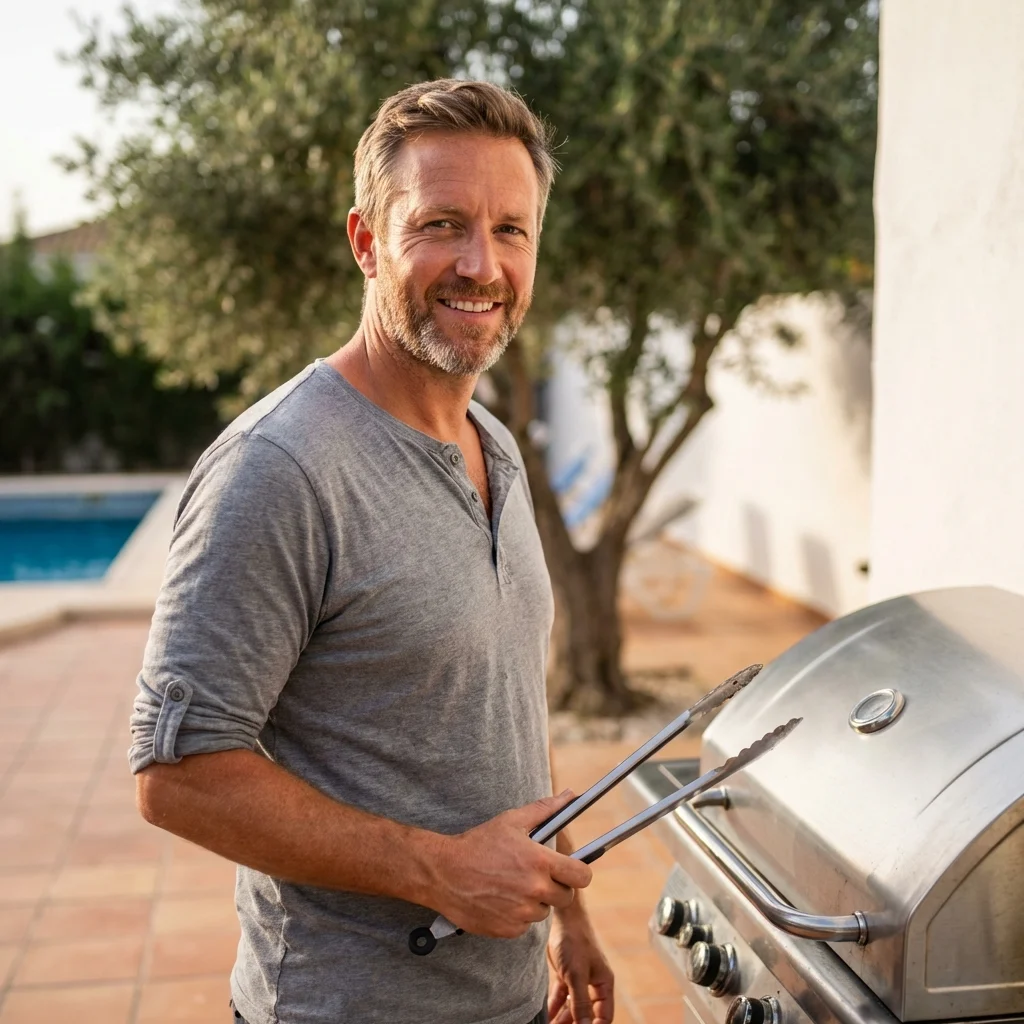
When we look at the way people live here, the outdoor cooking scene is a massive driver for installing these structures. I have helped many families set up shaded zones specifically to protect expensive outdoor grills and preparation areas. Whether you are in a compact beachfront apartment or a sprawling garden, the goal is to create a usable footprint that doesn't feel closed in. A shade sail provides that overhead protection without the need for heavy, permanent pillars that might obstruct your view of the Mediterranean or infringe on the limited square footage of a balcony.
Technical Considerations for the Local Climate and Regulation
Installing a shade sail in this town is not merely about aesthetics; it is a battle against the elements. We deal with two primary winds: the Levante, which brings humidity and salt from the east, and the Poniente, the hot, dry wind from the interior. Because this area is so exposed, your hardware choices are more important than the fabric itself. Within two kilometers of the shore, salt spray is a constant factor that will corrode standard galvanized steel in a matter of months. I always insist on 316-grade stainless steel for every turnbuckle, eye bolt, and D-ring. This marine-grade hardware is the only way to ensure your installation remains safe and rust-free when the sea mist rolls in over the Coves. A basic installation kit in 316 stainless might add 80 EUR to your project cost, but it saves you the 200 EUR cost of replacing failed components and potentially damaged fabric two years down the line.
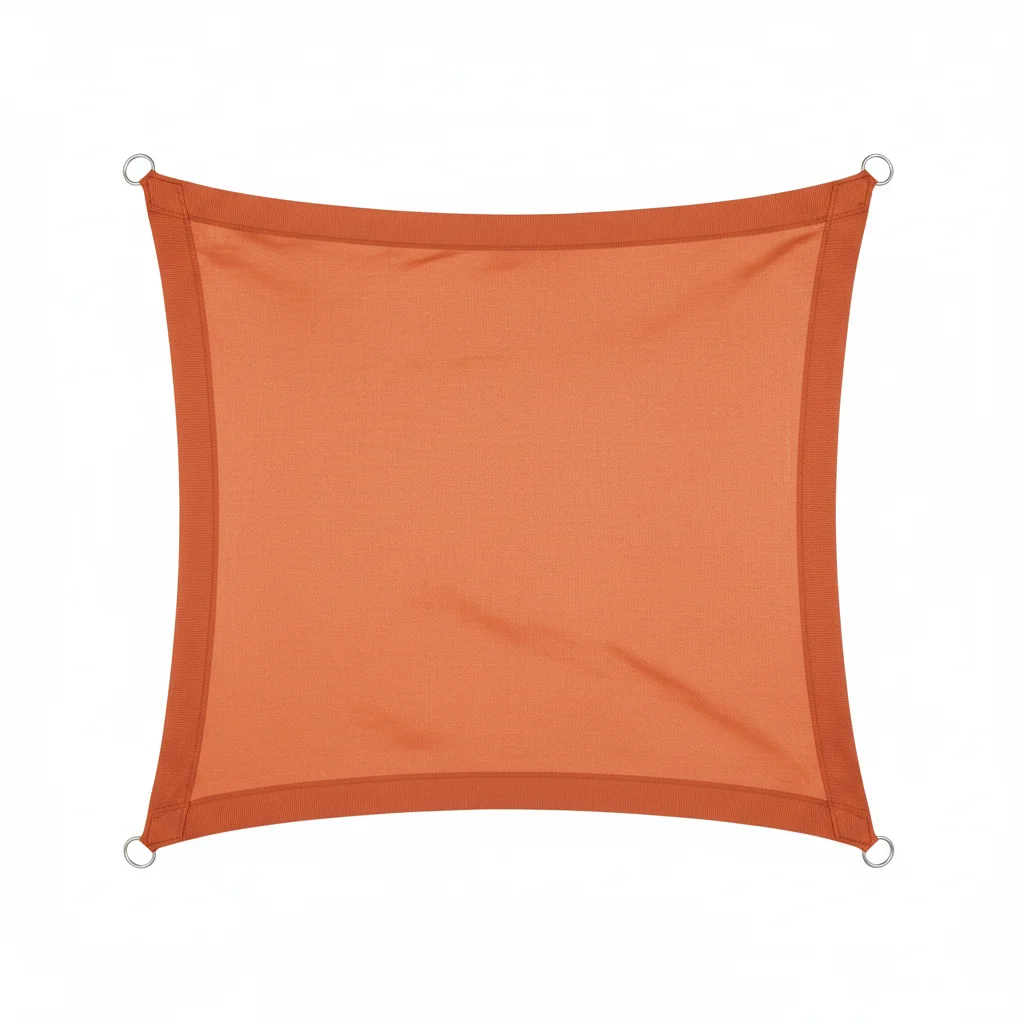
The fabric itself must be a high-density polyethylene (HDPE) monofilament yarn. You will see cheaper polyester sails in local hardware stores for under 50 EUR, but I advise against them for this region. Polyester acts like a sail on a boat; it catches the wind, holds water, and will eventually rip out your wall fixings during a sudden Levante gust. HDPE is a knitted mesh. If you look closely at a 280g/m² or 320g/m² fabric, you will see tiny holes that allow wind to pass through while still providing dense shade. For a standard 4x4 meter square sail in a premium HDPE fabric, you should expect to pay between 180 EUR and 350 EUR for the sail alone, depending on the reinforcement used in the perimeter webbing.
Navigating the rules of the Comunidad de Propietarios is another local hurdle. If you live in an apartment block near the promenade, the community rules often dictate what colors or structures you can attach to the facade. Shade sails are frequently viewed more favorably than permanent pergolas because they are considered "muebles desmontables" or removable furniture. However, you must ensure your fixing points are professional. We use chemical anchors—a two-part resin injected into the brickwork—to secure the eye bolts. This is far superior to standard plastic plugs which can pull out under the constant vibration caused by the wind. In many modern developments here, the external walls use a SATE insulation system (External Thermal Insulation). If your building has this, you cannot simply bolt into it; you need specialized thermal bridge spacers to reach the structural brick without crushing the insulation. This is the kind of detail that separates a DIY job from an expert installation.
Maintenance in this environment is relatively straightforward but non-negotiable. The salt and fine dust from the inland quarries can settle in the knit of the fabric. I recommend a deep rinse with a garden hose every three months. Do not use a pressure washer, as the concentrated jet can damage the UV-stabilized fibers. If you are leaving the property for the winter months, these sails are designed to be taken down in minutes. Simply loosen the turnbuckles and unhook the sail. This prolongs the life of the fabric and ensures that if we get a "Gota Fría" (a sudden, violent storm common in autumn), your home remains secure.
Strategic Recommendations for Different Property Types
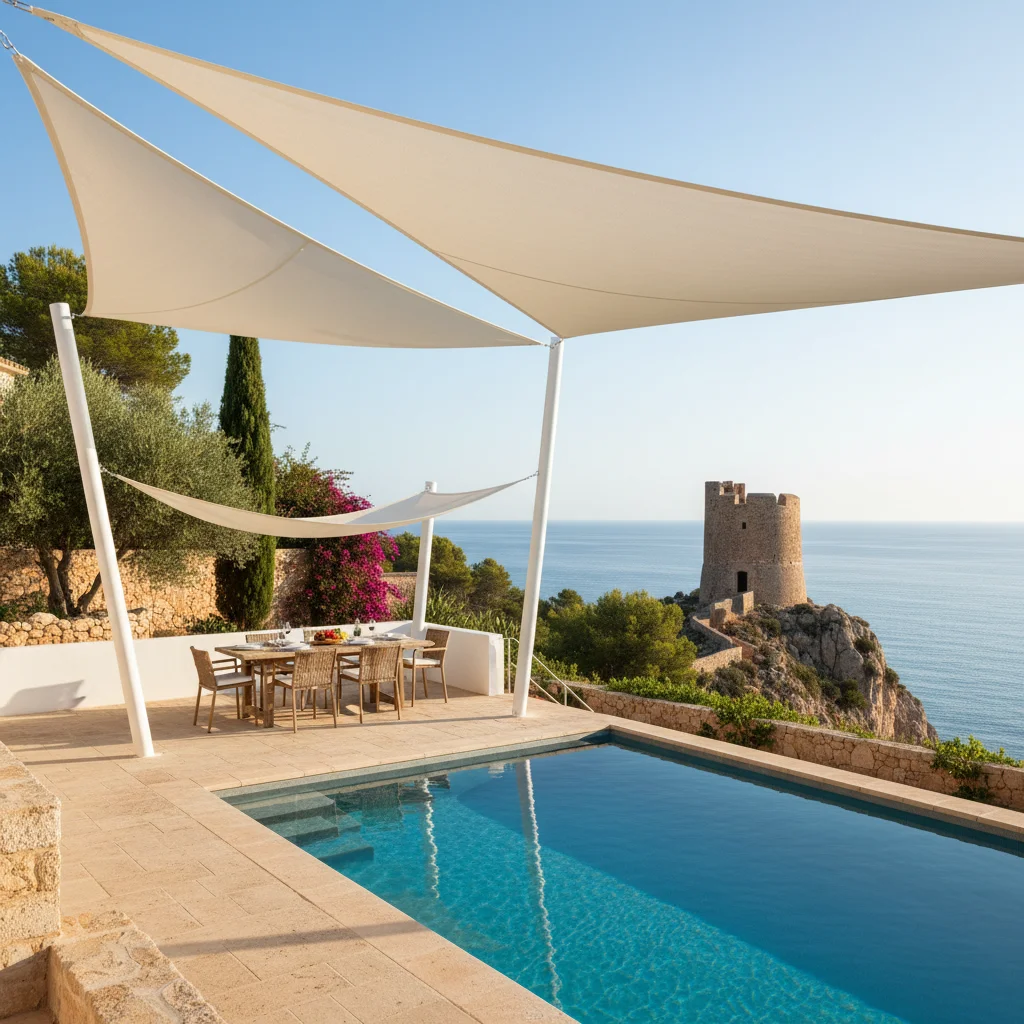
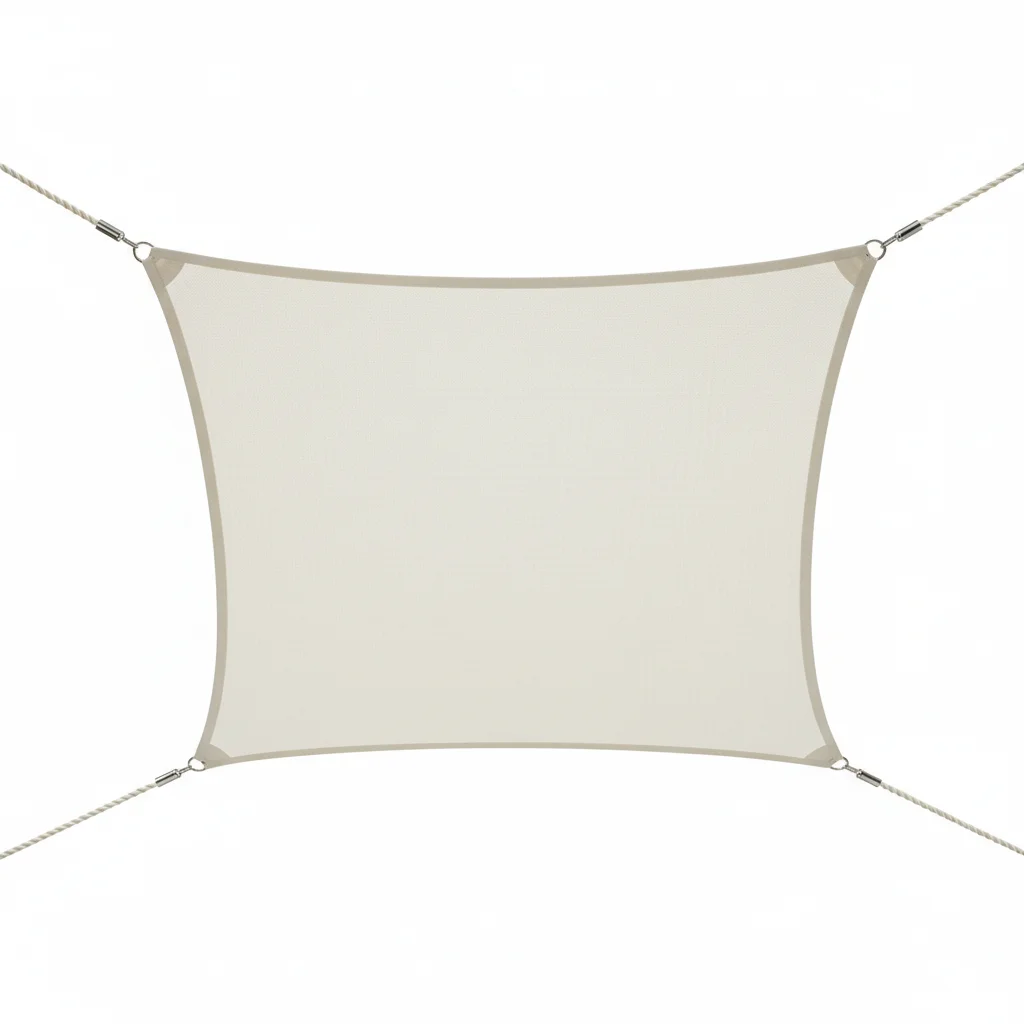
The best setup for your home depends heavily on the "parcela" or the layout of your terrace. For the detached villas found in areas like Coveta Fumà, where gardens are often multi-leveled and irregular, I recommend a "hypar" configuration. This involves using a four-sided sail where two opposite corners are high and the other two are low. This creates a three-dimensional twist in the fabric which is not only visually striking but incredibly stable in high winds. It prevents the fabric from "flapping" and helps shed any unexpected rainwater. For a large terrace of about 30m², a custom-cut rectangular sail or two overlapping triangles can create a dynamic shade zone for around 1,200 EUR to 1,800 EUR including heavy-duty masts and professional tensioning hardware.
In the more compact environments of the town center or beachfront apartments, the challenge is usually a lack of fixing points. Often, you only have the back wall of the apartment and a metal railing. In these cases, we frequently combine shade sails with high-quality parasols-shade solutions. You might use a triangular sail to cover the main dining area, fixed to the house wall and perhaps one powder-coated steel post bolted to the terrace floor. This can then be supplemented by a cantilever parasol for the sun lounger area. This "hybrid" approach gives you flexibility. If you have a larger budget and a permanent terrace, you might even consider how a sail integrates with a bioclimatic pergola. The sail can provide soft, affordable shade for the perimeter, while the pergola serves as the main, weatherproof hub for outdoor dining.
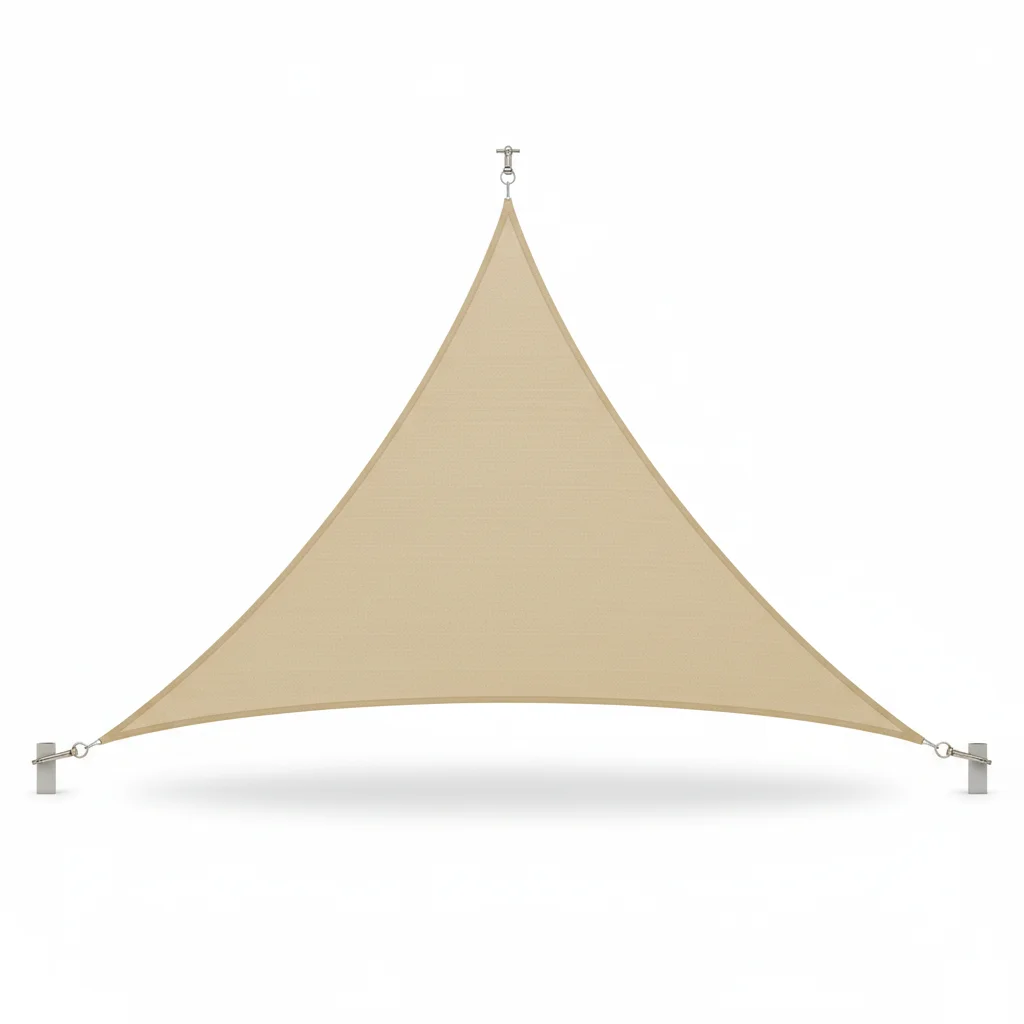
For those with smaller balconies, a custom-made triangular sail of roughly 3x3x3 meters is often the perfect entry point. These can start as low as 100 EUR to 150 EUR for the fabric and basic hardware. The key is the angle. I always recommend a minimum 5-degree slope on any installation. Even though HDPE is a mesh and water will eventually permeate during a heavy downpour, a good slope ensures that most of the water runs off the edge rather than pooling in the center. Pooling is the number one killer of shade sails; the weight of the water stretches the HDPE fibers, leading to a saggy, unsightly sail that can no longer be tensioned correctly.
If you are planning an outdoor kitchen—a popular addition for the Nordic and German residents here—positioning is everything. You want the sail high enough to avoid heat damage from the BBQ but low enough to block the late afternoon sun which hits horizontally across the Mediterranean. This usually requires a sail with at least one adjustable fixing point. By using a sliding rail on one of the support posts, you can lower one corner of the sail as the sun drops, maintaining your shade coverage throughout the evening. This level of customization is something you won't find with off-the-shelf awnings.
Delivery Logistics and Local Expertise in the Marina Alta and Baixa
Operating out of this region since 2019, I have learned that the logistics of delivery and installation are just as important as the product quality. We provide full delivery and consultation services not just to the central areas of the town, but also to nearby Alicante, San Juan, and Villajoyosa. Each of these areas has its own logistical quirks. For example, delivering large masts or 5-meter rolls of fabric to the narrow, winding streets of the old town requires smaller transit vehicles than a delivery to the wide avenues of Muchavista. We are familiar with the access restrictions and the local "carga y descarga" (loading and unloading) regulations that can catch out less experienced providers.
Our knowledge extends to the local building materials used in this part of the Costa Blanca. Whether your home is a "finca" with traditional thick stone walls or a new build with hollow "termoarcilla" blocks, we know exactly which anchoring systems will hold. We understand that the ground in the hilly urbanizations can be rocky and difficult for post installations, requiring specialized drilling equipment rather than simple hand-digging. This local insight prevents "surprises" on installation day and ensures that the quote we give you is the price you actually pay.
When we visit your property for a consultation, we don't just measure the distance between walls. We look at the trajectory of the sun relative to the Watchtower or the coastline to see how the shadows will move across your terrace at 2:00 PM in July versus 2:00 PM in October. We consider the wind tunnels created by neighboring apartment blocks and suggest the best orientation to minimize wind load. This neighborly, expert approach is why we have been able to help over 200 families transform their outdoor spaces into functional, beautiful environments that stand the test of time and the Spanish sun.
If you are tired of struggling with flimsy umbrellas that blow over at the first sign of a breeze, or if you find your terrace is simply too hot to use for most of the day, a shade sail is the most versatile and cost-effective upgrade you can make. It changes the entire silhouette of your home while providing the practical relief needed for this coastal climate. I am always happy to chat through the specifics of your project, whether you are looking for a simple DIY sail or a fully managed architectural installation. We can arrange a time to look at your space, discuss the best fabric weights for your specific exposure, and provide a detailed plan that respects both your budget and the unique character of your property. Feel free to reach out for a free consultation and let's make your outdoor space as comfortable as your indoor one.
 JW'"
/>
JW'"
/>